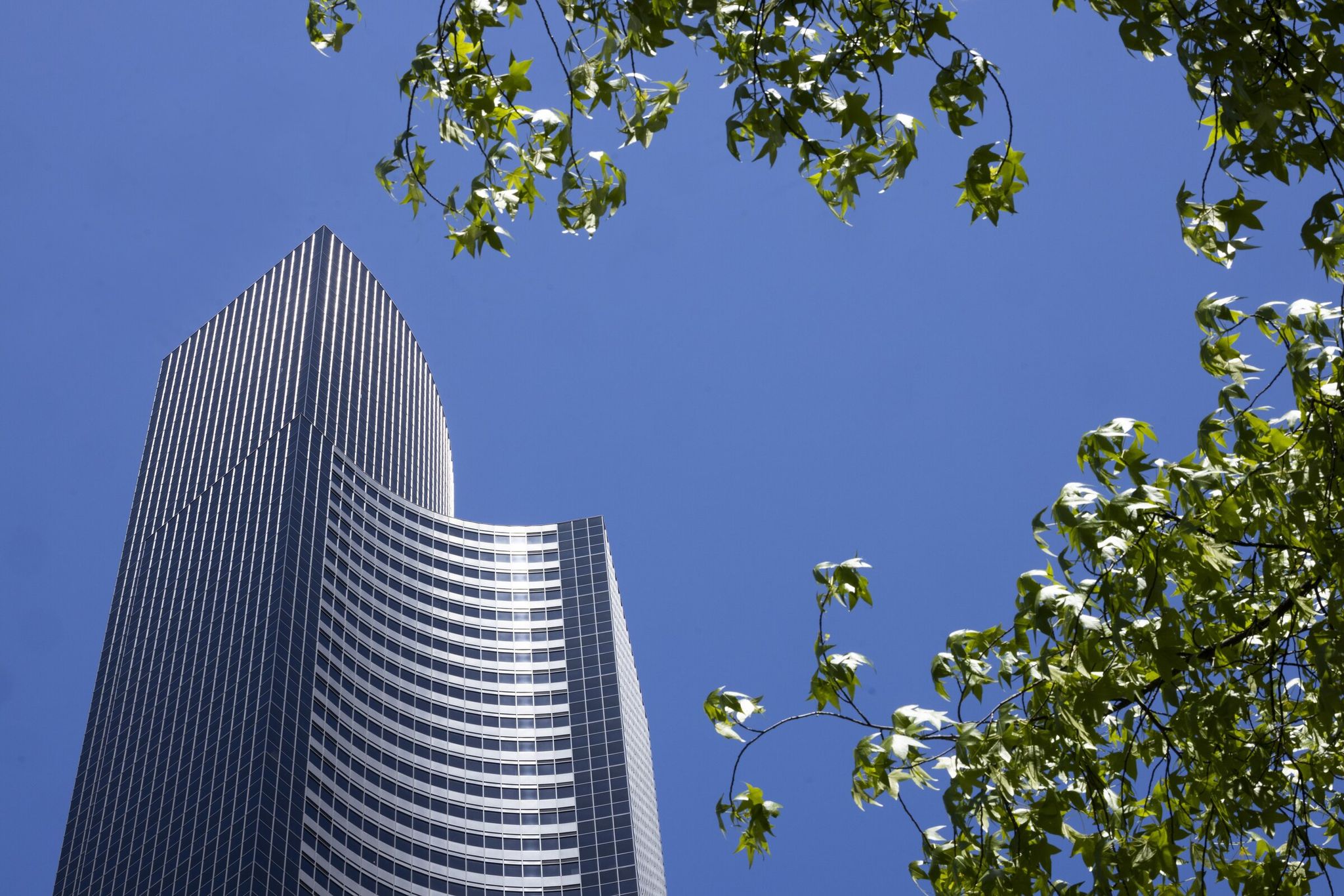
In Seattle, the legendary Columbia Tower Club is closing, marking the end of an era. The city council is calling for an audit of multimillion-dollar social service contracts. Meanwhile, the reopening of the popular North Cascades Highway is delayed due to a rockslide.
Closure of Seattle’s legendary Columbia Tower Club: the end of an era
One of Seattle’s best-known and most prestigious private business gathering places — the Columbia Tower Club, which occupied the upper floors of the Columbia Center skyscraper for nearly four decades — is closing. The decision marks the end of an era for the city’s elite and business community.
The club, which opened in 1985 soon after the city’s tallest building was completed, will be history after April 30. According to The Seattle Times, the club’s owner, Texas-based Invited Clubs, decided to consolidate its Seattle operations into a single location. The Collective in South Lake Union, which opened in 2018, will now be the company’s main club in the city. In a statement, Invited Clubs senior vice president Vincent Mauriello called the Columbia Tower Club a place where “Seattle leaders connected, collaborated and built community” for four decades. However, business logic apparently outweighed sentimental value: Seattle is not considered a primary market for the company, compared with cities like Atlanta, Dallas or Los Angeles.
The club was notable not only for its status but also for unique features. The weekday restaurant Hunt and Gather, led by chef Thomas Kallen, formerly of the luxury Fairmont Olympic hotel, was open on business days. But the signature feature remembered by many visitors was... the restrooms. With huge windows occupying an entire wall, they offered a breathtaking view of the city and Puget Sound. It was arguably the most famous “toilet view” on the West Coast. The Columbia Center building itself, formerly the Bank of America Tower, at more than 900 feet (about 275 meters) tall, remains the tallest in Seattle. The Sky View Observatory and Bar on the 73rd floor is still in operation.
The closure decision came after a “thorough review,” the company said. The building owner, Hong Kong investment firm Gaw Capital Partners, which bought the skyscraper in 2015 for $711 million, did not respond to requests for comment. Members of the prestigious club are being offered membership at The Collective. It’s interesting to compare the terms: the city exchange program, which provides access to all 150 Invited Clubs locations in the U.S. and Mexico, cost $200 in initiation fees and $275 monthly at the Columbia Tower Club. At The Collective, the monthly fee for that program is slightly lower — $255. There is also a more budget-friendly option for membership at The Collective only, at $240 per month.
The Columbia Tower Club’s closure does not mean private clubs in Seattle will disappear. Historic institutions such as The Rainier Club downtown and the Birch Road Clubhouse on First Hill will continue to operate. However, the departure from the 75th and 76th floors symbolizes changes in city life and business culture. This is not just the closing of a restaurant or an office — it is the end of a unique space where deals were made, careers were built, and Seattle’s business history took shape against panoramic views. The era when the business elite gathered in the clouds to dine with views of Mount Rainier is giving way to new, perhaps more democratic formats like The Collective.
Audit of social spending: Seattle councilmember calls for review of homelessness contracts
Amid growing public scrutiny of social program spending, Seattle City Councilmember Maritza Rivera has launched an initiative that could lead to a wide-ranging review of one of the city’s key departments. She is calling for an official audit of the Human Services Department (HSD) to determine how effectively the city oversees multimillion-dollar contracts related to homelessness and other social services.
Rivera said she wants the city auditor to conduct a broad review of HSD contracts after a recent audit of county-funded programs raised new questions about oversight. In an interview on Tuesday, Rivera explained that the audit’s goal is to assess how well the city tracks contract performance. She emphasized that she was not aware of any ongoing fraud cases related to Seattle contracts, but believes the city shouldn’t wait for problems to appear before testing its oversight systems. Her request comes as regional spending on homelessness and public programs is under increasing scrutiny.
Seattle’s Human Services Department budget for 2026 is $421 million, and the department says it contracts with more than 190 community organizations. Rivera believes any review in Seattle should also examine underutilization of funds, especially after questions arose at City Hall about $7.7 million reportedly unspent in 2025 by King County’s Regional Homelessness Authority. That context matters: the King County auditor this year found that the grant oversight structure for county parks has not kept pace with program growth, and outcome monitoring remains limited. A separate county review of contracts for youth diversion programs, including the Restorative Community Pathways program, also focused attention on oversight and financial management issues.
However, the city auditor’s capacity to take on the work quickly is in question. Acting audit director Arushi Takoral said she has only five staffers available, who are already occupied with existing requested audits. Audits are prioritized based on the level of requests from the mayor’s office or council members. To date, Rivera is the only councilmember to request an HSD review. In its 2026 work plan, the auditor’s office noted it will continue audits related to safety in city-funded housing, non-police surveillance technologies, commercial solid waste billing oversight and other issues.
Despite possible delays, Rivera insists the review should be placed on the city’s agenda because Seattle needs a clearer picture of how well its oversight is working. As noted in a KOMO piece, her initiative reflects a growing trend toward demanding accountability in social spending, especially for complex and costly crises like homelessness. An audit could shed light on whether millions of taxpayer dollars are reaching their intended goals or getting lost in a maze of contracts and insufficient controls.
When will the North Cascades Highway open? Work in final stages, but obstacles remain
Clearing work on the famed North Cascades Highway (US 20) in Washington state is in its final stages, but an exact reopening date for travelers and drivers has not yet been announced. The seasonal highway, which closes each winter due to heavy snowfall, is an important transportation route and a popular scenic corridor through the North Cascades mountains.
The Washington State Department of Transportation (WSDOT) says crews began clearing the highway on March 23. The work involves not only snow removal but also pavement repairs and monitoring avalanche-prone areas. Although the process is generally proceeding on schedule and several drifts have already been cleared, unforeseen complications have arisen. On the west section of the highway, about four miles from the seasonal closure point, a large rockslide occurred that completely blocked traffic in both directions. KIRO 7 News Seattle reports that timelines for removing the debris and reopening the road are undetermined. Additional challenges include flood damage from last December that also requires repairs.
Historically, the North Cascades Highway opens mid-to-late April or in early May. In the past two years it opened relatively early — April 19–20. In earlier seasons, 2022–2023 openings were later, on May 10–11. The earliest recorded opening was March 22, 2001, and in 2015 the highway opened on April 3. This year’s snowpack in the mountains is below average, which could theoretically speed the process, but WSDOT officials are not yet forecasting whether that will affect the opening date. Thus, despite active work by road crews, drivers and tourists planning trips over the pass should watch for official announcements, as the final decision depends on how quickly the rockslide is cleared and repairs are completed.