The Mariners are willing to discuss a trade for Kirby amid setbacks, Darnold stays composed as the team defends its title, and Sound Transit puts forward possible opening dates for the light-rail line to Ballard — as early as 2042.
Seattle changes course: why trade talk around Kirby surfaced ahead of the deadline
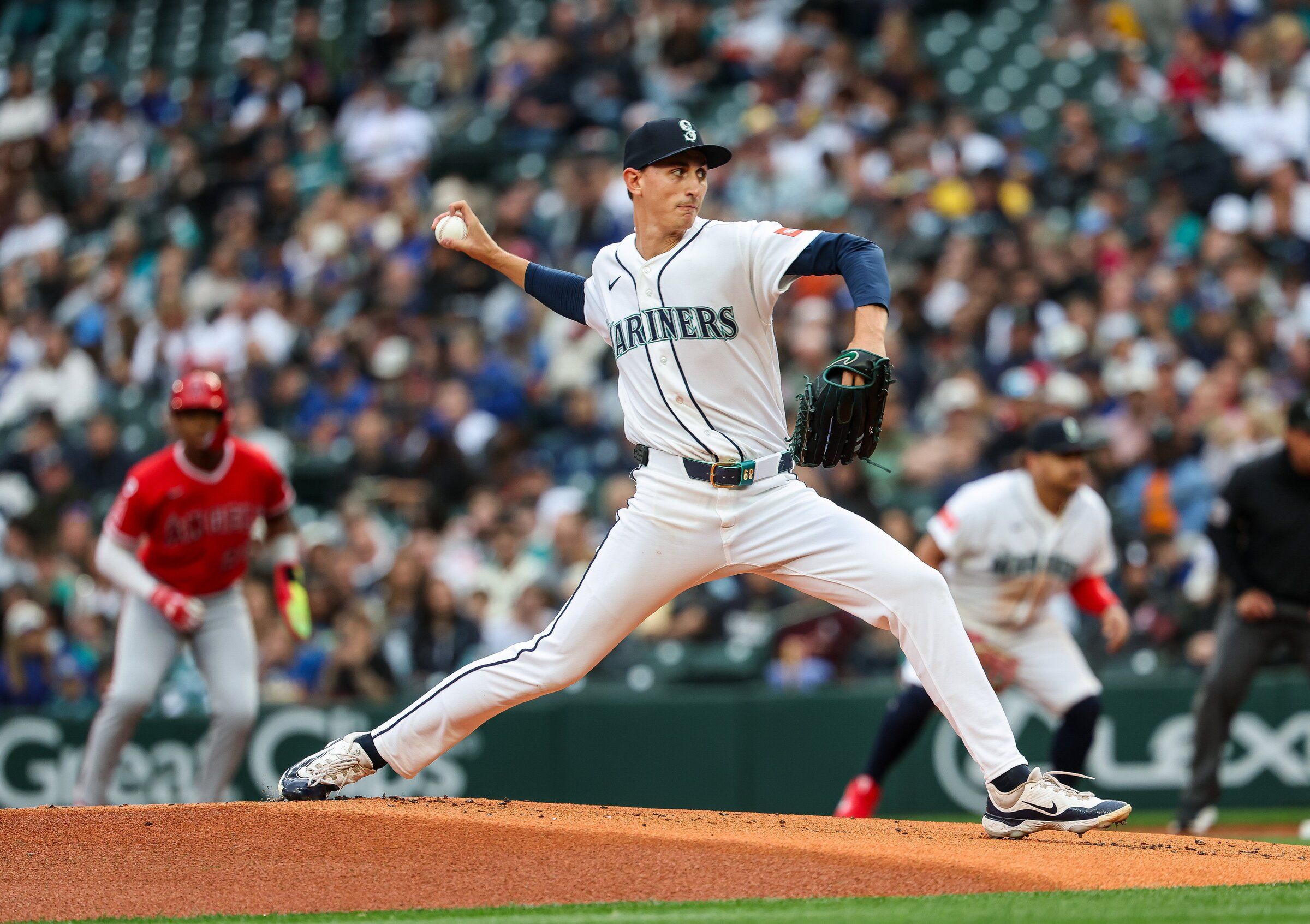
The situation in the Seattle Mariners’ camp ahead of the trade deadline is changing by the day. Just a week ago, the club’s front office insisted the team would be in the fight for a playoff spot. But a string of setbacks and obvious problems on the field have forced leadership to at least listen to proposals involving a wide range of players. As the Seattle Times reports, in the final hours before the market closes the “Mariners” made it clear to other teams that they are open to considering trade options involving starters they have in excess of. This is not only about veteran Luis Castillo or the young Emerson Hancock, who were discussed earlier, but also about George Kirby — a pitcher Seattle has long viewed as nearly the most talented in its starting rotation.
The past two weeks have been disastrous for the Mariners: the team has lost eight of ten games, dropped to third place in its division, and nearly erased any chance of comfortably positioning itself in the standings. Against that backdrop, several clubs asked about Kirby’s availability, and according to sources, Seattle has not been categorically shutting down the conversation. ESPN, citing Jeff Passan, adds that other team executives feel Kirby could indeed be available. At the same time, the deal is not inevitable, and the Mariners themselves are “just doing a lot of talking,” as one source put it.
Kirby is a special case. A former All-Star selected in the first round of the 2019 draft, his strike-zone control is described as unique in modern baseball, and at 28 he still has the ceiling of an ace pitcher. This season he is 8–9 with an ERA of 3.98, and on Sunday he is set to take the mound in a game against the Minnesota Twins. The financial terms make him a relatively affordable option: his salary this year is $6.55 million, and the team retains his rights for another two seasons. However, among the club’s young core of starters, Kirby is seen as the least likely candidate to sign a long-term contract — which makes him a logical trade target.
Another story is Luis Castillo, whose contract calls for a salary of more than $24 million next season. Interest in him appears minimal, and even if Seattle agrees to cover part of his salary, the number of interested teams remains low. At the same time, Emerson Hancock, who is under club control through 2030, will be paid at least the league minimum next season and will become an arbitration-eligible player only in 2028. That is why, in recent weeks, his name has surfaced most often in talks with other teams.
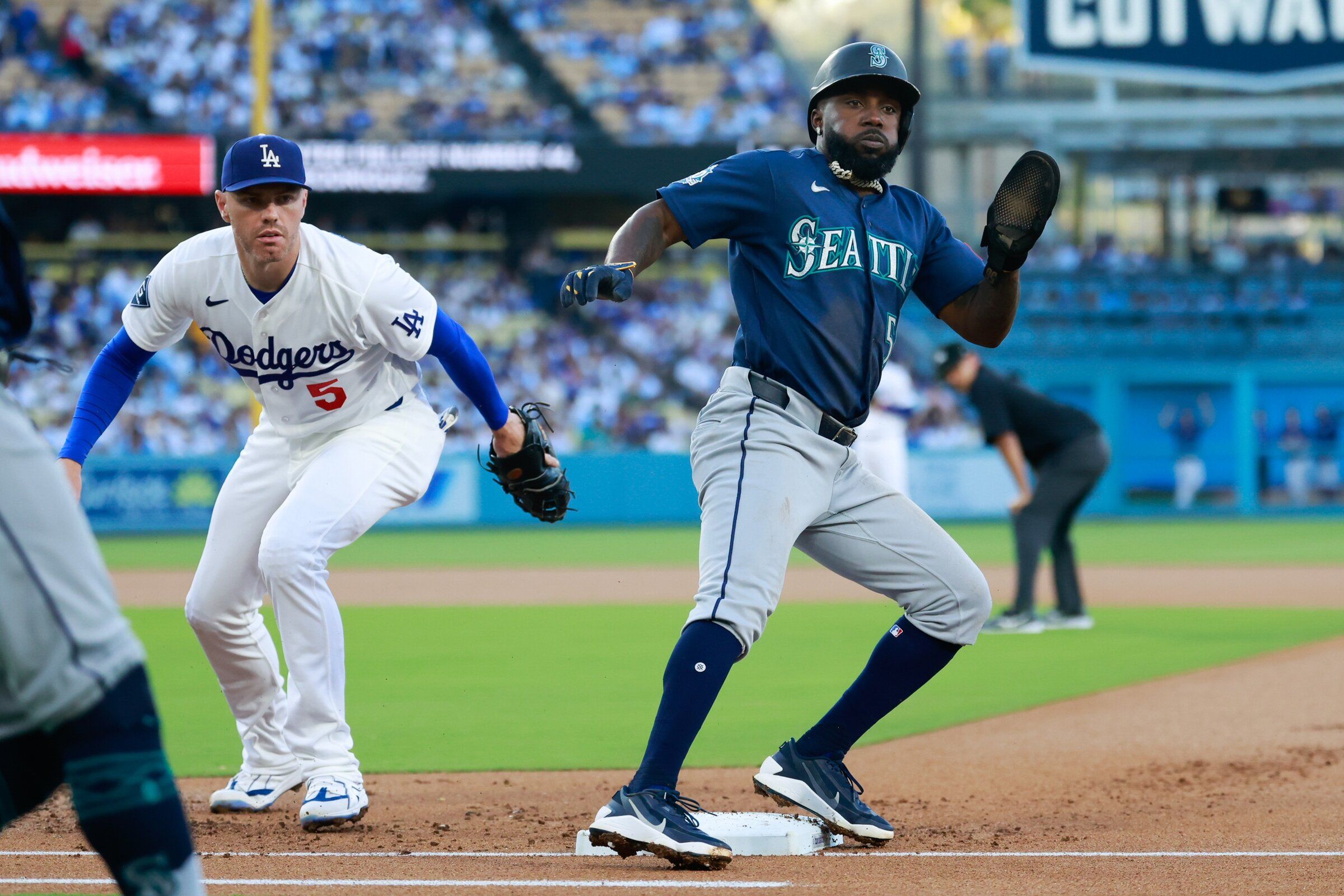
One more key asset is left fielder Randy Arozarena, acquired from the Tampa Bay Rays last year. He is having the best season of his career, leads the team in bWAR (3.5), and was the only Mariners representative at the All-Star Game. But his contract expires at the end of the season, and Arozarena — a client of Scott Boras — is likely to hit the free-agent market. There have been no contract-extension talks with him, and that puts Seattle at a crossroads: either keep him through the end of the season and receive a compensatory draft pick if it declines a qualifying offer, or trade now if the proposed package is more valuable than that pick. A qualifying offer this year will likely be around $22 million, and the compensatory pick, under the collective bargaining agreement rules, will depend on the contract amount Arozarena signs in the offseason.
It feels like, 48 hours before the deadline, the Mariners are trying to sit on two chairs. On one hand, they are not ready to fully give up hope for a late-season surge. On the other hand, the team has clearly been stuck for two months already, and it would be smarter to start building next year’s roster by selling one or two valuable players. It is telling that a year ago, in a similar situation, the club acted aggressively and added pieces for the playoffs. Now the tone of the conversation is very different: “We’ll look at any options,” one source within the organization says.
To make sense of what’s happening, it helps to clarify a few terms. MLB’s arbitration system allows a player with a certain amount of service time to earn a salary set through arbitration, until he reaches free agency. Team control refers to how many seasons the club can keep a player without his consent. A qualifying offer is a one-year contract the team can extend to its free agent; if the player declines, the team receives a compensatory draft pick. All of this directly affects a player’s price in trades, and the Mariners are clearly weighing each of these components.
It’s still too early to say that Kirby is definitely leaving Seattle. But the very fact that the club is willing to entertain offers for a pitcher who has only recently been considered untouchable suggests a possible shift — and change of direction is the point now.
Sam Darnold isn’t listening to talk about him: defending the title matters more than other narratives
Sam Darnold, just a few months ago winning the Super Bowl for the first time in his career with the Seattle Seahawks, is entering the new season with surprising calm. On the fifth day of the team’s preseason camp, reporters tried to get him talking about how attitudes toward him have changed after years of criticism, but Darnold just gave a brief smile. His career really has unfolded in an unusual way: drafted third overall, he was long seen as a disappointment, bounced between teams, and eventually landed in Seattle — his fifth team in eight NFL seasons. But Darnold insists he has never doubted himself and does not let outside evaluations affect his preparation. In a conversation cited by Seattle Sports, he emphasizes that what matters is not what was or what will be, but what is happening right now.
Rather than looking backward, Darnold is focused on studying the Seahawks’ new offensive scheme. The system this season is being installed by new offensive coordinator Brian Fleury, who Darnold has already worked with: Fleury spent four years coaching tight ends in San Francisco, while Darnold was a backup quarterback there in 2023. The quarterback says Fleury has incredible steadiness — his mood doesn’t change after a good play or a bad one — and admits he’s interested in watching how the coach performs in his new role. Fleury, in turn, replaced Clint Kubiak, who went to the Las Vegas Raiders.
Darnold also pays special attention to his connection with receiver Rashid Shaheed, who signed a three-year, $51 million contract with Seattle in March. Last season Shaheed recorded 59 catches for 687 yards and two touchdowns, playing for the Seahawks and the New Orleans Saints. During the offseason he also spent a lot of time training with Darnold. Both were born in Southern California and, at one point, played together for the Saddleback team in Orange County. Darnold believes that familiarity will help Shaheed absorb the new system faster, and he hopes the chemistry between them will result in the receiver getting the ball more often next season. “He’s a really catchable receiver,” Darnold sums it up succinctly.
Fans will be able to track the progress of the Darnold–Shaheed pairing, in part, thanks to this season’s HBO reality show Hard Knocks, which is filming life around the Seahawks during training camp. Darnold understands that as the quarterback of the reigning champions he will almost certainly be at the center of the camera crew’s attention, and he says he’s ready for it. For him, it’s just part of the job in his ninth season in the league, in which he intends to keep proving that his place is among the NFL’s elite quarterbacks. After two straight seasons at the Pro Bowl level — the league’s All-Star game — few doubt his status, but Darnold prefers not to dwell on his accomplishments.
Meanwhile, Seahawks head coach Mike Macdonald is not stingy with praise for his steady leader. According to Macdonald, what he values most in Darnold is that every practice moment has the same importance — whether it’s reviewing the script in the quarterback room, a training session, or a real game. That mental approach, the coach believes, is exactly what the team must show in its fight to defend the championship title. Darnold, for his part, continues to stick to his approach: no reflection, no attention to other people’s stories — only work on what he can control. Maybe it is precisely that focus that helps him feel confident in a situation where the entire football world is watching his every move.
Sound Transit names timeline for building the light-rail line to Ballard: opening could be by 2042
It sounds almost like a promise finally taking shape. Sound Transit, the agency responsible for public transportation in Seattle and the surrounding area, officially announced that, with favorable circumstances and sound financial planning, the light-rail line to Ballard could be up and running as soon as 2042. Of course, to make that happen the agency will need to find about a billion dollars in additional savings or new funding sources by 2030, complete the project’s final design by 2032, and fully secure construction funding by 2033. If that doesn’t happen, Ballard-area residents would have to wait for the train until 2060 — and that would be the best case.
At the center of this story is a long-standing and painful question for Seattle: when will light rail finally reach Ballard? In May, Sound Transit’s board of directors approved an updated ST3 system plan that ran into serious financial trouble. Under that plan, only the initial segment of the line is fully funded — from Chinatown to Seattle Center. The portion from Seattle Center to Ballard, including neighborhoods such as Smith Cove and Interbay, was deemed unaffordable under the current budget. That triggered a wave of criticism, especially from King County’s north-area districts, whose representatives on the board demanded more transparency and specific timelines from the agency.
It was under that pressure that Sound Transit released this ambitious but cautious timeline. As board member and Seattle City Council president Dan Strauss notes, “Light rail to Ballard hasn’t died.” In his view, today’s announcement is meant to get the project back on track and give the public a clear picture of what work still needs to be done together. Strauss stresses that without added resources and savings, the opening date would have been unacceptable — but now officials have clear benchmarks.
Others key figures agree. King County executive Girmay Zahilaay, also on the board, calls the announced timelines proof that getting the line to Market Street is achievable if the next seven years are focused on finding savings and expanding financing capacity. Seattle Mayor Kathy Wilson, another board member, says that as a lifetime public-transportation rider she understands how important it is to complete all ST3 projects for the region’s future. She is confident that a creative approach to reducing costs and cooperation with government partners will get the line finished.
For Sound Transit, it’s important to understand that this is one of the agency’s most significant and complex projects. The Ballard line is expected to become the busiest on the entire Link system: estimates say it will serve more riders than any other new segment in the agency’s history. Ballard Chamber of Commerce representative Mike Stuart reminds readers that the local community has long and consistently supported building a station at the intersection of NW Market Street and 15th Avenue NW — and that is where it is planned to be located. He urges Sound Transit to use every available tool to hit the 2042 target.
At the same time, Sound Transit emphasizes that optimism must be grounded. The agency already has experience cutting costs: similar work on the West Seattle Link Extension project produced savings of about $2.5 billion. That was achieved by reworking the alignment, dropping some real-estate properties, and using more rational engineering solutions. Sound Transit says it plans to apply a similar approach to Ballard. It is also considering other mechanisms: for example, obtaining from the state permission to issue longer-term bonds, increasing its debt capacity, reforming permitting processes to speed up construction, and bringing in funds from third parties.
One of the biggest points is how Sound Transit envisions achieving the goal. If the agency can find about a billion dollars in additional savings or financial capacity by 2030, it would be able to begin buying land between Seattle Center and Market Street. By 2032, the final design should be completed, giving the board a clear picture of the project’s real cost and where further savings are still possible. And finally, by 2033 funding for all construction must be secured — only then would a 2042 opening become real. But if Sound Transit sticks only to existing revenues and does not gain additional resources, service to Smith Cove, Interbay, and Ballard would likely be pushed back to around 2060. The segment from Chinatown to Seattle Center, meanwhile, is still expected to open in 2042 as planned.
State-level politicians representing Ballard interests have also voiced support. State Senator Noelle Frame said the Sound Transit announcement provides the long-awaited transparency and clear understanding of which tools must be used to accelerate construction. State Representative Liz Berry noted that this is one of the most important investments for creating jobs, building housing, and fighting climate change. Her colleague Julia Reed added that strong coordinated action by city, county, state, and federal authorities is needed to keep the promise made to voters when ST3 was approved. And King County Councilmember Jorge Baron, who has been active in public campaigns supporting the project, urged residents to keep up the energy and continue pressing the board to meet the scheduled timelines.
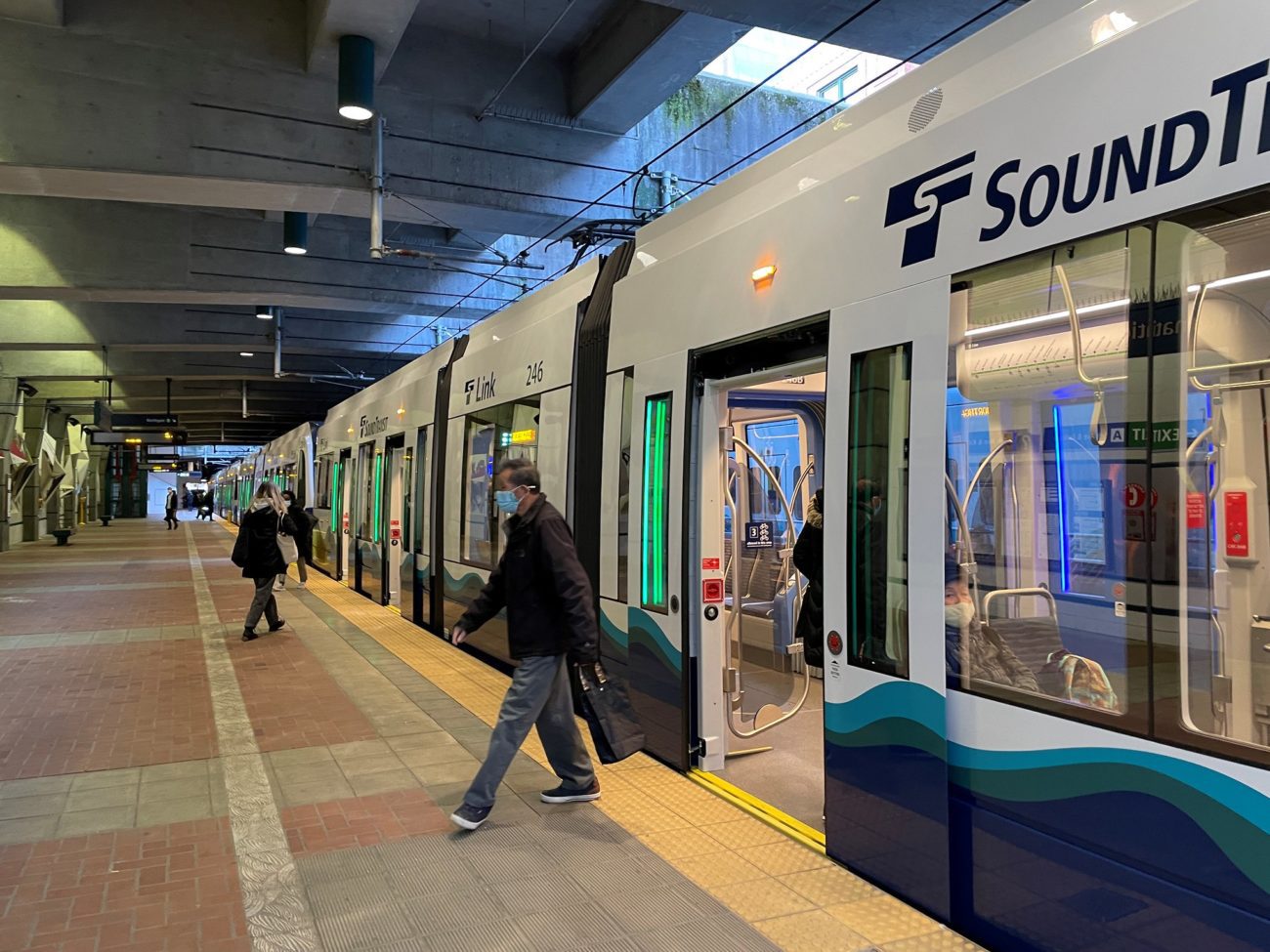
For those unfamiliar with local specifics, here’s the context: Sound Transit 3, or ST3, is the third and largest regional transportation-system expansion plan, approved by voters in 2016. It calls for a major expansion of the light-rail network connecting Seattle to suburbs and outlying areas. Link light rail is essentially a modern subway-style service that runs on dedicated tracks and is partially underground in the downtown core. That’s the approach being bet on to fight traffic congestion and population growth.
As for the practical meaning for Ballard residents, a line opening by 2042 would mean they could reach downtown Seattle without transfers — quickly and predictably. Still, it’s worth remembering that all the announced dates are not guarantees, but more like a roadmap. Exactly seven years from now, it will be clear whether the agency hit the needed financial targets. That said, given that the project is backed at every level of government — from the city council to the state legislature — the odds that Ballard will get its station in the foreseeable future look quite realistic. As the Seattle City Council blog reminds readers, stakeholders are now united around a common goal, and it will depend on their coordinated actions how quickly the dream of light rail in Ballard becomes everyday reality.