Seattle’s independent bookstores can be visited by ferry; a rabid bat was found near the University of Washington campus; and in West Seattle, locals recall the 1989 parade in support of the Admiral Theatre.
Seattle’s Independent Bookstores: a Ferry Ride for New Reads
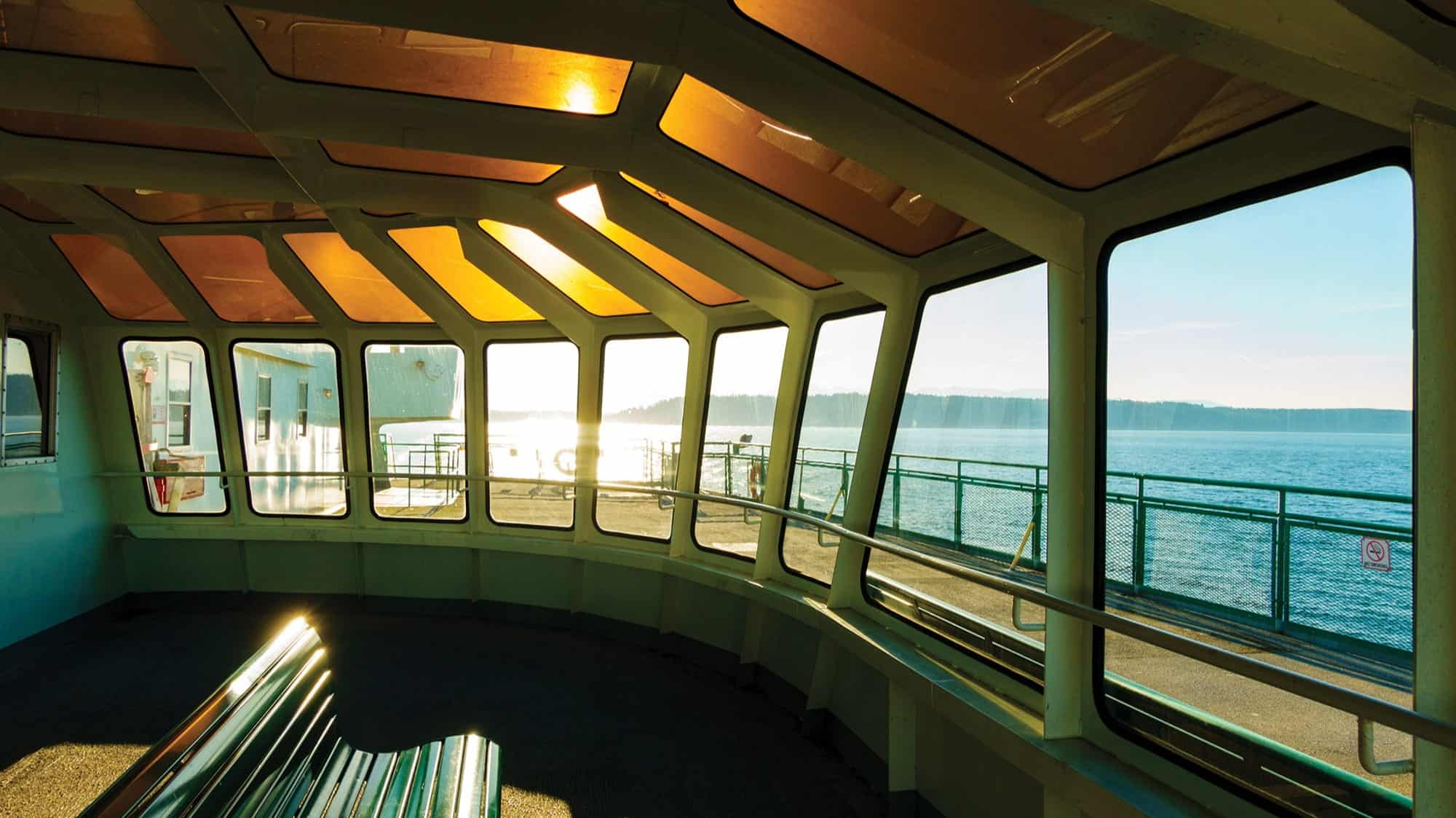
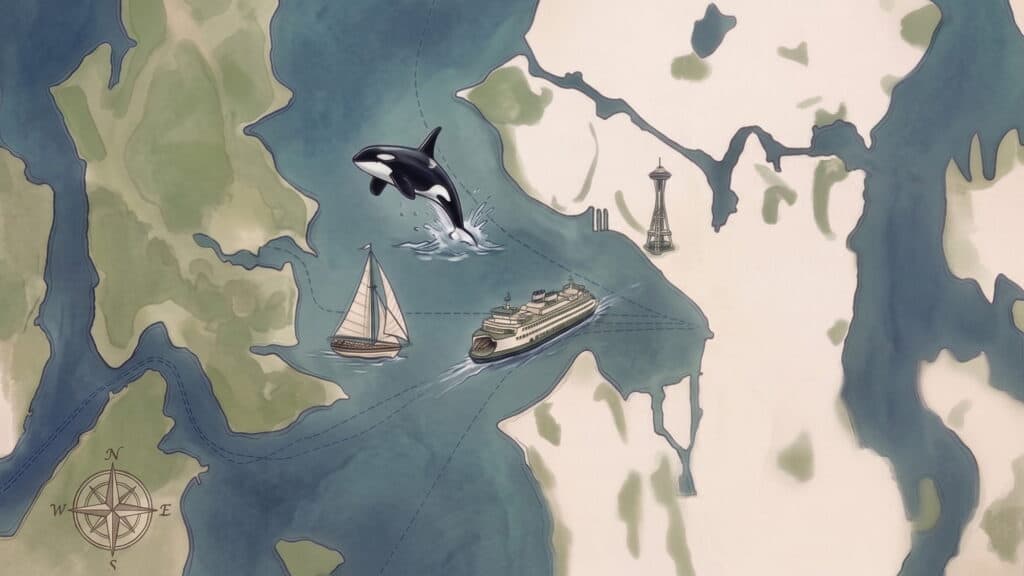
Independent bookstores are more than just places where books are sold. They become true hubs for local communities, and Seattle is no exception. Owners of these shops don’t only help readers find their next favorite story—they also host author meet-and-greets, book clubs, and parties celebrating new releases. Many of them are paired with cozy cafés and reading areas where you can linger for a long time, taking in the smell of fresh paper and coffee. But there’s one especially memorable way to get to these places—by ferry. As Seattle magazine notes, taking the ferry to bookstores doesn’t just offer thrilling views over the water; it can also save time, since bypassing Puget Sound by highway is often longer. Of course, you’ll need to keep an eye on the schedule and plan your route in advance to avoid long lines.
A perfect destination example is Ballast Book Company in Bremerton, just a few blocks from the ferry terminal. The shop is a tiny space—65 square meters—but it’s packed with books across nearly all genres, along with souvenirs: stickers, notebooks, tea, and bookmarks. Owner Kate Larson says she wants something to be found for everyone—especially since it’s the only independent bookstore in the city. Another popular stop among ferry passengers is Eagle Harbor Book Company on Bainbridge Island. The store fills up as soon as passengers step off the dock—here, the phenomenon is affectionately called a “ferry unload.” A little farther north, in Kingston, there is Saltwater Bookshop, which opened on the 2023 Independent Bookstore Day. It started with a few shelves in a neighboring bakery, and now it offers mostly cookbooks, children’s literature, and works by Indigenous authors.
Bookstores reflect the interests and history of their communities, support local writers, and shape their selection around what shoppers want. Kate Larson advises anyone looking to go beyond their usual reading to simply ask the bookseller for a recommendation based on the authors or themes they already love. “We choose books based on what the community wants and what can broaden its horizons,” she says. “We offer a much wider range of titles that don’t necessarily show up in algorithmic recommendations—recommendations that often lean toward sameness or overrepresent white authors.”
In Seattle, the number of genre-specific bookstores has grown rapidly in recent years—especially romantic ones. A standout example is Beguiled Books, which began in 2024 as a mobile shop, then moved from a table to a tent, to a trailer, and finally found a permanent home in the Pioneer Square area, just minutes from the ferry terminal. Owner Ashley Adeyere recalls that the idea of a genre store initially sparked curiosity, but now people no longer feel shy about their love of romance. Pioneer Square turned out to be the ideal location: history is constantly in the air there, a famous underground tour even runs beneath the building, and among local entrepreneurs there’s a strong sense of community. At Beguiled Books, people come not only for books: they celebrate birthdays, marriage proposals, promotions, and sometimes just meet up after long periods apart. “That’s the magic of bookstores,” Adeyere believes.
Besides romance shops, Seattle also has Book Larder for cookbooks, Open Books for poetry, Crow’s Nest Comics for graphic novels, Charlie’s Queer Books for LGBTQ+ titles, and Mam’s Books in Chinatown—the only independent Asian American bookstore in the Pacific Northwest, specializing in authors of Asian heritage. But most importantly, all these shops serve as places to connect. The booksellers know their neighborhoods well and can recommend the best restaurants, galleries, and attractions you might otherwise easily miss. Kate Larson points out that Ballast Book Company often becomes the first stop for newcomers in Bremerton, and themed book clubs (science fiction, movie lovers, fantasy) help people make friends in adulthood. Ashley Adeyere emphasizes that a passion for reading is a natural icebreaker—and that people today are genuinely hungry for analog activities and face-to-face encounters. Even a trip just to make a quick stop at a bookstore can turn the day into a real adventure. Here are eight independent bookstores that are easy to reach by water: Ballast Book Company in Bremerton, Saltwater Bookshop in Kingston, Liberty Bay Books and Away with Words Bookshop in Poulsbo, Eagle Harbor Book Company on Bainbridge Island, and also Beguiled Books, Arundel Books, and Open Books in Seattle itself—all within walking distance of the terminals.
A Rabid Bat Found Near the University of Washington Campus: Authorities Urge Caution
In downtown Seattle, right on a busy sidewalk near the University of Washington campus, a bat was found with confirmed rabies. City and King County medical services strongly recommend that anyone who may have had contact with it seek medical attention immediately. The incident occurred on University Way Northeast between 41st and 42nd streets, near Parrington Lane—a spot that weekdays is packed with students and visitors to local cafés and shops. As reported by KOMO, the bat was found on Wednesday, and on Thursday it was euthanized by animal control staff. On Friday, the test results came back positive for rabies.
According to the Seattle and King County Department of Health, everyone who called in and reported the discovery had not touched the animal, and at this time there is no confirmation that anyone else may have had contact with it. However, authorities stress that any physical contact with a bat—even without an obvious bite—can be dangerous, because the virus is transmitted through saliva. Department veterinarian Jocelyn Mullins explained that contact includes not only a bite or scratch, but also any touching of the bat—or its saliva—with bare skin. Rabies is a deadly disease that almost always ends in death after symptoms appear, but it can be prevented if treatment starts before symptoms develop. That’s why it’s so important to identify everyone who may have dealt with this bat as soon as possible.
In light of this incident, it’s worth remembering that rabies is a viral disease that affects the central nervous system. It spreads through bites or saliva coming into contact with damaged skin, and bats are among the major carriers in North America. Symptoms can show up weeks or even months later, and without post-exposure prophylaxis—a series of vaccines and immunoglobulin—the disease is nearly untreatable. That’s why even the smallest risk of contact requires immediate attention from a doctor or your local health department at 206-296-4774.
It’s important to understand that bats don’t attack intentionally, but may end up near a person by chance—especially if they’re sick or disoriented. Experts advise never to touch bats with bare hands. If you find one, don’t try to chase it away or rescue it—call animal control right away. This case is another reminder that wild animals—even small ones—can be sources of serious infections, and being careful during an encounter can save lives.
A Historic Parade in West Seattle: How “Save the Admiral” Brought Residents Together
The parade for West Seattle Founders Day is an event with nearly a century-old tradition, dating back to the mid-1930s. In 1989, it became more than just a celebration march—it turned into a platform for a public campaign. Local historian and journalist Clay Eels recalled how the closure of the historic Admiral Theatre sparked a wave of protest, which spilled into a vivid parade column under the slogan “Save the Admiral.”
An amateur video recorded on July 29, 1989 by Ed Thorbern of the Seattle Southwest Historical Society and posted by Ils captured 25 minutes of preparation and the parade itself. Of particular interest are the final five minutes, showing the parade moving through the shopping district of The Junction—the same streets where familiar places like Easy Street Records once stood in an earlier building just north of today’s location. That store was also mentioned by the current parade marshal, Easy Street owner Matt Wonn, when he talked about paying tribute to that time.
The campaign succeeded—the Admiral Theatre was saved—though its then-owner, Cineplex Odeon, had shut it down six months before the parade. Notably, one of the volunteers who had been actively involved in that effort and helped organize the 1989 parade column returned to help at this year’s parade as well. In a note on West Seattle Blog, there’s a photo: on the left is Deb Barker, who sits at a registration table alongside Kyle Edwards (the brother of parade coordinator Michelle Edwards). Even today, Barker remains a public figure, leading the Morgan Neighborhood Association. This story is a clear example of how local initiatives and festive parades can become tools for civic activism—and, decades later, valuable historical evidence that connects past and present. The term “Cineplex Odeon” may be unfamiliar, but it was a major Canadian cinema chain that, in the late 1980s, owned many venues in the United States. And “The Junction” is the historic commercial hub of the West Seattle neighborhood, where many shops and cafés still exist today.