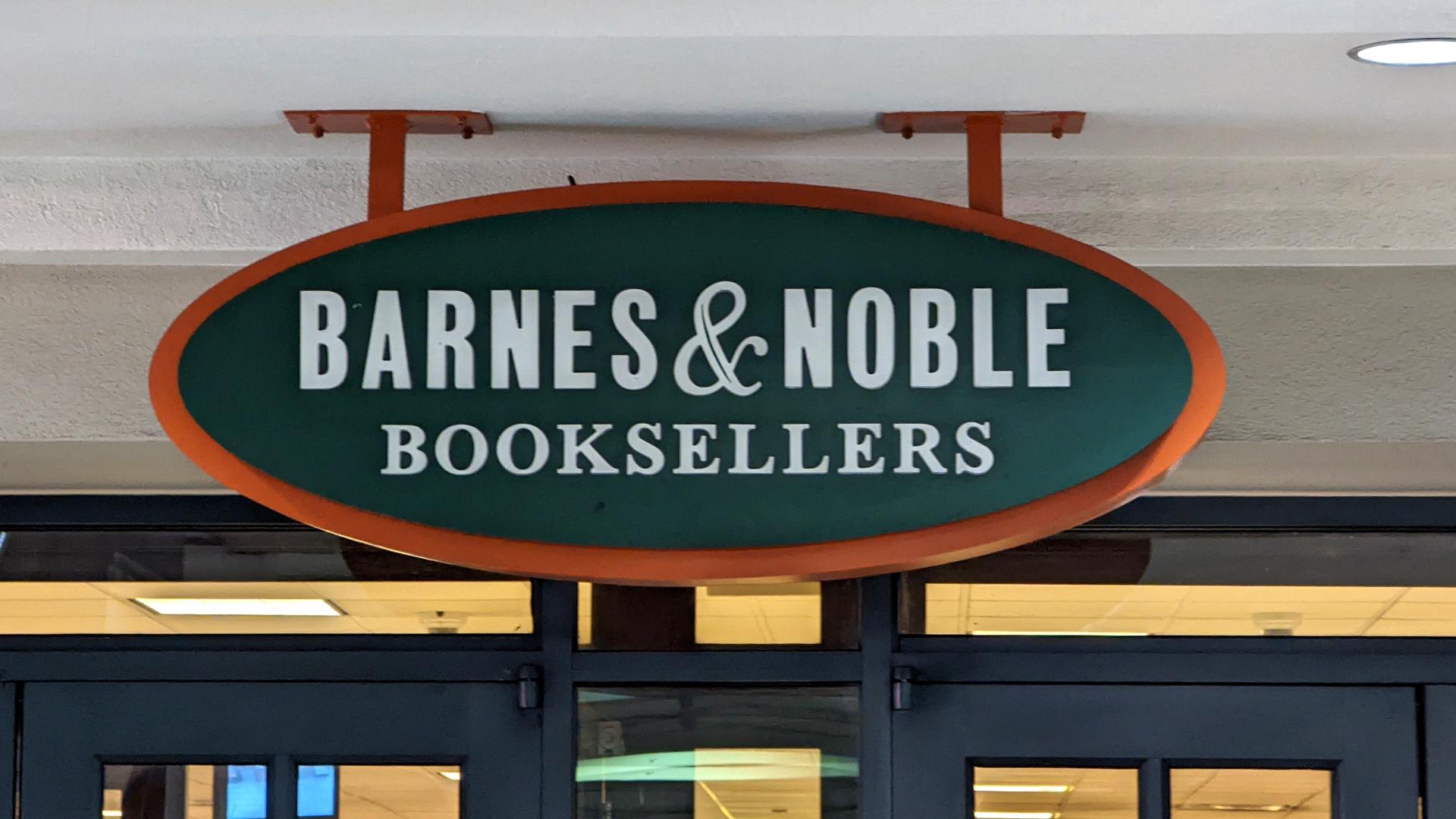
Barnes & Noble is returning downtown, Thursday will be a sunny day after a frosty morning, and the mayor paused surveillance cameras for an audit, sparking debates about safety.
Book giant returns: Barnes & Noble to reopen in downtown Seattle
After several years away, the iconic bookstore chain Barnes & Noble is preparing for a triumphant return to downtown Seattle. The event, scheduled for May 6, is eagerly anticipated by local readers and marks a notable moment for the city’s business and cultural life.
According to KING5.com, the new store will open at Pike Place and Sixth Avenue, taking over the historic building that formerly housed The North Face. The return of a major retailer like Barnes & Noble to downtown Seattle is more than just a new storefront. It’s a symbolic gesture signaling revival and resilience in the urban core after a difficult period when many businesses faced challenges. For many residents, a bookstore is not merely a place to buy books but a public space, a cultural hub where people can spend time, discover new authors, or sit with a book and a cup of coffee. The opening is planned for early May, fitting neatly into the city’s spring bustle and potentially helping draw more residents and tourists back downtown. While the article does not provide details on the size of the new store or its inventory, the mere fact that a national bookseller is returning to the heart of Seattle indicates the company’s confidence in the area’s future. This could send a positive signal to other retailers and help further revitalize commerce and street life around Pike Place Market, one of the city’s main attractions. Thus, the Barnes & Noble opening is not only welcome news for book lovers but also an important milestone in Seattle’s post-pandemic recovery of its public spaces.
Seattle weather: Another cold Thursday morning followed by a sunny day
Residents of western Washington should prepare for another frosty morning followed by a pleasant sunny day. According to a forecast published on FOX 13 Seattle, there is a frost advisory for some areas on Thursday morning, but temperatures will rise above seasonal norms during the day.
On Thursday morning, a frost advisory is in effect until 9 a.m. for areas including Everett, the Cascade foothills, and south of Olympia. That means temperatures in those areas could drop low enough to threaten cold-sensitive plants. However, conditions will shift dramatically during the day: abundant sunshine is expected, and thermometers should climb into the mid- to low-60s Fahrenheit (about 16–18°C), a bit above normal for this time of year. The warmth peaks on Friday, when West Washington could approach 70°F (around 21°C), making it the warmest day of the week. High clouds will begin to move in Friday, and light precipitation is possible in the southwest part of the state.
The pattern will change heading into the weekend. After a weak area of high pressure shifts east on Friday, an upper-level trough will move in from the northwest. To explain: an upper-level trough is an area of lower pressure in the mid and upper troposphere, appearing on weather maps as a bend of the contour lines toward the equator. Its arrival usually brings cooler air and more unsettled weather. That’s what will happen: temperatures will fall over the weekend and scattered showers will return, though they won’t be continuous. Saturday’s forecast is of particular interest, since there is a chance for thunderstorms. In short, the week will end cooler and wetter after a brief almost-summery warm spell on Friday.
Seattle surveillance cameras: pause sparks debate over safety and privacy
Amid an ongoing wave of gun violence, Mayor Kshama Sawant marked her first 100 days in office while finding herself at the center of heated debate. Her decision to pause use of closed-circuit television (CCTV) and automatic license plate readers (ALPR) for an audit has drawn both support and sharp criticism from residents and city officials.
In an interview with FOX 13 Seattle, Mayor Sawant said she hasn’t seen evidence that cameras prevent crimes. “We can’t rely so heavily on cameras as our public safety strategy. I haven’t seen any proof that cameras actually deter or prevent crime,” she said. As a result of this “pause,” cameras already installed in key areas — including the Central District near Garfield High School and entertainment hubs on Capitol Hill — remain turned off. Moreover, a planned installation of at least 20 cameras in the stadium district, which is preparing for a surge of fans during the World Cup, has been delayed until the audit is complete. Sawant insists on the need for “deliberate conversations” and an assessment of the technologies’ effectiveness before building permanent surveillance infrastructure. “We really want to do this evaluation before making decisions about expansion. I just don’t want to be reactive,” she explained.
However, the decision faces pushback. Residents and business leaders, such as Lawrence Evans and Tom Graff from the Belltown Business Association, are urging expansion rather than reduction of the surveillance program, viewing visible cameras as a necessary deterrent. City Councilmember Bob Kettle, who chairs the public safety committee, expressed particular concern about cameras being off ahead of a global event like the World Cup. He noted the city is in a “heightened threat environment” due to international tensions and emphasized that the audit should be finished before the tournament begins. “It’s not best practice to have a system and just keep it turned off, saying, ‘Hey, if there’s a real threat, we’ll just flip it on quickly,’” Kettle said.
The backdrop for these debates is persistent violence. In neighborhoods like Rainier Beach, residents are fearful after recent shootings, and the killing of teenager Amarr Murphy-Payne remains unsolved. Speaking as a mother, Sawant called the situation “gut-wrenching” and stressed that the city needs to do more to prevent violence. Alongside the camera debate, the mayor has expressed full support for Chief of Police Shaun Barnes and advocates diversifying emergency response. She is promoting the CARE program — teams of non-medical, unarmed responders designed to handle crisis calls where police presence may not be necessary. Sawant noted that contracts from the prior administration limited the team’s usefulness and is now working to expand its authority and capacity.
Thus, the pause in surveillance camera operation has become a symbolic decision reflecting a deeper conflict between the desire for immediate security via technology and a longer-term approach that pairs effectiveness reviews, privacy protections, and investments in alternative, preventive crisis and violence-response methods. The outcome of this dispute will shape not only downtown Seattle’s appearance during the World Cup but also the principles guiding the city’s public safety strategy in the years ahead.