In today’s roundup: the Mariners could use an abundance of starting pitchers to bolster the bullpen; Seattle’s Senegalese diaspora is backing the national team despite a ban on entry for fans; and the city is facing a transport breakdown ahead of the Belgium–Senegal match.
Mariners can cast a wider net than others: Seattle’s starting pitching depth is a trade-deadline ace
In baseball, a moment has arrived when there’s less than a month to the trade deadline, and—just like often happens—the market remains surprisingly thin. Many teams, even ones whose results are far from perfect, aren’t rushing into seller mode. The Baltimore Orioles, for example, with 40 wins and 48 losses, have already said they’re “going for the win” in 2026. But the Seattle Mariners have a unique advantage that allows them not to limit themselves to searching for partners among the long shots. The key is their deep surplus of starting pitchers, giving the club the ability to trade not only with teams that have already given up on the season, but also with direct contenders.
Normally, at the deadline, teams split into buyers and sellers, but Seattle can pull off a deal that benefits both sides even if both clubs are still in the playoff race. As USA Today’s well-regarded reporter Bob Nightengale said in an interview for Seattle Sports, “the Mariners can trade one of their starters—say Luis Castillo—to a top reliever from another contender.” It’s an unconventional move, but it’s entirely realistic, given that nearly half of the league’s teams, according to MLB.com, have identified their starting pitching staff—or pitching overall—as their biggest problem. That list includes the Tampa Bay Rays, Chicago White Sox, Athletics, Toronto Blue Jays, Orioles, Los Angeles Dodgers, Atlanta Braves, Chicago Cubs, St. Louis Cardinals, and San Diego Padres.
The core idea is that demand for quality starting pitching is enormous, and Seattle has an abundance of such players. At the same time, the club has an obvious weakness: a bullpen that needs strengthening. Put simply: starters are the pitchers who begin the game and typically work the first few innings from the mound, while relievers come in later—often in the late innings—to protect the lead and hold the score. The Mariners can send a strong starter to a team that lacks “length” in its rotation and, in return, acquire a powerful reliever to plug gaps in their own defense. In the end, both clubs remain buyers, but they simply swap the assets they need.
Nightengale highlighted the unusual nature of the situation: “Of course, that’s a little unusual, but it happens.” He also added that the market will likely open only in the final days before the August 3 deadline, when more teams admit their hopeless position. But Seattle doesn’t have to wait. Their starting pitching depth is so deep that they can negotiate even with teams that, it seems, should be buying rather than selling. That puts the club in a strong position: while others look among the long shots, the Mariners can strike deals directly with competitors—solving their own problems while also strengthening themselves using other teams’ weak spots.
For fans, that means the coming weeks may bring some out-of-the-ordinary moves. A trade for Castillo—a multi-year contract star—might seem risky, but if an elite reliever comes back, the team could become more balanced. In any case, the ability to “cast a wider net than others” gives Seattle flexibility that many contenders don’t have.
In Senegal, fans couldn’t make it to the World Cup in the United States: Seattle’s diaspora cheers for the team
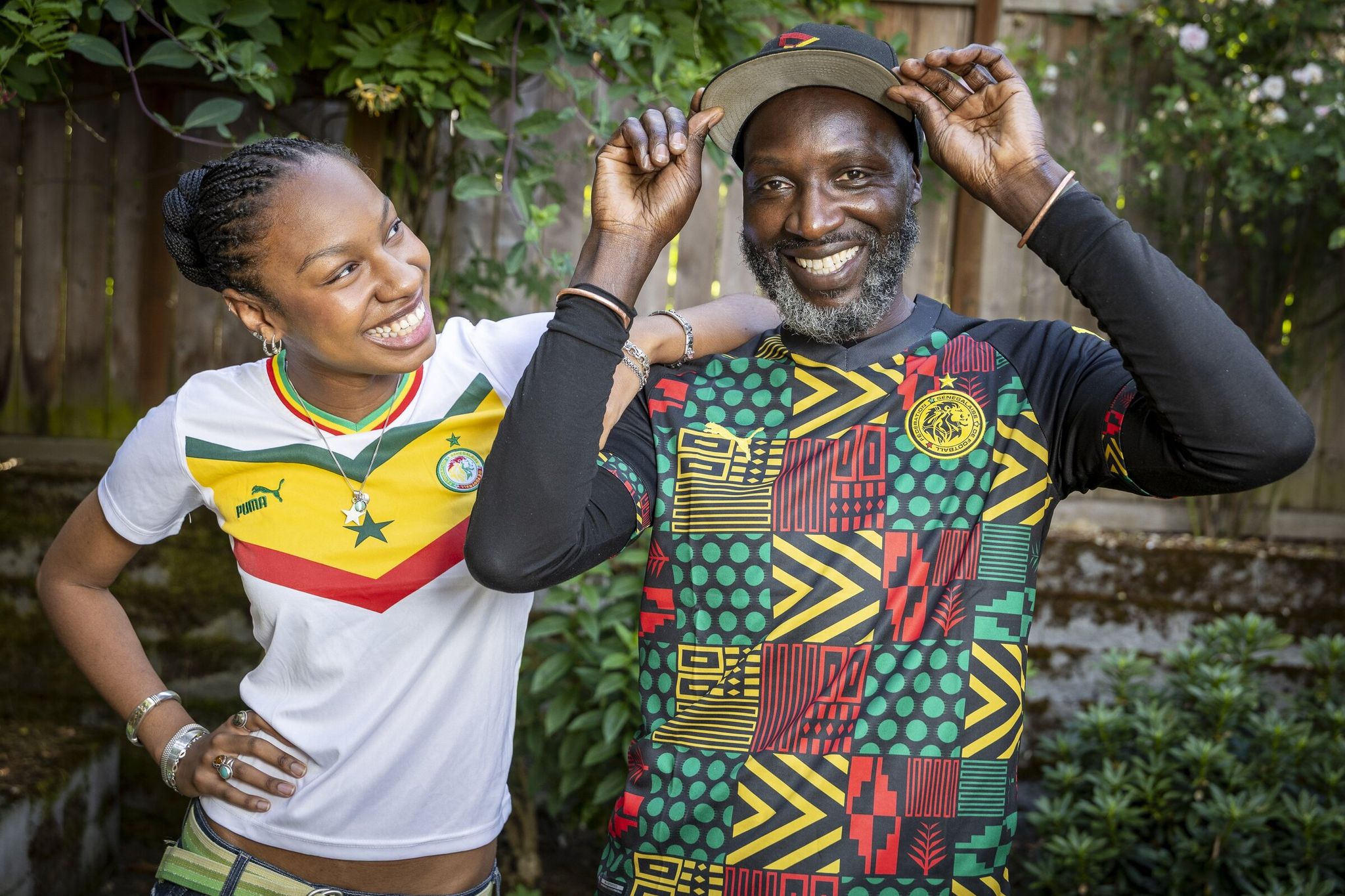
When Senegal’s national team took the field at the stadium in Seattle on Wednesday, they were backed by a small but devoted group of local diaspora representatives dressed in green, yellow, and red—the flag colors. According to the U.S. Census Bureau, the Seattle metro area is home to just over 1,100 people identifying as Senegalese. But because of travel restrictions imposed by the United States on Senegalese citizens, the local community said it would loudly and proudly represent its countrymen by backing the “Lions of Teranga”—the nickname for the national team, referencing the strength of the king of the savanna and the spirit of generosity embedded in the word “teraannga” in Wolof.
As Cheikh Yirime Sek, a Central District artist and Senegalese-American, said in an interview with The Seattle Times: “The moment I found out that Senegal would be playing in Seattle, I knew I had to be there.” He bought tickets for $700 for himself and his daughter, and his siblings—with their families—also came to the city for the match against Belgium. “We need to show up and represent our country and culture. We’re proud of our music, our culture, our heritage, our language—everything,” he said.
For the Senegal team, this is the fourth World Cup; the squad is currently considered “one of the most intriguing outsiders.” Earlier this year, it won the Africa Cup of Nations final against Morocco, but the result was later overturned by a controversial decision from the tournament’s appeal board. Many in the Senegalese diaspora across America traveled to the region: on Monday, a crowd of fans greeted the team at a hotel with songs and music. For those who can’t make it to the stadium, a restaurant called “Taste of Jollof” in Des Moines is hosting a broadcast of the match with traditional West African dishes. But Senegalese fans back home will, for the most part, be unable to attend the stands.
In December, President Donald Trump, as part of large-scale immigration system changes, imposed entry bans on citizens of several countries, including Senegal, Côte d’Ivoire, Iran, and Haiti. While exceptions were made for athletes, staff, and close relatives of players, ordinary fans did not get that option. That has disappointed some members of the team. Team captain Kalidou Koulibaly, speaking to The Athletic, said: “I don’t want to talk about politics, but for me the most important thing is that we play for our people.”
That kind of isolation is especially painful for Senegalese people, where soccer is life, added Mamadou Diahatte, a longtime entrepreneur in Columbia City (Seattle) who grew up in Senegal playing football before going on to play in the Greater Seattle league. “In Senegal, everyone is a coach,” he joked. His son managed to get a ticket for Wednesday, and Diahatte plans to meet up with Senegalese friends to celebrate. He acknowledges that the cost of tickets and travel would always be out of reach for many Senegalese fans, but the Trump administration’s actions have soured the tournament atmosphere: “If the government were a little more tolerant and let people come watch the World Cup and then leave safely, we would probably have seen the greatest World Cup ever organized.” Still, Diahatte is excited to be at the match and to support the team. “This Senegal team can beat any team at this World Cup. I have no doubt about that,” he concluded. For the local diaspora—unable to rely on large-scale support from back home—this match is especially meaningful: a chance to show that even far from home, they remain true to the Lions of Teranga. A full report was published in a Seattle Times article.
Belgium vs. Senegal: Seattle endures a “traffic-jam apocalypse” for the World Cup match
On Wednesday, July 1, Seattle will host a World Cup playoff match for the first time in its history—a meeting between the Belgium and Senegal national teams. In connection with that, the local station FOX 13 Seattle launched a live broadcast with real-time updates on road conditions: street closures, bus and train delays, and general tips for fans trying to get to the stadium. City officials had warned in advance of large-scale traffic breakdowns, and judging from early reports in the blog, those predictions have come true—major thoroughfares have been locked into hours-long gridlock.
A key feature of the event is that, for Seattle, it isn’t just another soccer match, but the city’s first experience hosting a World Cup elimination game. Events like this always put enormous strain on transportation infrastructure, and local services try to reduce inconvenience by communicating with residents in real time. In the stream of updates, there are likely to be details from police, the transit authority, and volunteers—for example, which parking lots are already full, where it’s best to detour around the stadium area, and which light-rail stations are seeing the biggest surge of passengers.
Even though the article itself contains no specific figures or quotes, the “live blog” format inherently means information is continuously added as events unfold. For readers, that means they can plan their route based on the current situation, and for journalists it’s a way to stay on top of what’s happening and capture even small incidents that could affect traffic. A train delay of 20 minutes or a sudden closure of a side roadway—those details become important for thousands of fans rushing to get to the stadium.
From the standpoint of long-term impact, the successful hosting of a match like this and the way traffic is managed is also a pitch from Seattle for even larger tournaments in the future—such as the 2026 World Cup. For now, though, attention is on streets packed with Belgium fans waving red-and-yellow flags and Senegal supporters in green, and on dispatchers doing their best to turn the chaos that’s inevitable into something manageable. The important thing to remember in situations like this is that information is a key resource, and local media provide it nonstop.