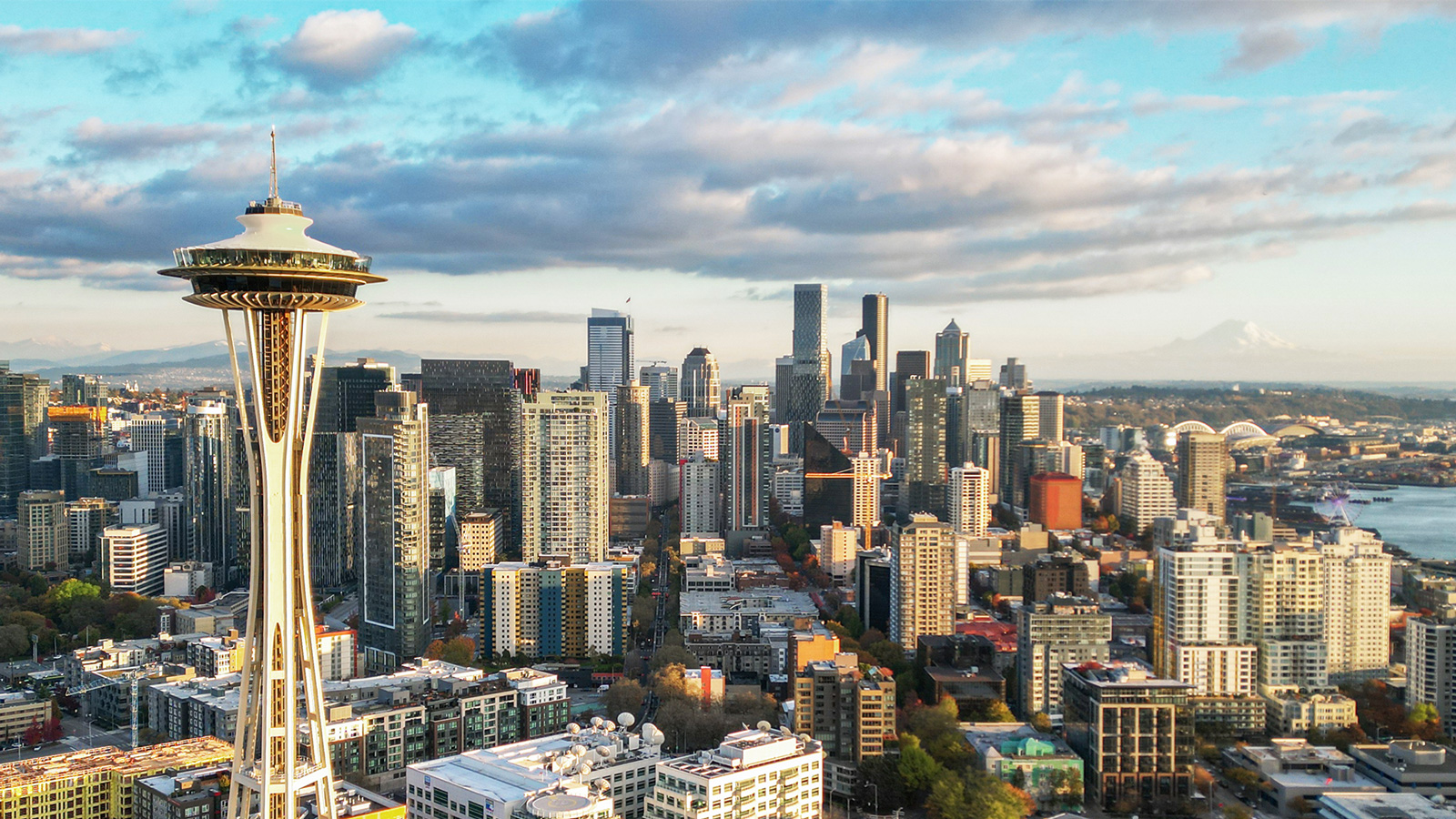
In the roundup: the Seattle Mariners made a move at the deadline—trading for Taylor Ward and Serántoni Domínguez, releasing veterans, and bringing back Brendan Donovan. And over the city itself, smoke from wildfires is moving in, worsening air quality.
The Mariners bet on Ward: how the deadline reshaped Seattle’s lineup
On the day of the MLB trade deadline, the Seattle Mariners finally closed their biggest area of concern. The Washington club traded right-handed outfielder Taylor Ward to the Baltimore Orioles as part of a four-player deal. As The Seattle Times reports, it was the biggest move the team made in the final hours before the trade window closed—an unmistakable signal of intent to fight for a spot in the postseason. At the same time, the Mariners kept Randy Arozarena, who could have left this winter as a free agent, and they did not part with either George Kirby or Emerson Hancock, even though other teams have shown interest in those starting pitchers.
Ward is a figure familiar to Angels fans and, more broadly, to viewers of the West Division of the American League, because the first eight years of his career were spent in Los Angeles. Last winter, he was traded from the Angels to Baltimore for pitcher Grayson Rodriguez. A fun detail: in 2015, the Angels drafted Ward in the first round, when the club’s general manager was the current president of the Mariners, Jerry Dipoto. Now they’ve reunited in Seattle, and the veteran is expected to help the team at the season’s crucial stage. Ward is 32, and after this season he will become a free agent—so this is essentially a short-term rental aimed at this year’s championship run.
Ward’s numbers this season look mixed when you look at them in isolation. In 506 plate appearances for the Orioles, he posted a modest .246 with seven home runs and 20 doubles, while his OPS was .730. His power has indeed dipped—his slugging percentage (.346) is a career low for a full season. But his OBP (.383) is a career best, and his 87 walks—i.e., times he reaches base via a walk—are tops in the American League. For those not deep in baseball stats, here’s what that means: OBP shows how often a player reaches base while accounting for hits, walks, and being hit by pitches. OPS combines OBP with extra-base production. A high OBP paired with low slugging suggests Ward has become a patient, disciplined hitter who rarely swings and misses at bad pitches and keeps putting pressure on opposing pitchers.
What matters more: all season, the Mariners have been one of the league’s worst offenses against left-handed pitchers. Ward is a right-handed hitter, and his numbers versus lefties look strong: .269/.413/.426, for an .839 OPS. For comparison, against right-handers his line is noticeably more modest—.238/.372/.318 and .690 OPS. That is the exact profile Seattle has been looking for, as they’ve long tried to balance their lineup. It’s logical to assume Ward will be used alongside other outfielders and also in a right-field “shortstop”-type role defensively, though with Baltimore he primarily played left field. He can also bat as a designated hitter.
The other side of the trade is parting with three players who likely weren’t close to making the everyday lineup: reliever Alex Hopp and two minor-league pitchers, Brock Moore and Harrison Kreiling. The price looks reasonable for a seasoned rental outfielder. In Seattle, they apparently believe the current roster is already strong enough—and Ward will be the final piece of the puzzle. In addition, the Mariners already made one trade on Saturday, acquiring veteran reliever Serántoni Domínguez from the Chicago White Sox in exchange for Luis Castillo. That was their only other deal during the entire summer window. Domínguez and Ward are expected to be ready by the start of the series against the Detroit Tigers on Tuesday.
However, not all plans came together. The Mariners couldn’t pull off a second trade at the deadline to strengthen the bullpen, even though talks with various teams ran until the window closed at 3:00 p.m. Eastern. This is the second year in a row the club has been unable to fulfill one of its biggest priorities—to acquire a trusted late-inning reliever for high-leverage situations. Domínguez, of course, helps the bullpen, but the depth of the bullpen…
Seattle says goodbye to veterans: Mariners continue roster rebuilding
On the night of Tuesday, the Seattle Mariners announced a series of roster moves that make one thing clear: the team is betting on fresh faces and young players in the fight for a postseason spot. The club officially released veterans—catcher Mitch Garver and outfielder Rob Refsnyder—whose performances this season have fallen short of expectations. These decisions are part of a larger roster rotation tied to the trade deadline and the return of key players to health.
Garver, who is already 35, signed a minor-league contract with the Mariners back in February and appeared in 50 games. During that time, he hit just .175, with four home runs and 15 RBI. For a catcher who was still seen not long ago as one of the league’s most reliable backup options, those numbers were a real letdown. His spot as the backup to starting catcher Cal Raleigh went to 30-year-old Johnny Paredes, called up from the Tacoma farm system. Paredes is already familiar with the big club: in 19 games this season he is hitting .270 with two home runs and four RBI—far more convincing than the veteran who is fading.
Refsnider’s story in Seattle ended even more painfully. After signing a one-year deal in December, he was expected to be a useful role player, but in 53 games his average stalled at .140—with four home runs and 11 RBI. In addition, from late June through late July he was on the injured list with inflammation in his right knee, which finally undermined his position on the team. Now both veterans will hit the free-agent market, where they likely won’t be able to count on guaranteed contracts, but may still get a chance to finish out the season somewhere.
Much better news for fans is the return of Brendan Donovan. The utility player, who made the 2025 All-Star Game roster, was activated from the 10-day injured list. He hadn’t played since May 15 due to a left groin strain. In the 25 games before the injury, Donovan hit .274 with three home runs, four doubles, and eight RBI. His return significantly strengthens the depth, since he can cover multiple infield and outfield positions.
Also addressed ahead of the deadline were the acquisitions. Serántoni Domínguez (a right-handed pitcher) and Taylor Ward (an outfielder) whom the Mariners traded for before Monday’s deadline are already on the active roster and took the field against the Detroit Tigers. Ward, 32, debuted for his new club by batting eighth in the starting order. His numbers this season for the Baltimore Orioles look solid: in 111 games he is hitting .246, with 20 doubles, seven home runs, 30 RBI, and—most impressively—leading the American League with 87 walks. That approach to pitch selection makes him an ideal top-of-the-lineup contributor, capable of constantly creating pressure for opposing pitchers.
Domínguez, meanwhile, is brought in to strengthen the bullpen. In 43 games this season, his ERA is 3.99, and his record is 4–3. This isn’t an elite closer, but he is a dependable innings-eater who should take some burden off the rest of the relievers late in the season. For these two players, Seattle sent prospects Alex Hopp, Brock Moore, and Harrison Kreiling (right-handed pitchers), and it also released outfielder Stuart Fairchild, who was placed on waivers.
In summary, the Mariners are acting decisively and pragmatically. They aren’t afraid to admit mistakes in signings, and they have no hesitation moving on from those who haven’t lived up to expectations. Donovan’s return and the arrival of Ward and Domínguez substantially refresh the roster right in the middle of the fight for the postseason. ESPN’s official site ESPN notes that there were seven roster moves in one day, underscoring how active management has been. If the new core performs as planned, Seattle could deliver a surprise in the fall portion of the season. As for veterans like Garver and Refsnyder, the only thing left is to look for new opportunities—because in modern baseball, age and past accomplishments quickly give way to statistics and fresh energy.
Wildfire smoke blankets Seattle and Portland: what’s happening and why it’s dangerous
The U.S. West Coast is once again in the grip of nature: smoke from dozens of major wildfires burning in eastern Oregon and Washington is moving toward the region’s largest cities. As The Weather Channel reports, in the coming days residents of Seattle, Portland, Tacoma, and Olympia will have to breathe air that experts call unhealthy. The cause isn’t just isolated fires, but a whole complex of blazes that has engulfed a significant portion of the Pacific Northwest: three major fire sites are burning right near Spokane, where the flames have already destroyed hundreds of homes and businesses, and about thirty other major fires are burning in central and eastern Oregon. Fires are also occurring in Idaho, Montana, and Utah, so the situation is truly widespread.
The main reason the smoke will land specifically over Seattle and Portland is an unusual wind direction for summer. Typically, westerly winds blow in from the Pacific Ocean, bringing cleaner ocean air to coastal areas. But right now, an east-to-northeast flow has set in, pushing smoke from the burning east directly westward, toward Interstate 5—the main transportation artery connecting the biggest cities in the Northwest. As a result, the entire corridor from Seattle through Tacoma and Olympia, as well as Oregon’s Willamette Valley—where Portland, Salem, Corvallis, and Eugene are located—will be under a smoke veil for at least until Wednesday. In Boise, the capital of Idaho, the smoke will stay near ground level, and some air streams may even reach Salt Lake City. By Thursday, the westerly winds should return, and the smoke will start moving back east, crossing the Rocky Mountains and by the end of the week blanketing popular tourist destinations such as Yellowstone and Aspen.
Smoke is compounded by another problem—abnormally hot weather. The same weather pattern that has brought smoke to the coast is acting like a heat pump: west of the Cascades, the air is heating up to unusually high values. In Seattle, temperatures could approach 30°C, in Portland 36–37°C, and in some areas from Portland to Eugene, temperatures may hit 38°C or higher. There’s a caveat, though: if the smoke is dense enough, it will intercept some of the sunlight and slightly lower temperatures, as has already happened earlier in the week. In any case, these figures are close to daily record highs for a number of cities, including Seattle, Eugene, and Medford.
Unfortunately, there’s little good news. Summer is the dry season in the Pacific Northwest, so there’s no reason to count on prolonged rains that could help put out the fires. The only relief is a gradual cool-down over the weekend. Next week, however, meteorologists expect monsoon thunderstorms to push far north, all the way to the northern Rockies. That’s a double-edged sword: rain is badly needed right now, but if it falls over areas that have recently burned, even a small downpour can trigger dangerous flash floods and mudslides. What’s more, in some places the storms may bring only lightning and strong winds—not moisture—which is a direct path to new fires.
Safety is another issue that deserves special attention. Wildfire smoke isn’t just an unpleasant smell—it’s a serious health threat. It contains enormous numbers of tiny solid particles, dozens of times thinner than a human hair. Such particles can easily penetrate deep into the lungs and then enter the bloodstream. Even with short exposure, it can cause coughing, shortness of breath, throat irritation, a runny nose, and burning or stinging eyes. With prolonged inhalation of dense smoke, the risk of chronic lung disease increases, and the inflammatory load on the body rises, increasing the likelihood of heart attacks and strokes. That’s why meteorologists strongly advise people to check the air quality index before going outside. Its scale ranges from green, meaning good conditions, to maroon, which is considered dangerous for everyone. If the level reaches at least orange, people with respiratory or heart conditions, older adults, children, and pregnant women should avoid spending extended periods outdoors. At red, purple, or maroon levels, limiting time outside is recommended for everyone without exception: workouts should be moved indoors, and dog walking should be kept to a minimum.
The situation remains dynamic, and residents of the U.S. Northwest should keep a close eye on forecasts. Smoke isn’t just a temporary inconvenience—it’s a real risk factor, especially in combination with the heat. Nature is reminding people of its presence in a harsher way, and this fire season, judging by current signs, is far from over.