An installation called Clouds of Belonging transformed the plaza outside King Street Station, and Seattle’s cream-cheese hot dog was named the best in the U.S. by The New York Times.
“Clouds of Belonging”: How a Vibrant Installation Transformed the Plaza Outside King Street Station in Seattle
If you thought giant multicolored clouds appeared in the plaza outside King Street Station in Seattle, you’re not imagining things. The temporary public installation Clouds of Belonging by StudioPROBA—founded by artist and designer Alex Proba—turned a busy transit hub into a place for meeting up and strolling. The work consists of a system of large, cloud-like forms that don’t just stand as sculptures; they create a pass-through space—visitors can move beneath the arches and between them, choosing their own route. The plaza, spanning about 2,000 to 3,000 square feet and sitting at the edge of Pioneer Square and Chinatown, has taken on a new dimension: now people don’t just pass through—they pause, look around, take photos, and share the experience with one another.
As reported in an article on Seattle.gov, the installation is intended as a response to the layered cultures and the day-to-day rhythm of this bustling place. Proba explains: “I wanted to create a space that reflects this constant flow, where people can slow down, move freely, and feel connected to each other. Inspired by the changing skies and landscapes of the Pacific Northwest, I translated these natural rhythms into color, form, and light. When the city opens its world to the FIFA World Cup, it becomes a moment of unity—where people from different cultures and places gather under the same sky.” The artist hopes visitors will leave with a sense of openness, connection, and joy.
A key feature of Clouds of Belonging is its temporariness. Like real clouds, the installation exists for a limited time: it will rise, change the environment, and then disappear—leaving behind only memories and the conversations that took place around it. This deliberate decision underscores the idea that belonging is not a static state, but a process we create together, in motion and in conversation. At night, the lighting turns the clouds into a constellation of softly glowing forms visible from nearby streets, sidewalks, and train platforms—making the sculpture a landmark for travelers and a meeting spot after sunset.
There aren’t complex concepts to unpack in the installation’s description, but it’s worth paying attention to the metaphor of “belonging as a shared path.” Proba doesn’t impose a single meaning: viewers decide for themselves how to interact with the objects—walk through the clouds, stop beneath them, or simply watch from a distance. It’s this freedom of choice that turns an abstract idea of belonging into a real, physical experience.
Key details: the installation spans 2,000–3,000 square feet and was created in collaboration with local producer Skywater Studios. The materials used convey softness and lightness, and the colors reference the sky over Puget Sound and the surrounding mountains. The most striking quote is Proba’s idea that even short shared moments can change how people see a place—and each other. The project goes beyond art: ahead of the 2026 FIFA World Cup, the installation serves as a symbol of unity for visitors to the city from around the world. It also highlights the growing role of temporary public art in modern cities—allowing public space to be transformed quickly and without major capital costs, creating an emotional response in both residents and visitors.
Seattle’s Hot Dog Named the Best in the U.S. by The New York Times
The New York Times—more specifically, its review unit Wirecutter—ran an unusual tournament. Eight regional hot dogs from different U.S. cities faced off in a “hot showdown.” To everyone’s surprise, the winner was a Seattle hot dog: an unassuming street snack with melted cream cheese, caramelized onions, and spicy add-ons. In the final, it even beat the famous Chicago and New York versions—much to the surprise of the tasters themselves. The Seattle Times reports on this win and what makes the Seattle hot dog different from all the others.
Seattle has long been associated with coffee, craft beer, and rock music, but not with hot dogs. Yet it’s precisely this street food from the Pioneer Square shop—created by vendor Hadley Long back in the 1980s—that now has national recognition. Eight versions were tested, ranging from the classic New York style with onion sauce and sauerkraut to the Chicago hot dog with bright green relish, sport peppers, and celery salt, as well as Cincinnati-style with cheese, Detroit’s “Coney,” Kansas City’s reuben, Arizona’s Sonoran with bacon and avocado, and West Virginia’s version with the famous. The judges included food writer Kathleen Squires, food blogger Katy Quinn, and the celebrity chef José Andrés, founder of World Central Kitchen.
The key ingredient that decided the outcome was cream cheese. As José Andrés noted in a video, “cream cheese acts like a diplomat: it softens the sweetness of caramelized onions, pairs with mustard and jalapeño, and brings everything together into a harmonious whole.” That ability to balance flavors and textures—smoky sausage, crisp peppers, the sweetness of onions—is what brought the Seattle hot dog its final win over the Cincinnati version piled with cheese. In the semifinal, it dominated Kansas City’s “reuben” 3–0. Meanwhile, West Virginia’s slaw dog lost unanimously due to a cabbage slaw flavor that was too dominant.
The win was unexpected even for the lead judge—Katy Quinn admitted: “Seattle, known more for coffee and beer, came out of left field.” But it was exactly the simplicity and originality that did the trick. For Seattle residents, it’s a great reason to be proud ahead of Independence Day and the Fourth of July. The article notes that the version judged by the panel was “deluxe”: a beef sausage, caramelized onions, sriracha, jalapeños, and spicy brown mustard. That recipe can now confidently be called a national treasure.
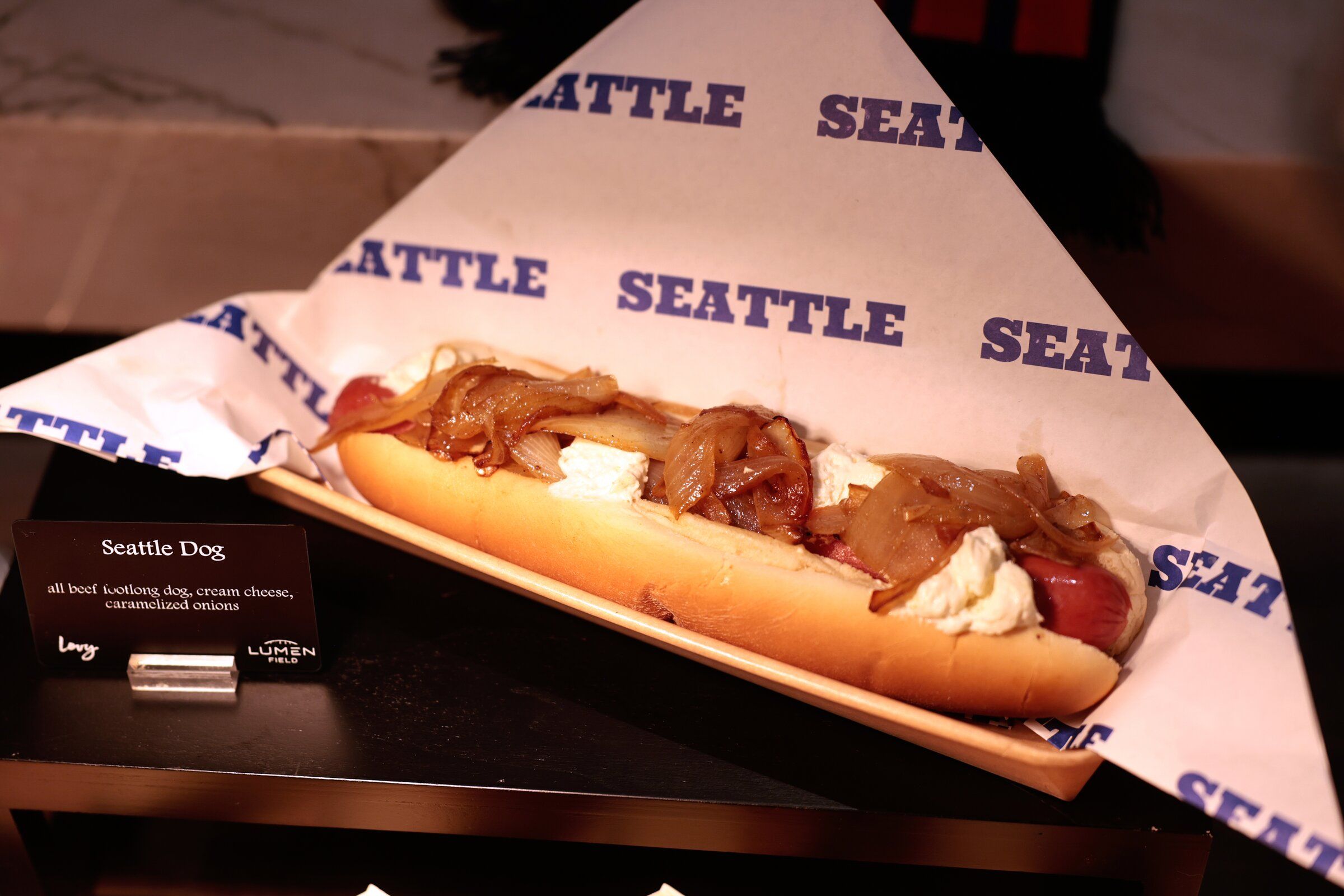
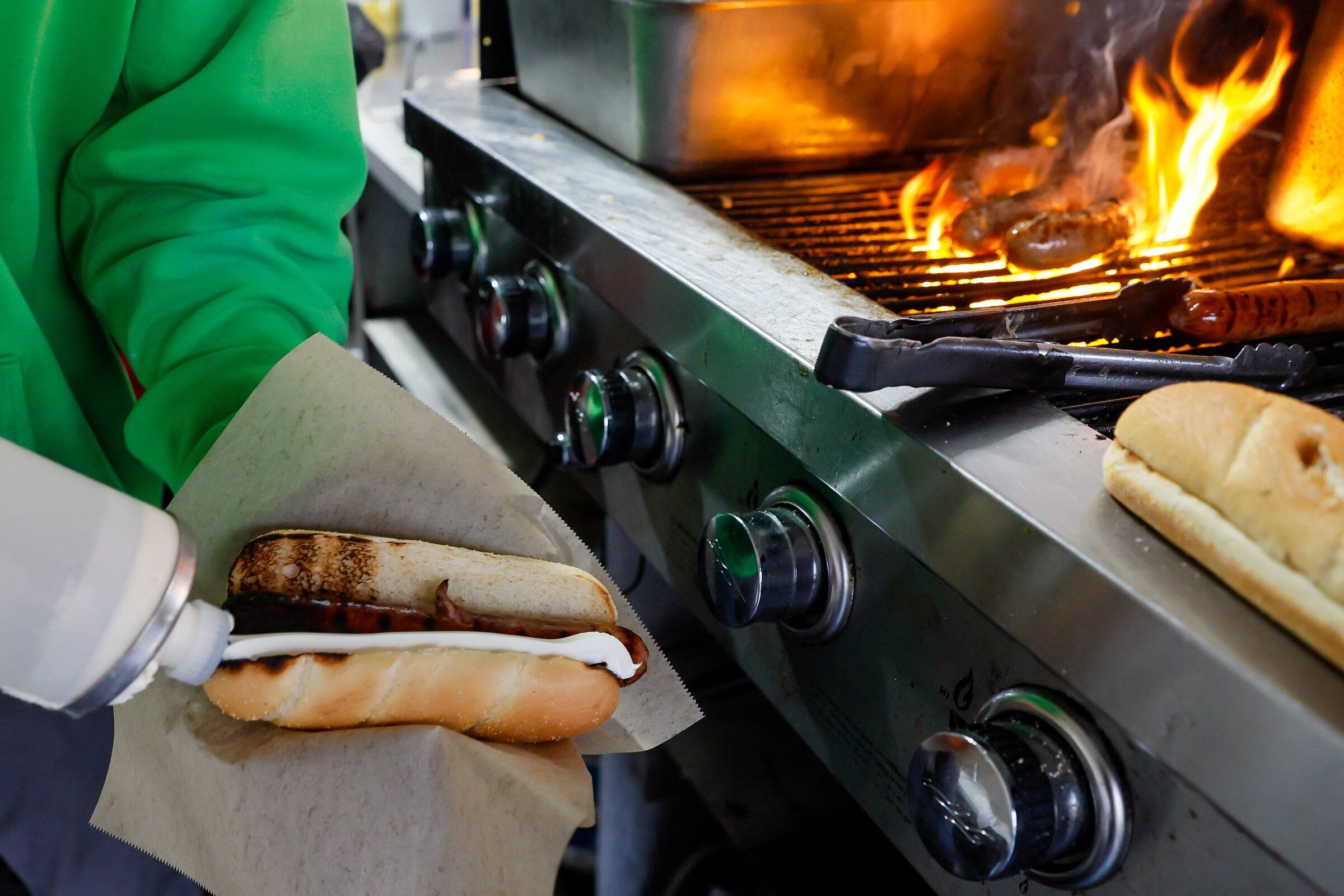
So what exactly is a “Seattle hot dog”? It’s a standard beef sausage in a bun, but with an unusual topping: cream cheese (usually spread on the bun) and caramelized onions. Sometimes ketchup, mustard, or fried peppers are added. This combination emerged in the 1980s at Hadley Long’s stand and quickly became a symbol of Seattle street food. For those who haven’t tried it: the flavor is rich and greasy, but balanced—because the cream cheese doesn’t overpower; instead, it brings together the sweetness and the heat.
Bottom line: in the U.S., regional hot dogs are true culinary calling cards for cities. And while the Seattle surprise may have caught many off guard, it earned its title as “the best” in this unofficial ranking. Next time you order a hot dog from a stand, it’s worth remembering that even a simple snack can become a source of pride for an entire city.
Source: The Seattle Times
Seattle’s Hot Dog Named the Best in America by The New York Times
Ahead of the 250th anniversary of U.S. independence, The New York Times Wirecutter conducted an unusual but extremely important study for food lovers: a panel of experts led by celebrity chef José Andrés (founder of World Central Kitchen) compared eight regional hot dog styles to determine the tastiest. The winner—unanimously—was the Seattle hot dog: a street-food classic that, according to the judges, perfectly balances the sweetness of caramelized onions, the bite of mustard, and the freshness of jalapeños. The ranking sparked lively discussion on social media, because the hot dog is one of the main symbols of American cuisine—especially on Independence Day.
The Seattle version packed a lineup of unexpected ingredients: a potato bun, cream cheese, a beef sausage crisped up in a pan, caramelized onions, jalapeño peppers, hot mustard, and sriracha sauce. In the final, it beat the Cincinnati hot dog (with chili and cheddar cheese) 2–1. As José Andrés put it, cream cheese in this combination works like a “diplomat,” uniting all the flavors. By the way, his colleague Katy Quinn joked that this hot dog is “almost like José Andrés in the world of hot dogs.” The chef seemed flustered to receive the compliment.
Other competitors included the New York style (with sauerkraut), the Chicago style (with pickles and celery salt), Detroit’s coney dog (with meat sauce), West Virginia’s (with slaw), Kansas City’s Rubin (with sauerkraut and Swiss cheese), and Arizona’s Sonoran (with bacon and avocado). Each has its own story and devoted fans, but it was the Seattle hot dog that won over the judges with its unusual flavor profile.
Some readers may be surprised by the use of cream cheese in a hot dog—it really is atypical for most American regions. However, that combination was born in Seattle back in the 1980s, when street vendors began adding cheese to soften the heat. Over time, the recipe became a cult local brand. As noted by USA Today writer Zachary Fletcher, the results of this ranking highlight just how diverse American street food is: the hot dog stopped being just a sausage in a bun and became a reflection of local food culture.
The article also mentions that the study was conducted in a “bracket” format—a knockout-style playoff in which each style faced another. Seattle advanced confidently in the first round against West Virginia, then beat Kansas City, and in the final defeated Cincinnati. Experts unanimously agreed that the secret to its success was cream cheese’s ability to “make peace” among sweetness, tang, and heat. This idea could inspire cooks around the world to experiment with contrasts in texture and flavor.
Overall, the ranking story isn’t just a fun summer talking point. It shows how regional identity is expressed through food—and how even a simple street snack can become a matter of national pride. For Seattle residents, it’s another reason to be proud of their city, and for everyone else, it’s a chance to try something new on Independence Day. In his USA Today blog, the author reminds readers that a hot dog is a canvas on which each region paints its own flavor.