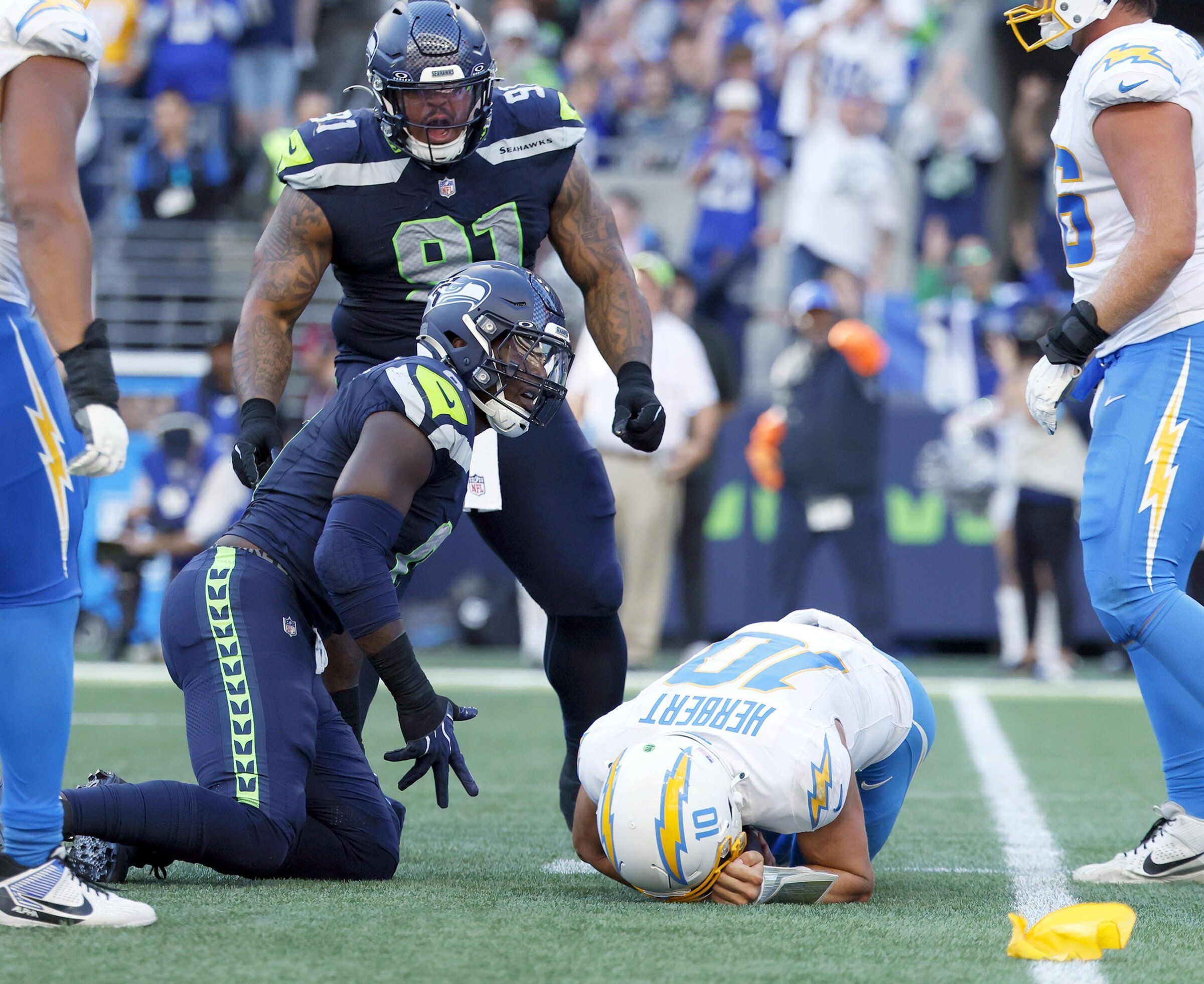
Seattle is introducing the first U.S. ban on “surveillance” AI pricing in major supermarkets, experiencing its coldest September since 2007 and a record-low number of rainy days, while the Seahawks defeat the Chargers 30–23 and set a club record for penalties with 150 penalty yards.
Seattle Bans Price “Surveillance”: New Law Targets AI Pricing in Supermarkets
Seattle has taken a step that could prove pivotal for retail across the United States. Mayor Katie Wilson signed an ordinance prohibiting major grocery chains from using shoppers’ personal data and artificial intelligence algorithms to set individualized prices. The move, described as the first of its kind nationwide, has sparked heated debate among consumer advocates, unions and representatives of big business, who warn of possible negative consequences for shoppers’ wallets.
The Seattle City Council approved the measure, titled the “Fair and Transparent Pricing Ordinance,” by a vote of seven to two. As KOMO News reports, Mayor Wilson was expected to sign it Monday, after which the law would take effect. The main goal of the measure is to protect shoppers from a practice often called “surveillance pricing.” It involves stores using data about a person’s race, gender, employment status, online purchase history or even the contents of conversations with chatbots to determine the maximum price that individual is willing to pay. Major chains with at least 20 locations worldwide will now be barred from setting prices based on such personal details. The rules apply to brick-and-mortar stores as well as online platforms and delivery services.
City Councilmember Alexis Mercedes Rink, who worked on the bill with the mayor, explained why it was necessary amid cuts to the Supplemental Nutrition Assistance Program (SNAP), which have hit the most vulnerable residents. Speaking to reporters, she said the measure was intended to “put at least some guardrails on what big business can do with our personal information.” At a time when people are being forced to cut back on food, she said, the move was important to prevent “AI-powered price gouging” and ensure fair discounts for everyone. Traditional customer incentives, such as publicly available coupons, seasonal sales and discounts for seniors or veterans, remain permitted. Stores must also clearly publish prices available to all customers without exception.
The radical step followed investigative reports published in 2025. They uncovered significant price differences for the same products among different shoppers. One report described a Safeway supermarket in South Seattle where several people using the same shopping app at the same time saw a price difference of up to 23% for the same item. Such examples prompted UFCW 3000, the union representing grocery workers in Washington, to strongly support the initiative. Union representative Rich Smith said it was “super important because we’re being squeezed from all sides: gas is getting more expensive, rent is rising, and prices on everything are increasing for many reasons.” In his view, the law is needed to stop “surveillance pricing” and require stores to display uniform and fair prices.
The measure also has powerful opponents. Amanda Dalton, president and CEO of the Northwest Grocery Retail Association, warned that consumers themselves would suffer if the law was flawed. She said that “people are the only ones who lose if we get this wrong,” and that “Seattle families will feel the risk first if this untested policy leads to fewer coupons, discounts and personalized savings.” Retailers are particularly concerned about the fate of loyalty programs, which could simply disappear within the city. Safeway representatives said they strongly disagreed with the City Council’s decision because the company does not engage in the practices prohibited by the ordinance. They said using customer data is necessary to provide digital coupons and special member prices, and that the new law could deprive Seattle residents of these important ways to save.
Even within the City Council, opinions were divided. Councilmember Maritza Rivera, who voted against the measure, supported banning price increases based on personal data but worried that the ordinance in its current form could discourage stores from offering discounts altogether. For many Seattle residents, including regular shopper Rachel Marquoya, coupons and loyalty programs are important factors when choosing products. She said she often chooses a particular brand precisely because she sees it on sale. Unions, meanwhile, do not plan to stop there and intend to promote similar rules at the state level. UFCW 3000 Secretary-Treasurer Shaun Embly expressed hope that passage of the law would help shift the focus back to “feeding our communities, not feeding Wall Street’s greed.” The new law will not affect small grocery stores, convenience stores or farmers markets.
To better understand what is happening, it is worth examining several key concepts. The term “surveillance pricing” describes a situation in which algorithms collect a user’s digital trail—from geolocation to purchase history and social-media likes—and use it to predict the maximum price that person is willing to pay. This is not simply a discount for a loyal customer, but a hidden markup for someone whom AI considers less price-sensitive or trapped in a difficult situation. In this context, “loyalty programs” are not merely discount cards but sophisticated data-collection systems that allow retailers to segment their audiences. Retailers insist that they use this data exclusively to provide discounts, not to raise prices. Investigations, however, have shown that the line between a “personalized offer” and “a higher price for a specific person” can be very thin. Seattle’s law attempts to draw a clear line: data may be used to offer a discount, but not to secretly raise the price. The central unanswered question is how city authorities will monitor compliance and whether the fight for fairness will leave shoppers without familiar benefits while major chains simply leave the city.
Seattle Enters October With Dry Weather After an Unusually Cold September
Seattle has just experienced an unusually cool September—the coldest in years—and is now entering October without its usual rain. Meteorologists are forecasting several dry, mild days before precipitation returns. The contrast between temperature and moisture is making the start of autumn in the region particularly unusual, while the year’s statistics are already breaking historical records.
The first month of fall was colder than usual in Seattle, with an average temperature of 60.4 degrees Fahrenheit—more than two degrees below normal. It was the coldest September since 2007, according to Yahoo News. Despite the cool temperatures, however, there was surprisingly little rain. During the first nine months of 2024, the city recorded just 80 days with measurable precipitation—a record low that surpassed the previous mark of 82 days, set last year and in 1979. Seattle normally has about 105 rainy days by this point, so this year is running well below the climatic average.
October is also beginning with dry weather. Several more dry and mild days are expected this week, with the first potential rain arriving Friday or Saturday. That gives the city a chance to extend its rain-free period—but how long could it last? The historical record is 23 consecutive dry days, set in 1986. October is highly variable in Seattle: the driest October, in 1987, brought just 0.31 inches of precipitation, while the wettest, in 2016, brought more than 10 inches of rain. The range shows how dramatically the month can shift conditions in either direction.
For Seattle residents, this means they can enjoy the sunshine for now, but should not let their guard down. Historically, October can deliver surprises very quickly. In the broader climate context, the unusually low number of rainy days this year may point to a dry trend, with records being set for the second consecutive year. If October remains dry, it could worsen pressure on water resources and affect the region’s ecosystems, although the short-term forecast is not currently alarming. In any case, watching Seattle’s weather this year is especially interesting: a city known for rain is displaying an uncharacteristic dryness against a backdrop of cool temperatures.
“A Game That Defies Logic”: Seahawks Beat Chargers Despite Penalty Record
Sometimes a football game becomes something between a thriller and a comedy of absurdity. That is exactly what happened in Seattle, where the Seahawks hosted the Los Angeles Chargers. The game began with back-to-back interceptions on the first two plays—something that had not happened since 1978, according to ESPN—and then turned into a parade of flags that nearly cost the home team the victory. The Seahawks ultimately held on for a 30–23 win, but the aftermath was unpleasant enough that head coach Mike Macdonald made no effort to hide his frustration.
The story at Lumen Field unfolded from the opening seconds. Justin Herbert threw an interception to Drake Thomas, and on the very next snap Sam Darnold repeated the feat, throwing into the hands of Chargers defender Tuli Tuipulotu. That start set the tone for a nervous, chaotic game filled with mistakes. But the main storyline was not the interceptions—it was the penalties. The Chargers were flagged 16 times for 130 yards, while the Seahawks committed 14 penalties for 150 yards. Seattle’s 150 penalty yards were a franchise record for a single game, while its 14 flags ranked sixth in team history. The total of 30 penalties was the second-highest in franchise history. Seven were personal fouls, and those nearly turned the game around.
“We left the field on defense a lot of times, and we got penalties, so it’s pretty clear,” Macdonald said. “That’s not how we’re going to do business. That’s not how we’re going to play. It’s unacceptable.” His comments were reported by The Seattle Times. Five defensive personal fouls were particularly costly, extending the Chargers’ drives. Nick Emmanwori was flagged for a headbutt after the whistle, allowing the Chargers to kick a field goal late in the first half. Roughing-the-passer penalties by Derick Hall and DeMarcus Lawrence revived an 85-yard, 16-play drive that cut the lead to 30–20. Hall’s flag came on third-and-24, while Lawrence’s came on second-and-17. These were not merely mistakes—they were gifts.
A “personal foul” in American football is a penalty involving unnecessary roughness, unsportsmanlike conduct or dangerous play, such as a headbutt, a late shove or roughing the passer. It automatically awards the opponent 15 yards and often a first down, which in the NFL can effectively extend an offense’s life. That is why Macdonald divided penalties into “the cost of doing business” and “self-inflicted” penalties. The former result from an aggressive style; the latter reflect a loss of control. In this game, there were far too many of the second kind.
“We thought a few calls didn’t go our way,” Uchenna Nwosu admitted. “We disagreed with some of the whistles, and emotions got the best of us.” Macdonald responded: “Seven personal fouls is unacceptable at any level, no matter how you slice it. That’s not us, and that’s not how we’re going to play football.” Linebacker Ernest Jones IV agreed, saying the team felt “collectively pissed off.” “You can’t extend drives for teams in this league, and we did it a lot today. Tomorrow we’ll go through it defensively and fix it by next week.”
Despite the chaos, the Seahawks improved to 3–1 and for a long time looked like a team that would close out the game comfortably. After Darnold’s interception, they committed no more turnovers, while forcing four Chargers turnovers—three in the first half. Seattle converted two of them into touchdowns: a fumble recovery on a punt by Connor O’Toole and Jones’ interception. The Seahawks led 20–6 at halftime. Emmanuel Wilson scored two touchdowns in his first start at running back, replacing injured first-round pick Jadairian Price. First, Wilson caught a 23-yard screen pass, then he ran for eight yards. “He put his head down and ran like a damn animal,” right tackle Abraham Lucas said. Wilson finished with 81 yards on 21 carries and three catches for 39 yards. Receiver Rashid Shaheed added another first-half touchdown on a 28-yard run out of the backfield. Early in the third quarter, Darnold found Tory Horton for a six-yard touchdown, making it 27–6. It appeared safe to relax.
But from that point, the penalties began their destructive work. Personal fouls on Devon Witherspoon and Emmanwori extended an 81-yard Chargers drive that cut the deficit to 27–13. After Jason Myers’ field goal made it 30–13, flags on Lawrence and Hall helped the Chargers make it 30–20. The Seahawks then failed to move the ball, while the Chargers drove from their own 7-yard line to Seattle’s 19, helped in part by Herbert’s 44-yard pass on fourth-and-seven. Los Angeles chose a field goal with 2:14 remaining, cutting the lead to 30–23 and attempting to get the ball back. They did: Darnold was sacked twice on the next drive. The Chargers eventually had the ball at their own 11 with 1:42 remaining. It was a long way to go, but given everything that had happened, anything seemed possible.
The ending came courtesy of Nwosu, who slipped past backup left tackle Logan Taylor, reached Herbert and forced a fumble. Derick Hall recovered at the Los Angeles 10-yard line with 54 seconds remaining. “We have to stick together,” Macdonald said. “As frustrated as we are, we have to go win the football game. Uchenna Nwosu got the game ball for closing out the game. That was great.” The coach also provided an encouraging update on Leonard Williams’ knee injury in the fourth quarter: it was not serious, though the player will undergo additional testing.
The victory came at a high price for the Seahawks—not so much physically as reputationally. Next up are the undefeated San Francisco 49ers, who are 4–0. It will be an early test of Seattle’s strength in the NFC, and if the penalties remain at this level, no amount of talent will be enough. “We have a big week ahead, and the guys are excited,” Macdonald said. The players did not disagree. “It’s a lesson, even though we won,” Emmanwori said. “It’s hard to win in the NFL. It was a good lesson and a good message. We’ll keep moving forward.”
The key takeaway from this game is simple: talent and roster depth allow the Seahawks to win even amid chaos, but that style will not work in the playoffs. Penalties are not merely a loss of yards; they represent a loss of control over the game and a failure to respect discipline. Macdonald made clear that the next 24 to 48 hours would be devoted to a “thorough, not superficial” review of the violations. That may be the most important statement made after the game. If the team cannot correct this “self-inflicted” problem, the next meeting with the 49ers could end very differently.