Top news of the week: the return of Bite of Seattle with hundreds of food trucks and cultural events, a seaplane crash off Seattle in which all 11 people miraculously survived, and a major police raid targeting human trafficking on the notorious Aurora Avenue.
Bite of Seattle food festival returns: how to spend a packed weekend in Seattle
Summer in Seattle is in full swing, and after the first wave of heat, residents can look forward to a perfect weekend for getting outside and staying active. The main gastronomic event will be the return of Bite of Seattle at the Seattle Center grounds. From July 19 to 21, more than 300 food and merchandise vendors will come together, along with 50 music groups—plus beer and wine tents. According to the organizers, the festival will let attendees try dishes from around the world without spending time cooking. In addition to the main festival, on Saturday from 11:00 a.m. to 4:00 p.m. in Chinatown, there will be a CID Food Walk, where you can sample food at special prices—$6 or $8. As noted in a MyNorthwest article, it’s a great way to find a new favorite lunch spot.
Beyond food, the weekend features extensive cultural programming. Seafair keeps building momentum: on Saturday, the famous Torchlight Parade will take place along the Alaska Way waterfront. Starting at 1:00 p.m., interactive activities will be held at various piers—wall painting at Pier 58, “interactive love notes” and a beer garden at Pier 62, along with live music. The parade itself begins at 7:30 p.m., and beforehand, at 6:30 p.m., you can take part in the Torchlight Run. Free ice cream from Seattle Pops is also promised before the parade gets underway. For art lovers, there are two fairs to check out right away: the Seattle Art Fair at the Lumen Field Event Center stadium (tickets are sold; kids under 12 are free) and the Bellevue Arts Fair Weekend in downtown Bellevue, featuring more than 300 artists, live music, and family-friendly workshops.
The Washington Midsummer Renaissance Fair (Washington Midsummer Renaissance Fair) deserves special mention—it runs through mid-August. This weekend they’re celebrating the “Feast of Fools,” dedicated to court jesters—expect plenty of antics and fun across seven stages with traveling musicians and interactive areas. For those who prefer outdoor cinema, free screenings are happening in Seattle and Tacoma. At the Seattle Center, on Fridays after sunset, they’re showing “Wonka” (the prequel about Willy Wonka). In Tacoma, at Meridian Park, the Friday screening is the animated “Lilo & Stitch,” and at Kala Anderson Park you can see the cult classic “The Rocky Horror Picture Show.” In Kirkland, there’s a double feature on Saturday starting at 6:00 p.m.—“The Wild Robot” and “Superman.” Finally, at Volunteer Park, a Seattle outdoor theater festival starts Saturday at 10:00 a.m., with 13 local theaters staging 21 free performances across three stages.
The article’s author invites readers to share their impressions of summer entertainment by email. In this way, the upcoming weekend promises to be lively and varied—from food and parades to art and theater—reflecting Seattle’s rich cultural life during peak season.
All 11 survived in a seaplane crash off the Seattle coast—an incredible stroke of luck after a fire
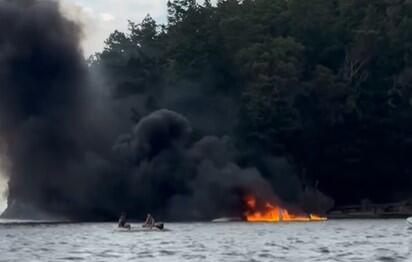
On the evening of July 23, a serious aviation incident occurred in Puget Sound waters north of Seattle: a seaplane from Kenmore Air, operating a flight from Seattle to Roche Harbor in the San Juan Islands, went down into the water and caught fire. There were 10 passengers and a pilot on board. According to authorities, all 11 people survived, although they suffered injuries of varying severity—from fractures and cuts to traumatic brain injuries. One injured person is in critical condition. Such a low death toll in a crash followed by a fire can be considered a true miracle. Video filmed by eyewitness Monica Scott shows the aircraft literally wobbling over the water just a few feet above the surface, then striking and immediately being engulfed in flames. Footage later published by the Coast Guard shows the burning plane on the water. Emergency responders—Coast Guard, local rescuers, and three medical helicopters—arrived quickly in the area of Shallow Bay, northwest of Sucia Island, which is part of Washington state’s Olympic National Park. Everyone on board was rescued from the water. Kenmore Air, calling itself the largest seaplane operator in the United States, has already said it will not speculate about the cause of the crash until the investigation is complete, and that it is fully cooperating with investigators.
To understand the scale of the incident, it’s important to clarify that seaplanes (or seacraft) are aircraft capable of taking off from and landing on water. In this case, the model was a de Havilland DHC-3 Otter—an early single-engine monoplane developed in Canada back in the 1950s, but still widely used to transport passengers and cargo in remote regions, including Alaska and the Pacific coast. These aircraft are often used for tourist and transportation flights between the many islands of the San Juan archipelago, separated by straits and fjords. In a CBS News report, the incident is said to have occurred in an area where the border with Canada is very close, and Shallow Bay itself lies along the northwestern edge of Sucia Island—a popular spot for boating. At the same time, it’s important to understand that although the plane caught fire, the passengers managed to get off the aircraft before the flames fully consumed the structure; most likely, the evacuation was carried out instantly, helped by the low altitude and the speed at the moment of impact. As noted by the San Juan County sheriff’s office, all of the injured were rescued from the water—meaning they likely made it out themselves rather than waiting for rescue vessels to arrive. The fact that one passenger is in critical condition (likely severe chest injuries or internal bleeding) suggests the impact was still serious, but that rescuers responded with maximum efficiency. Kenmore Air President David Gadgel emphasized that the company will not speculate about the cause of the crash; however, the published video shows that before touching the water, the plane was losing stability—possibly due to engine failure or a partial loss of control.
It’s also important to note that this flight was not operating as a charter or tourist service, but on a regular route—from the international airport in Seattle (likely from the terminal on Lake Washington) to Roche Harbor, a popular marina on San Juan Island. As stated in the CBS News article, besides seaplane service, Kenmore Air also operates land-based aircraft under the Kenmore Air Express brand, but seaplanes make up the core of its business. There is currently no official information about maintenance on the specific aircraft, weather conditions, or the pilot’s actions. But even without that, one thing is clear: none of the 11 people died—an exceptionally rare outcome for a crash followed by a fire. Usually, incidents like this (especially involving a de Havilland DHC-3) end far more tragically, because an aluminum fuselage breaks down quickly and fuel spills into the water. It appears the crew acted professionally, and the passengers did not panic. For Washington residents and the tourism industry alike, the incident will serve as another reminder of the risks associated with flights over water—and, at the same time, of the courage of the rescuers. Kenmore Air itself has already promised to publish verified information as soon as it becomes available.
“Operation Circuit Breaker”: Seattle police conducted a raid on Aurora Avenue
The Seattle Police Department, along with federal and local partners, carried out a two-day operation against human trafficking and violence on the notorious Aurora Avenue. According to FOX 13 Seattle, during the operation codenamed “Operation Circuit Breaker,” law enforcement was able to make contact with 60 people working in the sex industry, ten of whom agreed to accept assistance from support services. Particular emphasis was placed on protecting minors: three teenagers were removed from this dangerous area. Two were returned to their parents or guardians, and one, who had an arrest warrant, was turned over to juvenile services. In addition, four people were arrested, suspected of serving as pimps or buyers of sexual services.
The raid took place on June 11 and 14 alongside another major operation, “Red Card,” timed with the World Cup and aimed at arresting dangerous criminals who were wanted. Deputy Police Chief Andres Sayles said Aurora Avenue—long referred to by locals as “The Blade”—never stops activity. “This happens 24 hours a day, seven days a week,” he emphasized, adding that officers have to account for the constant threat posed by criminal groups that control sex-industry workers. During the operation, many pimps and their victims chose to leave the area, feeling the increased presence of law enforcement.
Federal agencies also contributed. An ICE (Homeland Security Investigations) representative, Jason Chudi, said their agents specializing in human trafficking, along with the Child Exploitation Investigations (ICE) or the Crimes Against Children (ICAC) unit, rescued five more victims and arrested four suspects. In turn, the FBI Seattle office said that between June 8 and July 19, as part of nationwide initiatives related to the World Cup, more than 100 operations were conducted involving more than 130 federal, state, and local partners. The bureau will continue gathering information and working with authorities to combat human trafficking in Washington state even after the active phase of the raids ends.
Seattle police’s cyber unit also didn’t sit idle: it monitored the internet to identify online activity related to human trafficking. The Port of Seattle administration, meanwhile, focused on training staff to recognize trafficking victims and informing them where to go for help. Residents and business owners on Aurora Avenue are still waiting for long-term solutions to safety problems. As Deputy Chief Sayles assured, enforcement efforts and social work will continue not only on Aurora Avenue itself, but across Seattle.