In Seattle, the Seahawks are losing key players ahead of their game against Arizona, the city is allocating $125,000 to support LGBTQ+ organizations, and Elliott Bay Book Company legend Rick Simonson is celebrating 50 years on the job.
Seahawks on a Downward Spiral: Final Week 9 Injury Report Paints a Grim Picture
Seattle seems to be cursed in the 2026 season, and that’s no longer just a figure of speech. The latest final injury report ahead of the Week 9 game against the Arizona Cardinals is so bleak that Seahawks fans can only throw up their hands in despair. Several key players are sidelined, and taken together, their absences look like a death sentence for a team already teetering on the edge of playoff contention.
The most telling case is that of recently acquired left guard Quenton Nelson. Before being traded from the Indianapolis Colts, he hadn’t missed a game since 2021. Now, however, a knee issue will force him to miss his second game as a Seahawk. According to 12th Man Rising, the team says Nelson underwent a “minor” knee procedure before he was traded from Indianapolis. But the fact remains: a key newcomer to the offensive line isn’t available.
Nelson is far from the only loss. Leonard Williams, Uchenna Nwosu, Charles Cross, Sam Darnold, Rashid Shaheed and backup nose tackle Brandon Pili are all listed as out. In football terms, the Seahawks are without their starting quarterback, new left guard, best defensive lineman, left tackle, arguably their most versatile edge rusher, and their best kick and punt returner. In other words, this is a list of Pro Bowl-caliber players, and their absence could prove too much to overcome even against the Cardinals.
The context makes the situation even more worrying. Arizona hasn’t beaten Seattle since 2021, but this may be the Cardinals’ best chance in half a decade to break that streak. Mike Macdonald’s team looks to be fading and is headed straight toward missing the playoffs. If the Seahawks were playing an opponent like the San Francisco 49ers or the Chicago Bears, a loss by at least two touchdowns would be expected. But against a fired-up Arizona team that smells blood, Seattle could lose by ten points or more.
A 4–5 record after Week 9 looks not just realistic, but almost inevitable. Next, the Seahawks face an improved Las Vegas Raiders team in Week 10, followed by a bye week. By the time they return to action, they could well be 4–6. In that situation, talk of the playoffs and the trade deadline becomes pointless—there seems to be no way to save this team. The only sensible thing left is to look ahead to 2027, when roster changes are inevitable and an offensive coordinator change is also possible.
If the Seahawks do beat the Cardinals—one of the league’s worst-run organizations—with a roster this battered, it will be a genuine miracle. For now, though, the reality is that Seattle’s season is rapidly turning into a fight for survival rather than a push for a playoff berth.
To better understand the scale of the problem, it’s worth explaining a few terms. A nose tackle is a defensive player lined up directly opposite the center, tasked with disrupting the interior of the offensive line. An edge rusher is a defensive player whose job is to pressure the quarterback from the edge of the line. A kick and punt returner catches the ball after an opponent’s kick and tries to advance it as far as possible. All these positions are critically important in today’s NFL, and losing several players of this caliber is almost certain to affect the outcome.
The key takeaway from the report is clear: the Seahawks are in a position where one week could determine the fate of their entire season. The numbers speak for themselves—six starters and one backup are unavailable, including the quarterback and the team’s best defensive lineman. A quote from the article captures the mood exactly: “As far as final weekly injury reports go, Week 9 is about as bad as it gets for the Seahawks.” The consequences won’t be long in coming: if Seattle loses to Arizona, talk of a rebuild and a change at offensive coordinator will no longer be speculation, but a plan for the near future.
Seattle Directs Funds to Those Who Know Their Communities: How the City Supports LGBTQ+ Residents
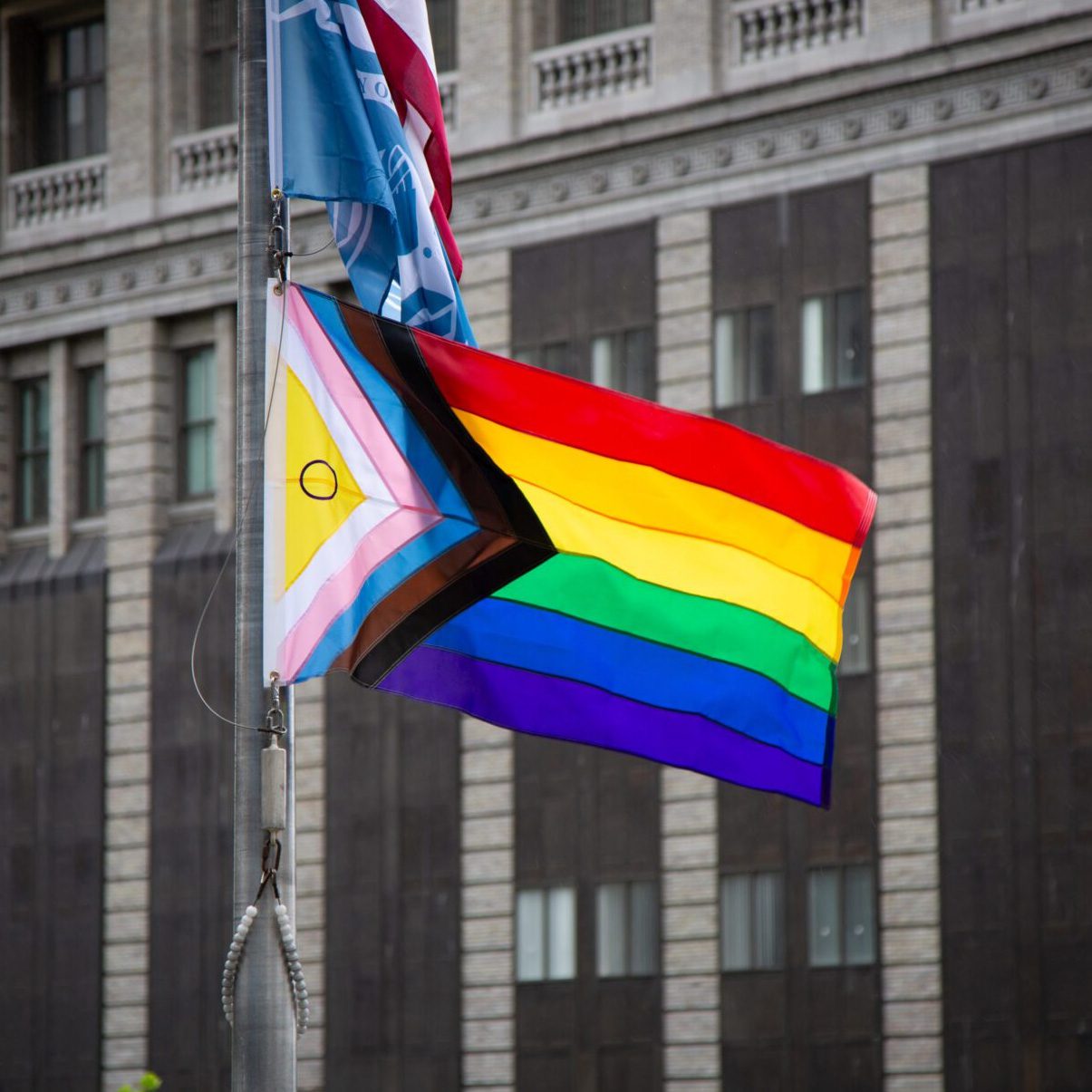
Seattle officials have announced the first round of emergency funding for organizations serving LGBTQ+ residents. A total of $125,000 has been split evenly between two groups, Lavender Rights Project and GenPride. Behind what may seem like a modest sum in the context of the municipal budget lies a broader story about how the city is responding to growing pressure on transgender and gender-nonconforming communities, as well as older LGBTQ+ people, who in recent years have increasingly faced uncertainty around their safety and access to basic services. The city’s official announcement emphasizes that funding priorities were not set by officials in a vacuum, but with input from activists, the Seattle LGBTQ+ Commission and relevant departments.
The story began in August 2026, when Mayor Katie Wilson and City Councilmember Alexis Mercedes Rinck identified $550,000 in one-time funding to address urgent needs in LGBTQ+ communities. Of that amount, $300,000 went to the Human Services Department (HSD), which was tasked with distributing it among local community organizations: $50,000 for a resource fair and $250,000 to support organizations directly. The $125,000 announced in November is only the first half of that amount; the remaining recipients will be named in the coming weeks. It’s important to understand that “one-time funding” here means money not included in the ongoing budget and allocated only once. That creates both an opportunity and a risk for recipients: it helps fill urgent gaps but does not guarantee stability for years to come.
The first recipient, Lavender Rights Project, received $62,500. The organization primarily serves transgender and gender-nonconforming communities of color, with a particular focus on Black residents. Its work centers on housing and economic stability, as well as culturally responsive services—that is, an approach that takes into account the racial, gender and social context of people’s lives rather than applying one-size-fits-all solutions. Angel Patterson, Lavender Rights Project’s director of development, put the problem plainly: Black and transgender communities continue to face significant barriers to housing, health care and safety, while also experiencing growing pressure from discrimination and systemic harm. The funding, she said, will allow the organization to expand its advocacy, deepen partnerships and advance long-term solutions to these inequities. Details about its services are available at lavrights.org.
The second recipient, GenPride, also received $62,500. The organization serves LGBTQ+ older adults through community programs, support groups and case management—that is, individualized assistance from a specialist who helps people navigate medical, social and everyday concerns. GenPride helps older adults connect with health care, food and other resources, while also creating opportunities for social connection, including dedicated programs for LGBTQ+ older adults of color. The organization’s executive director, Judy Kinney, described a worrying trend: LGBTQ+ older adults across the country are increasingly uncertain about their safety, rights and ability to access appropriate support, and GenPride has seen older people move to Seattle from states where policy changes and weakened protections have made life less safe. The funding, she said, will help the organization welcome people starting over, connect them with community and resources, and give them “a place to land” where they can feel they are not alone. More information about the organization’s services is available at GenPrideSeattle.org.
Mayor Wilson’s comments set out the initiative’s priorities: LGBTQ+ residents deserve safe housing, access to health care and services that meet their needs, and the city is investing in organizations that know the people they serve and understand their challenges. This is a deliberate choice: the money is going not toward new bureaucratic structures, but toward existing grassroots groups that have earned their communities’ trust. At the same time, the Seattle Office for Civil Rights (SOCR) is holding a resource fair on November 7, where LGBTQ+ residents can connect directly with organizations and learn about available services. The key takeaways are these: the city recognizes systemic barriers, rather than treating the issues as individual problems; the funding is targeted and one-time, leaving the organizations’ long-term sustainability an open question; and the fact that older LGBTQ+ people are moving to Seattle from other states suggests that local policy is seen as more protective amid nationwide changes. The question now is how the remaining funds will be distributed, and whether this one-time investment will become a permanent line in the budget.
Half a Century Behind the Counter: How Rick Simonson Made Elliott Bay Book Company the Heart of Seattle’s Literary Scene
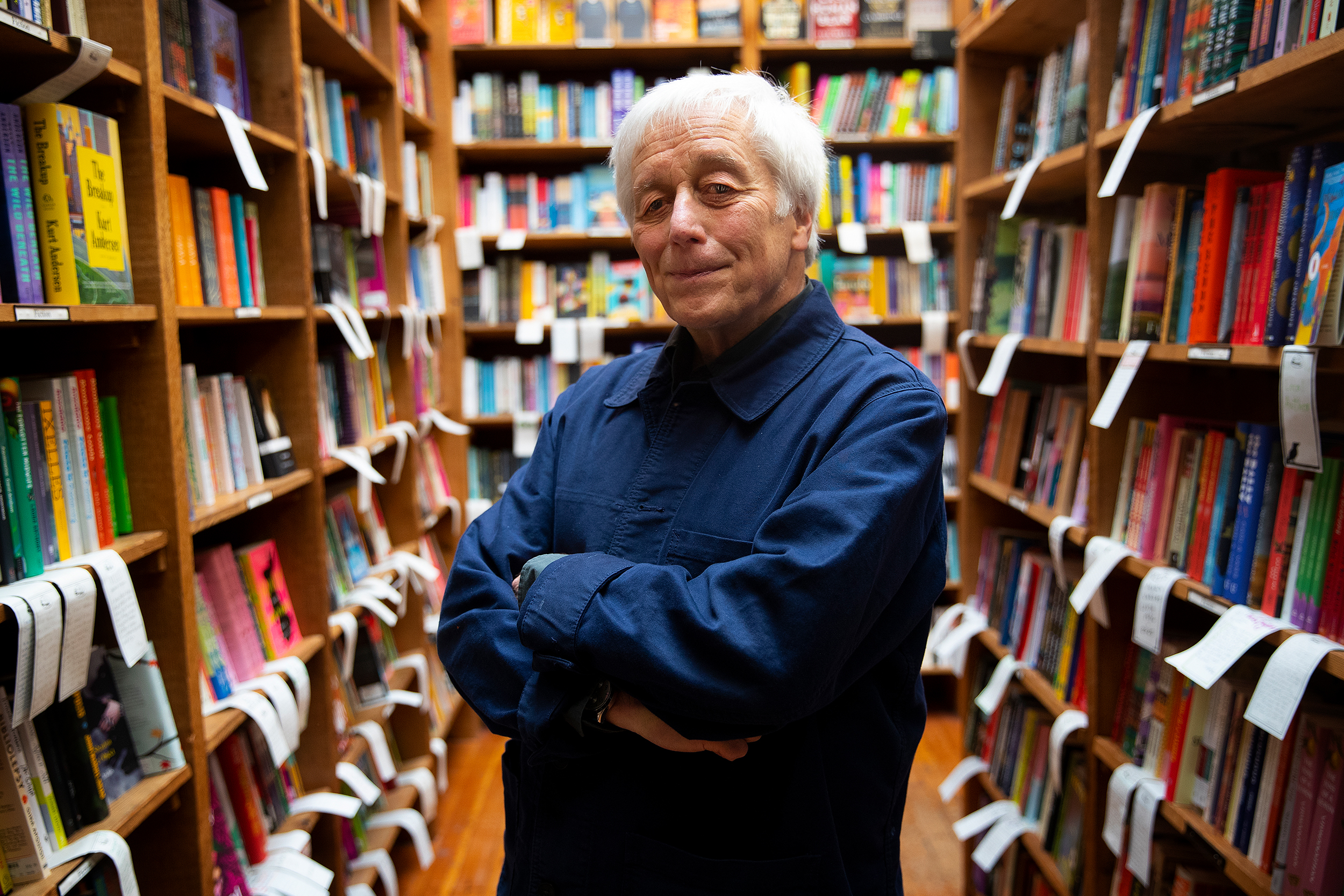
Seattle has a bookstore that for 50 years has been more than a retail outlet—it has been a cultural institution. And there is a man whose life is so intertwined with the place that the two are now impossible to imagine apart. That man is Rick Simonson, the legendary bookseller at Elliott Bay Book Company, whom readers and colleagues celebrated on November 7, 2026, for his 50th anniversary on the job. Simonson’s story is not simply one of a long career in bookselling. It is the portrait of someone who introduced the Pacific Northwest to dozens of authors who later became internationally known, yet prefers to stay in the background, telling stories about how books bring people’s lives together rather than talking about his own achievements.
One of the clearest examples of Simonson’s modesty took place in September 2026 at the Seattle edition of the Jaipur Literature Festival. He went to fetch a book for a talk by author Yann Martel and struck up a conversation with a woman who had recently moved from southern India. Brinda Sarathi, dean of the School of Interdisciplinary Arts and Sciences at the University of Washington Bothell, joined them, and they discovered that the woman had been her eighth-grade English teacher in India. Simonson is still amazed by the coincidence. As he points out, the woman had likely helped shape the writer and scholar Sarathi would become, and now both had ended up in Seattle. Yet in telling the story, he left out another, much more significant one—a story Elliott Bay co-owner Tracy Taylor told on his behalf. After reading an early copy of Life of Pi, Simonson persuaded the publisher to send the then-unknown Yann Martel on a tour of the Pacific Northwest. Just ten people came to his first event at Elliott Bay. A year later, when the author returned with the paperback edition, the crowd was too large for the venue. Taylor says the story captures Simonson perfectly: he would rather talk about how books reunited a student with a former teacher than boast about how he effectively introduced the region to a great writer.
This habit of talking about others rather than himself is familiar to Simonson’s close friend, legendary bookseller Paul Yamazaki, chief buyer at San Francisco’s City Lights Booksellers and Publishers and the 2023 recipient of the National Book Foundation’s Literarian Award for outstanding service to the American literary community. Their friendship, Yamazaki says, began “through conversation, by chance,” and they discovered they were “knocking on the same doors.” Watching them talk is like reading a good book: they jump from one story to another, filling the narrative with real-life characters such as English novelist John Berger and Sonny Mehta, editor-in-chief of publishing giant Alfred A. Knopf. Both, meanwhile, suffer from a kind of “extreme modesty syndrome.” While one speaks, the other either laughs sheepishly or looks away and shakes his head, trying to steer the conversation elsewhere. Over the decades, they have traveled the world together, laughed so loudly on the streets of Chicago at night that Tracy Taylor could hear them from a block away, and marveled at the splendor of the original Jaipur festival. Yamazaki remembers standing at the foot of a staircase in Jaipur when everything suddenly went quiet and someone said, “Oh, Rick is here.”
Simonson’s path to Elliott Bay began in 1976. He was working at a restaurant around the corner from the bookstore’s original building in the Pioneer Square neighborhood when founder Walter Carr offered him a job—not in the shop, but on the construction crew. Along with his restaurant coworker Peter Miller, now a well-known bookseller and author, Simonson carried drywall, sawed boards, swept sawdust and dismantled structures during the bookstore’s first expansion. When the work was finished, Carr realized he needed a second person for the night shift. The one-room store became a two-room store, and Simonson became a bookseller. At the time, the shop stayed open until 11 p.m., an hour later than it does today. He tells the story as if it were only natural that he had literally built Elliott Bay with his own hands. But Tracy Taylor later pointed out the tables in the current store, made by Simonson and Miller: his fingerprints are everywhere, from the furniture to his personal recommendations on the shelves and the plastic USPS mail tubs he makes sure are always behind the counter for frequent trips to the post office. Bookseller Rainia Spade, who Taylor says knows all Simonson’s secrets—though Spade insists he has none—says there’s nothing in the store he hasn’t done.
Simonson’s influence extends far beyond Elliott Bay. Sophia Breccan, the store’s events manager, met him while working at the rival bookstore Third Place Books. She says competition never concerned him—he attended events at their stores, as well as at other bookstores across the city. Despite the decades between them, Breccan rejects the idea that Simonson is a kind of grandfather figure to Seattle’s younger booksellers. “He’s too much one of us,” she says. “Age becomes completely irrelevant once you start talking to him, because, yes, he has stories from the literary scene of the ’70s, ’80s and ’90s, but every story is so timeless it feels as if it happened yesterday. I never think, ‘Oh my God, the old days were so wild.’ I think, ‘No, we’re the old days, because Rick is here telling us these stories.’”
Simonson, who is no longer 50 and no longer hauling drywall, had been speaking for less than five minutes when he mentioned that he and Yamazaki had done their work “with an eye toward those who will come after us.” He said they had had to say goodbye to many colleagues, friends and relatives, and that City Lights opened in 1953—“the year I was born, and Paul wasn’t that much older.” “We’re not here forever, but we do what we can while we can,” he said. A lot has changed over half a century in bookselling: technology and critics’ endless lists of favorite books have changed the rules of the game, making conversations with booksellers less frequent and shorter. But there are more books on the shelves, more translations and more stories by authors of different races and ages. Simonson is not pessimistic about the future of reading—people simply need to see others reading more often. He remembers a booksellers’ breakfast a couple of years ago, at eight in the morning, when poet and writer Ocean Vuong told a story about his illiterate mother, who took him to the door of a library in East Hartford and said: “You have to go in and find out what’s there, because there are ways of knowing things that we don’t know, that I don’t know.” She was talking about Lawrence Ferlinghetti’s Poetry as Insurgent Art, published by their friends at New Directions. That was enough to send 17-year-old Ocean onto a bus and across the country to City Lights. Simonson calls him a beautiful example of what writing, books and everything connected with them can be. What Simonson doesn’t say—that he is an example of the same thing—is said for him by Breccan. She recalls knowing about Rick before she started working there, and how Elliott Bay had always been a kind of beacon to her ever since she moved to the United States as a child. When she arrived, he welcomed her with open arms; there was never any chance he would be anything other than the kindest, most welcoming person in the world.
Watching the next generation grow up alongside him brings Simonson particular joy. He deftly dodged a question about retirement, preferring instead to tell one more story about how they