The main topics of the day: the Seahawks prepare to face the Chargers without J’Darrian Price, consider signing Joe Mixon to bolster their rushing attack, and the Mariners decide how to fit four top prospects into their 2027 roster.
Seahawks vs. Chargers: How Seattle will handle losing Price and return to winning
The Seattle Seahawks enter their home game against the Los Angeles Chargers following an unexpected 33-31 loss to the previously winless Washington Commanders. The defeat ended a franchise-record 12-game winning streak, but head coach Mike Macdonald is not planning to change his philosophy. “In our world, we try to be as consistent as possible and think about what we can control within our process,” he said, according to The Seattle Times. In his view, the loss is a good test of how deeply the team truly believes in its principles, rather than merely talking about them after victories.
Seattle’s opponent is in a far more difficult position. The Chargers have lost all three of their opening games and are considered one of the season’s biggest disappointments. The team is averaging just 14.7 points per game — 29th in the NFL — and ranks 20th in total offense and 23rd in defense. Jim Harbaugh, who took over the Chargers during the offseason, will make his first appearance at Lumen Field as a visiting head coach since 2014, when he led the San Francisco 49ers. Oddsmakers have Seattle favored by seven points, but Harbaugh’s presence and the Chargers’ desperation to end their losing streak make this a potentially dangerous game for the home team.
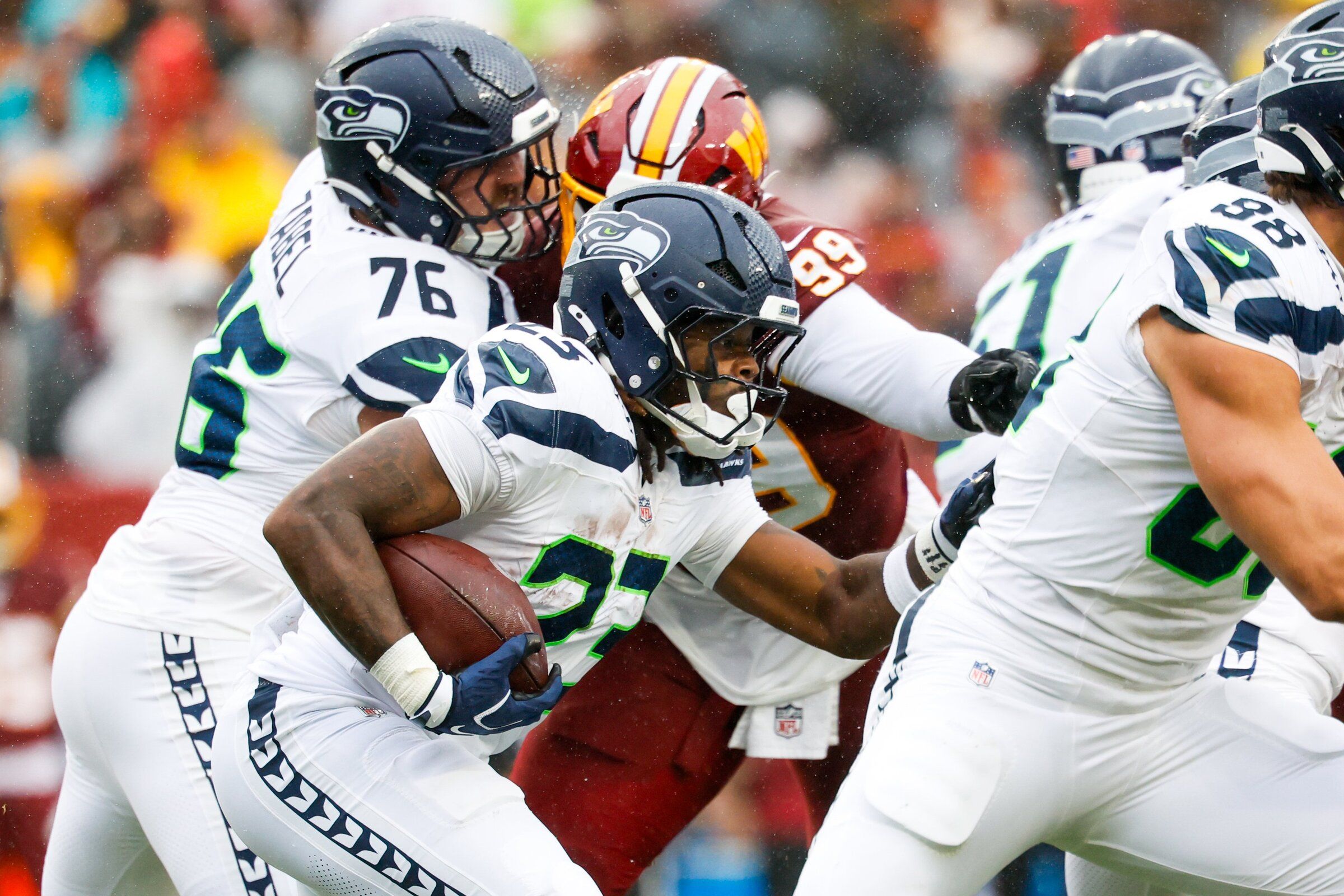
The Seahawks’ biggest concern is the absence of J’Darrian Price. This year’s first-round pick was the team’s most explosive running back, although he had already lost two fumbles. Last week, Seattle managed just 44 rushing yards on 18 attempts — the second-worst total of the Macdonald era. Price has now been placed on injured reserve and will miss at least four games because of an aggravated chest injury. Emanuel Wilson, George Holani and Velus Jones Jr., who was signed to the roster Saturday, will take his place. Wilson and Holani have combined for 171 yards on 47 attempts — 3.4 yards per carry — while Price was averaging 4.3. Jones, however, has averaged 8.2 yards per carry on 24 career attempts, including a 42-yard touchdown in 2022. The Chargers allow only 3.6 yards per rush, eighth-best in the league. That means Seattle will have to rely on its passing game and solid offensive-line play, particularly from left guard Gray Zabel, right guards Christian Haynes and Beau Stephens, and center Jalen Sundell.
The key matchup will be Justin Herbert against the Seahawks’ secondary. Herbert, formerly a star at Oregon, became the third player in NFL history last season to record at least 3,000 passing yards and 20 touchdowns in each of his first six seasons, joining Peyton Manning and Russell Wilson. This year, however, his completion percentage has fallen to 59.1%, compared with a career mark of 66.3%, and he has thrown three touchdowns and four interceptions. Seattle is bringing safety Julian Love back into the starting lineup after he missed the Washington game with a calf injury. Without Love, the Seahawks allowed Marcus Mariota to throw three touchdown passes; with Love in the lineup, they have allowed only two all season. The Chargers are also monitoring the status of leading receiver Ladd McConkey, who has a foot injury, and five-time Pro Bowl safety Derwin James, who is dealing with a hamstring injury.
First-half statistics are a concern for Seattle: the team has been outscored 31-17 in the first two quarters, and its 17 points rank third-worst in the league. After halftime, however, the Seahawks have dominated 58-19, while their 19.3 points per game after the break rank second in the NFL. That demonstrates Macdonald and his staff’s ability to make in-game adjustments, but against the Chargers — a team looking for any reason to believe in itself — a fast start would be extremely helpful. Special teams also deserve attention. Despite perfect kicker Jason Myers, who is 4-for-4 on field goals and 9-for-9 on extra points, and punter Michael Dickson, Seattle ranks 30th according to Pro Football Focus. The team is allowing an average kickoff return of 30.1 yards, the third-worst figure in the NFL.
On offense, the main hope is Jaxon Smith-Njigba, who last week became the first player in NFL history to record at least eight receptions, 120-plus yards and a touchdown in each of his first three games of a season. He now has a chance to match the franchise record of four consecutive games with at least 100 receiving yards. Chargers defensive coordinator Chris O’Leary, in his first season in the role, acknowledged that stopping Smith-Njigba will require a team effort, but much of the responsibility could fall to third-year cornerback Tarheeb Still, a fifth-round pick in the 2024 draft. Still ranks ninth in coverage grade according to PFF, having allowed four receptions on eight targets for 40 yards.
Finally, the main question is how the Seahawks will respond to a rare defeat. “When you come in Wednesday morning, you feel that nervousness,” receiver Cooper Kupp said. “It’s an unpleasant taste you want to get rid of by getting back to work. But once you start working, everything falls into place and you move forward. Especially here, the energy is just great. Energy is something we can create now to become better in the future.” The Seattle Times predicts a 19-13 Seahawks victory. Seattle’s defense, despite the loss, allows fewer yards than any other unit in the NFL, and that should be enough to handle a Chargers team desperately searching for its first win.
Seahawks seek reinforcements: Why Seattle is interested in Joe Mixon
The Seahawks have reached a point where their depth at a crucial position is disappearing faster than injured players can return, forcing the front office to consider options that seemed unlikely only a few weeks ago. That is the context behind the news that Seattle is hosting free-agent running back Joe Mixon, a two-time Pro Bowl selection, for a visit. Jay Glazer reported the news on Fox’s Sunday pregame show, as reported by Seattle Sports.
The timing is nearly as important as the visit itself. One day earlier, the Seahawks placed rookie first-round pick J’Darrian Price on injured reserve with a chest injury. The Notre Dame product will miss at least four games. Zach Charbonnet, who tore his ACL in January, returned to practice Thursday. He is eligible to play as soon as next week, but Seattle has until its game-week roster deadline for the Oct. 25 matchup against Kansas City to activate him. For now, the 53-man active roster includes only Emanuel Wilson, George Holani and Velus Jones Jr. at running back — a group unlikely to withstand the demands of a full season.
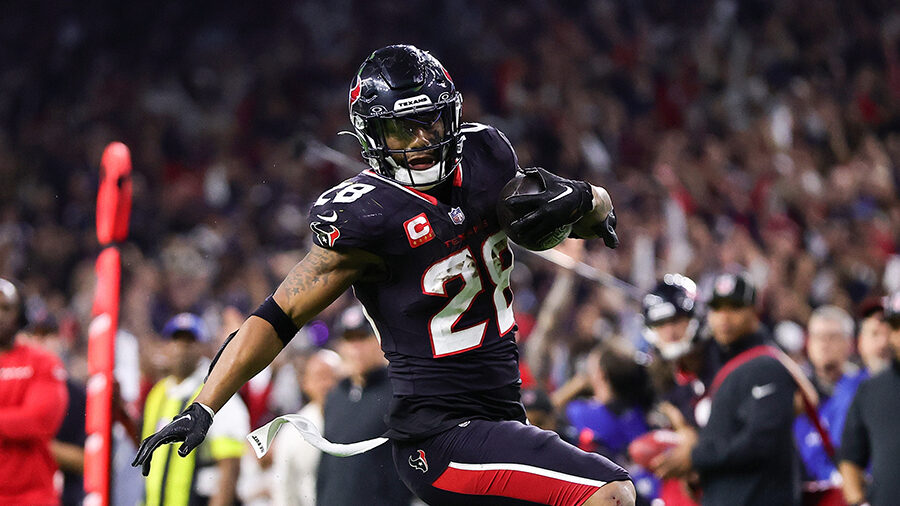
Mixon is 30 years old, has made two Pro Bowls and surpassed 1,000 rushing yards five times in eight professional seasons. However, he has not played a snap since the 2024 playoffs. A mysterious foot injury suffered away from the team before the 2025 training camp kept him sidelined. The Texans remained silent and never officially declared him out for the season, but he never returned to the field. ESPN later reported that Mixon requested his release one day before he was waived on March 6. Before the injury, he had a strong first season in Houston in 2024, totaling 1,325 yards from scrimmage and 12 touchdowns in 14 games while earning a Pro Bowl selection. He spent his first seven seasons with the Cincinnati Bengals, including a 2021 campaign with 1,519 yards from scrimmage and 16 touchdowns. In total, he has 7,428 rushing yards and 60 touchdowns in 111 games.
Several terms help clarify the situation. Injured reserve is the list for players who cannot take the field; for a rookie, placement means missing at least four games, which effectively removes him from the rotation for a significant portion of the season. “Yards from scrimmage” combines rushing and receiving production, making it a useful measure of a modern running back’s overall value. Finally, a free-agent visit is not a signing but rather part of the negotiation and medical-evaluation process: the team assesses the player’s physical condition, motivation and financial expectations before offering a contract.
The key issue is not Mixon’s statistics but his health. Eighteen months without game action and an injury that his former club preferred not to discuss represent significant risks, especially for a 30-year-old running back whose value depends heavily on physical reliability. If Seattle signs Mixon, it would be a bet on immediate help during a personnel crisis rather than a long-term investment. If the visit ends without a deal, it could signal that the front office was not satisfied with the medical information or prefers to wait for Charbonnet’s return rather than commit to Mixon. Either way, the Seahawks’ activity in free agency reflects a simple reality: without reinforcements at running back, it will be extremely difficult for the team to remain in the playoff race, and Mixon’s visit is an attempt to address the roster’s most urgent weakness right now.
Mariners at a crossroads: Four young talents and a risk that could define 2027
The 2026 season was a year of debuts for the Seattle Mariners: four top prospects — Colt Emerson, Cade Anderson, Lazaro Montes and Michael Arroyo — made their first appearances in Major League Baseball. Each arrived there by a different path. Some produced a bright flash early before a painful decline, one delivered a 474-foot blast that became part of T-Mobile Park history, and another put together a modest but encouraging 15-game stretch. Now the club faces a difficult decision: how to fit these young players into a roster that, according to the organization’s plans, is supposed to compete for the playoffs again next year. Mariners insider Shannon Drayer and Brock and Salk co-host Mike Salk discussed the issue at length on Seattle Sports.
Arroyo, 22, posted a .371/.439/.514 slash line over 15 games, with one home run, two doubles and nearly as many walks — five — as strikeouts — six. He is the type of player who can easily be envisioned as the everyday left fielder following Randy Arozarena’s departure, and Salk directly asked whether Arroyo could become an everyday outfielder. However, he noted that doing so would be “a hell of a risk” for a team intending to return to contention immediately. Montes, 21, displayed “otherworldly” power but also familiar contact problems, striking out in 40.7% of his 59 at-bats. Salk called his four home runs “the four best moments of the entire season,” but acknowledged that Montes is not yet a “complete baseball player.” Starting him alongside Arroyo would mean accepting a flood of strikeouts.
Colt Emerson’s situation is different. The 21-year-old began his career spectacularly, hitting .233/.309/.575 with six home runs, five doubles and a triple over his first 22 games. In his next 47 games, however, his slash line collapsed to .169/.214/.216, with just three extra-base hits. He then underwent wrist surgery that ended his season. Drayer said directly that she does not see Emerson as the starting shortstop on Opening Day 2027: “I don’t think you start with Colt Emerson after he ended the season with surgery, especially after he was sent down before that.” He needs time to regain his form and feel comfortable on the field again. Cade Anderson, a 22-year-old pitcher, left a more positive impression. After a couple of uneven outings early on, he threw seven scoreless innings in his penultimate start and 3 1/3 scoreless innings in his final appearance before a line drive to the left forearm ended his night.
The central issue is not whether the four players are talented, but how to balance their development with the need to compete immediately. Drayer emphasized that the decision depends not only on the club’s preferences but also on who is available on the market. “What’s available? And where can you put them? That’s what they’re going to have to figure out,” she said. Salk framed the risk differently: “Without blocking those guys you think are about to have real success.” Drayer added that the Mariners may need to move away from platoons — a system in which a player faces either right-handed or left-handed pitchers — to give the young players more consistent opportunities. Seattle also has flexibility because Brendan Donovan can cover multiple positions, but the shortstop question entering the season remains unresolved.
At the same time, both analysts agreed that starting the season with all four rookies could work — under one condition. Drayer said the young players looked “comfortable but not complacent” and had “fit in” with the team. However, she added, “You need a safety net in case they crash, as young players sometimes do.” Salk went further, listing what else would have to go right: “You need the best year from Cal Raleigh, Julio Rodríguez and Josh Naylor, and you need a healthy Brendan Donovan, or this simply won’t work. That’s too much youth.” In essence, betting on the prospects is not an isolated decision; it is part of a broader plan in which veterans must carry the load and give the rookies room to make mistakes.
The central storyline of Seattle’s 2027 season will not be which member of the four breaks through, but whether the club can build a strong enough foundation around them — in the clubhouse, on the field and in its contingency plans if things go wrong. If it can, youth may become an advantage. If not, it risks becoming the “too much” of a gamble that Salk warned about.