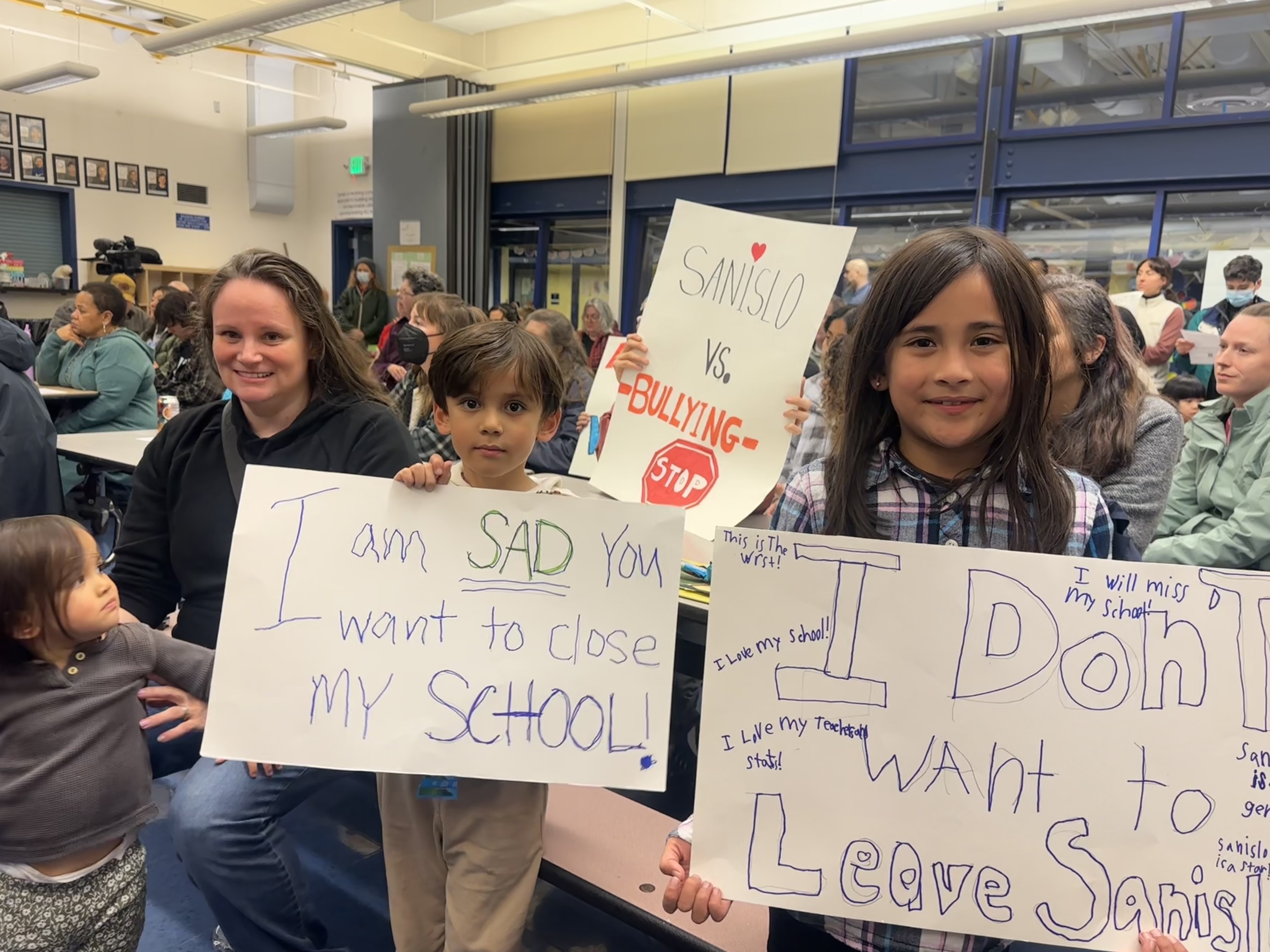
Two major developments have taken place in Seattle: the Seahawks acquired guard Quenton Nelson from the Colts in exchange for two draft picks, then waived starting guard Christian Haynes. Meanwhile, the city’s school district confirmed a list of 21 schools that could be merged by the 2027–28 school year as enrollment declines.
Seahawks make room for Nelson: waiving Haynes is no routine roster move—it sends a message
The Seattle Seahawks made one of the biggest moves of the season’s fall stretch, agreeing to acquire guard Quenton Nelson, an eight-time Pro Bowl selection, from the Indianapolis Colts. The club then wasted little time showing that revamping its offensive line was more than talk: that same day, the Seahawks waived guard Christian Haynes to open a spot on the 53-man roster. ESPN insider Adam Schefter reported the move. Waiving a depth player is routine in itself. But Haynes had started five straight games this season, making his departure a far more telling move than an ordinary roster cut.
The context of the trade matters. Seattle is sending Indianapolis a 2027 third-round pick and a 2028 fifth-round pick. The deal is not yet complete, as it is contingent on a physical. Nelson is 30. He was selected sixth overall in the 2018 draft and has earned eight Pro Bowl selections and six All-Pro honors during his career. According to the club’s official announcement, he has not allowed a sack on 275 pass-blocking snaps this season and has given up pressure on just 2.2% of those plays. That is elite production for an interior lineman—and the reason the Seahawks are giving up two draft picks.
Haynes is a less prominent player, but he was no afterthought. The 26-year-old guard was selected 81st overall out of Connecticut in the 2024 draft. He appeared in 16 games during his rookie season and played in eight regular-season games during Seattle’s 2025 championship season. His role grew sharply in 2026 after starting right guard Anthony Bradford suffered knee and hip injuries in September. Haynes made the first start of his NFL career on September 20 against the Arizona Cardinals, playing 43 offensive snaps and splitting time with rookie Beau Stephens. He then started five straight games, including a loss to the Denver Broncos on October 15. According to Pro Football Reference, those are all of his regular-season starts in his career.
Seattle’s offensive line began changing rapidly after that. On October 24, the club activated Bradford from injured reserve ahead of a 20–3 win over the Kansas City Chiefs. Haynes played in that game, but did not start. Three days later, Seattle reached an agreement to acquire Nelson, leaving Haynes surplus to requirements in a crowded guard room. Officially, he was waived to make room on the roster. In practice, the club had found a better player at his position and did not want to keep a third- or fourth-string guard on the bench.
The coaching staff now faces a tricky question: how to arrange the lineup. Nelson has played left guard throughout his career, but Seattle has 2025 first-round pick Grey Zabel at that spot. Bradford has just returned at right guard. One of the three will have to give way: Zabel could move, Nelson could try a new position for the first time in his career, or Bradford could return to a rotation. For now, the club has resolved just one roster question: it has moved on from Haynes.
For Haynes, this is an unwelcome but not necessarily dead-end turn. He will go through waivers, where any NFL team can claim him. A 26-year-old guard with five starts and an inexpensive rookie contract is a useful asset for a team looking for offensive-line depth. For Seattle, the episode is revealing: just a month ago, Haynes was competing for playing time while Bradford recovered. Now that Bradford is healthy and Nelson has arrived, the club has chosen to move on without him. The Seahawks’ offensive-line overhaul is already in full swing, and the vacant roster spot is its first visible result. Details of the deal and the league’s reaction are being tracked in Yahoo Sports’ report.
A few terms are worth clarifying. The Pro Bowl is the NFL’s annual all-star game; an “eight-time Pro Bowl selection” is a player who has been chosen eight times as one of the best at his position in a vote involving players, coaches, and fans. All-Pro is a more demanding distinction: it means being named to a season-ending team of the league’s best players, usually selected by the Associated Press. A snap is one play in which a player is on the field. Pass blocking is the work linemen do to protect the quarterback from pressure and sacks. A sack occurs when a defender brings down the quarterback with the ball behind the line of scrimmage before he can throw. Waivers are the process through which other clubs can claim a waived player in reverse draft order within a set period; afterward, the player becomes a free agent. A draft pick is the right to select a player in one of the draft’s rounds. The earlier the round, the more valuable the pick, so giving up third- and fifth-rounders for a 30-year-old guard is a significant bet.
The main takeaway is simple: in the NFL, roster depth is measured not by the number of names on a list but by the quality of individual players. The arrival of an elite guard can immediately make even a recent starter expendable. Haynes will be remembered for his five starts and his third-round draft selection, but Seattle has made clear that it is building its line around Nelson and the young talent already on the roster, such as Zabel. If Nelson passes his physical and maintains his pass-blocking production, the Seahawks will have one of the league’s best interior lines—and Haynes will get a chance to start over somewhere else.
Colts send Quenton Nelson to Seahawks: the end of an era for Indianapolis’ offensive line
On Tuesday, the Indianapolis Colts announced a major trade that marks a change of direction for the franchise: guard Quenton Nelson, one of the team’s most recognizable players of the past decade, is heading to the Seattle Seahawks. In return, the Colts will receive two future draft picks—a 2027 third-rounder and a 2028 fifth-rounder. For Indianapolis fans, the decision is painful but rational: the team has opted for future draft flexibility and a younger offensive line over retaining an expensive veteran.
Nelson joined the Colts in 2018 as the sixth overall pick and became a cornerstone of the offensive line in his very first season. His résumé is impressive: he was named first-team All-Pro by the Associated Press three times (2018–2020) and selected to the Pro Bowl eight years in a row—every one of his first eight seasons. Over his nine-year career, he has started 136 games, a testament to his rare durability and consistency. Players like him are the foundation of an offense, particularly in the running game and in protecting the quarterback.
The key question now is who will take Nelson’s place at left guard. According to the Colts’ official website, Jalen Farmer, a fourth-round pick in the 2026 draft, could get a chance to prove himself. It is a classic bet on developing talent from within: rather than paying veteran money to a proven player, the club is giving a young athlete the opportunity to show what he can do in the system.
From an asset-management perspective, the trade looks well planned. The Colts now have a broad collection of picks in the next two drafts. In 2027, they have selections in the second round, two in the third (one from Seattle), one in the fourth, one in the fifth, and two in the seventh—one of them acquired from Buffalo in the Cedric Van Pran-Granger deal. The club also retains flexibility in 2028, though the full list of picks has not yet been disclosed.
A few terms used in the article are worth explaining. A guard plays in the interior of the offensive line, blocking defenders to give the quarterback time to throw or to open a path for a running back. All-Pro is a season-ending team of the league’s best players; making the first team means being recognized as the best at one’s position. The Pro Bowl is the NFL’s annual all-star game, and a draft pick is a team’s right to select a rookie in a particular round. The earlier the round, the greater the chance of getting a high-level player. Trading future picks is a common strategy: a team that moves a player now gets an opportunity to strengthen its roster later.
The article’s central insight is that the Colts are deliberately giving up immediate reliability in exchange for long-term flexibility. Nelson remains a high-level player, and Seattle is getting a proven veteran who can strengthen its offensive line right away. For the Colts, the value of the deal lies in managing payroll costs and having the chance to build a younger, less expensive line. The risk is clear: if Farmer or another candidate struggles, pressure on the quarterback could increase and the running game could suffer, leaving fans to remember Nelson with nostalgia. But every trade is a bet on the future, and Indianapolis has clearly decided it is time to make a new one.
Seattle schools prepare for mergers: district names 21 schools that could close or combine
Seattle Public Schools (SPS) has officially confirmed a list of 21 schools that could be paired up ahead of the 2027–28 school year. As KUOW reports, a district representative confirmed in a written statement that families at the schools on the list received emails inviting them to take part in a “potential school merger process.”
The proposed pairs are Licton Springs and Salmon Bay, Sacajawea and John Rogers, Rainier View and Rising Star, John Hay and Queen Anne, Stevens and Montlake, Orca and MLK Elementary with Mercer Middle School, Decatur and View Ridge, Sanislo and Highland Park, Sandpoint and Laurelhurst, and Cedar Park and Baldwin. Nearly all are elementary schools; the only exception is Mercer Middle School, which is being considered alongside MLK Elementary.
The district representative added that district leaders are meeting with staff at the schools included in the potential process during October, with meetings with families planned for November and December. This matters because those consultations will help determine which proposed pairs stay on the list and which do not. For now, the district is discussing a possibility, not a final decision.
Superintendent Ben Shuldiner cited declining enrollment as the main driver of the process in a letter to parents last week. This is key: unlike many school-closure debates, where budget concerns take center stage, the district is publicly emphasizing demographics. Falling enrollment means some schools are operating below capacity, making it increasingly inefficient to maintain buildings and staff for relatively small numbers of students.
The district also points to educational considerations. According to the SPS representative, its priorities include “improved learning environments,” “reducing the number of split-grade classes,” and “expanding access to specialist teachers.” These terms need some explanation. “Split-grade classes” are classes in which children in different grades—for example, second- and third-graders—learn together in the same room. This often happens when there are too few students to form full classes at each grade level, and it places an additional burden on teachers, who have to teach two different curricula. “Specialist teachers” include music, art, and physical education teachers, as well as specialists who work with English-language learners and students with special educational needs. Small schools often lack these positions, or have them only part-time; a merger could bring together enough students to support full-time specialist staff.
One important detail is the district’s own wording: the invitations refer to a “potential merger process.” That means parents are being invited to take part in discussions, not simply informed that their school is closing. Even so, the official confirmation of a list of 21 schools shows that the district has moved from general discussion of declining enrollment to specific planning. Families now face a period of uncertainty lasting at least through the end of December, when the meetings are expected to conclude. Staff, meanwhile, face the risk of reassignment to other schools or layoffs.
The main takeaway from the KUOW report is that SPS is linking the reorganization of its school network not only to cost savings but also to the quality of education: fewer buildings with more students could mean fuller classes, fewer split-grade arrangements, and more specialist teachers. The downside, however, is the disruption of established school communities and the logistical challenges for families, especially if the schools being combined are in different neighborhoods. That is why the next two months of consultations will be decisive: parents’ and staff members’ responses will help determine which of the ten proposed pairs actually proceed to a merger by the 2027–28 school year.