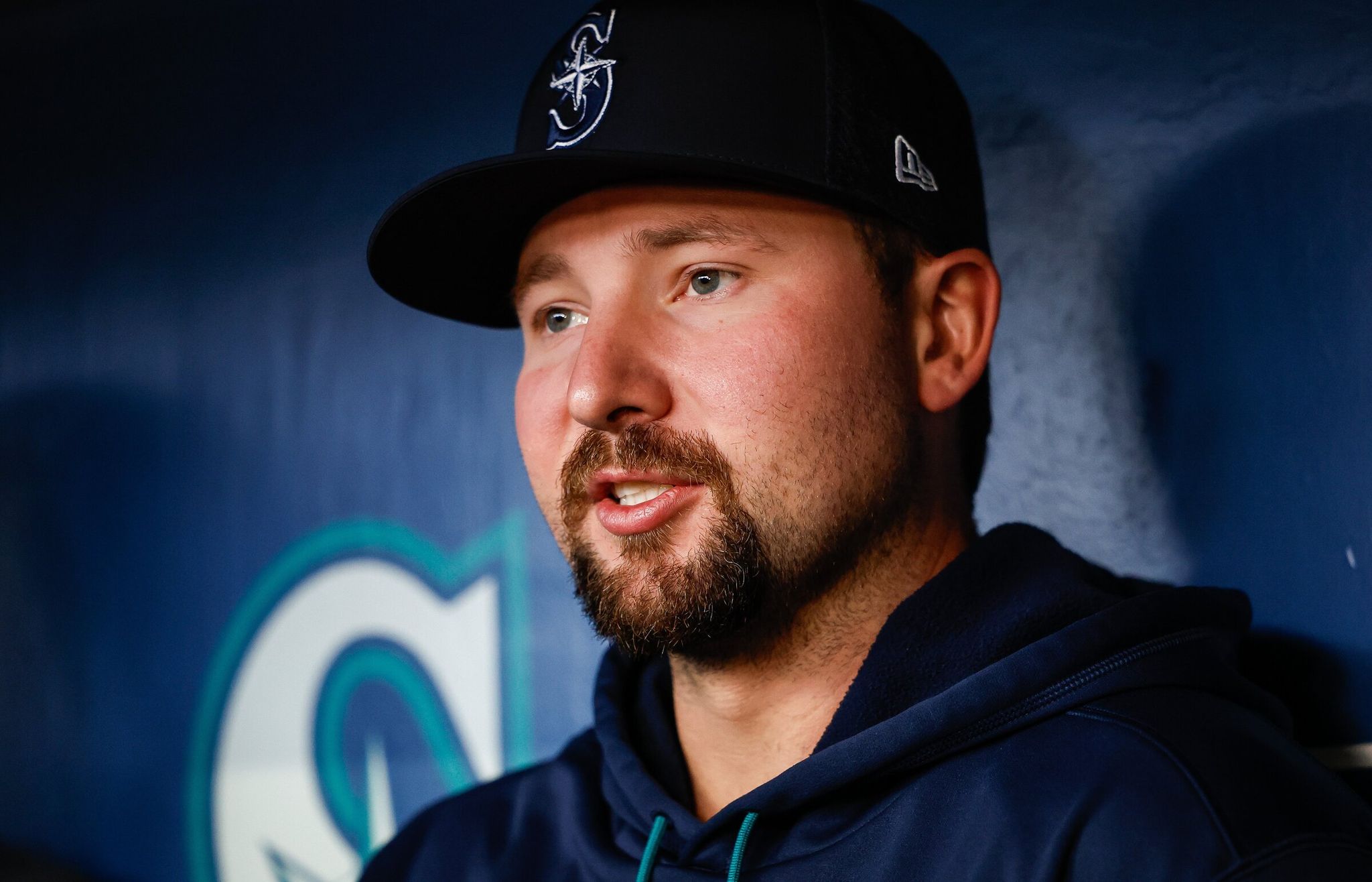
Overview of current news from Seattle: Mayor Katie Wilson finds herself at the center of a new scandal over an ill‑advised joke about a millionaire tax, and the Seattle Mariners celebrate the success of a risky pitching experiment and Cal Raleigh’s return to training.
Seattle Mayor Katie Wilson faces new backlash over an ill‑timed joke about the millionaire tax
Seattle Mayor Katie Wilson has found herself at the center of a new controversy after attempting to joke about a questionable gesture related to a recently enacted Washington state tax on the very wealthy. The situation began with an incident at an event at Seattle University, where during a Q&A session the mayor allegedly made a gesture mimicking a farewell to millionaires leaving the state because of the new high‑income tax. The movement was seen by many as mocking and provoked an outcry from conservative circles and the business community.
Weeks later, facing growing pressure, Ms. Wilson chose to respond to the criticism by posting a video message on social media. In it she tried to play things off as a joke, saying, “I know my hand gestures have gotten a lot of attention lately,” and then joked about an “awkward high five.” However, analysts note that instead of apologizing, the mayor opted to defuse the situation with humor while distancing herself from the tax law itself, shifting responsibility onto lawmakers in Olympia. “I know it would be convenient to claim credit for passing this millionaire tax, but I actually don’t have much to do with it. This happened in Olympia,” she said in the video.
Experts say this behavior demonstrates a classic political maneuver: an attempt to shirk responsibility for an unpopular decision while mocking its opponents. In a context where Washington is indeed seeing an outflow of wealthy taxpayers, such gestures and comments can be perceived as arrogant. Wilson also urged people not to get distracted by “trivialities” or allow “division” that hinders progress, but a critical journalist reasonably asks: “Wasn’t it her own team that created this distraction and new negative news cycle?”
For context, Washington enacted a capital gains tax on ultra‑wealthy residents, which has prompted mixed reactions. Supporters call it a fair measure to fund education and social programs, while opponents argue it encourages wealthy taxpayers to move to Nevada or other states without income tax. In trying to distance herself from the unpopular law, Mayor Wilson ultimately exacerbated the situation, showing inconsistency and reluctance to take responsibility for the consequences. As noted in the article on MyNorthwest.com, the final judgment on this incident will be left to the voters. Such a “humor instead of apology” tactic rarely works long term, especially on sensitive financial issues affecting a significant portion of the population. (https://mynorthwest.com/mynorthwest-politics/katie-wilson-faces-backlash/4242639)
A step toward recovery: Cal Raleigh returns to Seattle to map out next stages of rehab
Cal Raleigh’s daily routine in Arizona was monotonous and exhausting. While his Seattle Mariners teammates played, he focused on treatment, rehabilitation, and light workouts. Being sidelined left him feeling adrift: “You get home early and don’t know what to do, you just wait for games to start. A lot of emptiness.” Now, more than two weeks after landing on the injured list for the first time in his career with a strained right oblique, Raleigh is back in Seattle. He joined the team during Saturday’s game against Arizona and on Sunday morning met with the medical staff to outline the next steps in his recovery. The biggest milestone was that on Friday he took 30 swings with the bat. That’s a key test to show how the muscle tolerates load. Raleigh hopes to have a clearer idea by Wednesday of when he can begin rehab games and ultimately return to the active roster.
Before the injury Raleigh was struggling profoundly at the plate, batting just .161 with seven home runs. It emerged that he had been playing through discomfort in his side. The slump, including an 0‑for‑38 stretch, peaked in Houston when he aggravated the injury, prompting the decision to place him on the injured list. Mariners manager Dan Wilson believes the forced break could benefit the player: “The injured list is a tough experience, it’s hard in many ways. But in some sense it can be a breath of fresh air. Cal is a fighter, he wants to come back, but I think this will be a fresh start for him, and physically he will certainly be in much better shape.” Raleigh himself compares his state to a “twilight zone,” watching games on TV but not participating. He admits it makes him appreciate the game more when he’s so far from it. In Arizona he kept in shape with running and light athletics and even caught one fastball. Now his return depends on how the muscle responds to a gradual increase in workload.
The article also mentions former Mariners closer Paul Sewald, who is experiencing a renaissance in Arizona. After shoulder issues last season he has regained his effectiveness and already has 14 saves. In his interview with The Seattle Times he emphasized that time spent at the Driveline Baseball training center played a key role. While his fastball velocity hasn’t reached his Seattle peak years, for the 36‑year‑old pitcher it’s been enough to be successful again. Sewald fondly recalls his time in Seattle and is grateful to the team that helped turn his career around. Interestingly, he didn’t get to pitch against his former team during the weekend series because the Mariners swept all three games, leaving no opportunity for the closer to appear. (https://www.seattletimes.com/sports/mariners/mariners-cal-raleigh-back-in-seattle-to-map-out-next-steps-in-injury-rehab/)
Success of a risky experiment: Why the Mariners’ pitching “spark” turned out to be a triumph rather than a failure
The coaching staff’s decision to use two starting pitchers in one rotation slot — the so‑called “piggyback” — initially provoked a storm of criticism. The first outing looked disastrous: Bryce Miller nearly threw a no‑hitter, staying on the mound longer than planned, and then everything unraveled in the ninth inning. Luis Castillo remained in until he gave up the decisive hits, and manager Dan Wilson attempted two mound visits, which is against the rules. The result was a painful 2–1 loss to the Chicago White Sox despite the team having only one hit. The second pairing in Sacramento against the Athletics yielded a 9–2 win but didn’t ease tensions: Castillo was openly frustrated at being lifted after four innings, and Miller admitted in his postgame interview that “this scheme is really uncomfortable.” President of baseball operations Jerry Dipoto even had to meet with both pitchers personally to “reestablish communication.” When in the third piggyback, against the Arizona Diamondbacks, a 1–0 lead for Seattle was quickly erased and then a defensive error returned the game to tie, it looked like the idea had failed for good.
But looking beyond the emotions and at the numbers, the picture changes dramatically. Across the three piggyback games Miller and Castillo combined for outstanding results: in 27 innings they allowed only 5 earned runs (1.67 ERA), struck out 30 batters, and gave up just 12 hits and 8 walks. Importantly, the starting pitcher in each of those games didn’t allow a run at all. This isn’t merely “pretty good” — it’s elite dominance. In each of the three cases there were in‑game issues, but they weren’t related to the duo’s quality against hitters.
Moreover, the experiment yielded unexpected strategic benefits. In the Sunday game against Arizona the Mariners won in the 10th inning and didn’t need to use a single reliever. That means the bullpen is completely fresh heading into a three‑game series with the New York Mets. As noted in the Seattle Sports article, such luxury in modern baseball is a huge advantage. Since the scheme’s implementation the Mariners have won 8 of 11 games, recovered from several setbacks, and surged into the top of the American League West. Opponents in those games have averaged just 2.91 runs per game, meaning the team is winning thanks to pitching.
The risky move was a forced measure: the Mariners unexpectedly had six healthy MLB‑level starting pitchers. Rather than move Castillo to the bullpen or shift to a six‑man rotation, management chose a third path. And although it was accompanied by public dissatisfaction from players and skepticism from fans, the results speak for themselves. This case is a vivid example of how an unconventional decision made under pressure can succeed if backed by talented performers. Now the Mariners have not only records but also a unique tool for managing workloads that they will likely continue to use.