Seattle is facing two major conflicts at once: a diversion program has been accused of falsifying statistics that undermine confidence in criminal justice reform, while the city’s surveillance camera network has become the focus of a battle between supporters of public safety and privacy advocates. Polls show that 75% of residents support the cameras, but activists warn of the risks of transferring data to private corporations. City officials are awaiting the results of independent audits that will determine the future of the controversial initiatives.
Washington’s diversion program faces allegations of falsified data
On Monday, August 17, the evening news program Seattle News Tonight on FOX 13 Seattle raised serious questions about a Washington state program designed to divert people with mental health and substance-use disorders away from jail and into treatment and support services. As reported in the station’s segment, the initiative, which was intended to provide a humane alternative to criminal prosecution, is now itself under scrutiny. Critics accuse it of using inaccurate and possibly deliberately distorted statistical data.
The central criticism is that the data used by officials to evaluate the program’s effectiveness and decide whether to expand it do not reflect reality. Reported success rates may be inflated or presented in a way that creates the impression that the program is performing better than it actually is. This is a serious blow to public trust, because the program affects people who might otherwise receive help but remain in the criminal justice system because of unreliable statistics.
The program in question is a so-called diversion mechanism, in which suspects or defendants with mental illnesses are sent not to prison but to specialized centers where they receive treatment and rehabilitation. The logic behind the policy is straightforward and progressive: a crime committed during psychosis or severe addiction is primarily a medical problem, not purely a criminal one. But if data on how many people actually complete treatment and avoid reoffending are collected inaccurately, the effectiveness of the entire system is called into question. Officials may have counted only those who successfully completed the program while ignoring those who dropped out, absconded or were removed. Recidivism rates may also have been understated to make the program appear more successful amid requests for additional funding.
The situation is especially serious because such initiatives are funded by taxpayers, and every figure presented by officials affects how money is allocated. If the data are unreliable, this undermines not only the specific program but also the broader idea of criminal justice reform. Critics are already calling for an independent audit of all statistical reporting and for interim results to be published with explanations of the data-collection methods. Otherwise, they warn, policymakers risk building decisions on shaky foundations, ultimately harming the vulnerable groups the program was designed to help.
State officials have not yet provided detailed comments, limiting themselves to promises to “look into the matter” and “clarify the methodology.” But amid growing public concern over domestic violence, drug addiction and homelessness—issues that are closely intertwined in Seattle—any careless statement could trigger even harsher criticism. The situation is developing, and it appears that the matter cannot be resolved without a thorough review of every stage, from the initial collection of information to the final report. FOX 13 journalists will continue to follow the story, and official responses—and possibly revised figures—are likely to emerge in the coming weeks. Those figures may either confirm the concerns or dispel them. For now, however, one thing is clear: trust in the data used by government is the foundation of any social reform, and that foundation appears to have cracked.
The city at a crossroads: Who really controls Seattle’s street cameras?
Seattle is embroiled in a serious dispute over the city’s surveillance system, one that has gone far beyond ordinary debates about privacy. A coalition of activists calling itself “Community Not Cameras” issued a forceful statement describing the existing surveillance system as “structurally dangerous.” The concern is not only about the cameras monitoring residents in the city’s highest-crime areas, but also about the company behind the technology and the long-term security of the data being collected.
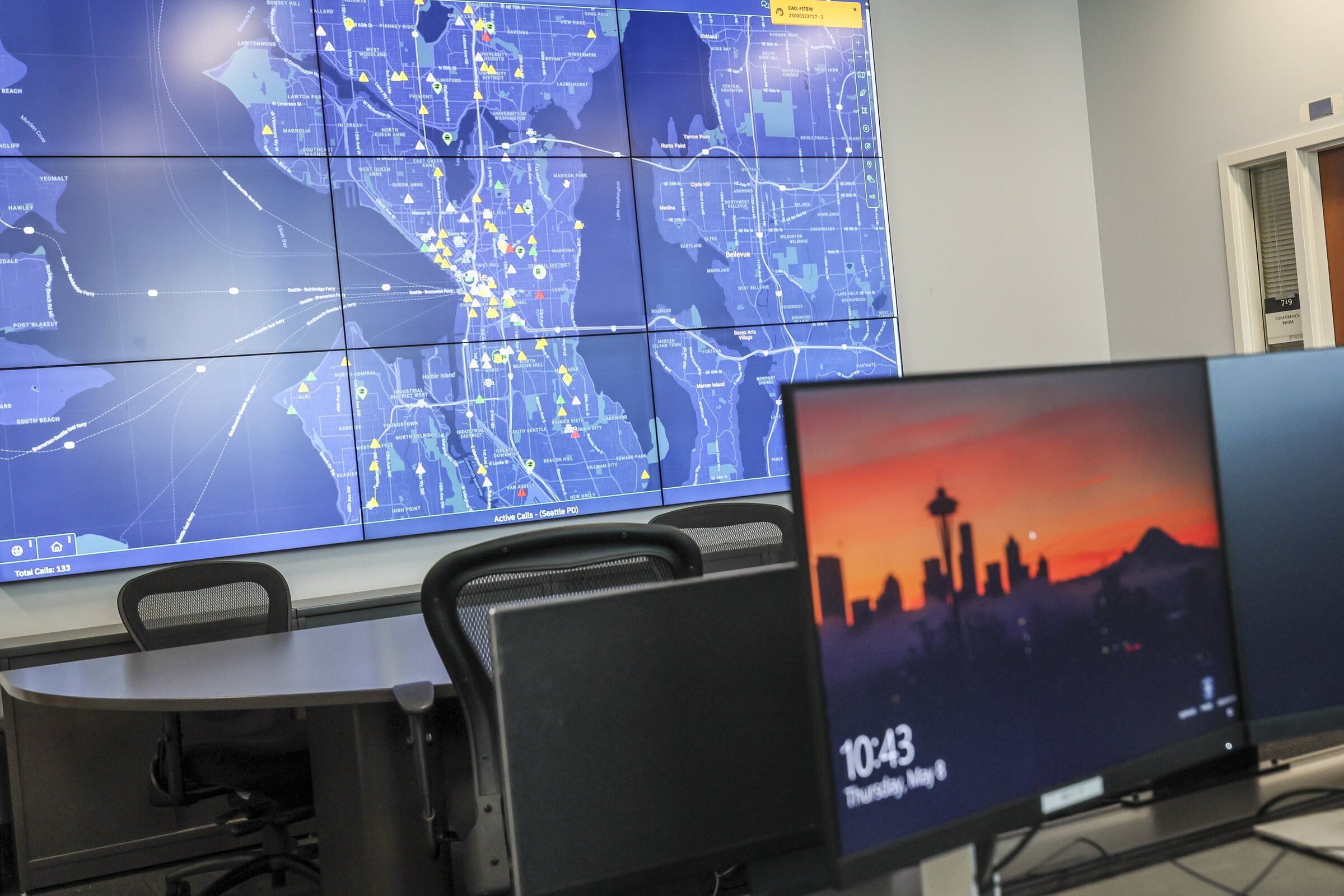
The main criticism is that the police Real-Time Crime Center, launched in May 2025, runs on Fusus software from Axon. The tool combines feeds from dozens of street cameras, 911 call data and information about patrol movements in a single interface. For police, it is a powerful tool for responding quickly to incidents. For critics, however, it is a step toward creating a comprehensive surveillance system in which a private corporation becomes a key player. Activist Phil Moczyk said bluntly that Axon is not an equipment manufacturer but a “data broker,” arguing that the city is effectively selling public information to a private entity.
Particular concern surrounds control of the information after it is transferred to Axon’s cloud systems. During a tour for activists, center employees appeared not always to understand the procedures themselves. For example, when asked how the city would know if Axon received a subpoena from government authorities demanding the data, the response was uncertain. The situation is further complicated by the fact that staff must manually “blur” camera views that capture private residences, while auditing mechanisms remain limited. Cybersecurity engineer Noah Williams believes Axon creates only an “illusion of control”: the company could transfer feeds to its own cloud storage without notifying the city, meaning hackers or the federal government could potentially do the same. Axon counters that agencies manage their own data, retention periods and access controls, and that any requests from third parties are directed straight to the police.
Seattle’s camera controversy has become a political trap for Mayor Katie Wilson. During the first seven months of her administration, she turned off cameras in the stadium district, then switched them on for the FIFA World Cup and later turned them off again. Following a recent shooting at the Bite of Seattle food festival that killed three people and injured at least four others, organizers of major city events, including Seafair and Climate Pledge Arena, openly demanded that the cameras be restored and their use expanded. The public, meanwhile, is divided. A poll conducted by the Seattle Chamber of Commerce found that 75% of 500 surveyed voters supported using cameras to investigate crimes following a 911 call. Activists, however, call arguments about increased clearance rates “insincere” and point to the lack of clear policies even among the center’s own employees. In the system’s defense, it does not use facial-recognition technology, and video is stored locally for only five days before being deleted or classified as evidence.
The situation vividly illustrates a fundamental contradiction of the modern digital world: cities want to use technology to fight crime, but they also risk handing unprecedented power over citizens’ personal information to corporations and the government. While lawmakers and the public debate the moral dimensions of the issue, technical details—cloud storage, third-party access and inadequate oversight—remain largely out of view. The program’s ultimate fate depends on two independent reviews. One, commissioned by the mayor’s office and conducted by New York University, will examine risks to privacy and civil rights. The second, overseen by the inspector general, will assess police performance and residents’ perceptions of the program. The results are expected in September. As explained in The Seattle Times, the reports could prove decisive: they may either affirm American cities’ authority to conduct comprehensive video surveillance or force a reconsideration of a model in which key cyber-physical systems are controlled by a single commercial company.
Poll finds Seattle residents support surveillance cameras despite activists’ protests
Seattle is seeing a new escalation in a long-running dispute between supporters of stronger public safety measures and defenders of civil liberties. According to a recent poll commissioned by the Seattle Chamber of Commerce, most city residents support using surveillance cameras in certain law-enforcement situations. The findings have nevertheless intensified the debate, as opponents of expanding the city’s surveillance network point to a lack of transparency and clear privacy protections.
The poll, conducted last week, produced striking figures: 75% of respondents supported using surveillance cameras in response to emergency calls to 911, while 74% approved of installing cameras near major event venues such as Seattle Center and the stadium districts. Notably, the poll’s organizers deliberately did not ask about placing cameras in residential neighborhoods, a decision that itself reflects the sensitivity of the issue. Chamber President Joe Nguyen said the results showed that ordinary residents who want their children to be safe clearly want more tools to protect public order. He added that, after eight months of Mayor Katie Wilson’s administration, the chamber decided to clarify public sentiment, which he said was unequivocally in favor of additional measures.
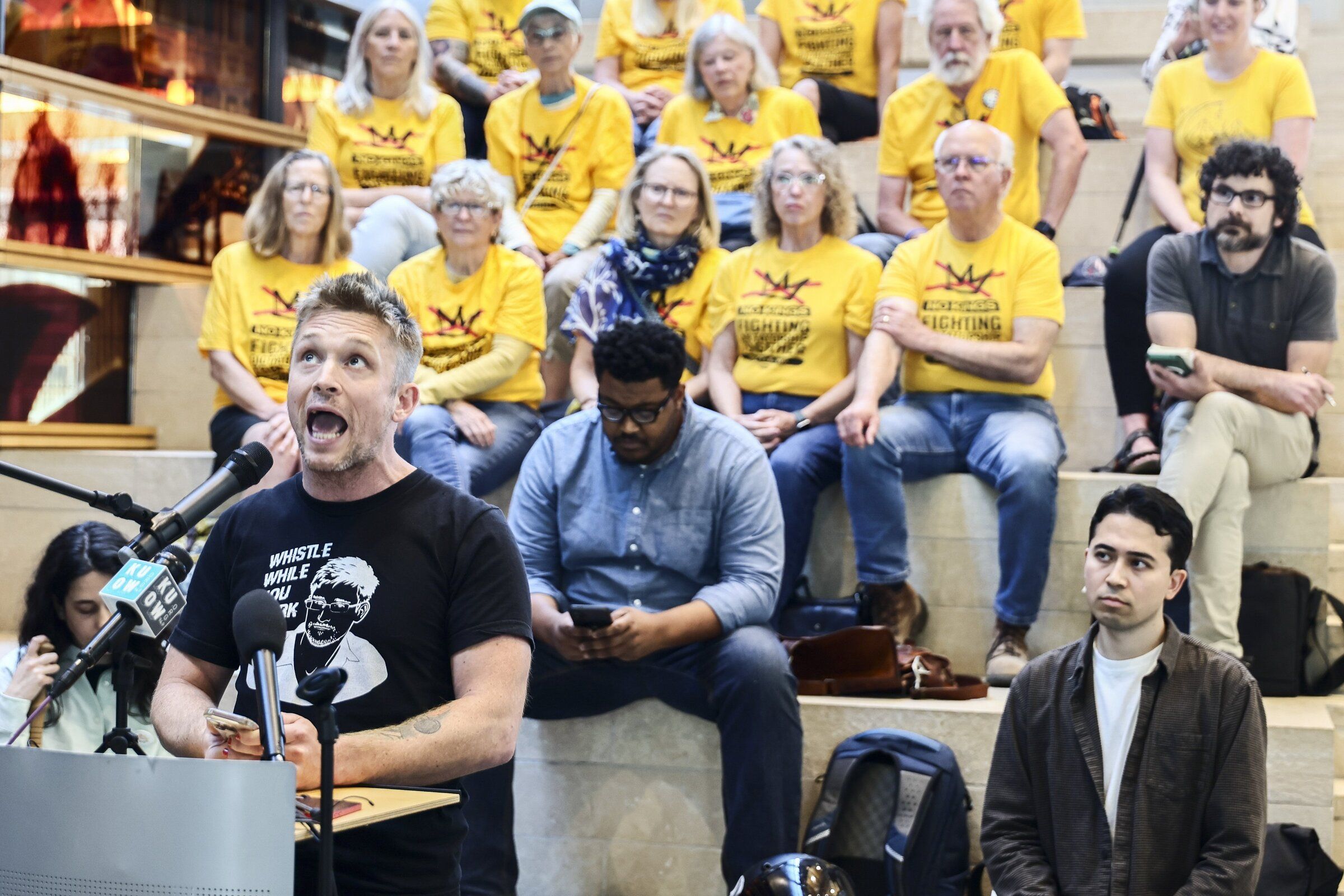
On Monday, however, activists from the “Community Not Cameras” coalition visited the city’s Real-Time Crime Center, where video feeds from across the municipal network converge, and left even more concerned. Coalition member and software engineer Moczyk said that during the tour, center representatives repeatedly emphasized public safety while barely addressing privacy. He said activists asked specific questions about which actions involving cameras or automated license-plate readers were prohibited by city policy and which were technically impossible. According to him, they never received clear answers: officials either responded evasively or said the matter was “covered by policy.” Cybersecurity expert AJ Randall added that the coalition was particularly concerned by the lack of answers about how city rules prevent police abuses similar to those reported in other states. He questioned whether a comprehensive monitoring and auditing system exists to guarantee that the technology is used strictly for lawful purposes.
The dispute has gained renewed force following a recent shooting in the Pioneer Square neighborhood after a Seahawks game. Cameras connected to the monitoring center are installed in the area, but they are currently turned off. They were operating during the recent World Cup, but Mayor Katie Wilson later ordered them shut down while awaiting the results of an audit on civil liberties and privacy. Joe Nguyen criticized the decision, saying the city needs leadership on the issue because residents want to see that their leaders have the tools necessary to do their jobs effectively.
Mayor Wilson, who promised during her campaign to address privacy concerns, has maintained a cautious position. In response to the Pioneer Square incident, her office cited the ongoing independent audit of the surveillance system that the city commissioned earlier this year. A city spokesperson said all residents deserve to feel safe, but added that the interests of different communities must also be considered—from businesses struggling with crime to immigrants, LGBTQ+ people and those seeking reproductive healthcare. Officials have promised that the audit’s findings, which will assess how camera data are collected, stored and shared, will be released this fall and will guide future decisions.
Seattle’s situation reflects a nationwide trend in which cities are trying to balance the use of technology to combat crime with the protection of civil rights. So far, that balance appears to remain out of reach.
For clarity, a real-time crime center is a system that collects and analyzes video from street cameras as well as data from automated license-plate readers (ALPRs), which record passing vehicles and compare them with databases. The poll results and activists’ response were described in a report by the local news outlet KIRO7. The release of the audit results is expected to be a pivotal moment that will determine whether the cameras are switched back on and what new rules governing their use are adopted in the city.