It’s a busy day in Seattle sports: the Mariners opened the MLB offseason with a qualifying offer to Randy Arozarena and a dozen roster moves, while the Seahawks prepare to face the Bears in a game whose main storyline is Seattle’s defense against Caleb Williams and the debut of newcomers following high-profile trades.
Mariners open the offseason with roster moves and a qualifying offer to Randy Arozarena
On the first day of the official MLB offseason, the Seattle Mariners conducted a major roster review, announcing a dozen moves that set the tone for the club’s winter strategy. The day’s biggest development was not the procedural return of players from the injured lists, but a qualifying offer to one of the market’s most valuable free agents, outfielder Randy Arozarena. The move shows respect for the player, provides insurance against risk and reflects a calculated approach to the draft-pick compensation system.
This season’s qualifying offer is a one-year contract worth $23.15 million. Analysts widely expect Arozarena to turn it down: he had the best season of his career and has earned a substantial multiyear deal. For the Mariners, that means they will receive a compensatory pick in the 2027 draft if he signs with another club. According to ESPN insider Jeff Passan, eight players across the league received qualifying offers, including Seiya Suzuki, Brandon Lowe, Trevor Rogers and David Bednar. The deadline to accept is November 17.
At the same time, Seattle returned seven players from the 60-day injured list to its active roster, as that list does not apply during the offseason. They are right-handed pitchers Matt Brash (lat strain), Nick Davila (sternoclavicular joint injury) and Logan Evans (elbow surgery); outfielder Brennen Davis (hamstring strain); infielder Colt Emerson (wrist tendon recovery); as well as Luke Raley (forearm strain) and Michael Toglia (dislocated shoulder). Five players, meanwhile, cleared waivers and were outrighted to Triple-A Tacoma: left-handed pitcher Josh Simpson, right-hander Troy Watson, utility player Weston Wilson, and infielders Will Wilson and Patrick Wisdom.
These transactions are routine but important preparation for the winter. They reflect the organization’s depth and its readiness to open spots on the 40-man roster. Earlier that day, the club announced the signing of reliever Isaac Mattson from the Pittsburgh Pirates, bringing the roster to 39 players. That flexibility will allow the Mariners to be active in free agency and the trade market without worrying about exceeding the roster limit.
The key takeaway is that Seattle is pursuing a two-pronged strategy: retaining control of young and injured assets while protecting itself with a compensatory pick if Arozarena leaves. If the Cuban outfielder does accept the offer—which is unlikely—the club will get an elite player for one season at market value, without a long-term commitment. For a team that in recent years has been balancing contention with rebuilding, this asymmetry of risk seems sensible. But the biggest question remains: can Seattle replace Arozarena’s production if he leaves, and will the front office be willing to invest in an offense that has often been the team’s weak spot in the playoffs?
The terminology is straightforward. A qualifying offer is a one-year contract set at the average salary of the league’s top 125 players. A club must offer it to its free agent to become eligible for a compensatory draft pick if he leaves. Waivers are the process by which a club tries to remove a player from its 40-man roster; if no team in the league claims him, he moves to the club’s minor-league system. The 60-day injured list allows a club to temporarily free a roster spot for an injured player, but it does not apply during the offseason, so those players are returned to the roster.
After all the moves, Seattle enters the winter with 39 players on its roster, room for new signings and a potential draft pick in hand. The next key date is November 17, when Arozarena must decide whether to accept the qualifying offer. His decision will have a major impact on what the Mariners’ offense looks like in 2027.
Seahawks vs. Bears: Caleb Williams faces his toughest test in Seattle
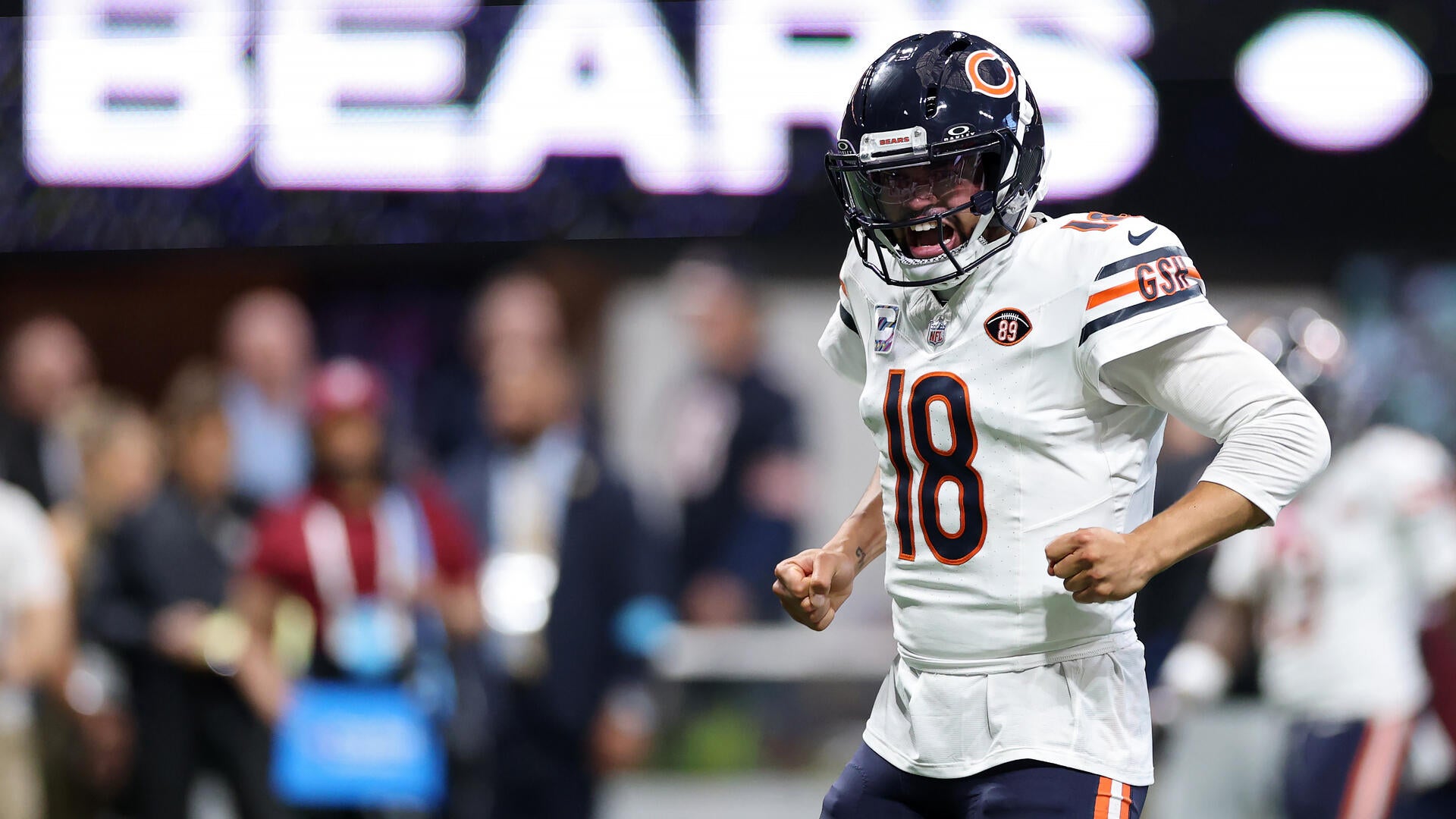
The Week 8 Monday Night Football matchup between the Seattle Seahawks and Chicago Bears centers on one player: young Chicago quarterback Caleb Williams, who is set to face perhaps the toughest defense he has encountered in his professional career. Seattle comes into the game after a statement win over the Kansas City Chiefs, ending a two-game losing streak and restoring confidence that its defense is once again among the league’s best. Chicago, meanwhile, has won both games since Williams returned from injury, improving to 5–2, and looks like one of the league’s best offenses with him on the field. The question of the night is simple: can Seattle make it two wins in a row, or will the Bears pull off a road upset?
One thing to keep in mind while watching is how heavily both teams rely on their stars. According to CBS Sports, Chicago scored 59, 31 and 30 points in Williams’ three starts, excluding the game against Minnesota in torrential rain. The team totaled 552, 368 and 405 yards in those games and turned the ball over just twice. Williams has completed 71% of his passes for 8.2 yards per attempt, both career highs. He has five touchdowns against one interception and 128 rushing yards with two additional scores. Notably, despite an average depth of target of just 7.0 yards, he creates explosive plays at the third-highest rate in the league—on 10.7% of dropbacks—largely thanks to 6.4 yards after the catch per completion, the fourth-best mark in the NFL.
That is precisely where Seattle excels: the Seahawks allow just 4.5 yards after the catch per completion, the third-best figure in the league. They play a lot of shell coverage, close quickly on ball carriers and rarely miss tackles at the second level. Chicago, meanwhile, runs the ball more often than almost any team in the league—on 48.7% of its plays. But D’Andre Swift and Roschon Johnson will have a tough time against Seattle’s elite pass defense, which also uses nickel and dime packages without loading the box. The Bears’ offensive line will have a huge task in moving Seattle’s defensive front, something few teams have managed this year.
On the other side, the Seahawks’ offense is built almost entirely around Jaxon Smith-Njigba, who leads the NFL with 867 receiving yards, 43 receiving first downs and eight touchdowns. He is targeted on 36.3% of the team’s pass attempts—the highest rate in the league—as well as 33.9% of its routes. He has more catches than the next three closest teammates combined: A.D. Barner, Cooper Kupp and Rashid Shaheed have 53 catches and 562 yards between them. They are supporting players who are rarely involved, and Shaheed will also miss Monday’s game. Like every other team in the league, Chicago has no one who can cover Smith-Njigba one-on-one—it simply cannot be done. The only real chance to limit him is to get to Sam Darnold and force him into rushed decisions. Under pressure, Darnold has been dismal: despite missing games with an injury, he leads the NFL with eight interceptions and has completed 26 of 66 passes for 331 yards, two touchdowns and four interceptions, with the league’s second-worst EPA per dropback.
Chicago will look to newcomer defensive tackle Jeffrey Simmons to help. A destructive force on the interior, he ranks among the league leaders in pressures and sacks from the inside. He will face one of the league’s best guard pairings—Quenton Nelson and Grey Zabel—and his snaps may be limited in his first game with the new team. Nelson, meanwhile, is likely to play a full workload in his Seattle debut. The Seahawks’ running game should also get a boost from the expected returns of Zach Charbonnet, who has missed the entire season after tearing his ACL during last year’s Super Bowl run, and Jadarian Price, who has been out since Week 3 with a chest injury. Emanuel Wilson and George Holani have been ineffective, so even slightly below-average production from Charbonnet and Price would be an improvement. Chicago allows an average of 4.4 yards per carry, the 23rd-best mark in the league.
The outlet’s prediction is clear: Seattle’s defense looks like the unit people expected it to be before the season. The Seahawks just stopped Kenneth Walker and should be able to handle Swift, putting the game on Williams’ shoulders. He may be up to the challenge, but doing it against Mike Macdonald’s scheme will be incredibly difficult, especially if Seattle gets Price and Charbonnet back and can establish even a modest running game. Prediction: Seahawks 24, Bears 20.
Trades, injuries and roster absences: Who will play in Bears vs. Seahawks?
Ahead of Monday night’s Week 8 game, the Chicago Bears and Seattle Seahawks released their inactive lists, and they proved almost as interesting as the matchup itself. Both teams made high-profile trades during the week: the Seahawks acquired guard Quenton Nelson, while the Bears landed Jeffrey Simmons. As expected, both newcomers are officially active and eligible to play, though their actual roles remain uncertain.
Seattle’s absences are significant. The team will be without left tackle Charles Cross, running back Velus Jones Jr. and wide receiver Rashid Shaheed, all ruled out before the game. Linebacker Uchenna Nwosu, who had been listed as doubtful, is also inactive. Of the four players listed as questionable—guard Anthony Bradford, quarterback Drew Lock, linebacker Patrick O’Connell and defensive tackle Brandon Pili—Lock and Pili will not play. The Seahawks do get a major offensive boost, however: running backs Zach Charbonnet and Jadarian Price are officially back in the lineup. For Charbonnet, this is his 2026 season debut; he spent the first seven weeks on the PUP list while recovering from a torn ACL. Price had been on injured reserve since Week 3 with a chest injury.
Chicago’s situation is no better. Running back Kyle Monangai is missing his fourth straight game, which was known in advance, but there was uncertainty about cornerback Malik Muhammad and linebacker D’Marco Jackson until the inactive lists were announced. Muhammad is inactive, while Jackson is active. The Bears’ full inactive list is running back Kyle Monangai, quarterback Case Keenum, lineman Jordan McFadden, defensive back Malik Muhammad, and defensive tackles Jordan van den Berg and Jayden Loving. The Seahawks will be without tackle Charles Cross, running back Velus Jones Jr., linebacker Uchenna Nwosu, wide receiver Rashid Shaheed, quarterback Drew Lock, tackle Brandon Pili and guard Beau Stephens.
Muhammad’s absence is a major blow to Chicago’s defense, as he has been the team’s best cornerback. Tyrique Stevenson will take his place; he has been inconsistent this season and will line up opposite Jaylon Johnson, who has also been disappointing. Without Monangai, Roschon Johnson will take on more of the offensive workload as D’Andre Swift’s backup, while Zavier Scott remains the third running back. As for Simmons, head coach Ben Johnson indicated that the newcomer is unlikely to have a full workload in his first game with the team: “Maybe in his first week with us he won’t be used that heavily, but he’s definitely shown that he can carry the load.” With starting interior lineman Grady Jarrett playing 72% of the snaps, Simmons will likely get around 40–50%. Rookie Jordan van den Berg has fallen out of the rotation after a poor first seven games and will now have to fight for any playing time.
A few terms help put this in context. The PUP (Physically Unable to Perform) list is for players who cannot practice because of an injury sustained outside the competitive season; a player on the list misses at least the first few weeks of the season. Injured reserve lets a club temporarily free up a roster spot while retaining the player’s rights. “Questionable” means a player’s chances of playing are roughly 50-50, while “doubtful” means he is unlikely to play. Snaps are individual plays in which a player is on the field; the snap percentage shows how heavily a player is used in the scheme. Finally, guard and tackle are offensive line positions, while cornerback and defensive tackle are defensive positions.
The key takeaway from the roster picture is that both teams enter the game with significantly reshuffled lineups. The outcome will depend in large part on how quickly newcomers Nelson and Simmons adjust to their schemes and whether backups can fill the gaps left by injuries. Chicago’s defense is particularly vulnerable: losing its best cornerback while other players in the secondary have been inconsistent creates a risk against a Seattle offense that is getting two running backs back. For more details and the full inactive lists, see the Sports Illustrated article. Johnson’s caution regarding Simmons also matters: a limited workload for the newcomer could reduce the impact of the high-profile trade in his very first game, forcing the Bears to find internal solutions on the defensive line.