
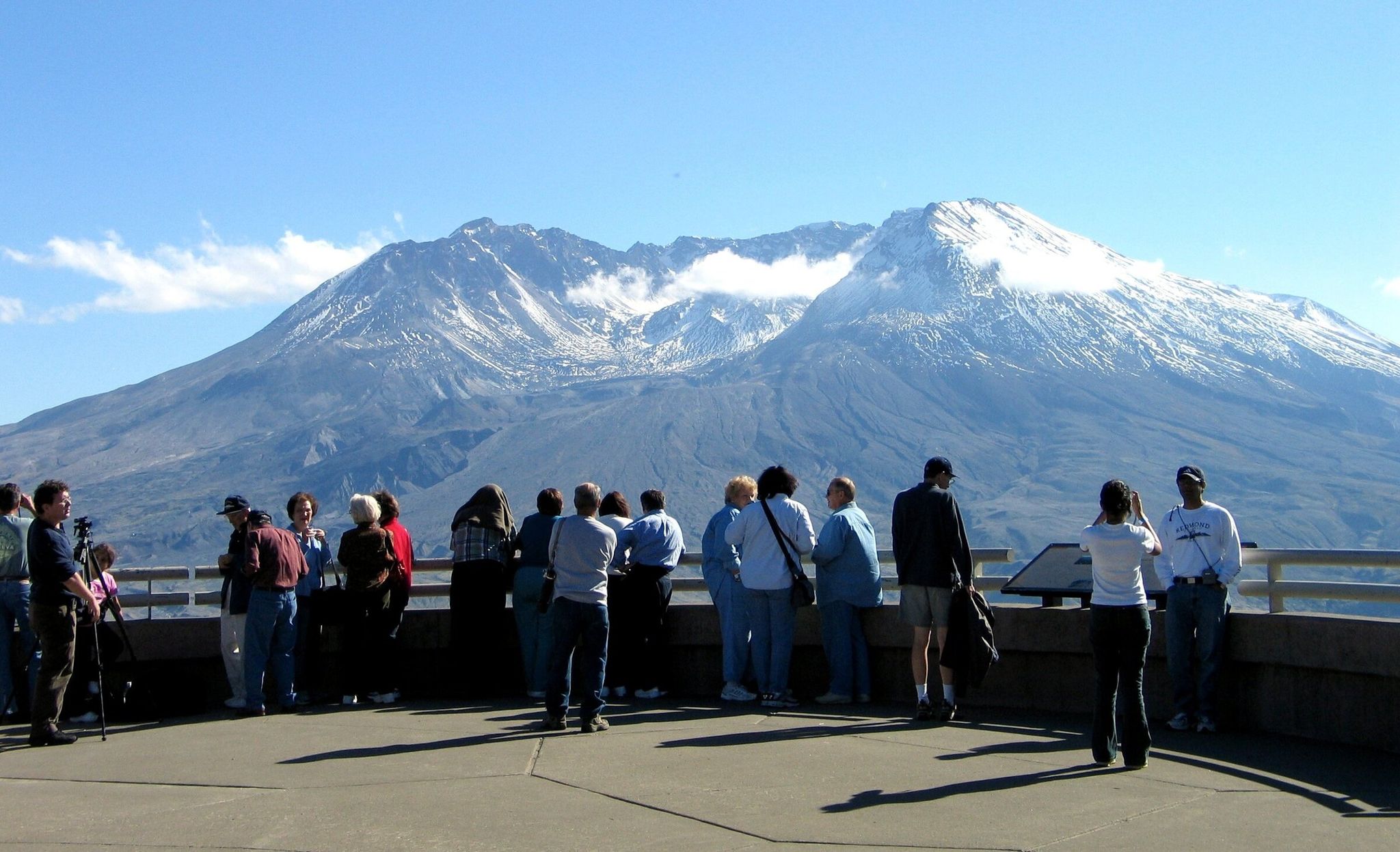
Access to one of Washington state's main attractions — the Johnston Ridge Observatory on Mount St. Helens — was cut off three years ago after a powerful landslide. Named for a volcanologist who died in the 1980 eruption, the observatory is significant because it sits just about 5 miles (8 km) from the crater and serves as a memorial, a scientific center for monitoring the volcano, and a viewpoint with sweeping views of the blast zone. Mount St. Helens became world-famous after the catastrophic May 18, 1980, eruption — the deadliest and most destructive in U.S. history — which dramatically reshaped the landscape.
In May 2023, more than 300,000 cubic meters (about 10.6 million cubic feet) of volcanic material slid down the slope, destroying a bridge and a section of Highway 504. Fortunately there were no fatalities, though some visitors had to be evacuated by helicopter. Now, beginning Wednesday, contractors for the state Department of Transportation will begin permanent repairs to the infrastructure.
Work includes building a new two-lane road and a bridge over the Spirit Lake outlet; the new bridge will be longer than the one destroyed but of similar width. The project is specifically designed to account for the area's complex terrain. Construction is expected to be completed this fall, allowing vehicles to once again travel the full length of the scenic Highway 504. However, the observatory itself, according to the U.S. Forest Service, will not reopen to visitors until 2027.
The prolonged closure of this key site has hurt the tourism economy in Cowlitz County. Local officials say many potential visitors mistakenly believed the entire recreational area around the volcano was inaccessible because of the road problems. In fact, most hiking trails, visitor centers, and overlooks of the national volcanic monument remain open. In addition to the observatory, the monument features several iconic sites that show the aftermath of the 1980 eruption: the Humphreys Ridge Trail with views of lahars and a new lava dome, the Silver Lake Visitor Center, the Red Zone exclusion area viewing blown-down forest, and the Windy Cape Trail that crosses ground scoured by pyroclastic flows that destroyed all life there.
Local officials and tourism representatives hope news of the major road repair will draw attention back to the region and restore visitor traffic. They emphasize that even without the observatory, the area offers striking views and a unique opportunity to see the effects of the famous eruption, which altered river courses and set in motion ecosystem recovery.
Based on: Road repairs to restore access to Mount St. Helens observatory