Seattle and King County are overhauling the homeless-services system, taking control of the money away from KCRHA over violations. Analysts are weighing whether the Mariners should risk the future for added strength this season.
In Seattle and King County, control over millions in homeless-aid dollars is taken from the agency
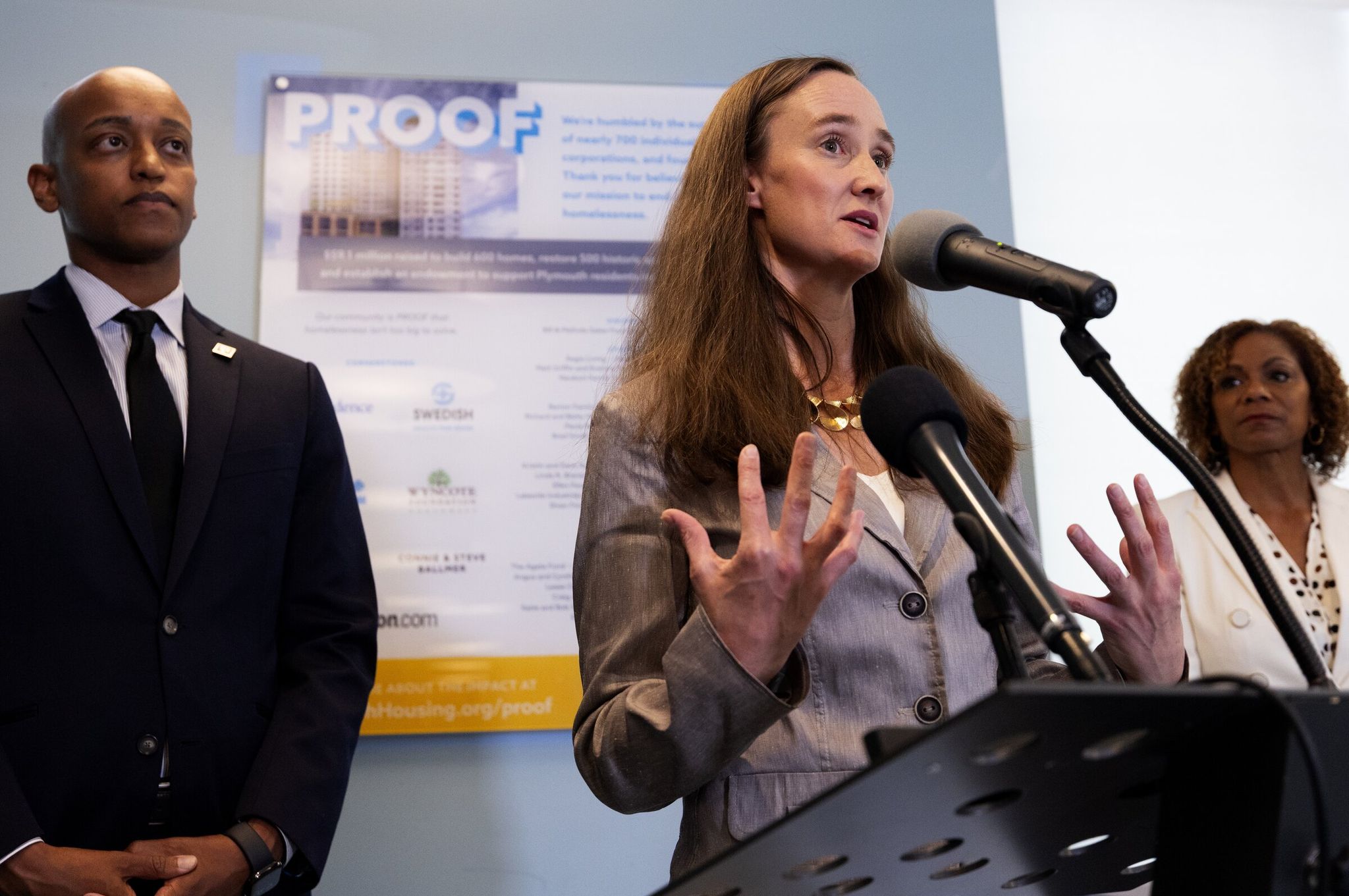
Seattle and King County officials announced a sweeping reform of the homeless-aid system: starting in January 2025, the city and county are taking back control of roughly $160 million in contracts that had previously been managed by the King County Regional Homelessness Authority (KCRHA). Created in 2019 to address homelessness in a centralized way, the structure will now handle only federal and state funding. Seattle Mayor Jenny Wilson and King County Executive Dow Constantine in an interview with The Seattle Times said they want to personally carry the political responsibility for dealing with the crisis. “A big part of it for me is really taking the political accountability,” Wilson said. She said the agency had “structural problems” and was not operating as effectively as authorities require. Constantine added that their decision is not directly tied to the most recent financial audit, but is driven by longstanding “deep structural deficiencies.”
The transition will take about six months, though the exact cost has not yet been named. The county will need to hire 10–12 new staff to manage the contracts, and the city has not yet provided an estimate. Up to 20–25 of roughly 80 KCRHA employees could be laid off. Details on staffing and spending are expected to be released by August 1, 2024. At the same time, officials intend to preserve some advantages of the regional model—for example, making it easier for nonprofits to apply for funding from both the city and the county at the same time. To strengthen financial oversight at KCRHA, a consultant has been brought in whose services will cost no more than $1 million.
The timing is not accidental: the Trump administration has introduced new rules that could put roughly $65 million in federal funding for the region at risk. Officials stress the decision is not meant solely to reassure federal donors, though Constantine noted that it’s important to act proactively to avoid accusations of mismanagement. He cited recent fraud cases in Los Angeles that led to federal grants being frozen. “We believe this path is less risky than the status quo,” he said.
Reactions from city and county councils have been mixed. Some members called the move “a step in the right direction,” but Seattle Councilmember Bob Kettle expressed disappointment, saying the decision was made without consulting the legislative branch and risks breaking up KCRHA without a clear plan for what would replace it. “Good governance means partnership,” he said.
KCRHA will continue, for now, to maintain databases of service recipients, conduct the annual count of people experiencing homelessness, coordinate responses to extreme weather, and administer state funds. But the city and county will take over contracts for emergency shelters, long-term housing programs, and short-term rental assistance. KCRHA CEO Kelly Kinnison said she understands and respects the officials’ decision, but acknowledged it will be a logistical challenge: the contract review work she initiated is being paused. “It stalls progress we achieved since I came in,” she said.
For nonprofits providing services, the changes could mean new bureaucratic procedures and added costs. However, Nicole Macry, a representative for District 43 and deputy director for strategy at the Downtown Emergency Service Center, sees it as an opportunity to rebuild public trust. Karen Lee, CEO of Plymouth Housing, urged that the transition not harm people: “People sleeping outside can’t wait.”
Notably, King County never transferred all of its authority to KCRHA— the county’s Department of Social and Health Services retains a large portfolio of contracts, and in recent months it has faced criticism for weak financial oversight and even fraud by contractors. Constantine said his accountability-boosting steps have already transformed the department and that he is ready to take on additional contracts. Meanwhile, Seattle has already started assuming some functions: former Mayor Bruce Harrell moved homelessness prevention and outreach programs back under direct city control, and current Mayor Wilson has launched a plan to expand the shelter network by 4,000 beds, 175 of which have already been created—entirely outside the scope of KCRHA.
A rescue plan: Seattle and King County take control of the homelessness agency
After a scandalous report on financial irregularities, King County leadership and Seattle city hall announced a major restructuring of the King County Regional Homelessness Authority (KCRHA). The main goal is to prevent a collapse in services for people experiencing homelessness and to restore taxpayer trust.
As reported by MyNorthwest.com, King County Executive Girmaie Zahila and Seattle Mayor Jenny Wilson presented a joint plan that effectively strips KCRHA of a significant portion of its authority. The trigger was the result of an independent forensic accounting review conducted in April. The audit found catastrophic financial management: $13 million in taxpayer money was spent improperly, and the agency’s overall deficit reached $45 million—and continues to grow.
To fix the situation, officials decided to bring in external financial oversight. Before the end of the year, an independent monitoring firm will be installed at KCRHA to oversee billing and payments to service providers. The plan also calls for management of the contracts funded by the city and county to be handed back to King County and Seattle city hall. That means KCRHA loses control over substantial budget dollars that had drawn so much criticism.
Going forward, the agency will focus on a tightly limited set of tasks that are its “core” as the lead organization of the Continuum of Care in King County. What does that mean in practice? KCRHA will keep submitting the annual federal funding application to the U.S. Department of Housing and Urban Development (HUD), coordinating the so-called “Coordinated Entry System”—the mechanism that routes people experiencing homelessness into permanent supportive housing and rapid rehousing programs. The agency will also continue maintaining the local Homeless Management Information System (HMIS), which tracks who receives which services. Another responsibility is the annual “Point in Time” (PIT) count— the one-night census conducted in January of everyone on the street or in shelters, which is a federal funding requirement. Finally, KCRHA will coordinate shelter operations during periods of severe cold and inclement weather.
In essence, it’s a “demotion”: the agency loses the role of central dispatcher for all crisis programs and becomes a technical organization focused on reporting and basic logistics. Direct contracting for shelters and assistance services shifts back to the county and city, which appear to place more trust in their own oversight mechanisms.
In a statement, officials emphasized that they remain “committed to the regional approach.” To find a long-term solution, a working group will be created with participation from other municipalities in the county, service providers, unions, business, philanthropists, and people with lived experience of homelessness. The outcome should be “the future evolution of KCRHA.” In other words, the current plan is viewed as a temporary emergency measure, while the long-term structure of the homelessness response system in the region still needs to be rethought.
The key takeaway: trust in a single regional authority has been undermined by glaring financial violations. Officials chose not to eliminate the agency entirely, but to sharply cut its powers and strengthen outside oversight. For taxpayers, that means hope for more transparent spending—but also the possibility of service delays during the transition. For the hundreds of people experiencing homelessness who rely on KCRHA’s work, the main promise is to prevent disruptions to assistance during the reorganization. The question is how quickly the new model will work in practice.
The contentious “Mariners” dilemma: should the future be sacrificed for a questionable present?
The season for the Seattle Mariners has been uneven. The team enters July with a record just over .500 and is trailing the AL West division leader, the Texas Rangers, by a small margin. With the August 3 trade deadline approaching, it creates a tricky situation. The Mariners arguably have one of the deepest farm systems in the league, but the major-league roster hasn’t lived up to expectations so far. That is what raises the key question that will shape the club’s entire strategy in the trade market.
ESPN insider Jeff Passan, in an interview with Seattle Sports, framed the dilemma bluntly: “We’ve already gotten past more than half the season, and this team is a pure .500—that’s as average as you can possibly get. Should you trade away a potential player in order to try to win something this year?” With many teams still in the playoff hunt, the prices for available players on the market could become prohibitive. Passan says the front office led by Jerry Dipoto and Justin Hollander needs to answer honestly: has this team earned us pushing this season? Does it make sense, after everything we’ve seen, to keep trading away the future? Or maybe you shouldn’t throw good resources into a ‘lemon’—that’s how he described the current Mariners.
In sports, the term “lemon” usually means an expensive purchase or team that isn’t living up to expectations. Here, Passan is hinting that, despite the expectations, the Mariners have—so far—looked like a problematic asset. Still, there are optimistic notes. First, the club has an entire month before the deadline to make a run and strengthen its status as a contender. Second, both the division and the entire American League remain wide open— even after a brief dip below .500, the Mariners still hold a spot in the wild-card picture. So, returning to the original question, Passan allows that arguments for being active in the market still exist.
Seattle’s biggest advantage is its starting pitching rotation. Passan explains: “If we can pitch with anyone, then we’ll be in every game. And in a league like this—where the obvious lead ‘New York Yankees’ have just lost four straight to one of the worst teams in baseball, the Boston Red Sox—if something like that is possible, then the Mariners definitely need to hit the gas this season.” That contrast—strong pitching against an inconsistent offense—captures the difficulty of the decision: whether to risk future talent for an immediate boost when the current roster hasn’t shown consistency. The bottom line: the Mariners are at a crossroads, and their ultimate choice will reveal much about how management assesses the team’s real potential in this season.