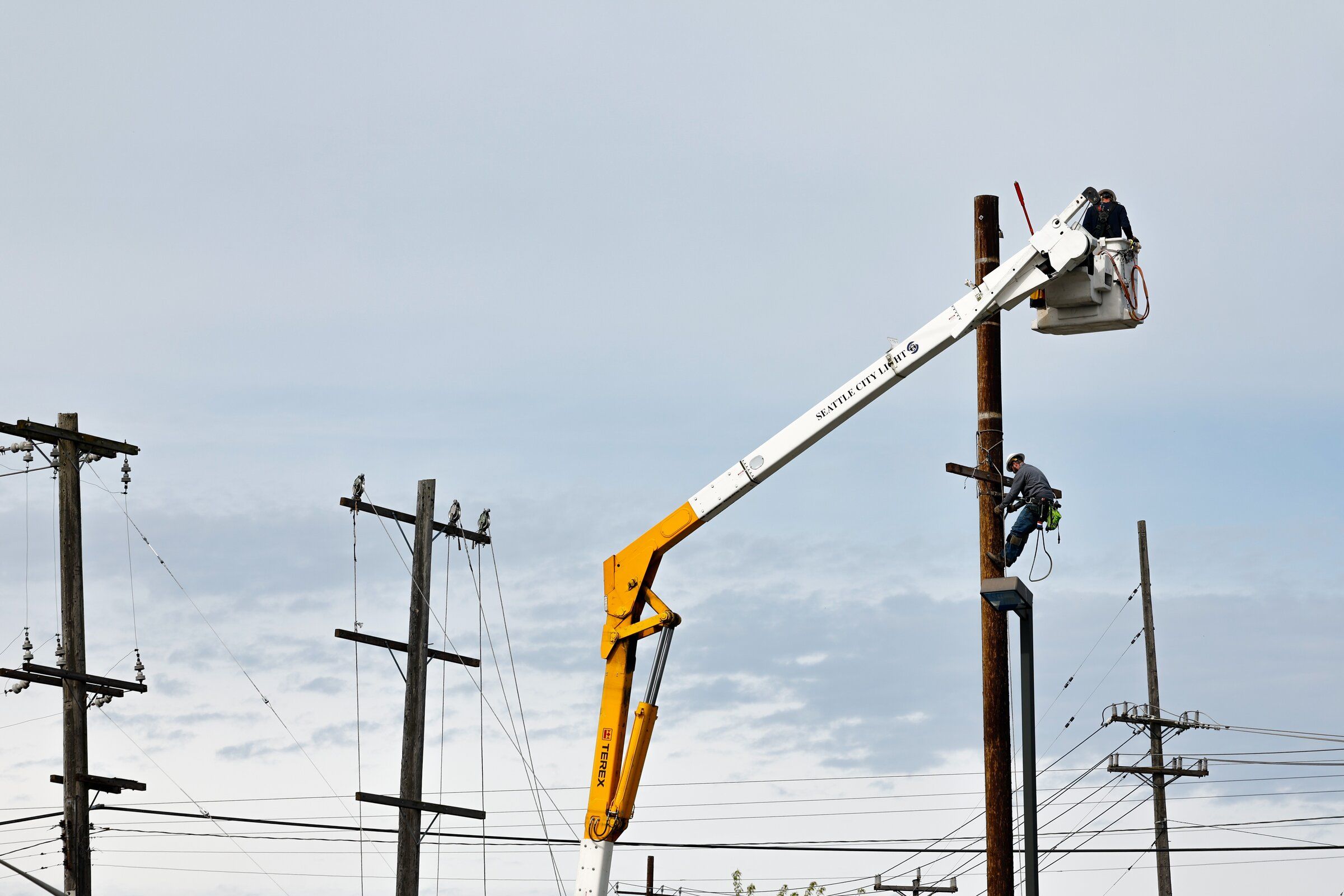
Last June in Seattle turned out to be one of the warmest on record, with an unusual cool spell at the end. Inflation in the region jumped to 4.5%, outpacing New York. In response, the city is expanding a utility-discount program for low-income residents.
Seattle’s June: Record Warmth Under a Mask of Chilly Weather
Last June in Seattle was the eighth warmest on record, based on data from the Seattle-Tacoma Airport weather station (SEA). The average daily high temperature was 73.7 degrees Fahrenheit (about 23.2°C). Notably, the thermometer crossed 90°F (32.2°C) twice during the month: on June 15 and June 23. For comparison, the record June of 2015 still stands on an average high of 78.9°F (about 26.1°C). But behind what looks like a straightforwardly hot picture lies an interesting nuance: if you factor in both daytime and nighttime temperatures, June’s average temperature in Seattle was 64.0°F (17.8°C)—the seventh-highest on record. Most striking is the sharp contrast between the first and second halves of the month.
From June 25 to July 6, the Puget Sound region saw unusually cool weather, brought on by an influx of maritime air from the Pacific Ocean. For 11 days, the average daily high barely reached 68.2°F (about 20.1°C), while the typical norm for early July is the mid-70s°F (about 24°C). This “cold stretch” was notable less for precipitation (just 0.1 inch, or 2.5 mm, of rain fell on June 25 and June 26) than for the dominance of marine cloud cover, which, however, often cleared in the second half of the day to make way for sunshine. Only on July 6 did temperatures finally climb to 85°F (29.4°C), ending the lingering cool spell.
Looking ahead, meteorologists remind that July is historically the hottest month of the year. According to the latest end-of-July forecast, the odds of conditions that are warmer and more humid than average are high. Forecasts suggest atmospheric circulation will bring southerly flows that will push warm air northward while also increasing the likelihood of monsoon moisture moving in from the desert regions of the U.S. Southwest. That means not only high temperatures, but also the threat of brief downpours and thunderstorms—especially to the east of the Cascade Mountains, bad news for those worried about new wildfires. The long-range summer outlook also predicts warmer-than-usual weather with below-normal precipitation.
Still, compared with the scorching heat that has gripped much of the rest of the country, the weather on the west side of Washington State this summer so far looks “air-conditioned.” As KIRO Newsradio meteorologist Ted Buehner notes in his piece on MyNorthwest.com, behind the cool mask at the end of June was, in fact, one of the warmest Junes in Seattle’s history. This paradox is a great example of how isolated weather anomalies can obscure the overall climate trend.
Seattle Inflation Jumps to Nearly 5%: Prices Higher Than in New York
The economic situation in the Seattle-Tacoma-Bellevue metro area is continuing to worsen for local residents’ wallets. According to fresh data from the U.S. Bureau of Labor Statistics, annual inflation in the region reached 4.5% for June, the second-highest figure among all major metropolitan areas in the country. That’s well above the nationwide rate of 3.5% and above the average for Western states (3.2%). By comparison, even traditionally expensive New York came in 0.4 percentage points lower. Only the Philadelphia-Wilmington-Camden region topped Seattle, where prices rose 5.4% over the year.
The main driver of the increase has traditionally been energy. The overall energy price index jumped 20.7% compared with June 2025, with gasoline up 24.7% over the year. That hits motorists directly and raises transportation costs for businesses, which inevitably gets built into the final price of goods. But it’s not only fuel that’s troubling consumers. Clothing prices surged 14.7%, fruits and vegetables rose 11.7%, and recreation and entertainment (including pet supplies, televisions, toys, sports equipment, and museum tickets) increased 9.8%. Dining out added 6.2%, while grocery prices rose more modestly—just 0.9%. Housing, the biggest spending category, was up 2.1% year over year, though over the two-month period the increase was minimal (0.6%). Meanwhile, an unexpected jump of 5.1% was recorded in the “home goods and services” category—covering furniture, appliances, bedding, and other household items.
It’s important to understand that the consumer price index (CPI) published by the Bureau of Labor Statistics isn’t just a number from the news. It measures the average cost of a fixed basket of goods and services (housing, transportation, food, medical care, and recreation) that typical city residents buy. In Seattle, this index is published every two months and is based on a smaller sample than the national one, so local figures may be more volatile. The Bureau specifically warns that these data aren’t meant for direct comparisons of price levels between cities—they only reflect trends in a specific region. Still, the trend is clear: life in Washington State’s capital is getting more and more expensive, and there are no signs that price growth is slowing. As noted in a KOMO News article, earlier research found that a single resident of Seattle needs to earn about $135,000 a year for a “comfortable life”—the sixth-highest figure in the country. With current inflation, that benchmark is likely to rise even higher.
Only a few categories bucked the broader trend: over the two-month period (May–June), prices for medical services and for recreation goods even dipped slightly, but that offers little comfort against the overall increases in almost everything else. Unless the Federal Reserve changes its monetary policy, Seattle residents will likely have to keep squeezing their budgets—especially given that wage growth often doesn’t keep pace with price growth.
Power Bill Growth: Seattle Expands Utility Relief Program
The Seattle City Council voted unanimously to expand the utility-discount program that will begin next year. About 31,000 new residents are expected to be able to use the benefits due to a technical change in the income calculation rules. Previously, the state’s median income was used to determine eligibility, but now the average income for the Seattle metro area will be applied. Because earnings in the metro and suburbs are significantly higher than in the rest of the state, the eligibility threshold will rise: it used to be a little over $50,000 per year, but now those who earn nearly $70,000 will qualify for the benefit.
Program participants will receive a 60% discount on electricity bills from Seattle City Light and a 50% discount on water and sewer bills from Seattle Public Utilities. Councilmember Dan Strauss, who authored the bill, emphasized that it is substantial work that doesn’t attract loud attention. For most city residents, the cost of expanding the program will be about 75 cents per month—25 cents for water and sewer bills, and 50 cents for electricity bills.
The utility-discount program has existed in Seattle since the 1980s, but its reach has always been limited: among those eligible, only about one-third (roughly 40,000 people) actually participated. Strauss hopes that now that the eligibility criteria will align with those of other local assistance programs, the application process will be simpler and participation will grow. As he said at a briefing last month, “the city has been doing this wrong for a long time.”
The expansion comes amid rising electricity rates in Seattle and across the country. As noted in an article by The Seattle Times, City Light (the municipal utility company) is being forced to find new—likely more expensive—sources of clean energy to meet rising demand. At the same time, the costs of materials and labor have surged, and a huge backlog of infrastructure modernization work is estimated in the billions of dollars. On top of that are deferred rate increases during the pandemic period—so bills are already rising. Earlier this year, the city council approved a 9.5% rate increase, the largest in recent years.
Thus, the new measure is intended to ease the financial burden on low- and moderate-income households as utility costs inevitably rise.