
Nearly a thousand families in Washington state were left without homes after summer wildfires. Governor Bob Ferguson is pushing to let those affected build homes to the 2015 energy codes, which are less stringent than the current rules. He believes this would lower upfront costs and help people rebuild faster.
The state Building Code Council disagrees, warning that cheaper construction could mean higher heating and electricity bills. The council is responsible for reviewing and updating building requirements under the authority and procedures established by law, but it cannot suspend rules at will, even in an emergency. Separate statutory authority or a decision by another government body may be required. The council has not yet made a decision and is considering possible compromises. The dispute raises a broader question: how aggressively should the state pursue energy efficiency if new requirements raise housing costs and could make construction more difficult?
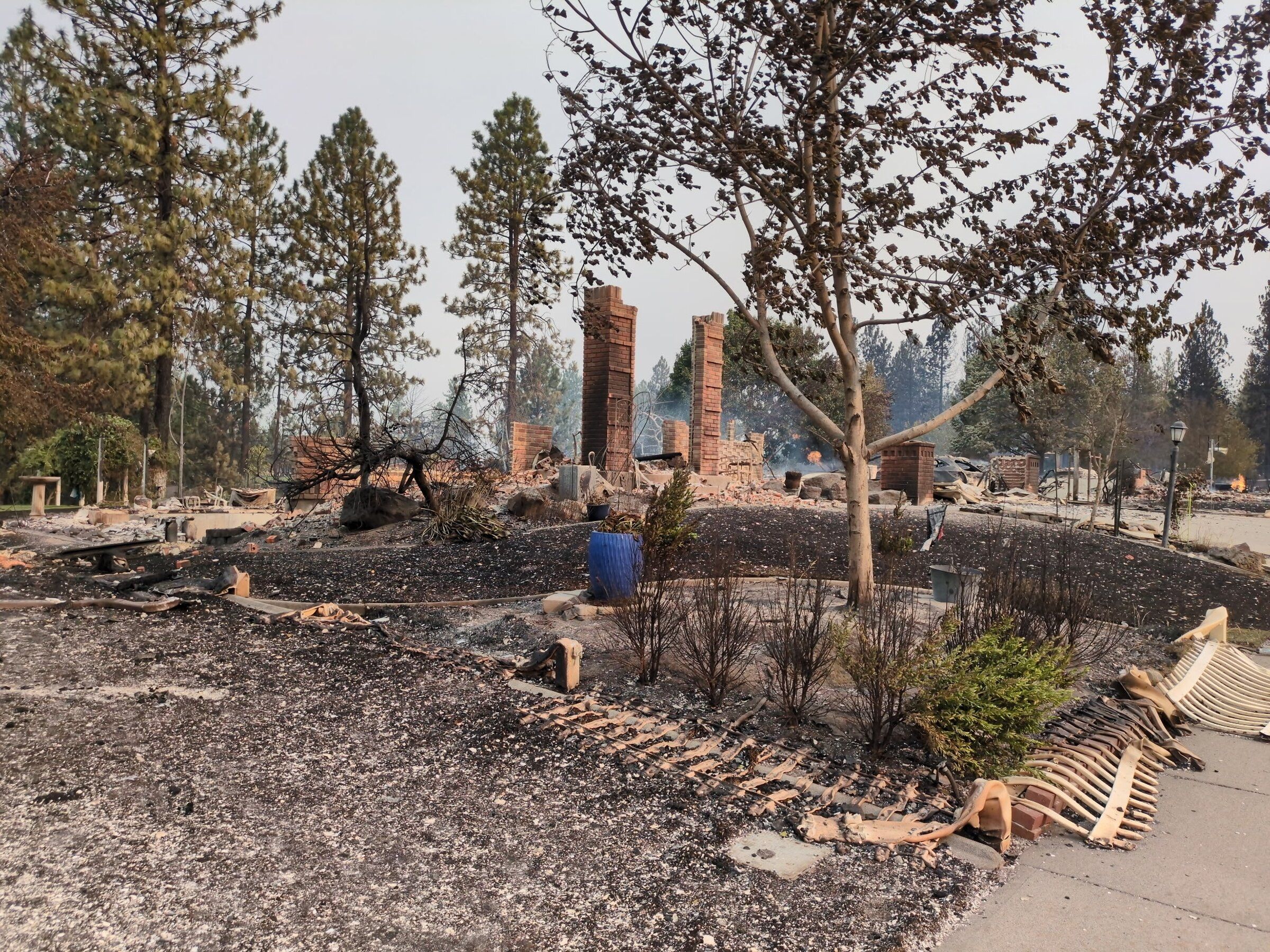
Adam Morrison and his family decided to rebuild their home in Spokane, where only the brick columns at the entrance survived the fire. Their insurance payout has not yet been determined, so the family plans to reduce the size of the new home from nearly 4,000 to 2,800 square feet. Morrison does not want to take out another mortgage with interest rates above 7%. He supports allowing construction under the previous rules, especially for neighbors whose insurance payouts may fall $200,000 to $300,000 short.
Spokane is in the eastern part of the state, where winters are generally colder and summers hotter than in the milder, wetter western part of Washington. As a result, homes need more intensive heating for longer periods, which can mean higher costs. Insulation, the type of heating system and energy rates also affect bills.
Nine days after the fires began, Ferguson declared a state of emergency and directed the council to determine which building requirements could be temporarily waived. The council did not recommend suspending the rules: it had received no evidence that they were hindering rebuilding and questioned whether it had the authority to do so. The governor later proposed allowing owners of homes built before 2015 to use that year’s codes, while owners of newer homes could use the standards in effect when their homes were built. A vote on several options for assistance is scheduled for October 30.
No one has calculated exactly how much reverting to the older requirements would save. The governor’s office says the savings could amount to thousands of dollars, while a representative of the construction industry estimates $30,000 to $40,000, mainly from solar panels, heating equipment and insulation. The council disputes those estimates, noting that some equipment permitted under the older code is no longer manufactured. Meanwhile, high mortgage rates have made financing energy-efficient features significantly more expensive.
Supporters of strict standards argue that the investment pays off through energy savings and helps reduce emissions: burning fossil fuels in residential buildings accounted for about 7% of the state’s greenhouse gas emissions in 2022. Avista, an energy company that supplies electricity and natural gas to much of the region, warns that switching to all-electric heating will require grid upgrades. If many homes switch from gas to electricity at the same time, both consumption and peak demand will rise. Larger transformers and power lines may be needed, and the cost of upgrading the distribution network could be passed on to consumers.
Spokane County officials stress that future savings on utility bills mean little to families who cannot afford to build: they will not be able to rebuild their homes at all.
The dispute is unfolding amid a housing shortage and rising construction costs. State officials estimate that Washington needs more than 50,000 new homes each year through 2044, while permits were issued for about 35,000 housing units in 2025. State lawmakers have already floated proposals to freeze updates to building codes and abandon the 2031 energy-efficiency target. The proposal did not pass, but construction groups expect it to return. As the council prepares to consider measures for those affected, the Morrison family’s lot has still not been cleared, and they do not expect to return home before next summer.
Based on: WA officials split on easing energy codes for homes rebuilt after wildfires