The Seattle Mariners are going through an eventful stretch: Cal Raleigh’s star performance, featuring three home runs against Philadelphia, and the loss of top prospect Colt Emerson to a wrist injury that has ended his rookie season.
Cal Raleigh’s Triumph: How Seattle Routed Philadelphia and Made Its Mark
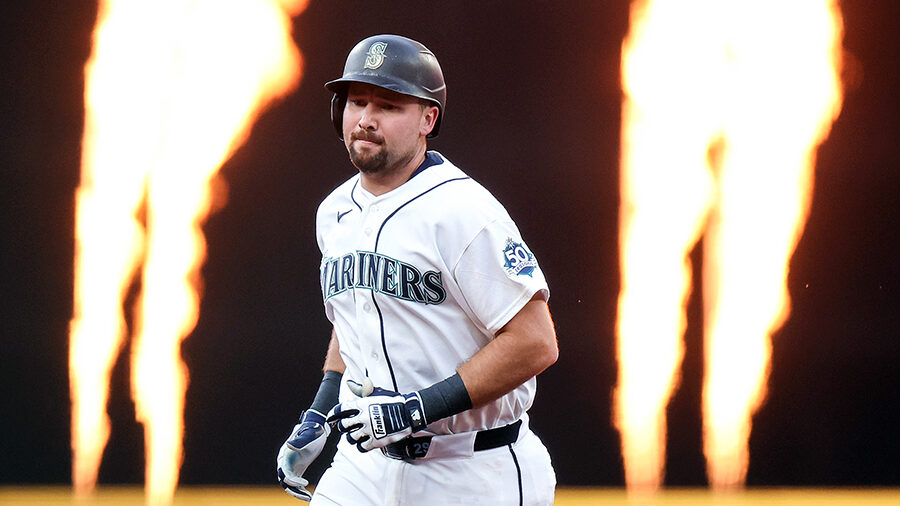
Monday night at T-Mobile Park was truly historic for Seattle Mariners fans. Their favorite, catcher Cal Raleigh, put on a spectacular show by hitting three home runs in a single game—the first time anyone in franchise history had done so at the team’s home stadium. This was more than just a hot streak; it was a powerful statement from a player who reached the heights of the sport just a year ago by hitting 60 home runs in a season. Exactly 11 months ago, on September 24, he reached that milestone, and now he seemed determined to remind everyone what he can do when he gets into a rhythm. The game ended 9–2 in favor of the home team, forcing Philadelphia, which had entered the game on an impressive nine-game winning streak, to surrender.
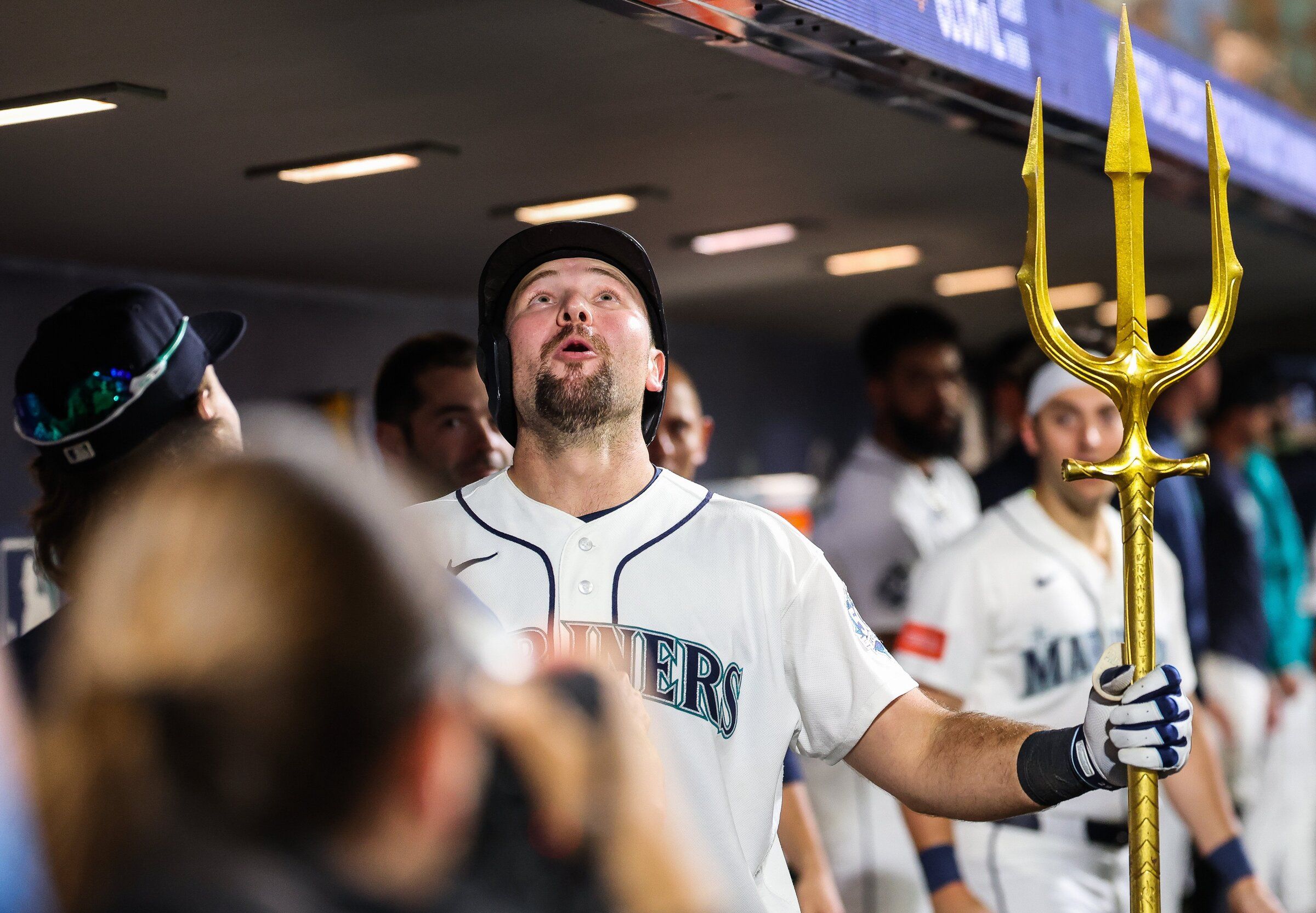
From the very beginning, it was clear that the evening would be special. Raleigh began his show in the first inning by sending a ball into the stands, then continued in the fifth and seventh. Notably, he hit two of the three home runs against Zack Wheeler, a three-time All-Star. Wheeler endured one of the worst outings of his career: four home runs and eight runs allowed were career-worst marks. Raleigh’s third and final home run was especially dramatic—the ball sailed over the head of Bryce Harper, who desperately tried to leap over the wall but could only watch the ball disappear. The performance made Raleigh the first Mariners player to hit three home runs at T-Mobile Park since it opened. Overall, the last player in franchise history to do so at home was Edgar Martinez, back in 1999 at the old Kingdome.
Raleigh was not the only player to shine that night. Julio Rodríguez, the team’s center fielder, also stood out by hitting his 20th home run of the season. The blast was symbolic: it extended his streak to five consecutive years with at least 20 home runs, and he now needs only four stolen bases to reach 20 home runs and 20 stolen bases for the fifth straight time. Young Cole Young, who started the game, also joined in with a solo home run to make the score even more lopsided. On the mound, Logan Gilbert put together a solid performance, pitching five innings, allowing only two runs, and earning his 11th win of the season. His work helped preserve the lead and guide the team to a convincing victory.
The win has major implications in the standings. Seattle improved to 63–69, cutting its deficit in the American League West to three games. The Texas Rangers took over the division lead that same evening, but the Mariners remain in the playoff race. They are also three games behind the Cleveland Guardians in the battle for the final wild-card spot. With less than a month remaining in the regular season, every game is becoming decisive, and such a convincing win over one of the league’s strongest opponents gives fans renewed hope. It may be exactly the boost the team needs to make a late push at the most important point of the season. Experts have already begun discussing the possibility that Seattle could become the dark horse of the fall if Raleigh continues to perform at this level and Rodríguez maintains his consistency.
It is worth explaining what a home run is: it is a hit that allows the batter to touch all the bases and score a run for his team. If other players are on base, they score as well, which is why three-run home runs, such as Rodríguez’s, are especially valuable. As for Zack Wheeler, he is considered one of the National League’s best pitchers, making his struggles a major surprise. Raleigh, meanwhile, is known for his power, but this season has been difficult for him, so three home runs in one game are a strong signal that he is rediscovering his best form. A Seattle Sports article notes that all of Raleigh’s hits came from the left side of the plate, making him even more versatile and dangerous for opposing teams. It remains to be seen what happens next, but one thing is certain: this is an evening that will be remembered for a long time and could become a turning point in the season for the “blue and teal.”
Injury Ends Seattle’s Top Prospect’s Rookie Season
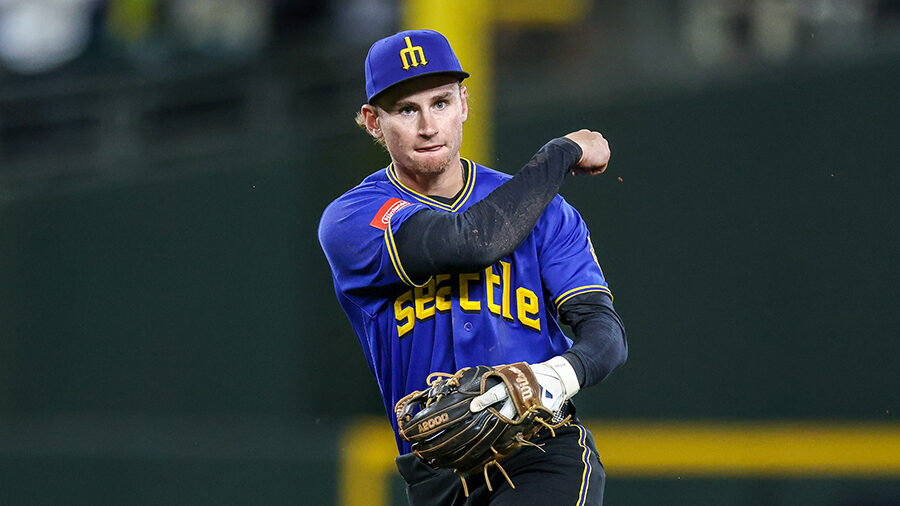
Ups and downs are a normal part of a young athlete’s career, but sometimes a string of setbacks receives an unexpected—and unfortunately logical—explanation. That is what happened to 21-year-old Seattle Mariners shortstop Colt Emerson, whose first Major League Baseball season has ended early because of a wrist injury requiring surgery. Emerson’s year is a classic example of how hidden pain can turn a promising start into a disappointing finish—and how important it is to acknowledge a problem in time, even if doing so means leaving the roster.
According to Seattle Sports insider Shannon Drayer, surgery on Emerson’s left wrist is scheduled for Wednesday. Despite the seriousness of the procedure, Emerson is expected to make a full recovery and be ready for the start of spring training in 2027, although doctors will monitor his condition closely. The news marks the final point in a series of events that began on August 14, when the player was placed on the 10-day injured list with inflammation of the wrist tendons. At the time, it appeared to be only a temporary setback, but a conversation with the front office changed everything.
The most interesting turn in the story occurred before the official announcement. Emerson was initially supposed to be sent to the minor leagues, but during a meeting with manager Dan Wilson and the team’s executive director, he honestly admitted how severe the pain in his wrist had become. The revelation, reported by Ryan Divish of The Seattle Times, proved decisive: instead of being demoted, Emerson was placed on the injured list. The development says a great deal—first, about the trust between the young athlete and the coaching staff, and second, about how directly Emerson’s late-season statistics were connected to his physical condition.
The numbers paint a troubling picture. In just 69 games at the highest level, Emerson posted a modest .190 batting average with a .581 OPS, hitting eight home runs and six doubles while “earning” 83 strikeouts against only 15 walks. However, those statistics are misleading without context. The left-handed infielder made his debut on May 17 and immediately announced his arrival by hitting a home run in his second game. Through June 16, his numbers looked impressive: a .241 average, an .867 OPS, and an outstanding 145 wRC+, meaning he was 45% more productive than the league average. Then came a sharp decline. Over his next 45 games, his batting average fell to .162 and his OPS collapsed to .420. The most alarming warning sign was a staggering 38.3% strikeout rate, indicating serious problems with coordination and swing timing that may well have been caused by the wrist pain.
This season was supposed to be Emerson’s breakthrough year. He began it ranked as the No. 7 prospect in all of baseball by MLB Pipeline, and on March 31 he signed a record-setting pre-debut contract for eight years and $95 million, keeping him with the Mariners through 2033. The club’s investment underscores how highly it values the young shortstop’s talent. Now the team and player must not only restore his health but also prevent a disappointing debut from damaging the confidence of a promising athlete.
In the long term, this injury may prove to be only a brief episode in a lengthy career. The early diagnosis of the problem, even if delayed, offers hope that after surgery and full rehabilitation, Emerson will return as the player Seattle expected him to become. For the Mariners, it is also a test of patience—they will have to build next season without one of their key young assets and rely on other candidates in the middle infield. The break may even benefit Emerson himself, giving him time not only to heal his hand but also to reassess his approach to playing at the highest level. As the careers of many stars have shown, early difficulties often become the foundation for future success.
Mariners Captain Puts on a Show: Raleigh’s Three Home Runs Turned the Game Around
On Monday night at the stadium in Seattle, something happened that Mariners fans will remember for a long time. Cal Raleigh, the team’s starting catcher, delivered perhaps the best game of his career, hitting three home runs against the Philadelphia Phillies—a team that had recently been regarded as one of the most formidable forces in the league. The lopsided victory not only strengthened Seattle’s position in the standings but also gave its fans a rare evening of pure baseball enjoyment.
Three home runs may not sound extraordinary. In Major League Baseball, it happens, although not every day. But the context and the opponent matter. The Phillies arrived in Seattle riding an impressive winning streak; their pitching looked nearly unhittable, and their lineup commanded respect from every opponent. Against that kind of team, Raleigh, who had not always been consistent this season, single-handedly decided the outcome. His third ball over the wall was accompanied by a characteristic roar—a signature gesture from the catcher that seemed to say, “We’re not here by accident.”
Seattle has long built its identity around pitching and defense, but offensive performances like Raleigh’s are what turn a good team into a dangerous one. When a catcher, who is usually responsible for working with pitchers and playing defense, begins carrying the offense as well, it is a serious indication that the Mariners are ready to fight for a playoff spot. Three home runs in one game were not only a personal milestone for Raleigh but also a powerful signal to the entire club: the offense is waking up.
As for the game itself, it unfolded according to a script Phillies fans will likely want to forget. The visitors’ pitchers never found an answer for Raleigh, who clearly felt comfortable every time he stepped to the plate. After his first home run, the score was tied; after the second, Seattle took the lead; and the third turned the game into a formality. The Mariners’ defense also gave the opponent no opportunities, allowing the team to dominate throughout the game.
For those who are not deeply familiar with baseball terminology, a home run is a hit after which the batter touches all four bases and scores a run—or several runs if teammates are already on base. Three home runs in one game are sometimes called a “three-homer game,” a sign that a player is in ideal physical and mental form. Raleigh was not merely hitting—he was reading the opposing pitchers like an open book, which is especially valuable against a strong pitching staff like Philadelphia’s.
Interestingly, the game also served as a test of Raleigh himself. His statistics early in the season were far from ideal, and critics had already begun writing him off as an offensive player. But nights like Monday are the best reminder that everything can change instantly in baseball. One good day, one string of pitches, and yesterday’s “weak” hitter becomes the hero of the night.
The atmosphere at the stadium also deserves mention. Seattle fans, known for their passion, turned the game into a celebration, greeting each home run with cheers and chants. The Mariners’ players in the dugout were equally unable to contain their emotions, while Raleigh himself clearly savored the moment after his third hit, understanding that such nights do not happen often. That is the beauty of baseball—it can deliver surprises even in the most familiar settings.
The victory over Philadelphia has strategic significance for Seattle. First, it provides a psychological boost before a series of home games. Second, it sends competitors a message that the team can challenge the leaders. Raleigh will undoubtedly become the main topic of discussion in sports media, and deservedly so. But it is important to remember that baseball remains a team sport, and the Mariners’ success is the result of the entire group, from the pitchers to the position players. Raleigh became the face of the victory—the player who took on the role of the evening’s hero.
As for the game’s long-term significance, it may well become a starting point for Seattle’s season. A team that spent the year balancing winning and losing stretches finally showed what it can do at full strength. Fans can only hope that this night becomes the rule rather than the exception. More about the game can be found in the original Seattle Times article, which also includes photographs from the memorable matchup.
Still, Philadelphia should not be counted out. One loss, even a heavy one, does not make a team weak. The Phillies have too much talent and too experienced a coaching staff to panic. Rather, this is a warning: there are no easy opponents in the playoffs, and any game can end unexpectedly. For Seattle, meanwhile, the matchup was a perfect example of how capitalizing on opportunities and believing in yourself can change the course of a contest against a favorite.
And yet, returning to Raleigh: performances like this are remembered forever. When his career is over and fans look back through the statistics, they will remember evenings like this—when one player carried the team on his shoulders and led it to victory. Three home runs against one of the league’s best teams are the stuff of legend. The Mariners now know that when their catcher is locked in, they can beat anyone.