
Dignity Village in Portland, Oregon, is home to about 60 people who previously experienced homelessness. They live in small homes they built themselves and run the community independently—from funding and maintaining the grounds to resolving conflicts.
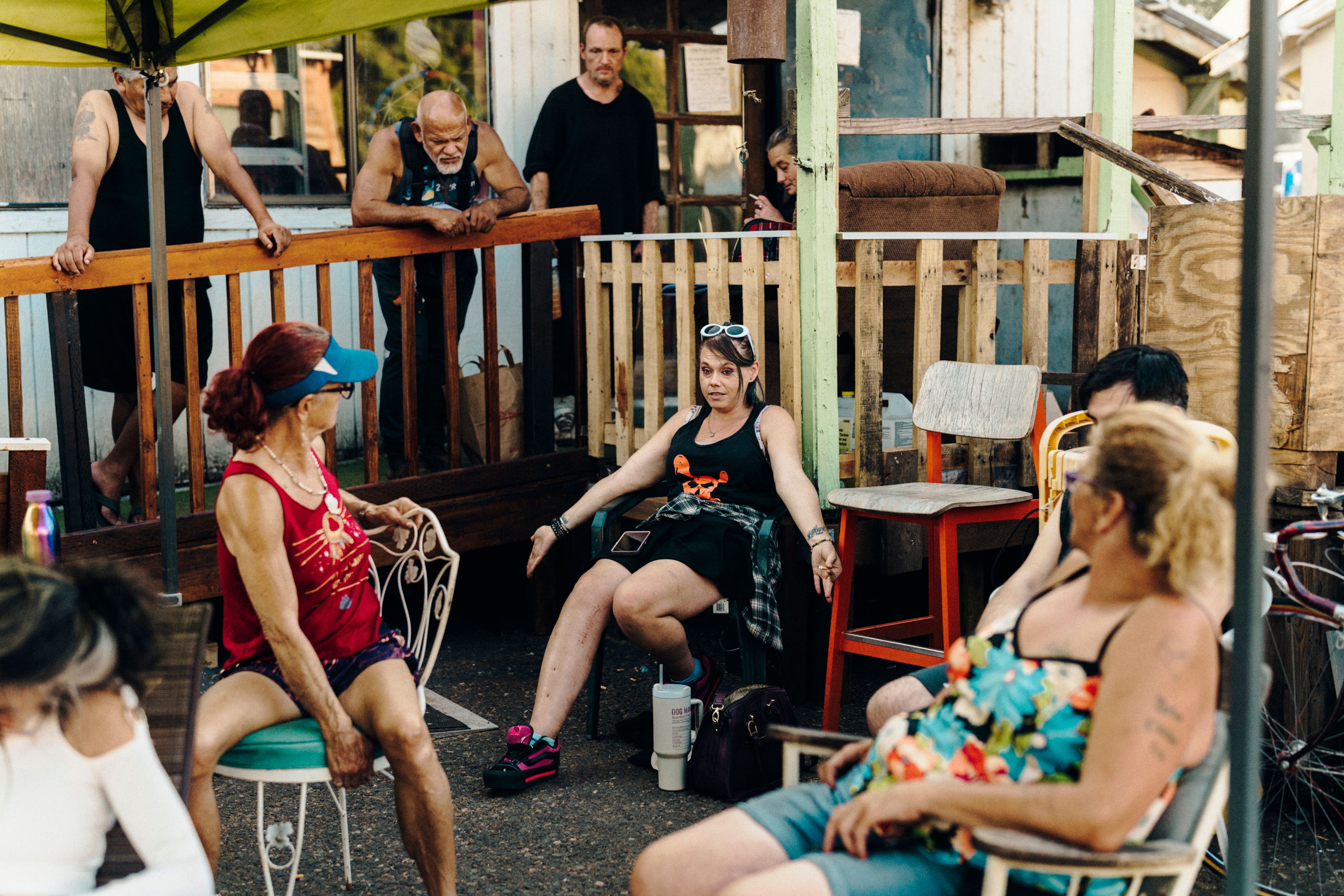
One evening, the village council addressed a personal dispute involving a woman, her current partner and her former boyfriend. After a discussion, the parties agreed to stop sending unwanted messages and avoid one another. Such proceedings take place in the communal Commons building, which serves simultaneously as a kitchen, living room and informal courtroom.
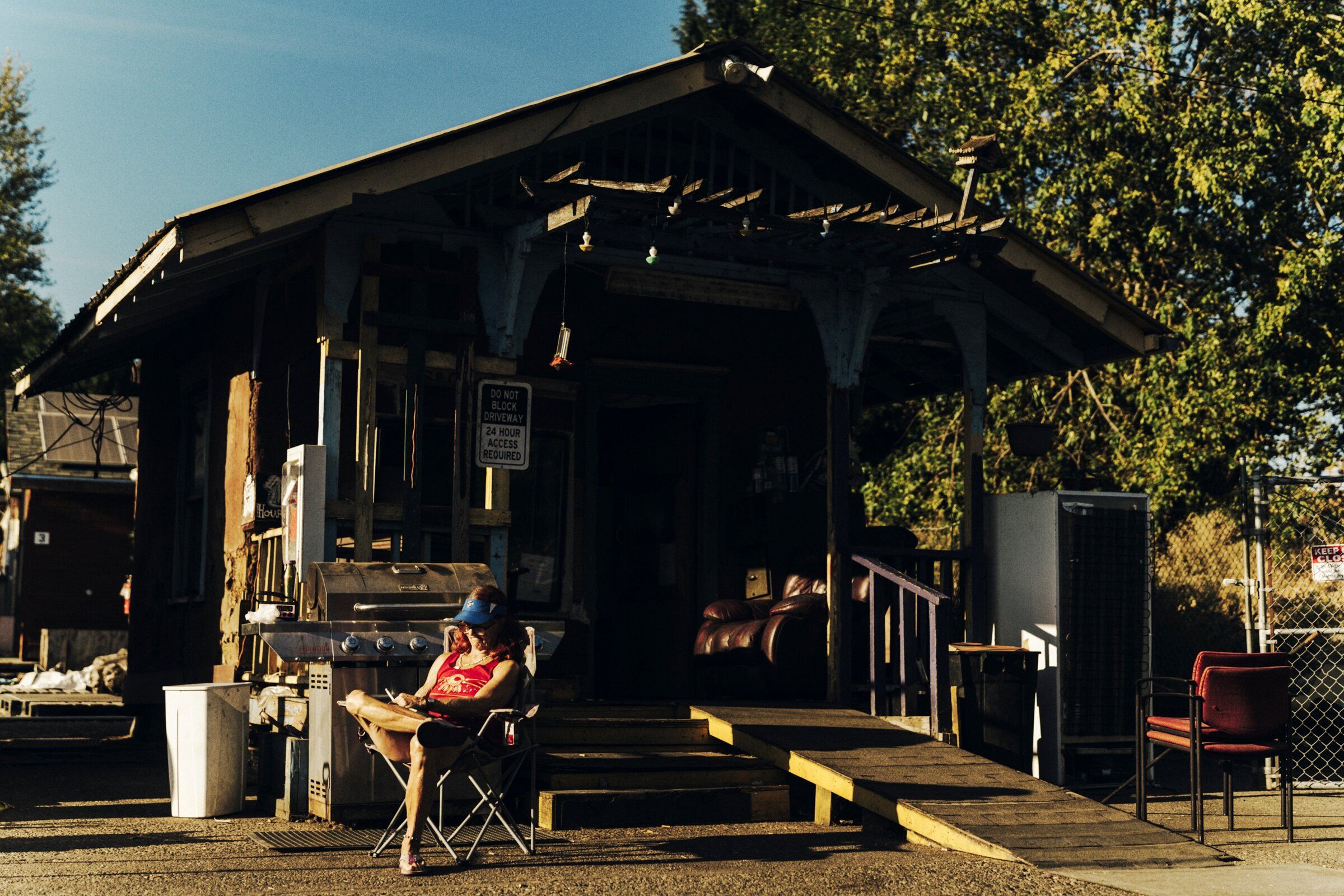
Dignity Village was established in 2001 after homeless Portland residents, tired of constant evictions from camps beneath bridges, occupied a site near the city’s organic-waste processing facility. Officials allowed them to stay, formally designating the area as a city campground. Over time, tents were replaced by sturdier cabins, while volunteers helped create a bathhouse, computer room, security post and greenhouse.
Residents are required to work for the benefit of the community for about 10 hours a week. They pay dues, accept donations and earn money through small enterprises, including firewood sales and groundskeeping services. The village’s annual budget is about $60,000—roughly $1,000 per resident, far less than the cost of conventional municipal shelters.
The community is governed according to principles of mutual aid and resident participation. Most violations do not result in immediate expulsion. Instead, the village relies on social pressure, incident reports and support from neighbors. Violence is the main exception. Residents say accountability to their peers feels different from reprimands by staff at a traditional shelter and provides stronger motivation to change their behavior.
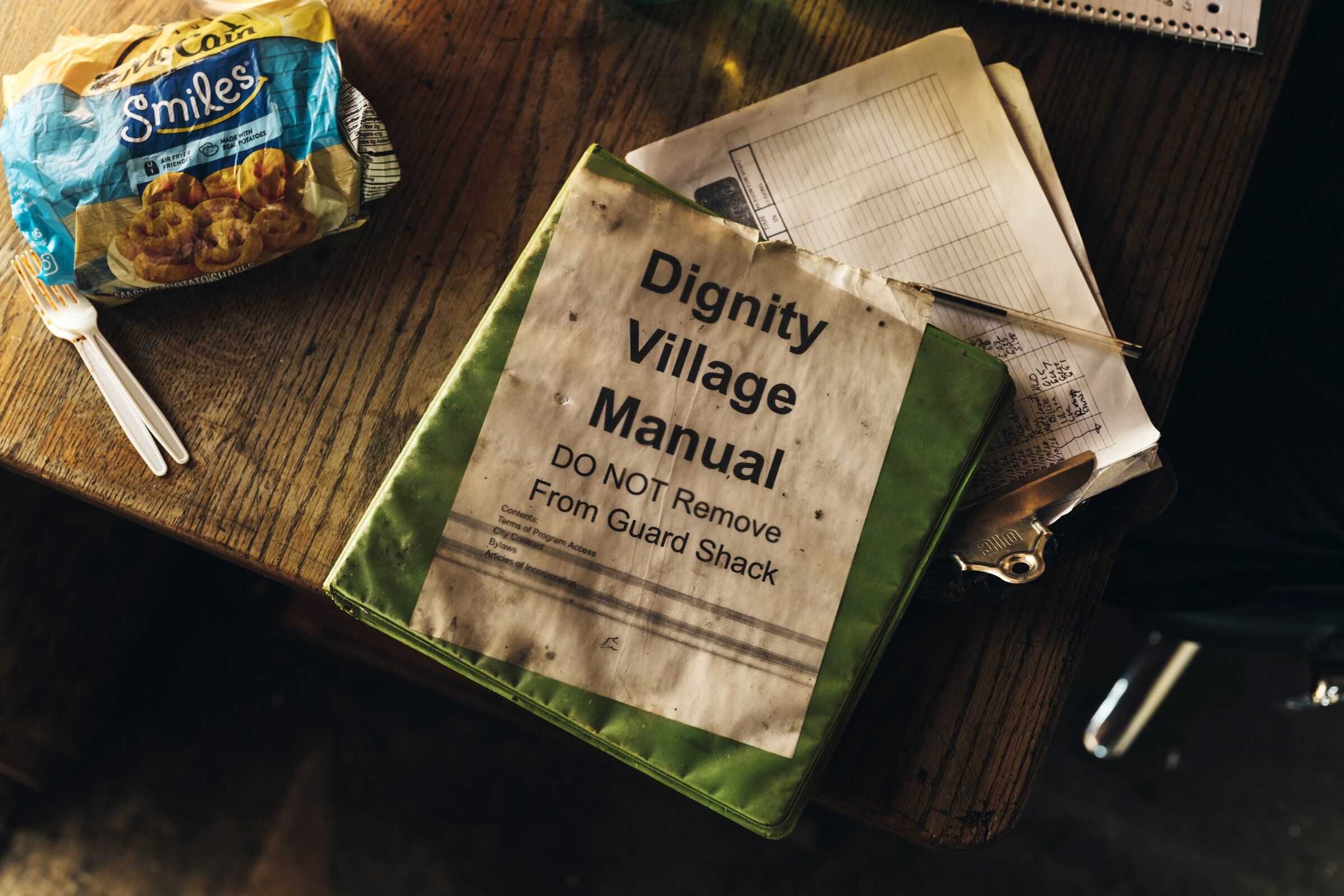
At the same time, Dignity Village’s independent status does not exempt it from city requirements. The community is expected to comply with fire-safety and sanitation rules, arrange regular waste removal, provide access to toilets and drinking water, place structures safely, inspect electrical wiring and keep pathways clear for emergency services. The specific conditions are set out in an agreement with Portland because the settlement is located on city-owned land.
The city’s relationship with Dignity Village reflects Portland’s broader and sometimes contradictory policy. Officials are trying to combine tolerance for certain established communities with efforts to reduce unauthorized camps and move people into controlled safe-rest sites. The city’s Safe Rest Villages operate under stricter rules, provide organized infrastructure and services, and generally limit stays to 120 days.
This policy became particularly significant after the U.S. Supreme Court’s 2024 decision in City of Grants Pass v. Johnson. The court ruled that prohibiting public sleeping or camping does not, by itself, violate the Constitution, even when a person has nowhere else to go. Portland subsequently gained broader legal authority to clear camps, though officials must still follow local procedures, notification rules, requirements for handling personal property and other established limitations.
Portland officials view independent villages with caution, citing fire risks, sanitation problems, water pollution and the lack of comprehensive support for finding permanent housing. A former resident of one Safe Rest Village says he was expelled for failing to complete required paperwork steps, despite attempts to make progress.
Still, Dignity Village’s statistics appear compelling: about 60% of those who leave the community move into permanent housing, compared with roughly 42% in the city’s villages. Direct comparisons, however, are difficult. Dignity Village allows longer-term, relatively independent residency, while Safe Rest Villages are designed for limited stays and offer more formalized housing services. The figures may therefore reflect different timelines, rules and success criteria rather than the superiority of one model over the other.
Supporters of the village believe that a sense of dignity, stability and belonging helps people recover and move toward independent living. But the experiment’s future remains uncertain: the community occupies city-owned land, so its independence depends on how willing officials are to tolerate its unusual, partly anarchic system.



Based on: The homeless community that became a self-governed village