
The Sacramento County Sheriff’s Department (California) has received an unusual addition — a robot dog called Buster. The four-legged machine, developed by Boston Dynamics and customized for police work by FlyMotion, has already seen action: during a recent shootout with an armed suspect, Buster helped assess the situation and allowed officers to safely disarm the attacker. Department leadership calls the robot a “fantastic addition” and stresses that it is not a toy and not a weapon, but a high-tech tool for saving lives.
Buster cost Sacramento County taxpayers $0 — fully funded through a $357,000 federal grant obtained after a two-year application process. Federal grants are money the U.S. government allocates from a budget that is funded by taxes. The application process can take two years due to multi-stage bureaucracy: first, agencies announce a competition; then applicants prepare detailed justification; after that, an assessment is conducted to ensure compliance with the rules and a competitive selection is held, which, together with periodic funding windows, leads to a lengthy wait. Lieutenant Tom McCue, one of the robot’s operators, explained that the department specifically sought outside funding so it wouldn’t take money from the local budget, which is already under pressure due to structural deficits and the effects of the federal “One Big Beautiful Law.” The robot is the second similar device in the unit — before this, they already had the heavy explosive-disposal robot Remotec Andros.
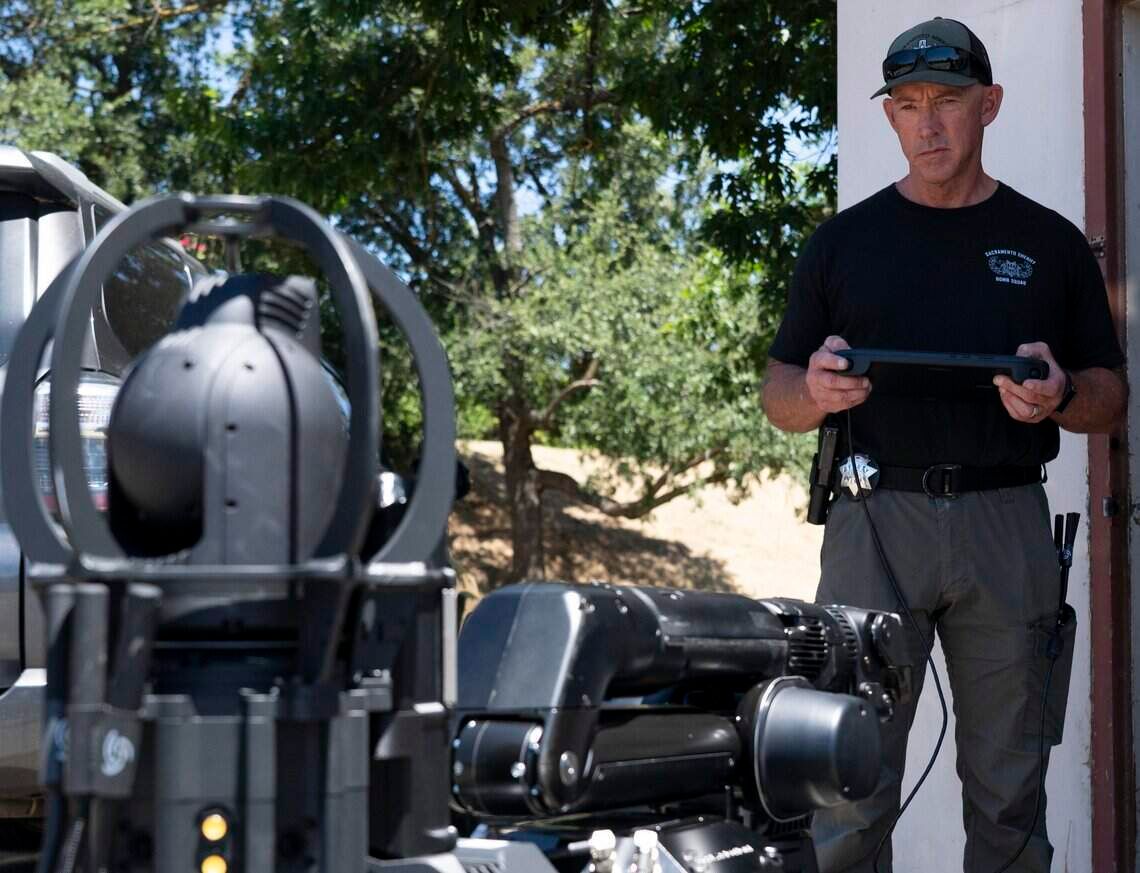
The new robot weighs about 45 kilograms and is equipped with a thermal camera, x-ray equipment, multiple cameras, two-way radio communication, manipulators, and powerful lights. It is controlled from a handheld control unit and can open doors, climb stairs, and traverse rough terrain. Its range is about 800 meters, and thanks to replaceable batteries, Buster can operate around the clock. Compared with the 180-kilogram armored Andros, designed to neutralize explosive devices, the new robot is much faster and more maneuverable, especially when searching through buildings.
Buster’s first use came during an armed standoff: the robot checked the premises, communicated with the suspect, and removed obstacles so police could enter safely. For now, the device remains under the Explosive Ordnance unit, but plans also include using it during shootings in crowded places for rapid detection of injured people. The department also intends to offer Buster as a “regional resource” to other police departments in the metropolitan area. It’s important to note that in the U.S., a sheriff is an elected official at the county level responsible for law enforcement across the entire county territory, including unincorporated areas and small towns without their own police departments. A police chief, by contrast, is appointed by city authorities and operates only within a specific city. That’s why in counties with rural areas like Sacramento, the sheriff’s department combines the functions of local policing and serving court warrants.
Against the backdrop of growing interest in police K9 robots in the United States (police in New York and Los Angeles already use them, as does the Massachusetts Police Department of the U.S. State Department), questions are emerging not only about privacy, but also about broader public debates. For example, in New York in 2020, a Spot model was tested for reconnaissance in dangerous situations, but after large-scale protests, the program was discontinued. In Los Angeles, they are used in hostage seizures. Critics worry about the militarization of police — the possibility of arming robots and replacing human officers, which could mean job losses. There are also ethical questions about remote control: mistakes in operation can lead to damage or injuries. The high cost (up to $200,000 per unit) with unproven effectiveness compared with traditional methods also fuels controversy. McCue assured that the department would use the technology transparently: “This dog isn’t for spying on you or causing harm, but to help people and neighbors.” Officers plan to introduce Buster in schools and at public events so residents can learn about its capabilities.
A telling example is San Francisco: in 2022, city authorities withdrew a proposal that would have allowed police to use remotely controlled robots with lethal weapons after large protests by residents. At the same time, in Sacramento they stress that Buster is not a weapon, but a means of keeping officers at a distance from danger, and its deployment was made possible exclusively through a federal grant, without any burden on the local budget.
Based on: Meet Buster, a robot dog now helping Sacramento deputies respond to dangerous calls