
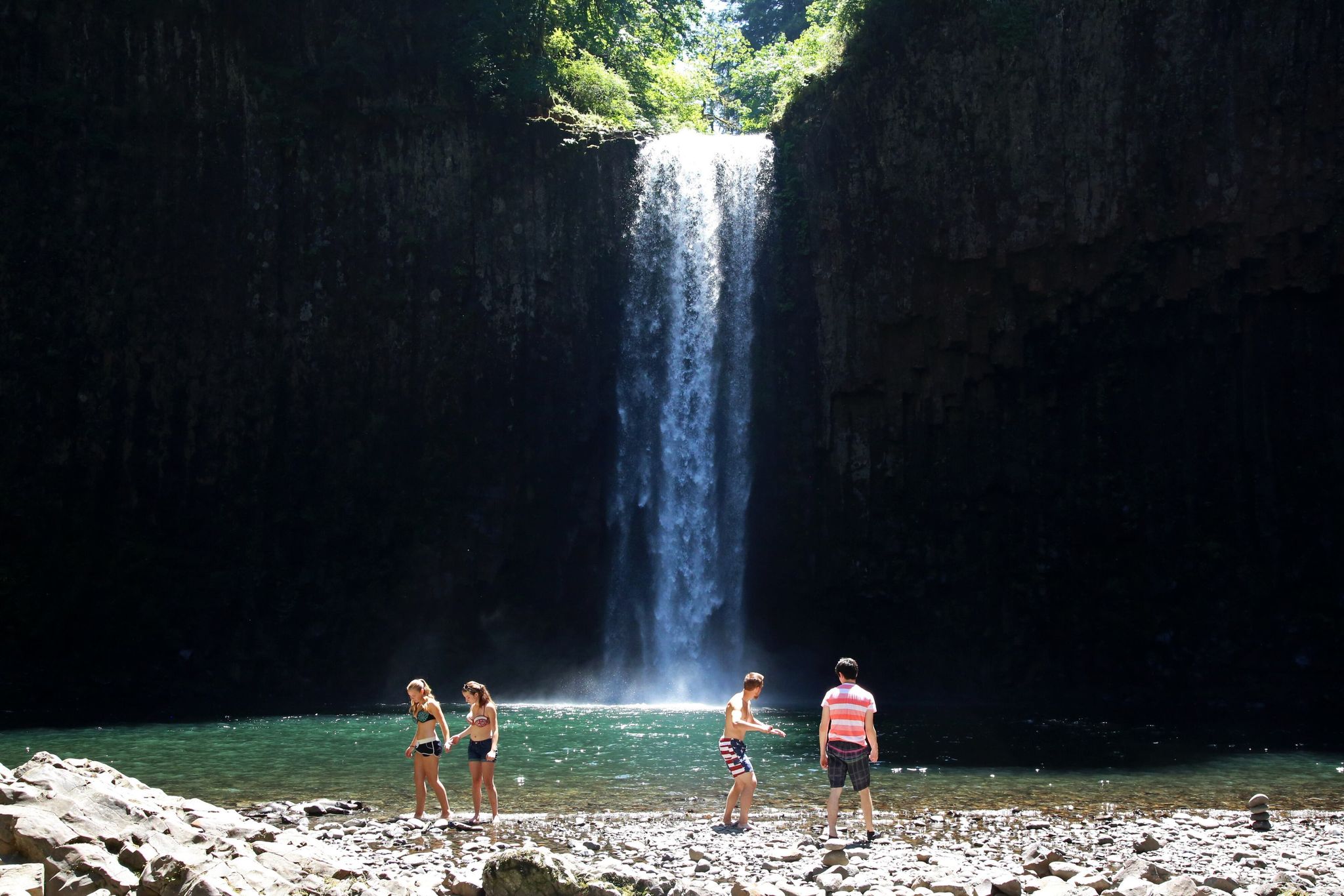
State lawmakers in Oregon have taken a major step toward making the famed Abiqua Falls accessible to the public. They set aside $2.135 million to buy the land around this natural wonder, which has been in private hands for nearly a century. The goal is to prevent the site from falling into private ownership and to preserve it for future generations.
The deal would involve acquiring two parcels. The primary parcel is 40 acres that include the 92-foot waterfall itself, owned by the nonprofit Abbey Foundation affiliated with Mount Angel Abbey. The second parcel, 160 acres, is owned by timber giant Weyerhaeuser. That company’s extensive landholdings in the Pacific Northwest stem historically from 19th-century federal land grants, economic returns from logging, and a long-term investment strategy; it’s typical in the U.S. for forest resources to be privately held for industrial use. The foundation has already confirmed it is ready to complete a sale, while Weyerhaeuser has not yet commented on any formal agreements.
However, the allocated funds are only the beginning of a long process. The funding must still be approved by the Legislative Assembly’s budget committee, then pass votes in the state Senate and House of Representatives, and receive the signature of Governor Tina Kotek. Only after that can the Oregon Parks and Recreation Department officially offer money for the land.
The parks department, which would likely manage the property, has already expressed serious concerns. Abiqua Falls is in a very remote and difficult-to-access location. The agency fears that managing such a site would place a heavy burden on an already strained and underfunded state parks system. These challenges — limited funding, complicated logistics, ensuring safety in isolated areas, and environmental preservation — are common across the Pacific Northwest, where many parks are located in mountainous or forested areas with harsh climates.
Difficult access is one of the main issues. A rough road that requires a high-clearance vehicle leads to the trailhead. The short but strenuous hike requires rope work to descend to the riverbed. Those geographic conditions, shaped by the Cascade Range, dense forests, heavy precipitation, and rugged terrain, are typical of many natural areas in western Oregon and Washington, making them attractive to visitors while posing serious infrastructure challenges. The site draws thrill-seekers, which has already led to serious injuries and rescue operations.
Given budget constraints, the set-aside funds are intended only for land purchase, not for development or management. The parks department could transfer management to another state agency or even a private company. Before any deal proceeds, the parcel will undergo a thorough appraisal, including environmental and archaeological assessments.
Despite the difficulties, lawmakers such as Senator Fred Girod and Representative Ben Bowman still envision creating a state park, Abiqua Falls State Park. The current allocation of funds is a critically important first chance for the state to ensure this natural gem remains in public ownership and is open to everyone.
Based on: Oregon sets aside $2 million to buy privately owned Abiqua Falls