
Massive data centers needed to run artificial intelligence consume colossal amounts of electricity. Big tech companies are urgently searching for new, clean power sources to meet their own “green” goals and local legal requirements. For example, Washington state’s Clean Energy Transformation Act (CETA) requires all utilities to move to 100% carbon-free electricity by 2045, with an intermediate step of 80% clean energy by 2030. In addition, Initiative 937 requires large businesses to obtain 15% of new electricity from renewable sources. Microsoft, which operates large data centers in the region, is forced to sign long-term contracts with innovative projects to comply with these rules. One such company, Everett-based startup Helion, offers an ambitious solution: use nuclear fusion — the same process that powers the stars.
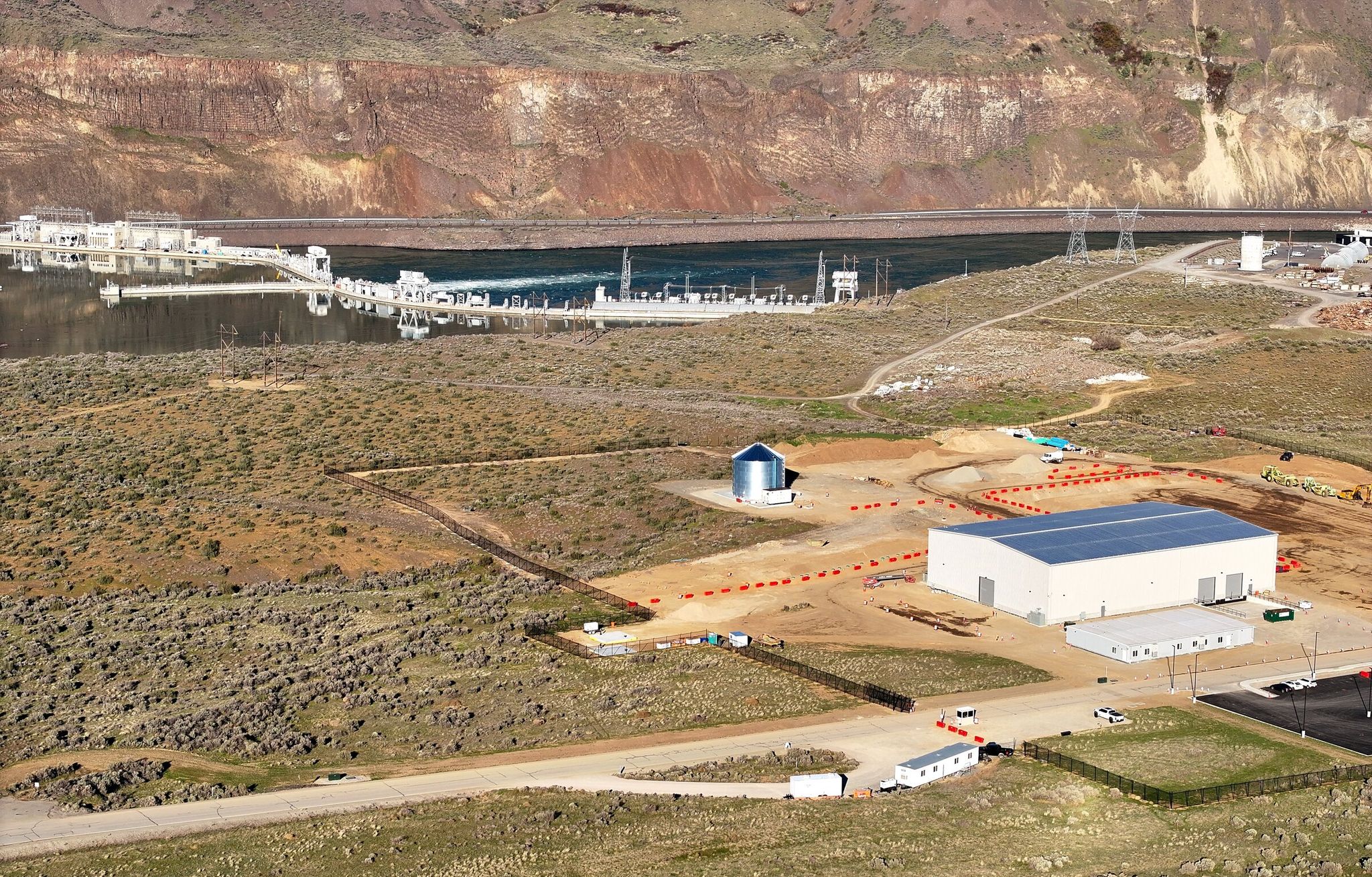
Helion has signed an agreement with Microsoft to supply power for its data centers — and this could happen as early as 2028. Last year the startup began construction of a site in Chelan County that is meant to become the world’s first commercial fusion power plant. The project has already attracted about $1 billion in investment from figures such as Sam Altman (OpenAI), Peter Thiel (PayPal, Palantir) and Dustin Moskovitz (Facebook). The choice of locations is deliberate: Everett, a northern Seattle suburb, attracted Helion with its proximity to Boeing’s largest plant, offering access to highly skilled engineers and industrial supply chains. For decades Boeing built an ecosystem of metal, composite and complex-equipment suppliers in the area — critical for building fusion reactors. In addition, proximity to Microsoft in Redmond (only 30 km away) and Amazon in Seattle provides potential funding and technological partnership. Chelan County, located in the central part of the state along the Columbia River, is attractive because of abundant cheap hydroelectric power — the region has long been the state’s energy hub, with large dams. However, rural areas face infrastructure challenges: limited capacity in power grids built decades ago and a shortage of local skilled labor, forcing the recruitment of specialists from Seattle and other regions.
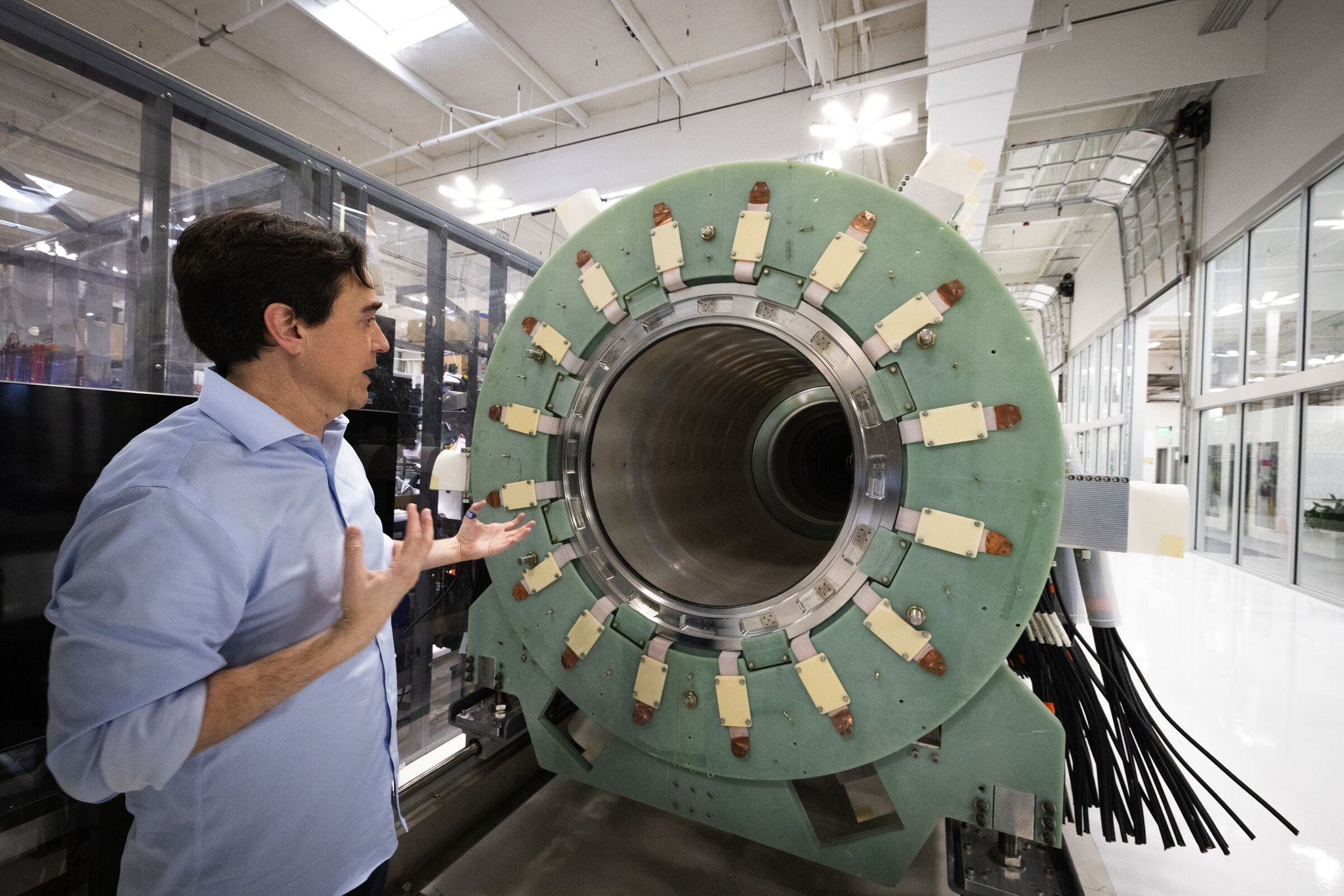
So what is nuclear fusion? It is the process of merging light atoms (usually hydrogen) into heavier elements, such as helium. Part of the mass is converted into an enormous amount of energy. To ignite the reaction requires temperatures around 100 million degrees Celsius and high pressure. In laboratories this is achieved either with powerful lasers or, as Helion does, with electromagnets that compress a superheated plasma.
Safety is one of fusion’s main advantages. Unlike conventional nuclear power plants (which operate on fission), a chain reaction or “meltdown” of the core is impossible. Radioactive waste from fusion reactions decays over years or decades, not millennia. In Helion’s reactor radiation is even lower, and much of it is absorbed by components of the device itself.
There is unprecedented hype around nuclear fusion today. Tech giants, criticized for the enormous power consumption of their AI systems, are investing heavily in development. In recent years key technologies — high-temperature superconducting magnets and semiconductor components — have also advanced to levels that allow reactions to be controlled far more precisely than before.
But commercial breakthrough is still a long way off. Fusion reactions have been achieved repeatedly in laboratories, but no facility has yet produced more energy than it consumed. Experts warn that even after achieving net-positive energy output, it will be years before such electricity can compete on price with other sources. Helion also faces additional challenges in Chelan County: it must invest in building new transmission lines and substations, which increases the project’s timeline and cost.
There are other players in the U.S. Commonwealth Fusion Systems, the country’s largest fusion startup, is building its plant in Virginia and promises to deliver “net-positive” energy in the early 2030s — Google has already reserved half of its output. However, Helion’s timeline remains the most ambitious — 2028.
Will Helion meet the deadline? Experts are skeptical. Unlike competitors, Helion does not publish its experimental results in scientific journals, making independent evaluation difficult. The company recently claimed it reached 150 million degrees in a prototype — above the threshold to start the reaction, but still far from the 250–300 million degrees needed for commercial operation.
In addition, Helion must build a 10,000-square-meter facility in two years, house the reactor there and connect to the grid. Many scientists believe such an aggressive schedule is more of a marketing move than a realistic plan. But if Helion or its competitors succeed, nuclear fusion could completely change the energy landscape, providing the world with an inexhaustible, safe and clean energy source.
Based on: What is nuclear fusion — and can it power WA’s data centers?