
The University of Washington (UW) has proposed changes to its Student Conduct Code. The amendments could broaden the range of people who may be held accountable in connection with protests and would allow outside contractors to conduct appeals hearings in disciplinary cases. The plans have raised concerns among students and faculty.
Under the proposal, a student could be punished for property damage even if they did not cause it themselves but were present at a protest. Concealing one’s identity or wearing a mask could also be considered an aggravating circumstance. Faculty members note that masks help peaceful protesters protect themselves from doxxing — the publication of personal information to intimidate or retaliate against someone.
The proposal calls for outside specialists to participate in appeals involving a broad range of cases, from academic misconduct to allegations of sexual assault and violations of protest rules. Students and employees are asking who exactly would perform this work and why the university decided to transfer such authority to contractors. UW representatives have not yet provided detailed answers.
The amendments were prepared jointly with the law firm Husch Blackwell and submitted to the Washington State Register. The university says the changes are intended to improve transparency, fairness and accountability and are unrelated to protests. Faculty members, however, believe university leaders may be seeking to demonstrate a tougher approach to federal authorities following U.S. Department of Justice investigations, funding cuts and other measures that came after protests over Israel’s war in Gaza.
Federal reviews of compliance with civil rights laws and possible sanctions could have put UW at risk of losing or having federal grants suspended, including substantial research funding. They could also have required reforms to disciplinary rules, increased oversight of anti-discrimination measures and additional legal expenses. The university retains autonomy in academic matters, but as a recipient of federal funds, it must comply with grant conditions and rules prohibiting discrimination and harassment.
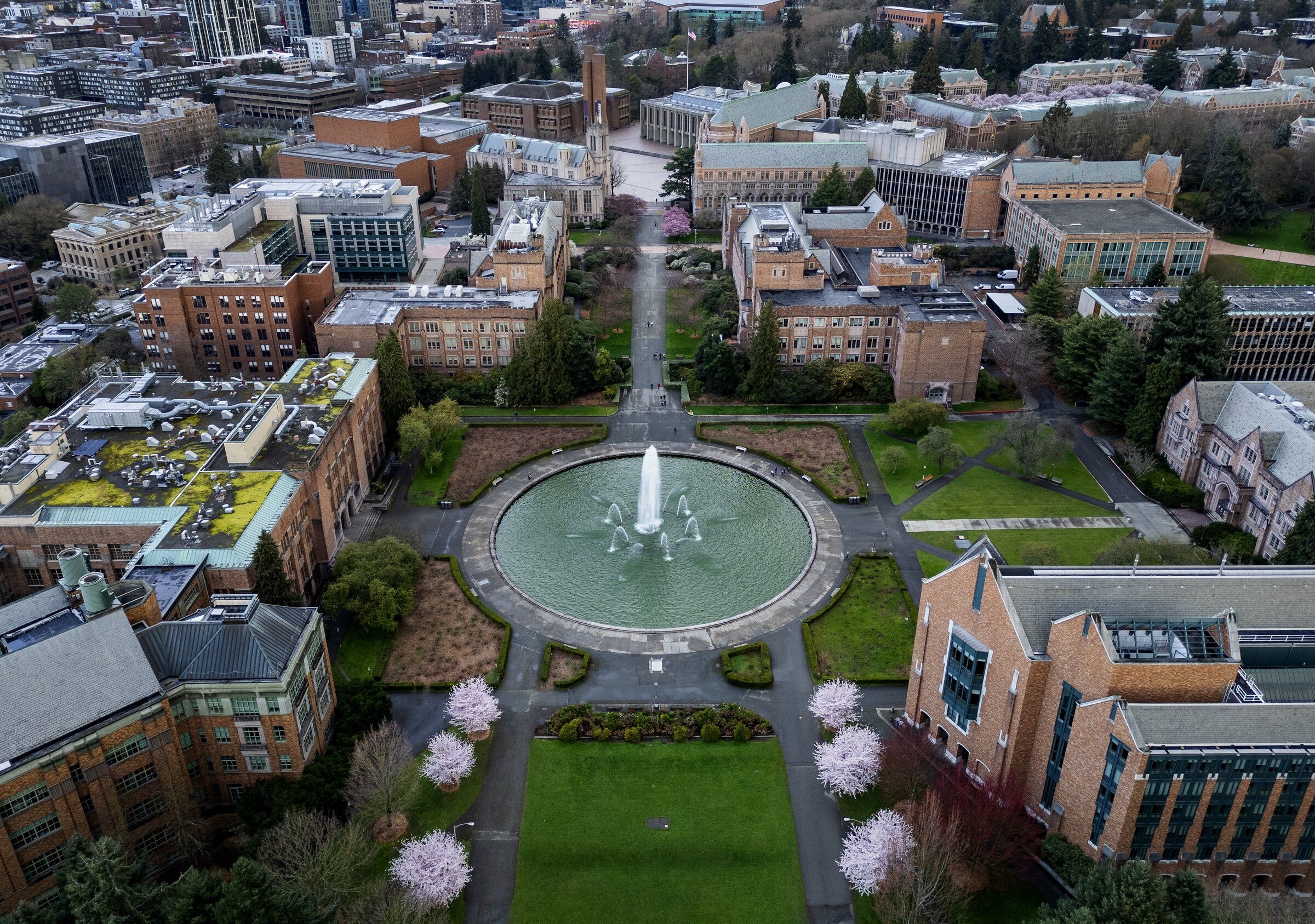
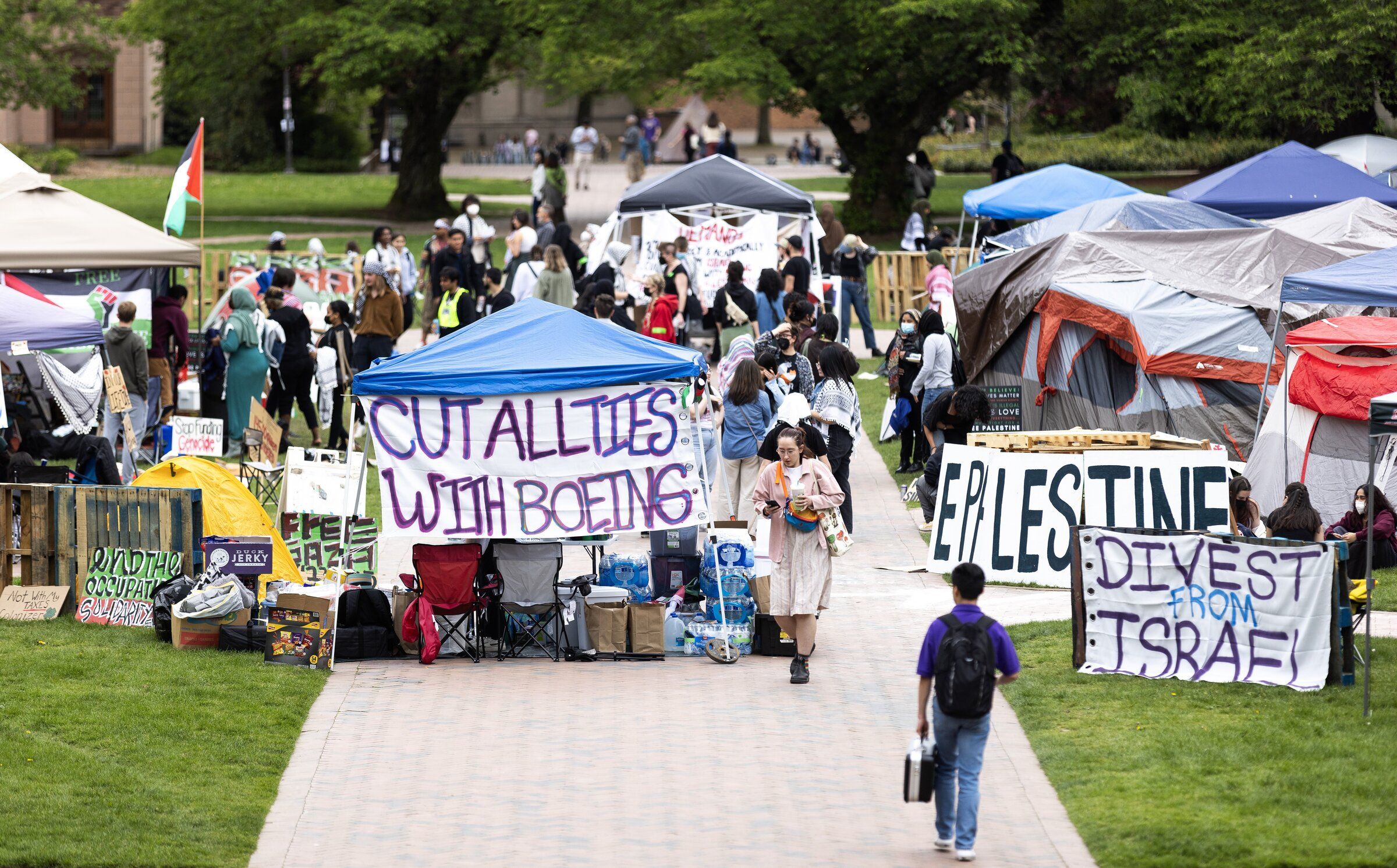
In 2024, activists occupied the UW Quad — the historic central plaza of the Seattle campus, surrounded by academic buildings and typically used for gatherings, rallies and ceremonies — for about three weeks. The encampment became a prominent symbol of protests against the war in Gaza and the university’s ties to Israel. Its prolonged presence disrupted normal campus operations, attracted media attention and forced administrators to balance freedom of assembly, safety, access to buildings and compliance with university rules.
Clashes with counterprotesters occurred during the demonstration, and graffiti appeared on buildings. In May, 21 students were suspended after occupying and blocking the interdisciplinary engineering building, where equipment worth more than $100,000 was damaged. UW President Robert Jones later said the current conduct code “was not written for this moment.”
Student leaders fear the new provisions could restrict freedom of speech and assembly, particularly for people who speak anonymously or under pseudonyms. Faculty members have also criticized the rushed process: many faculty senate members learned about the amendments only shortly before the hearings and believe the community had too little time to discuss them.
The university is governed by a board of regents appointed by the governor of Washington, the president and administration, and faculty-governance bodies. The board of regents makes key decisions on university policies and rules. The faculty senate represents professors, participates in developing and discussing academic standards, and may recommend changes; however, final approval of general conduct rules falls under the regents’ authority.
UW says it complied with state law and spent nine months holding meetings and gathering feedback from students, faculty and staff. At a public hearing on Aug. 25, according to faculty senate members who attended, everyone who spoke opposed the proposed changes. The board of regents is scheduled to vote on the proposal on Sept. 9; if approved, the rules will take effect the same day.
Based on: UW’s proposed changes to misconduct policy spur community concern