
Multnomah County, Oregon, is preparing to remove roughly 3,500 people from its official list of people experiencing homelessness. That does not mean thousands of residents have found housing. Officials are calling the change a “data cleanup”: They are tightening the rules for remaining in the named database and will recalculate figures retroactively back to January 2024. Against the backdrop of this statistical shift, Portland has already lost the River District Navigation Center, a 90-bed, around-the-clock shelter that closed on Aug. 31, 2026, as part of broader cuts to the shelter network.
The by-name list became Multnomah County’s main tool for measuring the crisis only in April 2025. Unlike the traditional Point-in-Time Count — conducted every two years and intended to capture a single night in January — the database gathers information on people who interact with the assistance system: those sleeping in shelters, meeting with outreach workers, visiting day centers or waiting for housing assistance. The system is intended to eliminate duplicate counting and bring statistics closer to the city’s real, month-to-month reality.
Now the rules for appearing on the list are changing. Records for people who have not used tracked services for a long time will be removed more quickly: The inactivity period is being reduced from 90–180 days to 60–90 days. The county also plans to remove outdated records and automate determinations of whether a person is staying in a shelter or living outside, in a vehicle or in another place unfit for habitation. According to homeless-services department staff, shortening the waiting period accounts for most of the expected decline.
In May, about 18,200 county residents appeared on the by-name list. If the new methodology reduces it by the projected 3,500 people, the decline will look almost like a sudden success — roughly one-fifth of the entire recorded group. But Deputy Department Director Anna Plumb emphasized that this is not a story of a mass exit from homelessness: The way people are represented in the administrative system is changing, not their housing status. To avoid creating the illusion of a sudden breakthrough, the county plans to recalculate previous months under the new rules.
That caveat is especially important because the earlier shift to the by-name database made the crisis appear larger. When the county began using a broader set of administrative data, the number of people it classified as homeless significantly exceeded the results of older one-night counts. In January 2025, Multnomah County reported roughly 10,500 homeless people to the federal government — 43% more than the previous year. That figure included not only people encountered by volunteers during the survey, but also service data that made it possible to identify people who likely remained without shelter.
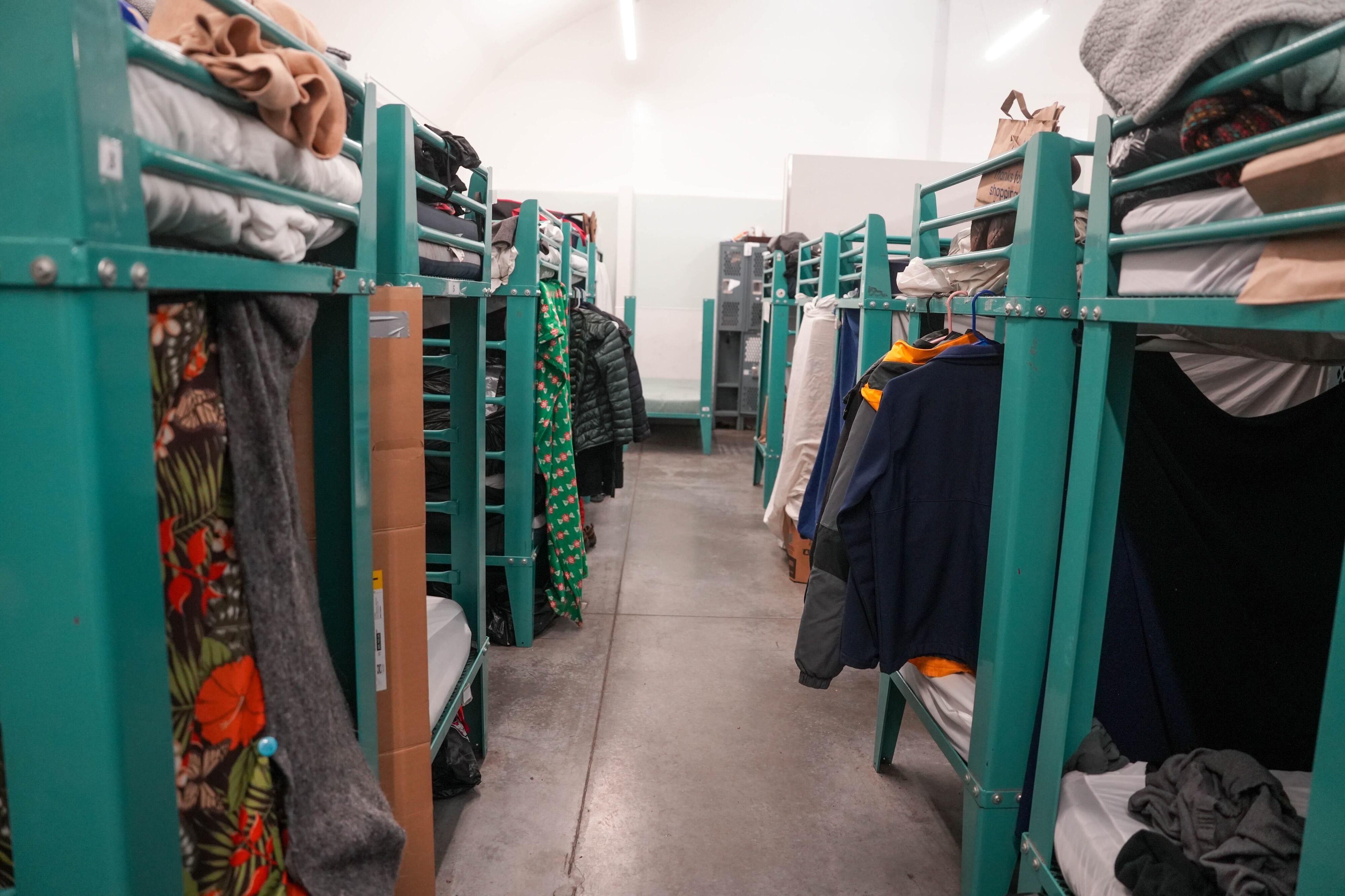
The fate of the River District Navigation Center shows why spreadsheets cannot be the only story about the crisis. The center, located on Naito Parkway in Northwest Portland, provided up to 90 beds, hot meals, showers and laundry facilities, storage, medical and peer support, as well as help finding housing. Many of its residents were older adults and people with disabilities. From its opening in 2019 through the end of 2023, more than 1,200 people passed through the center; roughly one in five left directly for housing.
Initial reports described the center as a shelter that was still expected to close. By the end of September, however, that had already happened: River District ceased operations on Aug. 31. According to the county, operator Transition Projects moved most remaining participants into other comparable around-the-clock programs or helped them move into housing. But the closure was part of a budget decision that calls for phasing out 605 adult shelter beds and another 90 family vouchers; even after the cuts, the county is expected to retain 1,742 funded beds.
In Multnomah County, officials are trying both to make the statistics more accurate and to keep from losing the system those statistics describe. A stricter database could prove more useful for planning: It will be less likely to confuse a long-ago request for assistance with current homelessness. But the risk for public discussion is obvious. If the number in the report falls at the same time the city is losing shelters, that will not prove that the streets have emptied. Instead, it will serve as a reminder of a simple truth: Behind every methodology is a decision about whom the government is still capable of seeing.
Based on: Multnomah County adjusts how it tracks homelessness, lowering numbers