
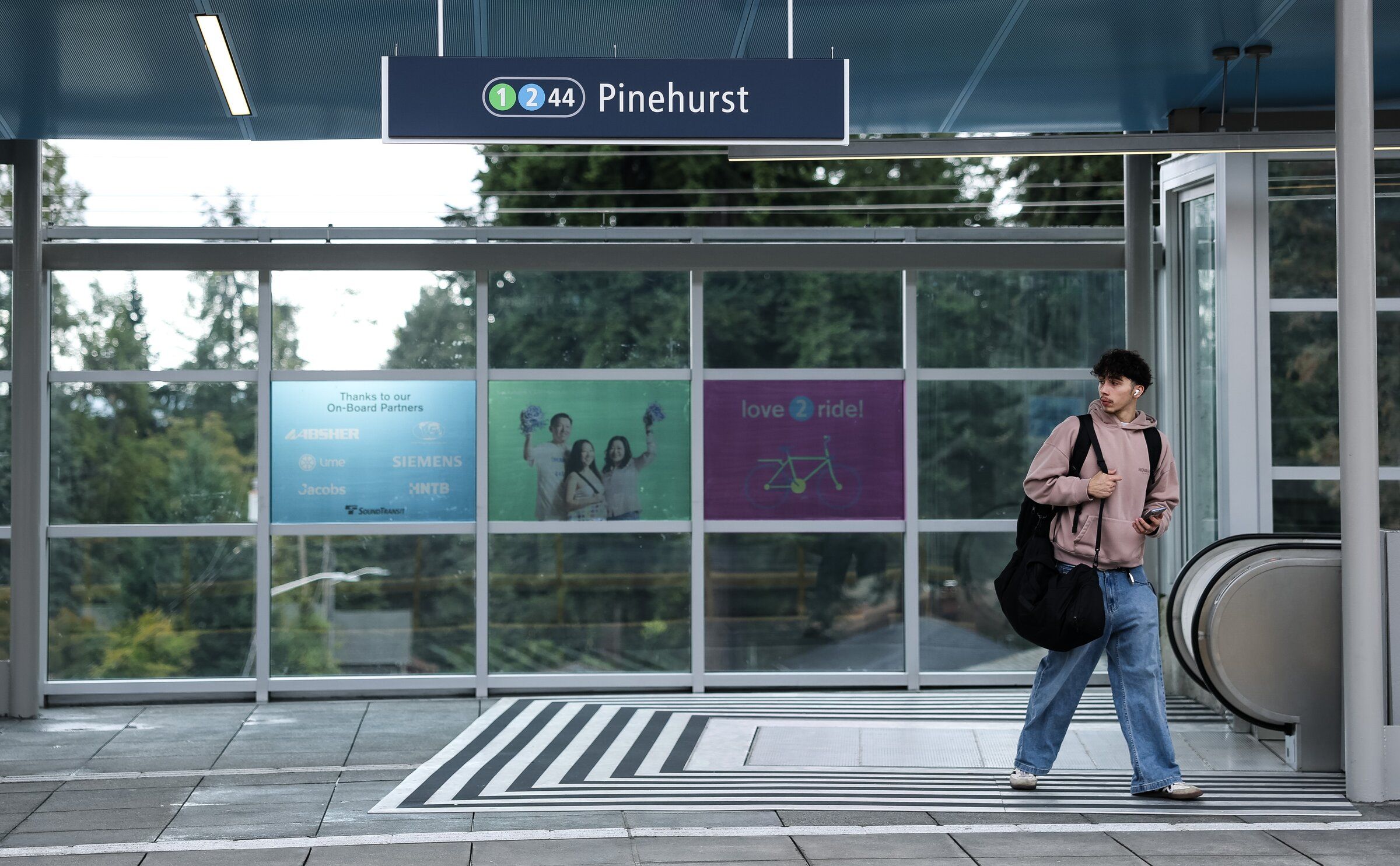
Pinehurst Station, a new $240 million Link stop, opened early Wednesday morning in North Seattle. Located along Interstate 5, it is Sound Transit’s 39th and final station until at least 2031, when a pause is expected following extensive construction of several line extensions throughout the 2020s.
The first passenger was Ann Kang, who walked to the first train at 5:12 a.m. Previously, she had to drive to Northgate Station, where the parking lot was often 80% full by 6:30 a.m. The trip to the University District now takes about nine minutes, while downtown Seattle is 19 minutes away. Residents also have an easier way to reach the airport without a car.
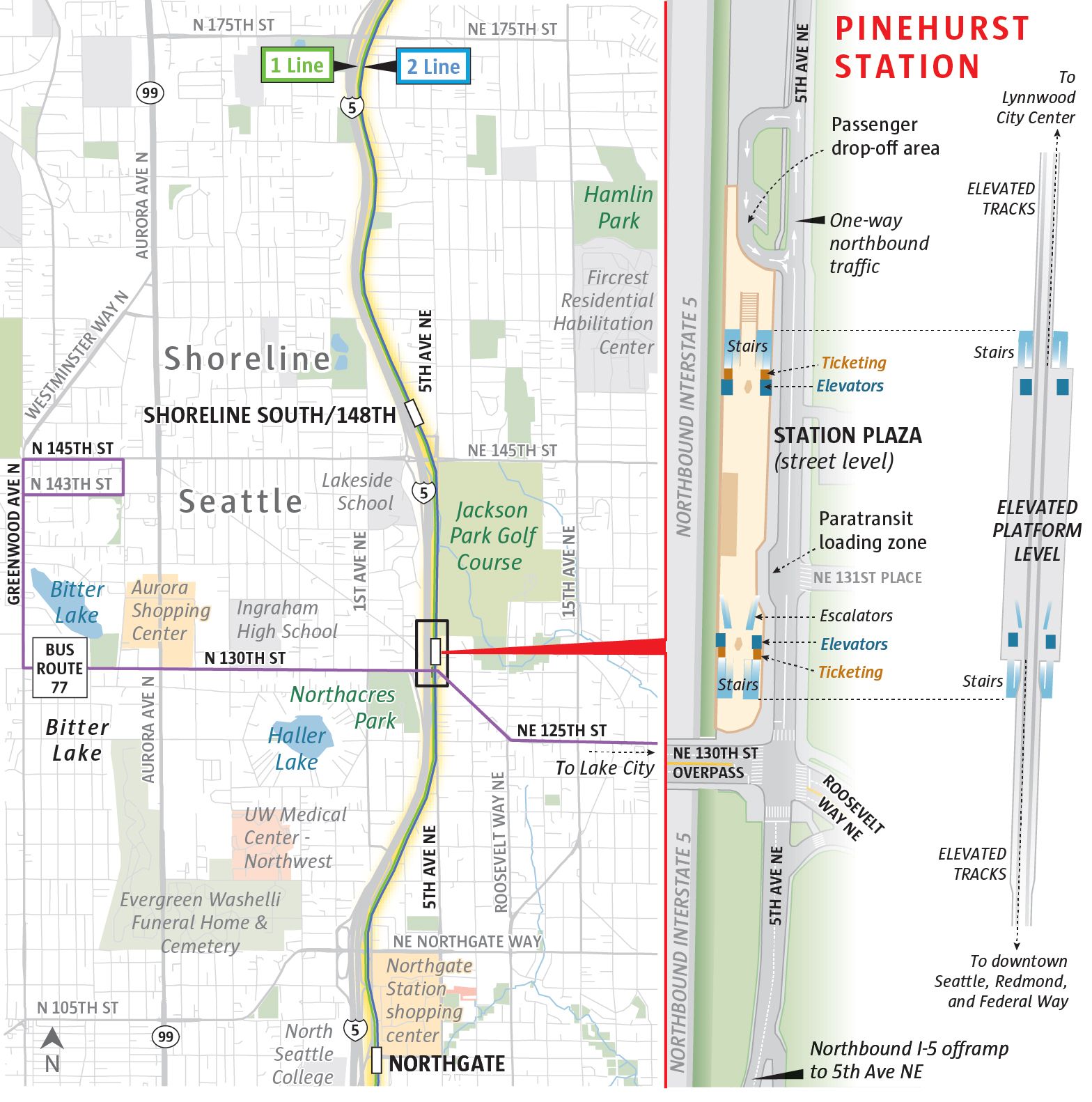
Pinehurst does not have its own parking garage, but sidewalks have been added nearby, along with 30 bike lockers and additional bike racks. The new Metro Route 77 connects the station with neighborhoods along Northeast 130th Street, reducing travel time between Aurora Avenue and Lake City Way from about 45 minutes to 17. The station’s design features a vibrant ceramic mosaic by artist Romson Bustillo, inspired by his Filipino heritage and childhood in Seattle.
The station is currently expected to serve about 1,100 boardings per day. With denser development and further expansion of the light rail system, ridership could grow to between 2,600 and 4,200 people. On opening day, trains remained nearly full with passengers from stations farther north, but only about six people boarded per train at Pinehurst. Transportation analyst Charles Prestrud said the station is unlikely to be busy at first, and its opening raises once again the question of light rail’s primary role: providing fast trips between the suburbs and the city, supporting local travel within Seattle or replacing bus routes.
Future demand will depend largely on development plans for the neighborhood. Seattle intends to allow mid-rise development near the station, which would increase the number of residents within walking distance and could boost ridership. A larger housing supply could also help restrain price and rent increases, but it would not guarantee affordability. The outcome will depend on the pace of construction, affordable-housing requirements and the preservation of existing low-cost homes. If the city plan is overturned or significantly scaled back, the amount of new housing and ridership will likely be lower. The plan is currently being challenged in court.
The station was added to Sound Transit 3 after pressure from local residents and support from City Councilmember Debora Juarez. It opened five years earlier than promised despite the challenges of building along the narrow corridor beside I-5.
The next new station is expected to be Graham Street in South Seattle in the early 2030s. Another station, Boeing Access Road in Tukwila, was approved by voters but has not yet been funded. Voter support secured the project’s place in transportation plans, but did not provide immediate funding. Sound Transit faces rising construction costs, limited tax revenue and long-term obligations, so it must first complete the lines already under construction.
When selecting future projects, the agency considers construction readiness, cost and funding availability, projected ridership, connections to the existing network, pressure on overburdened areas and transportation equity. Boeing Access Road remains in the long-term plans, but its implementation depends on a separate funding source and project prioritization.
Based on: Pinehurst light rail station opens in North Seattle