
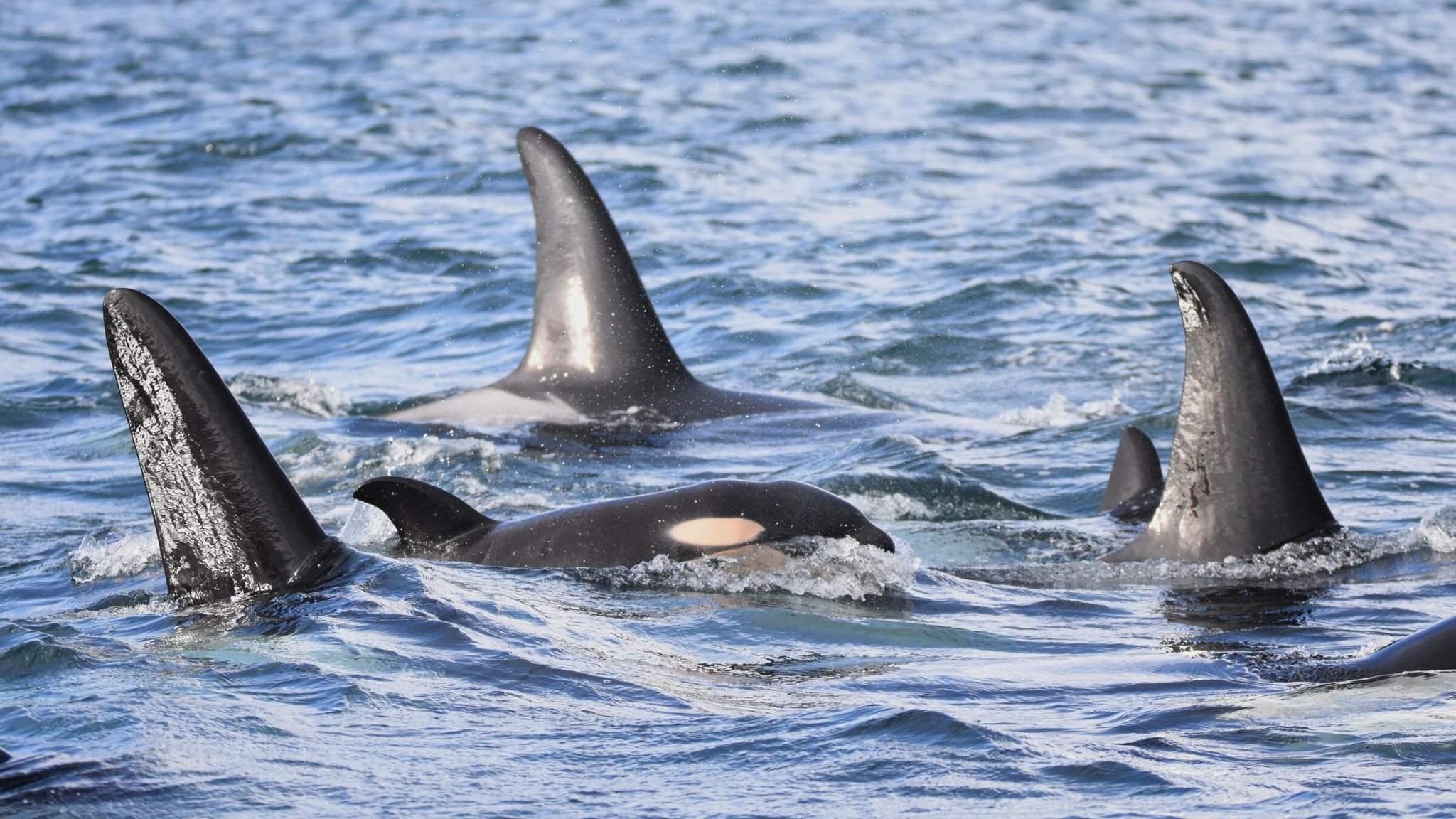
Researchers have reported the birth of a new calf in the endangered southern resident orca population. The calf, designated L129, was spotted Monday by biologists from the Whale Research Center in the Strait of Juan de Fuca alongside orcas from the L55 subgroup. Scientists express both joy and concern, as the newborn’s fate remains uncertain.
Observers noted the lively calf stayed close to the 49-year-old female L55 and also surfaced with L103, who may be its mother. If L103 is the mother, this would be her second calf. Although pregnancy at an advanced orca age like L55’s is rare, the presence of an experienced “grandmother” could improve the youngster’s chances of survival.
However, those chances, scientists say, are roughly a coin toss — only about half of southern resident calves survive their first year. By comparison, the northern resident orca population, which lives farther north off the central coast of British Columbia and southeastern Alaska, shows significantly higher reproductive rates. That is linked to better food availability and less human pressure, unlike the southern group that inhabits the densely populated Seattle–Vancouver region.
The primary threat to southern residents is the catastrophic decline in their main prey — Chinook salmon. To address the problem, Washington state authorities and conservation groups, such as the Pacific Salmon Commission, are implementing a suite of measures. These include restoring river spawning habitat, regulating fisheries, hatchery programs, and cooperating with Indigenous tribes, especially in river basins that drain into Puget Sound.
Compounding the food shortage are contaminants that have accumulated in the food web and persistent underwater noise from vessels, which interferes with the whales’ echolocation-based hunting. Heavy shipping from major ports like Seattle and Tacoma exacerbates this threat. To reduce it, programs such as “Quiet Sound” encourage voluntary vessel slowdowns, quieter propeller designs are being developed, and seasonal route advisories are issued to avoid key orca habitat. A 2017 study found that more than two-thirds of pregnancies in these orcas end in miscarriage due to lack of food.
L129’s birth is the first in the L pod subgroup in more than a year. Joy at such events is often tempered: a calf born in September 2024 died a month later. In December, a newborn was also seen in another subgroup (K), and in subgroup J scientists observed a female pushing a dead calf ahead of her.
As of the latest census, just 74 southern resident orcas remain. Scientists must reencounter calf L129 to determine its sex and confirm its mother, continuing their close watch on this fragile hope for the recovery of this unique community.
Based on: Orca born to L pod