
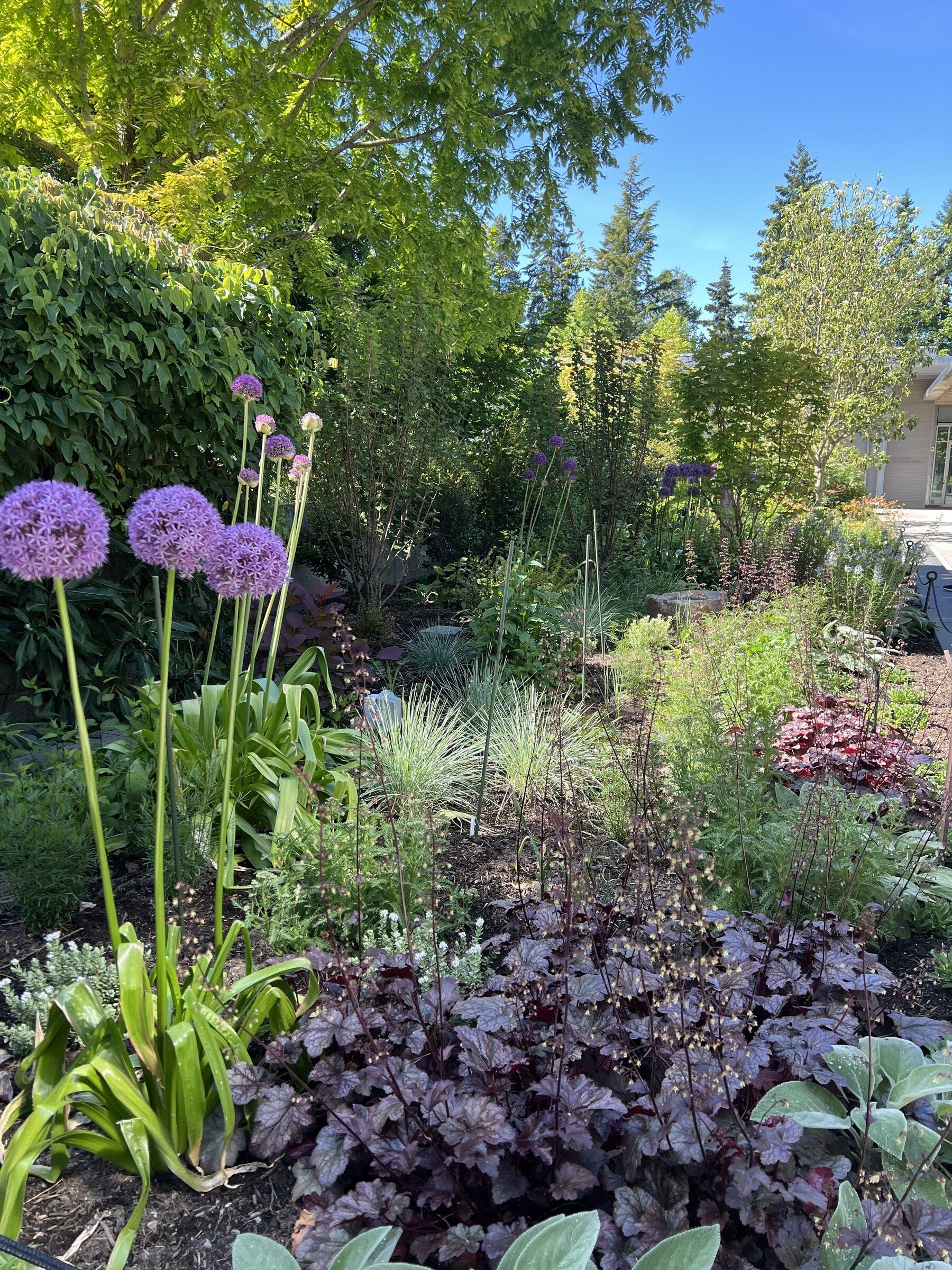
At the new "Habitats at Home" display garden at Bellevue Botanical Garden, flowers take center stage — and there are an incredible number of them. The project was made possible by the Washington State University Extension King County Master Gardeners program, in which volunteers receive specialized training in gardening and sustainable landscape design and then share their knowledge with the community for free. According to garden director James Gagliardi, the project is also supported by the King Conservation District, which coordinates efforts to protect the county’s soil, water and habitat. The garden’s main goal is to show how even a small plot can become a refuge for wildlife.
This project is the work of true community Master Gardener professionals. Team leader Gary Schieder said three volunteers compiled an “incredibly long” plant list, with 75% of the selections being native North American species. That’s particularly important in the mild maritime climate of the Seattle–Bellevue region, where dry summers require drought-tolerant choices like lavender or sages, while mild winters and cool springs allow planting of early-blooming species. Local plants attract the pollinators they evolved with — many specialist bees feed their larvae on only certain native flowers.
To narrow the list, the team used the concept of “pollination syndromes” — flower traits that attract specific pollinators. “We looked at color, shape, scent, the presence of pollen and nectar, and special ‘nectar guides’ to predict which pollinator would visit a plant,” Schieder explains. That approach allowed them to choose plants that provide maximum benefit to as many and as diverse pollinators as possible, and the garden was designed to maximize continuous bloom from spring through fall, providing pollinators with nectar each season.
Designer Dana Niblack, also a Master Gardener, brought the selected list to life, creating what she calls “a refuge from the outside world.” Planted in spring 2025, the garden uses color and plant placement to draw the eye while simultaneously providing resources for wildlife. In one part of the garden, visitors are greeted by calming cool tones: blue oat grass and hebe with silvery-blue foliage, surrounded by lavender and pale yellow bulbs.
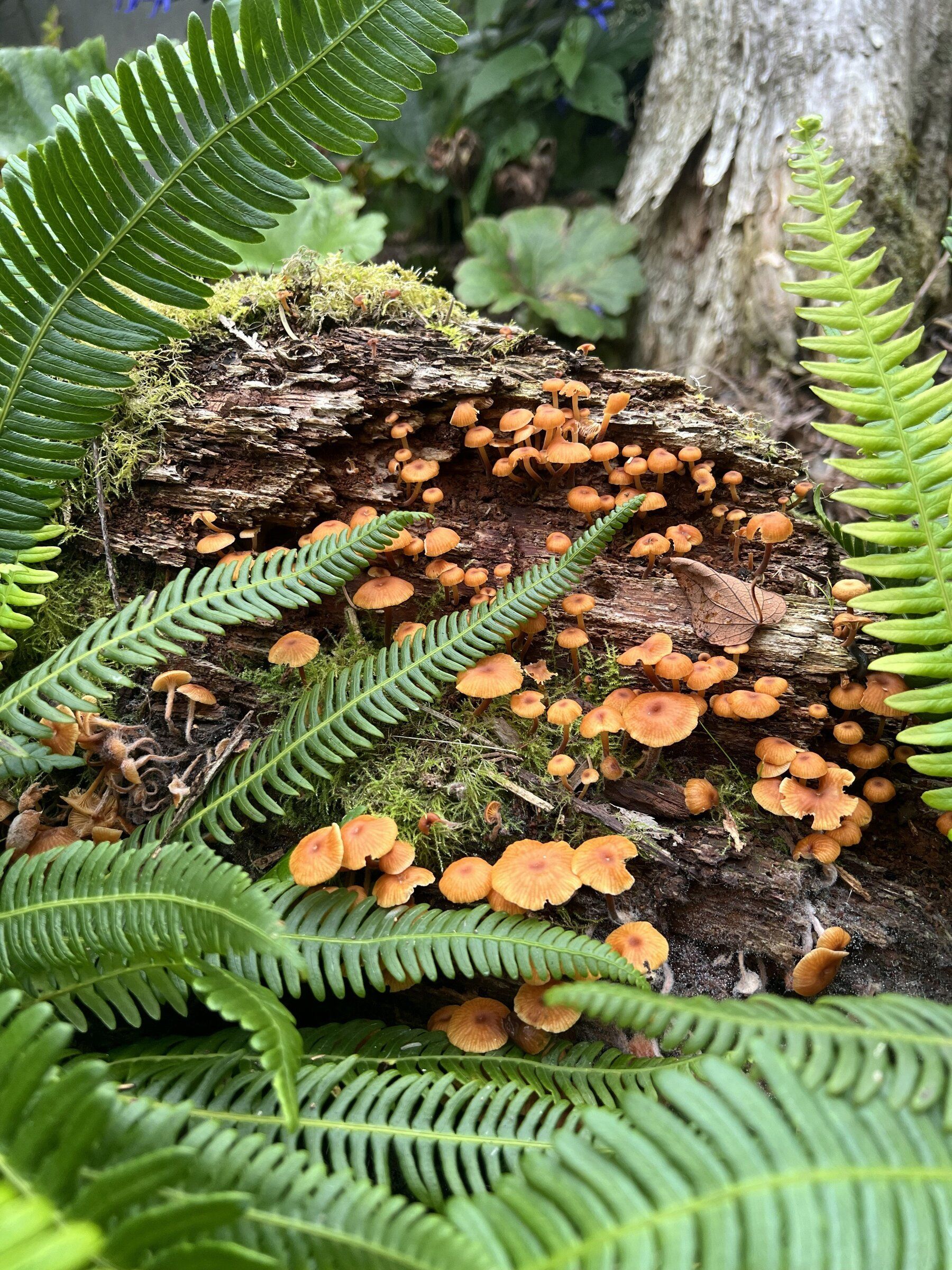
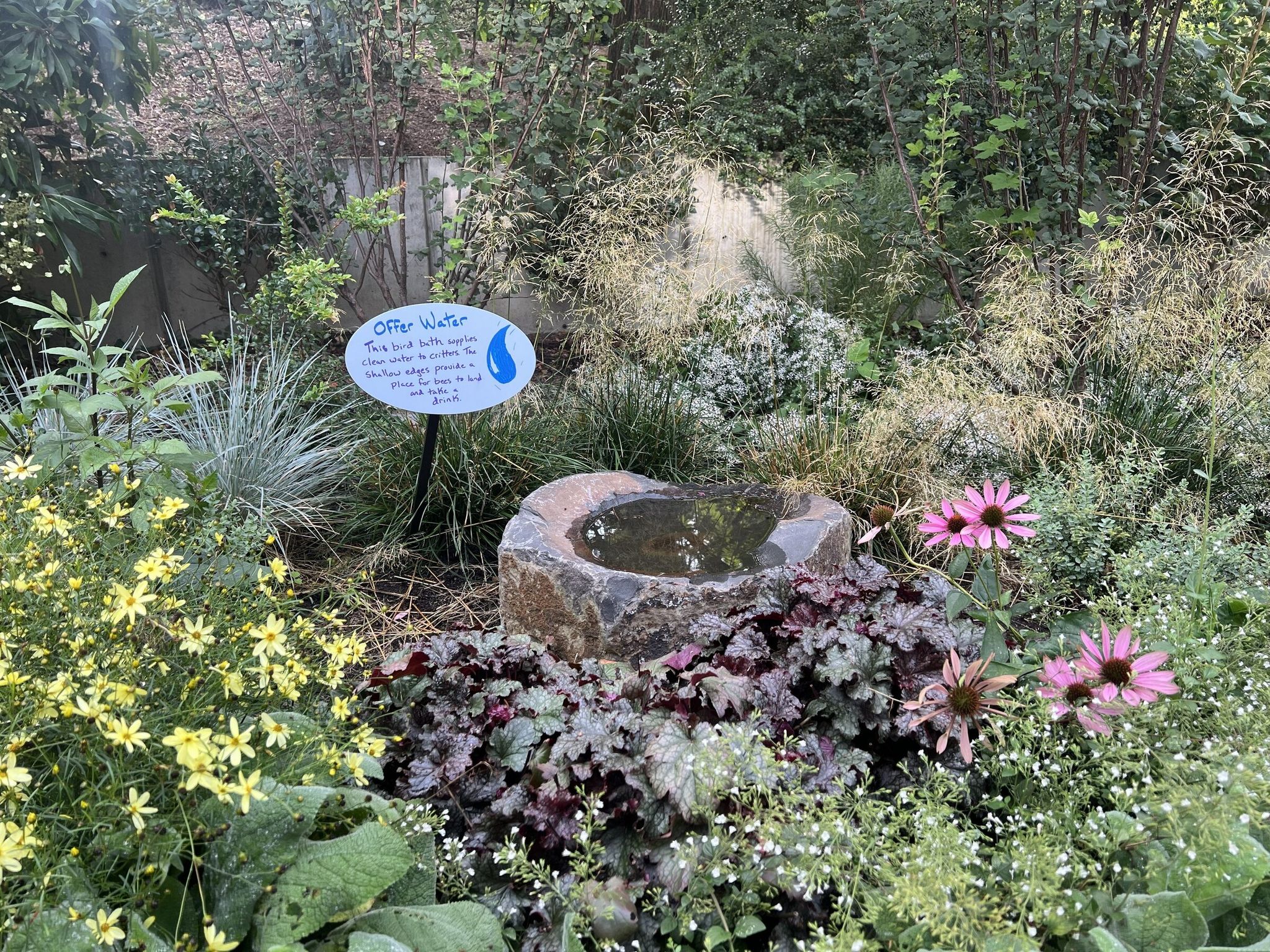
In the center of the 20-meter garden a woodland nook briefly interrupts the floral flow with a Pacific Fire maple and staghorn fern, where insects find shelter under the leaf litter and rotting wood. Butterflies, birds and bees drink from a carved basalt boulder, and an adjacent irrigation head keeps a small pond fresh during dry periods. Last fall, fungi on a log caused delight — a sure sign of a healthy fungal community.
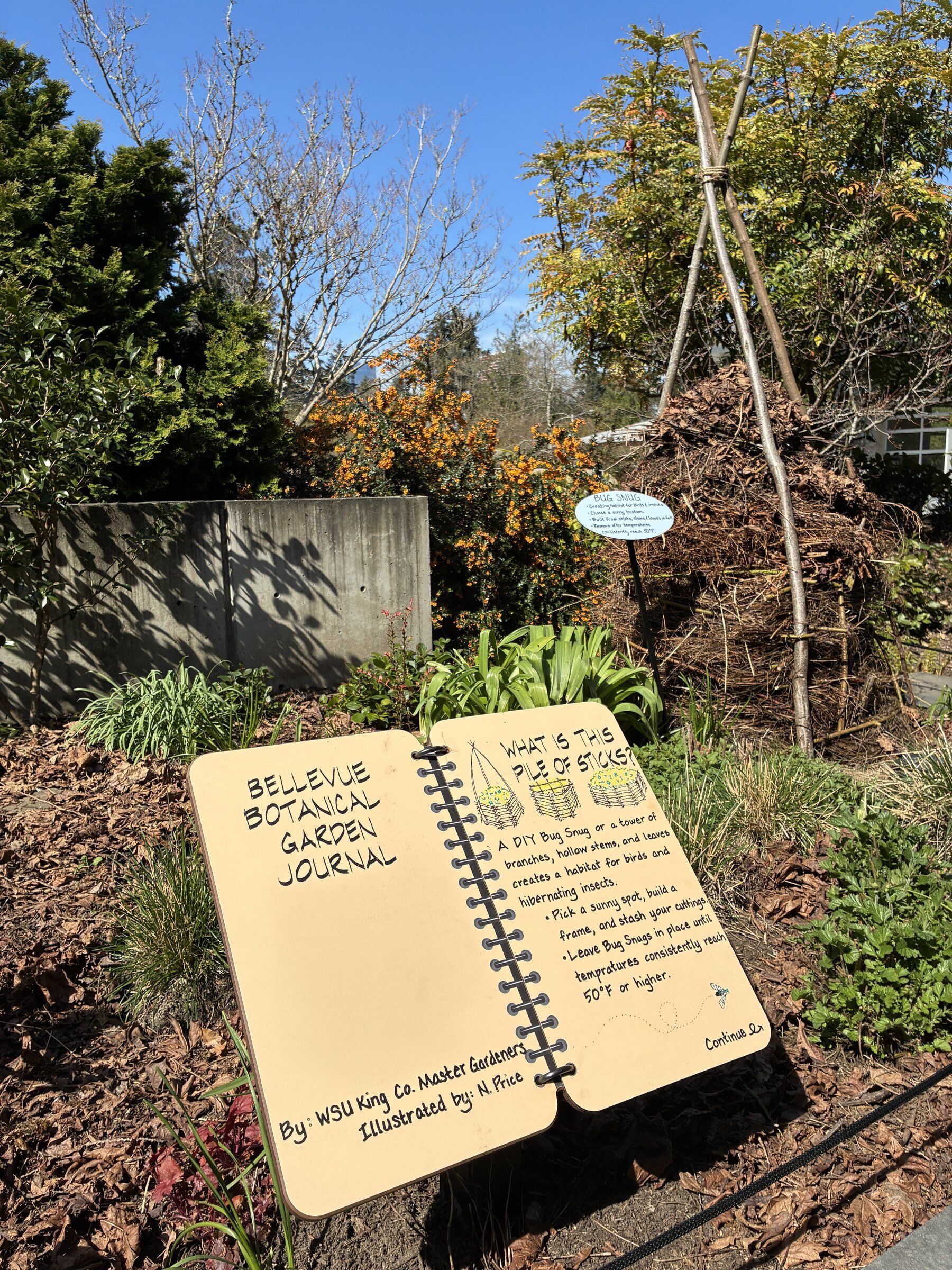
Moving on, the colors become more energetic: meadow plantings of tufted hound’s tongue, red yarrow 'Paprika', orange geum 'Totally Tangerine' and goldenrod 'Golden Fleece' attract pollinators gathering nectar. A whimsical element of the garden that delights children of all ages is the “bug snug”: a wigwam of tree branches filled with twigs and plant clippings that serves as winter shelter and nesting habitat.
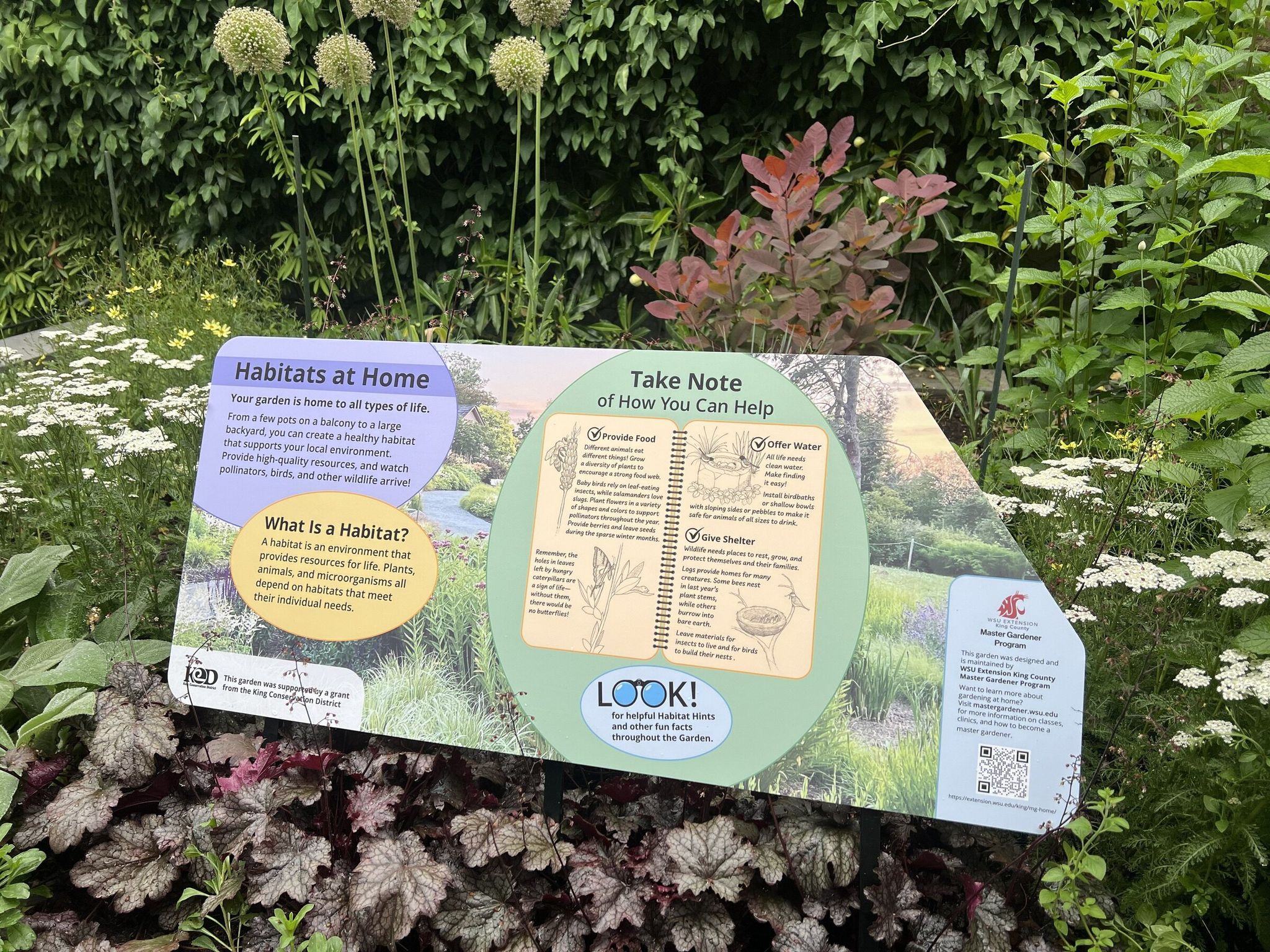
Permanent interpretive signs and a few small chalkboards point out the benefits to wildlife and seasonal changes, and QR codes on modest markers lead to plant information. Just a year after establishment the garden is teeming with life: native bees, butterflies, moths, beetles, beneficial wasps, hoverflies, birds, amphibians and even bats have taken up residence. The volunteer gardeners who created the space now maintain it through its first three years, and despite occasional deer incursions, the results are impressive.
Based on: Bellevue Botanical Garden’s newest display promotes wildlife habitat