
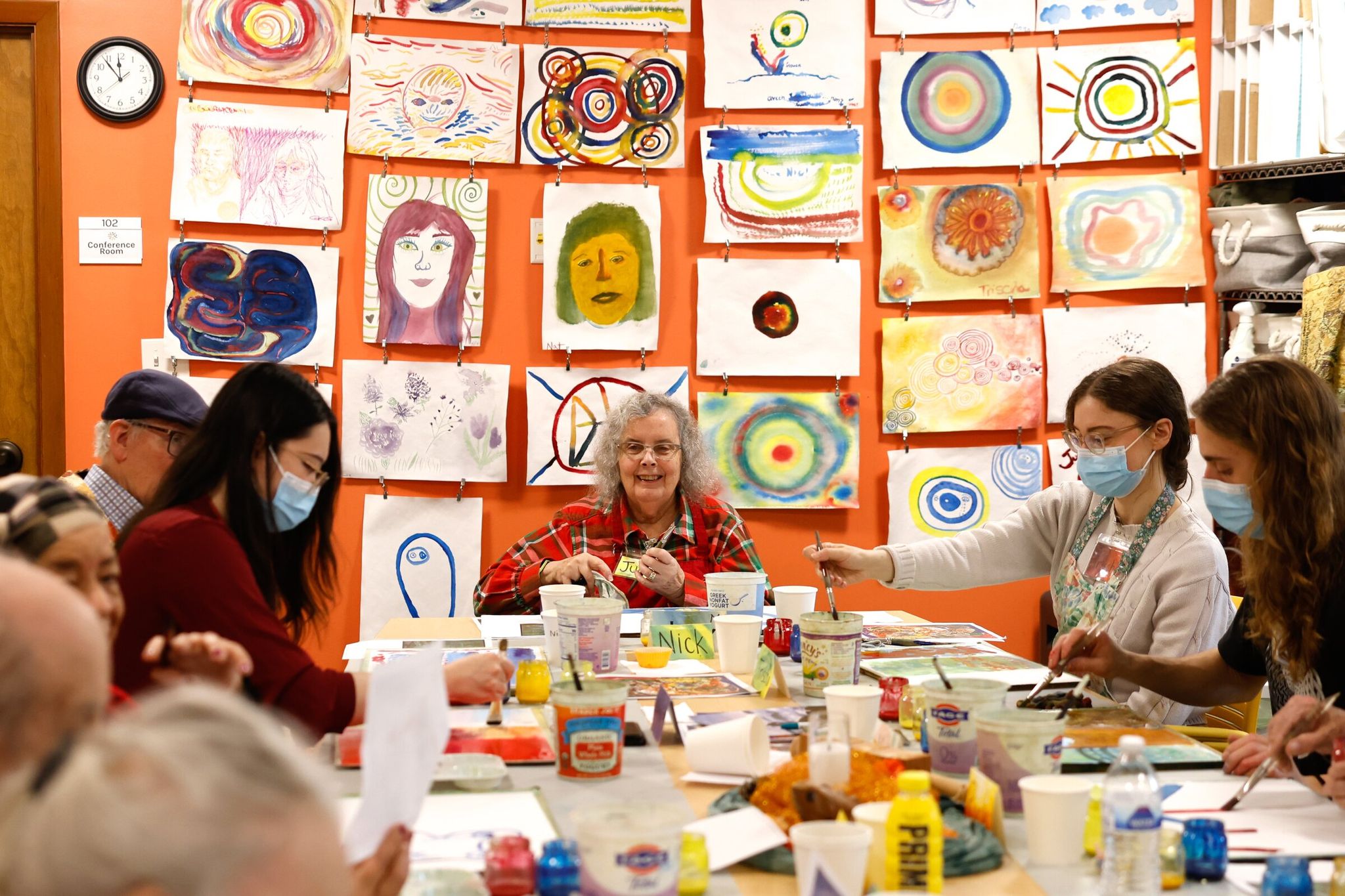
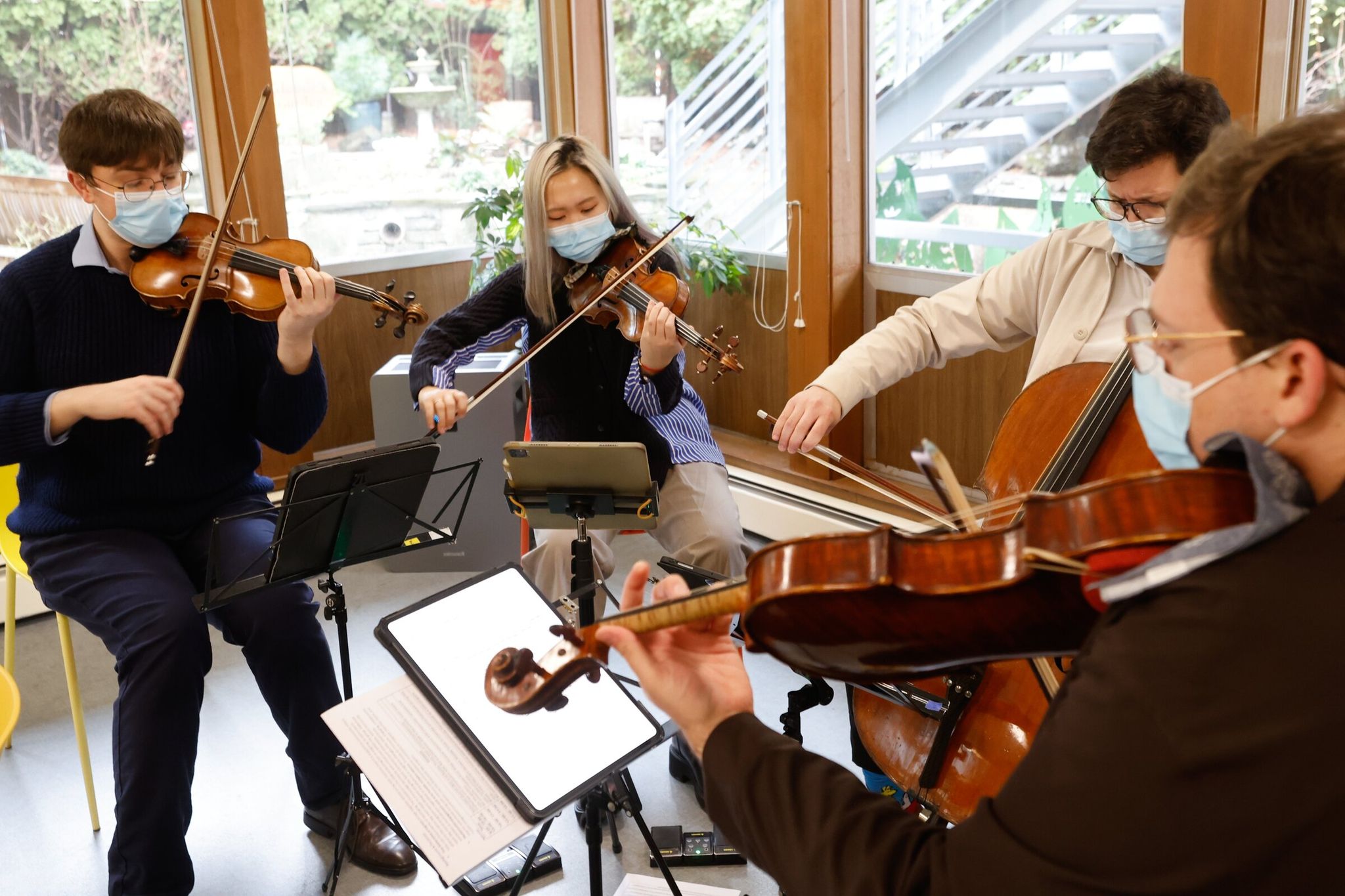
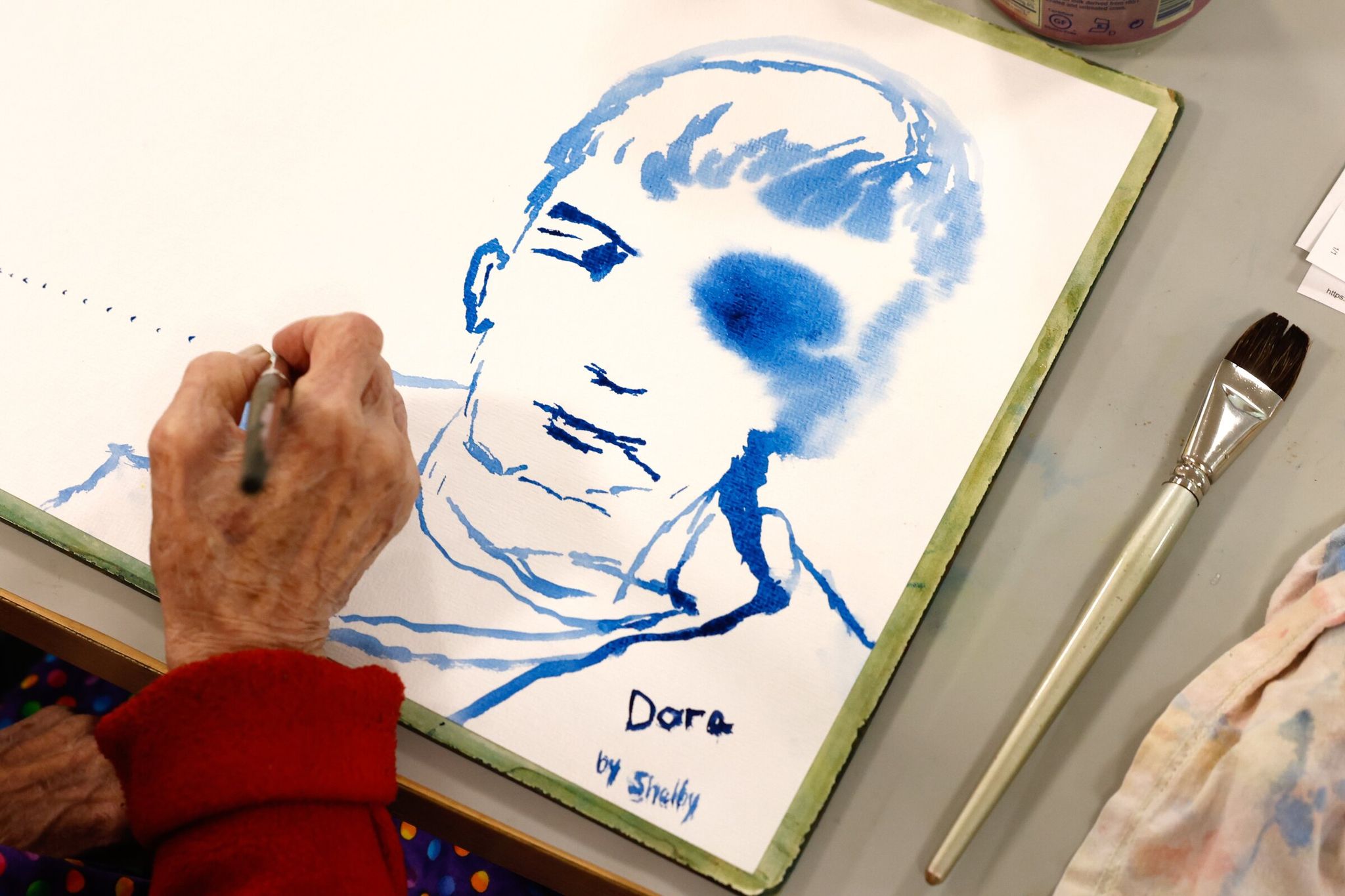
At the Memory Hub in Seattle, a community center supporting people with dementia, their families and caregivers, an unusual event recently took place. Its mission is to create an inclusive space where art, education and social services improve quality of life. There, a string quartet played music for older adults with dementia, after which participants were invited to express what they heard through watercolor painting. To sounds ranging from fleet passages to majestic crescendos, some listeners closed their eyes and tapped the beat, others sank into silence, and then their canvases filled with paints reflecting both imagined landscapes and portraits of the friends sitting opposite them.
82-year-old Judy Melissinos, one participant, described the experience not in musical terms but emotionally: “I can’t say what the music was. I can only say that I felt very happy.” She and others present were not merely spectators but central figures in a graduate student’s research project at the University of Washington. This leading research institution in Seattle conducts advanced work in neuroscience and aging, partnering with local organizations to translate scientific discoveries into practice. The study examines how music helps people with dementia connect with others and with the world.
Dementia is often associated with memory loss, but it encompasses a broader range of symptoms affecting thinking and social skills. Researchers are increasingly interested in how music can positively influence those beginning to experience cognitive difficulties. Sarah McKiddy, a doctoral student in the nursing program, is at the forefront of this work, studying how the performing arts can enhance a sense of self and well-being. Projects like this are funded through a combination of sources: grants from federal agencies, private donations, support from the state of Washington and the city of Seattle, and university resources.
McKiddy considers music a uniquely powerful tool because of its close connection to identity and relationships. Part of her research involves arranging live-music listening sessions in a carefully prepared setting and observing emotional and social responses. Her work reinforces scientific understanding: while many cognitive abilities may decline, musical memories often remain intact.
For her study McKiddy collaborates with the Balourdet Quartet, a young string ensemble based in Seattle known for its innovative performances within cultural and therapeutic programs. The quartet performs at the Memory Hub. At a recent session they played three distinct pieces, pairing each with a painting, and asked participants to reflect on the link between sound and image before creating their own drawings, blending auditory and visual stimuli.
McKiddy hopes the results of these sessions will form the basis for regular support programs for people with dementia. Her colleague records audio from the events, creating a “soundscape” — an audio album of music, reactions and the atmosphere of the meetings, which will be made available to the public. After completing her dissertation, McKiddy plans to share findings and encourage involving people with dementia in research as active coauthors.
She describes musical experiences as “little time capsules,” preserving moments from the past in a form accessible to the brain. Before beginning her scientific career McKiddy was a violinist and, while performing, noticed that familiar melodies often elicited the strongest responses from people with memory loss, which led her into dementia research.
The Memory Hub functions as a community center connecting people with dementia to a network of organizations working on arts and aging. This network includes institutions such as the Frye Art Museum with programs for people with dementia, Seattle Opera with projects to engage older adults, as well as nonprofit groups. The group at the music session came from Elderwise — a day program where participants engage in “spiritually oriented activities” four times a week. This well-known Seattle program emphasizes creativity, mindfulness and social interaction rather than a medical model. Elderwise director Janet Salisbury speaks to the idea that, despite cognitive changes, people can continue to learn, grow and sense one another’s essence through music, art and relationships.
Elderwise also provides respite for caregivers, as participants can attend the center independently. Salisbury emphasizes the importance of a calm, safe environment, in contrast to the chaotic pace of everyday life many participants face. She notes that dementia manifests differently in each person, but music can bridge those differences.
During the music session Salisbury watched one of the less talkative clients. “He didn’t speak much, but I could see he was responding internally to the music,” she said, describing how subtle facial expressions revealed deep engagement even without words.
Another participant, 77-year-old Rene Foster Jeffrey, reflected on the emotional power of music in the Memory Hub courtyard. The sounds returned her to childhood memories of home. “I used to sing. Christian songs, music.” Such initiatives using art for therapy are not unique in Seattle. The city has other programs, such as the “Creative Aging” series at the public library, art classes in senior centers and adapted museum projects, which together create a supportive environment for an aging population.
Based on: Music builds connections for Seattle residents facing memory loss