
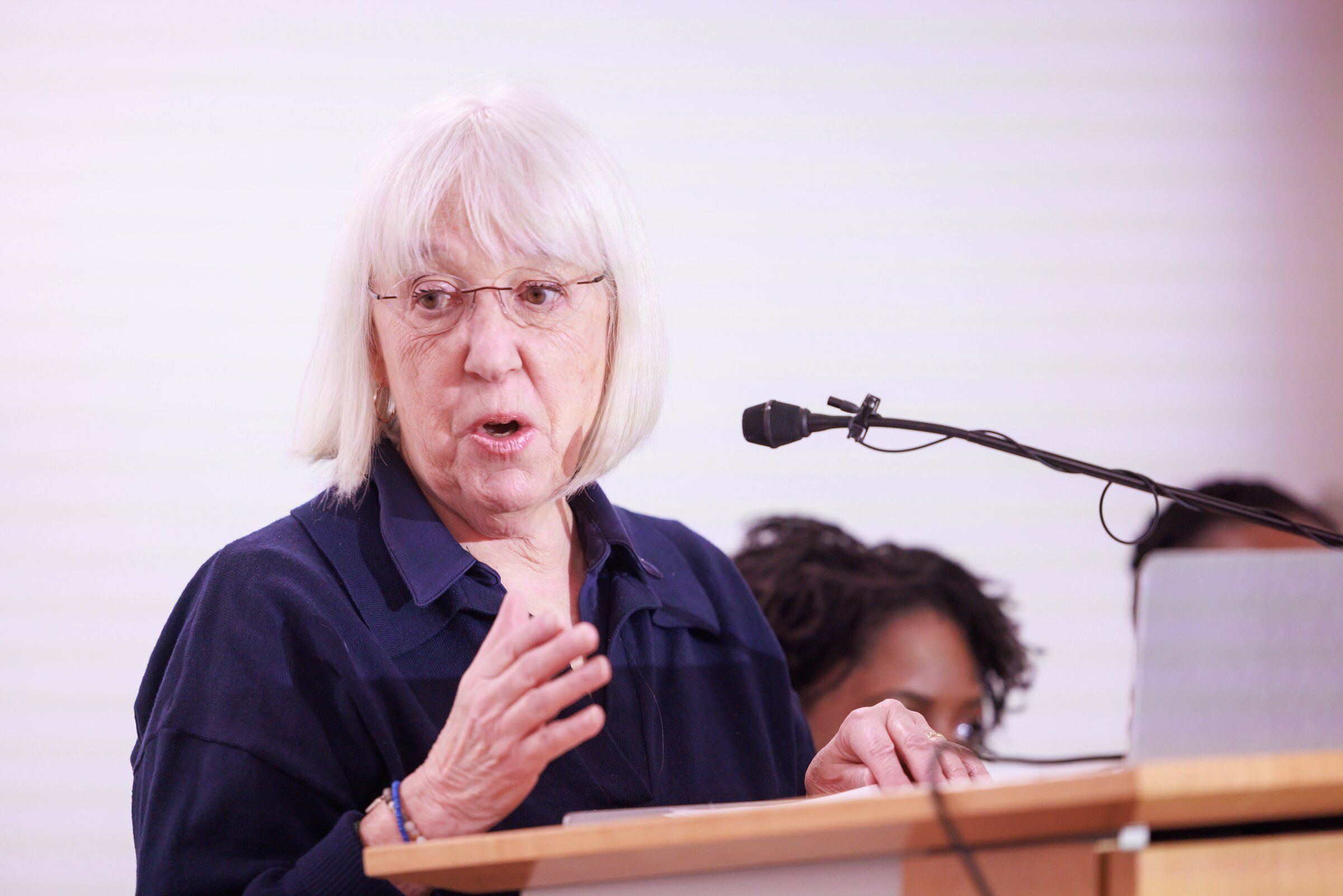
Democratic Sen. Patty Murray has unveiled new details of an initiative to strengthen the U.S. public health system. The Public Health for America Working Group is expected to develop proposals to help shield health departments and scientific protocols from political interference after Donald Trump leaves office. Possible measures include limiting the number of political appointees in agencies such as the Centers for Disease Control and Prevention (CDC), as well as guaranteeing funding for federal, state and local public health authorities.
Murray said that over the past two years, trust in medical institutions and scientific experts has suffered serious damage. She attributed this to layoffs at the CDC, cuts to scientific grants, the reorganization of the vaccination advisory group and the spread of debunked claims about childhood vaccines. She considers the group’s main task to be restoring trust in experts and creating mechanisms to prevent political decisions from overriding scientific conclusions.
The group consists of five people, three of whom are from Washington state. They include infectious-disease specialist Helen Chu of the University of Washington School of Medicine, whose laboratory was the first in the United States to detect community transmission of COVID-19; Patty Hayes, former director of the King County Department of Health; and pulmonologist Vin Gupta of Virginia Mason Franciscan Health, who is widely known for his public commentary on the pandemic. Public health experts Joshua Sharfstein and Jeffrey Levi have also joined the group.
The discovery made by Chu’s laboratory in February 2020 became an important signal for epidemiological surveillance. The virus was detected in a Snohomish County resident who had not visited areas linked to a known outbreak and had not had contact with anyone confirmed to be infected. This indicated that the infection was spreading undetected within the American community, rather than only through imported cases from abroad. Chu’s team helped identify the threat before it was officially confirmed and underscored the need to expand testing, contact tracing and preparedness among state and national authorities.
Chu plans to push for stricter rules for the CDC’s Advisory Committee on Immunization Practices. In particular, she believes the administration’s ability to unilaterally rewrite the committee’s charter and change requirements for its members should be limited. The issue arose after changes made by the Trump administration expanded the criteria for selecting members and added organizations known for spreading vaccine misinformation to the list of observer groups.
At the same time, decisions about vaccination and other public health measures are made at several levels. The CDC develops nationwide recommendations, collects data and coordinates federal assistance, but generally does not impose rules directly on state residents. The Washington State Department of Health issues mandatory statewide orders, distributes vaccines and coordinates the work of local authorities. Agencies such as the King County Department of Health are responsible for carrying out vaccinations and testing, investigating outbreaks and informing the public. Their authority depends on state law and decisions by the governor and local governments, so rules may vary between counties and cities.
Gupta is also calling for better public communication, stronger oversight of government agencies and a systematic discussion of artificial intelligence’s impact on medical care. At a meeting at Washington State University, doctors told Murray how politicization affects their work — from vaccinations to the distribution of grants. Pullman pediatrician Katie Hrynevich said many parents are confused by the stream of contradictory messages online.
Murray, who holds a leadership position on the Senate Appropriations Committee and serves on the health committee, said she intends to hear from as many people as possible and use the dialogue to restore public trust.
Based on: How Murray and WA experts plan to ‘politics-proof’ public health