
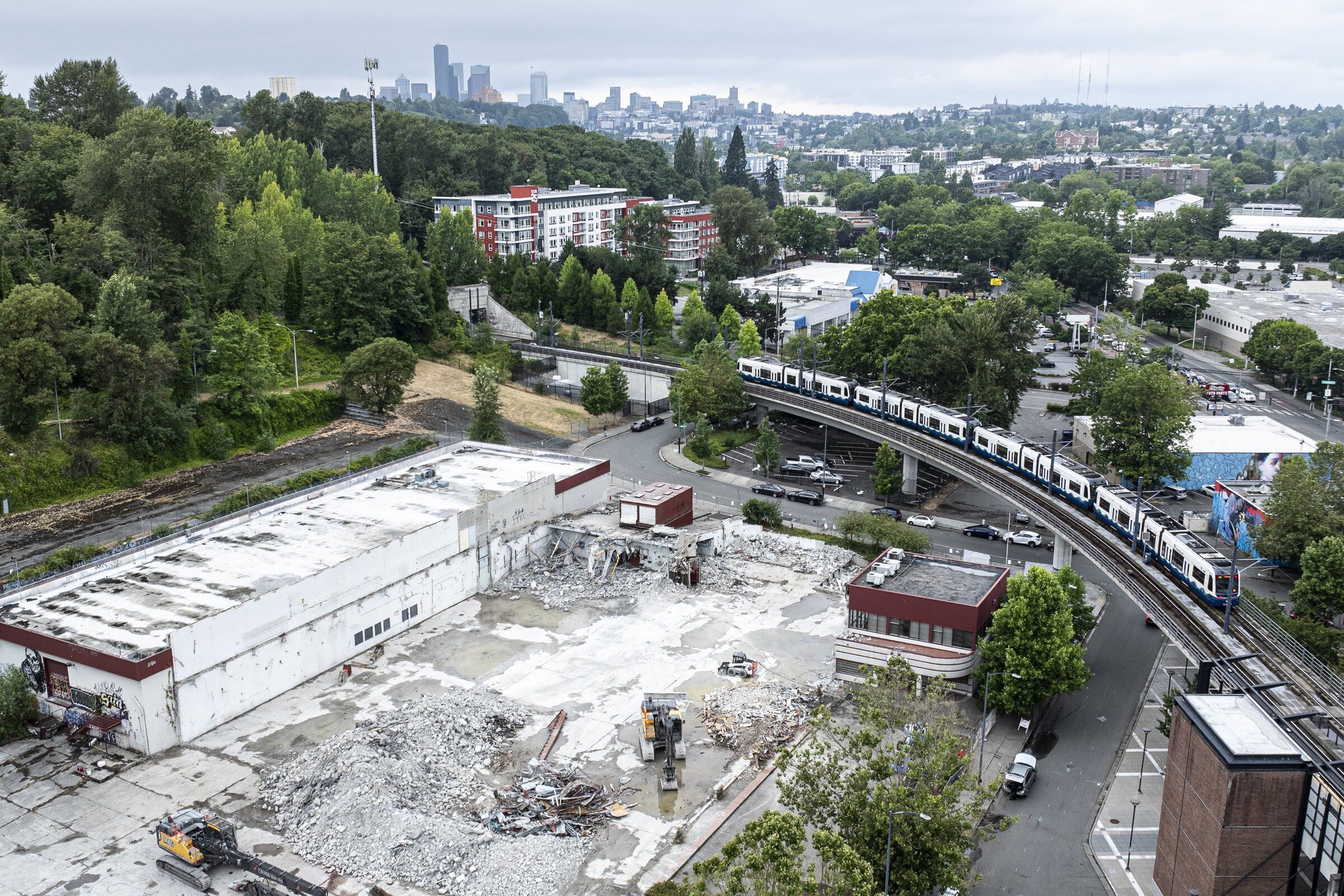
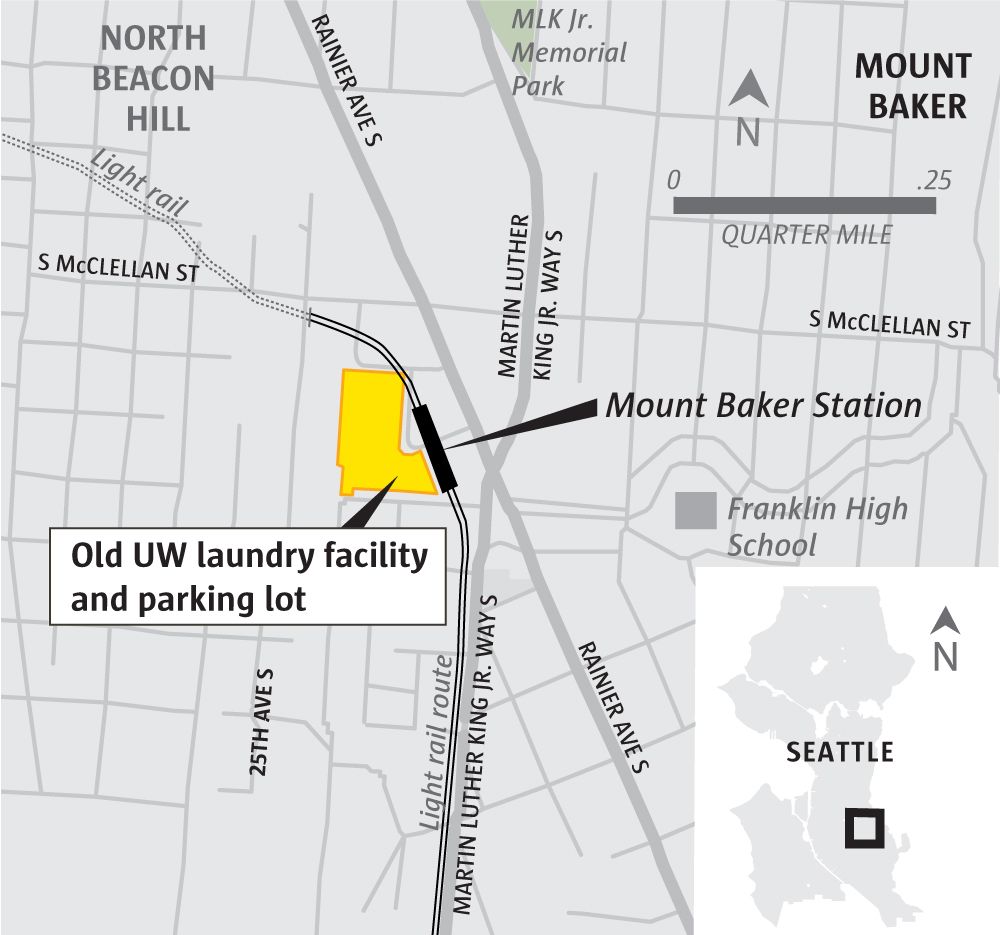
In Seattle, just south of the Link light rail Mount Baker station, a visible change is under way: a familiar parking lot is disappearing, and a large complex of affordable housing will take its place. Neighborhoods around transit stations are especially important for development. They’re easier places to live without a car—public transportation is nearby, and the city is trying to build more housing where people can get to their jobs and services more conveniently.
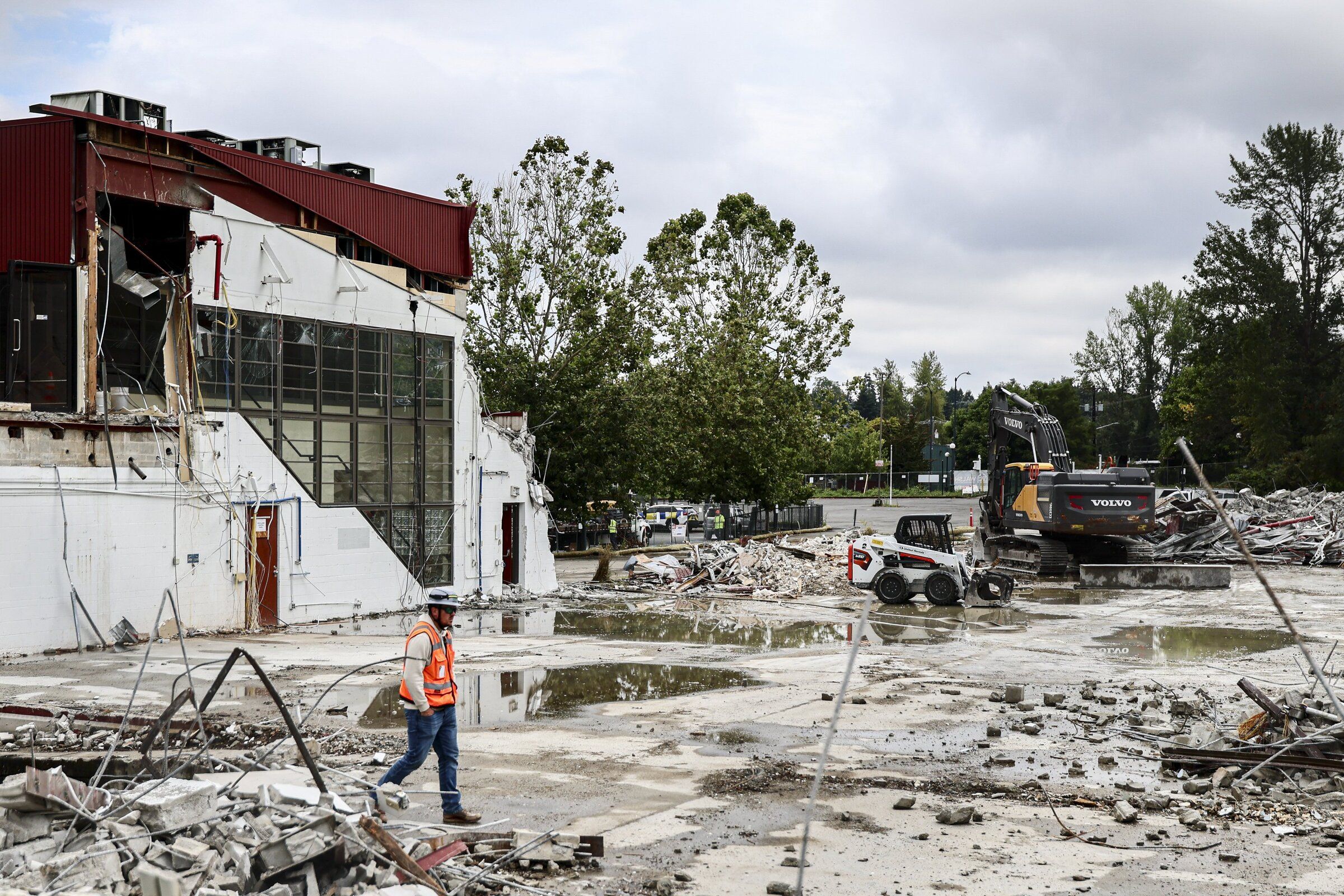
The site is already fenced off, and workers are preparing the area for construction of homes aimed primarily at families with low incomes. This is not only replacing the former parking lot, but also an old laundry facility at the University of Washington. After those buildings are demolished this fall, a project long planned by El Centro de la Raza and Mercy Housing Northwest is finally expected to move forward. El Centro de la Raza is a local community organization, and Mercy Housing Northwest is a nonprofit affordable housing developer. They were given the site because both groups specialize in projects for low- and middle-income families and know how to pair building plans with public interests—not just commercial gain.
The land was transferred to the city six years ago with the condition that it be used for housing that will help prevent people from being pushed out of Seattle’s expensive market. Later, the University of Washington transferred 3.8 acres to the city for 99 years for $1 per year. That amounts to an almost symbolic long-term lease, so the site works toward a public purpose rather than generating profit. In Seattle, agreements like this aren’t everyday practice, but they’re used when it’s necessary to sharply reduce a project’s cost and make it socially meaningful.
The need for such housing in the city is immense. In recent years, Seattle has indeed become a leader in adding affordable apartments among U.S. cities, but that hasn’t made living more affordable. Rent and home purchases remain very expensive, so even new projects haven’t been enough to fully keep up with demand. There is especially short supply of family apartments with two, three, and four bedrooms. Studios and smaller units are easier and cheaper to build, but families need more spacious homes—and in affordable housing, those options are typically less available than families require.
The first phase is estimated at $206.5 million and is expected to be completed in 2028. Two buildings will rise on the site, offering 239 apartments for residents whose incomes are well below the area’s median. Most of the housing will be for families: almost all units will have two or more bedrooms.
At El Centro de la Raza, leaders emphasize that it’s family apartments that the city especially lacks. According to Deputy Executive Director Miguel Maestase, more studios and one-bedroom units are being built now, while families need housing that is both more spacious and affordable so they can remain in Seattle.
In addition to apartments, the project includes two parks—one open to everyone, and a second reserved for residents of the complex. One of the buildings will include the University of Washington’s first Rainier Valley Early Learning Center, where about 160 children will be able to receive affordable childcare and preschool education, and future teachers will be able to complete practicums. In the second building, commercial space is planned on the ground floor, such as for a café or restaurant.
All of this is literally a few steps from a light-rail station. At El Centro, officials say proximity to the train is an important advantage, but not the main motivation for future residents. For many, the deciding factor will be the fact that they can afford the rent, with convenient transit access serving as an extra benefit.
Seattle City Councilmember Diann Foster backed a package of measures that helped the city’s Department of Housing move this and other projects forward. Foster represents the part of city government that influences housing policy and the allocation of funds, while the city council makes decisions on financing affordable housing and determines which projects will receive support. On Mount Baker, the city is directing $38.2 million. Foster described a future where residents can drop a child off, grab coffee, have lunch, enjoy a park, and then get on a train right away—using city conveniences that currently don’t exist at this site.
In the first phase, the complex will include 72 apartments for families earning no more than 30% of the area’s median income. That is about $49,320 per year for a family of four. It will include eight of the 14 four-bedroom apartments, and the smallest units in the project will be at least two-bedroom apartments.
Four-bedroom units will cost about $1,400 per month, including fees and basic utilities. For comparison, the median rent for a two-bedroom apartment in Seattle in June was $2,400. Another third of the housing is set aside for families earning up to 50% of the median, and the next third for up to 60%.
The second phase of the project has not yet been funded and is expected to add two more buildings and nearly 200 more apartments. Parking in the first phase will be limited: 69 spaces for 239 apartments. At El Centro, officials acknowledge that it won’t be enough for everyone, but say that’s by design and driven by the budget—each parking space adds noticeable cost to construction.
The idea of developing the station-adjacent site began moving forward in 2020, when the University of Washington transferred land to the city for affordable housing and education needs, including early childhood development. In 2024, El Centro de la Raza and Mercy Housing Northwest were selected as the developers, and in late June the city provided them full access to the site through a 99-year lease for the symbolic price of $1 per year.
Leadership at the city’s housing authority also changed in parallel. The office is now led by Kelly Larsen, who previously spent several years working on policy and planning within the same agency and before that worked in affordable housing. Despite staffing changes, the work continues, and the authority’s budget has grown over the past decade from about $50 million to nearly $350 million.
The city has also announced an additional $100 million for the construction, renovation, and repurposing of housing into affordable rentals. The primary funding comes from the housing levy—a citywide tax whose revenue is directed to affordable housing programs. It helps finance the construction and preservation of lower-cost apartments, but it also makes city building efforts more dependent on decisions about how those funds are allocated. For El Centro, this project is only part of a broader mission: the organization runs 43 programs and services, ranging from substance-abuse prevention and childcare supervision to tutoring, courses for future homeowners, and help with business planning.
Based on: Seattle light rail station swaps parking lot for affordable housing