
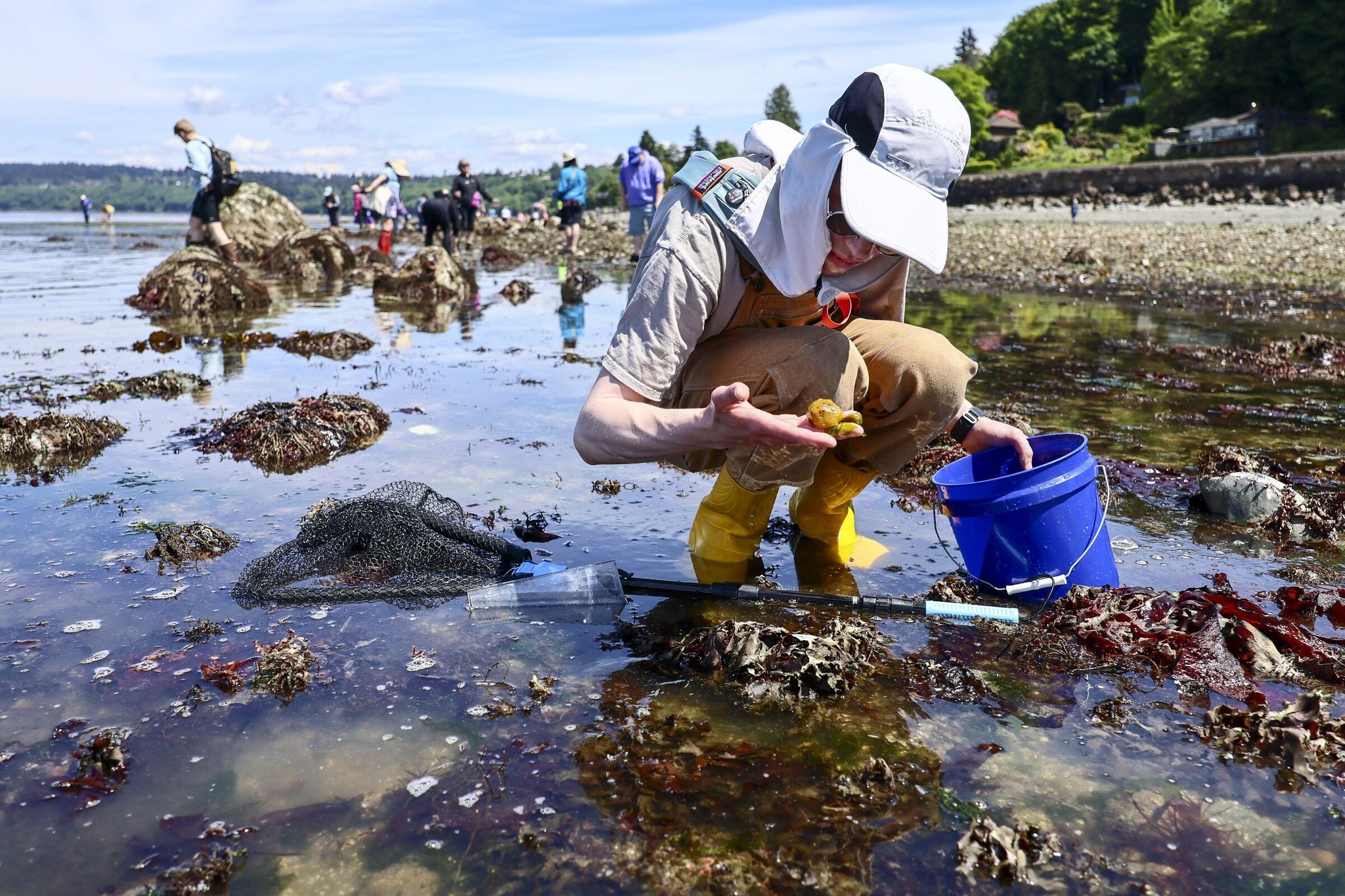
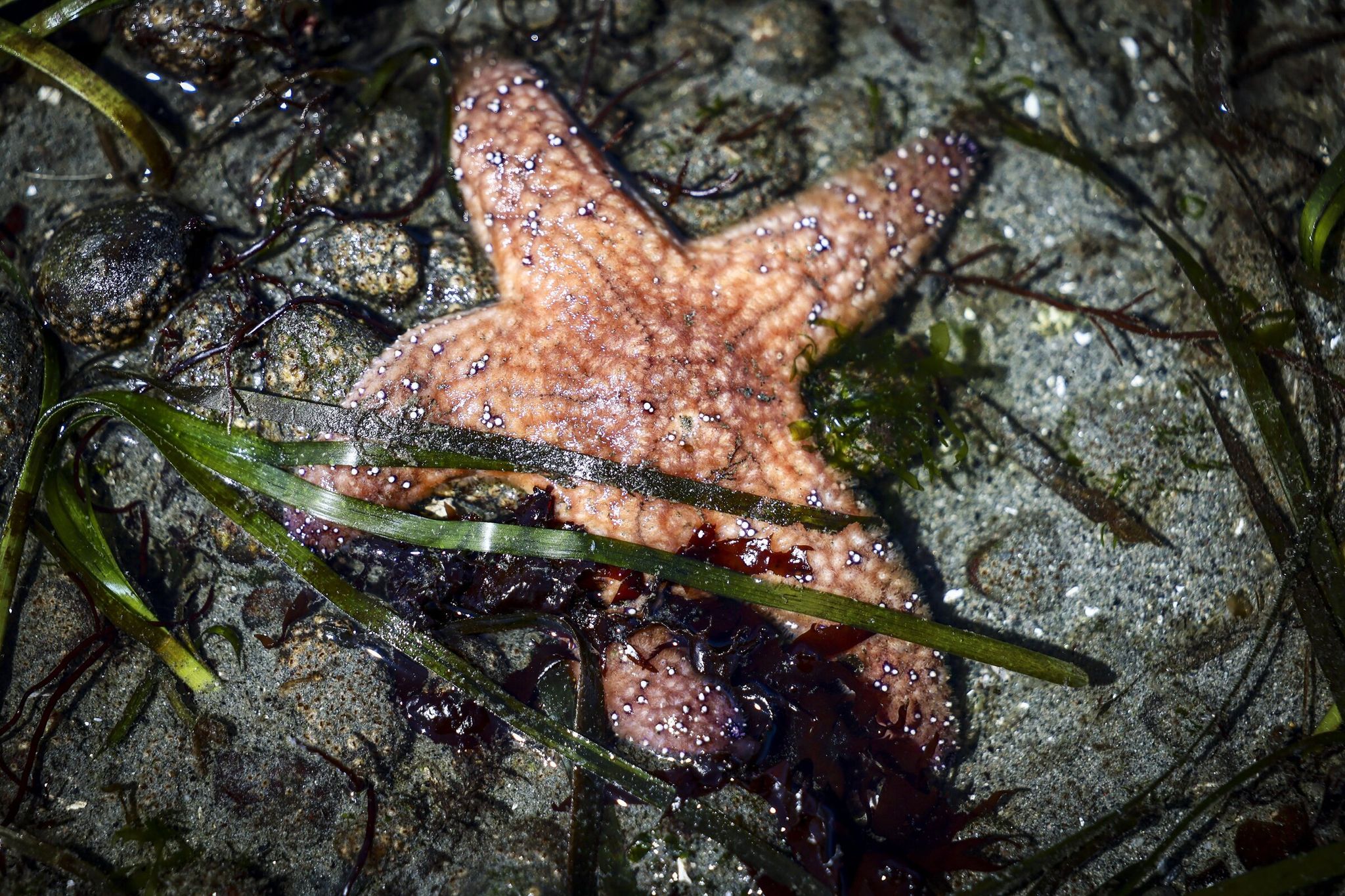
On Monday, Puget Sound experienced some of the lowest tides of the year — the water level fell 4.04 feet below normal. That exposed sea life usually hidden underwater: crabs, sea stars, moon snails and their characteristic slimy trails in the sand. Tuesday’s tides will also be record-low, so you have another chance to witness this remarkable natural event.
To help those who want to explore the newly exposed seafloor, the Seattle Aquarium sent naturalists to three sites, each unique in character. Des Moines Beach, located in the city of the same name south of Seattle, is a quiet sandy shore with a pier and views of the Olympic Mountains — ideal for relaxed outings and fishing. Golden Gardens, in the Ballard neighborhood in northwest Seattle, is a large park with a sandy beach, lawns and trails, known for sunsets and bonfires. Olympic Sculpture Park, meanwhile, is not a beach in the usual sense but an open-air modern art museum on the Elliott Bay waterfront in downtown Seattle, featuring large sculptures such as Alexander Calder’s “Eagle” and offering panoramic bay views. From 11 a.m. to 2:30 p.m. at these three locations, volunteers will explain the marine ecosystem and show how to investigate tide pools properly without harming their inhabitants. If you miss Tuesday, the next super-low tides are expected June 14–16 and July 14.
Beyond viewing, tides at -3 feet and lower are the best time to harvest the world’s largest burrowing clam — the geoduck. The name of this Pacific coast endemic comes from the Nisqually language and means “deep digger,” which is apt: its siphon can reach a meter in length and it can weigh up to three kilograms. Geoduck harvesting in the Puget Sound region is strictly regulated: diggers use special shovels and work by hand, digging up to 1.5 meters deep, which requires licenses and considerable effort. In local cuisine the clam is prized for its crunchy texture and slightly sweet flavor — it’s eaten raw as sashimi, in sushi, deep-fried, or added to thick fish chowder, and much of the catch is exported to China and Japan. According to the state Department of Fish and Wildlife, conditions are now ideal for geoduck harvesting. And if you can’t get to the shore, reporters have prepared video and photos from the scene — you can see all this beauty without leaving home.
Experts remind visitors of rules for behavior on the exposed seafloor: move carefully, touch creatures as gently as possible if at all, and leave no trace when you depart. The main priority is to preserve this fragile ecosystem for future generations and future low tides.
Based on: Can’t go see Seattle’s low tides? Here’s what you’re missing