
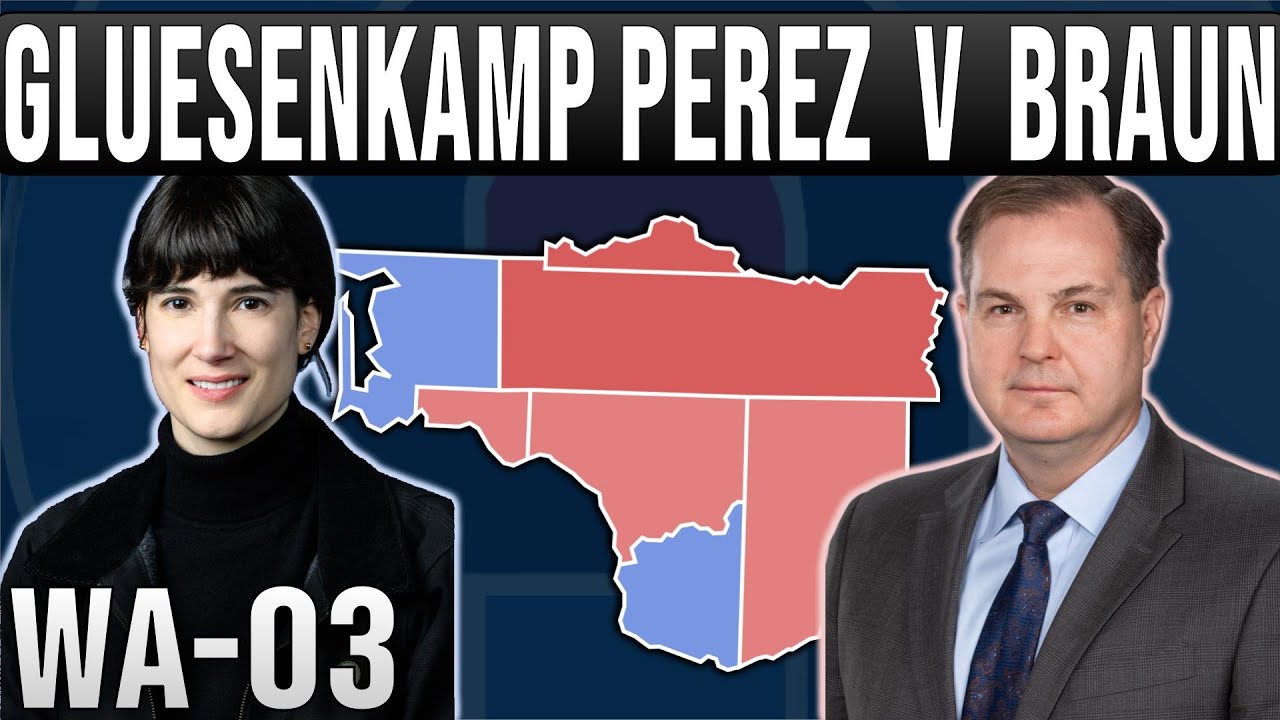
In the days leading up to the November 3 election, the race for Washington state’s 3rd Congressional District has become one of the most expensive and consequential in the country. Democratic incumbent Marie Gluesenkamp Perez and Republican John Braun have raised multimillion-dollar war chests of their own, but even more money has come from party organizations and outside political committees. For a district stretching from Portland’s suburbs to the forests, ports and agricultural areas of southwest Washington, that means the final weeks of the campaign are filled with ads, mailers, phone calls and text messages funded largely by people who don’t live there.
In this race, money has long since become more than a measure of a candidate’s popularity. Federal Election Commission reports show that by October 14, Gluesenkamp Perez had raised about $9.5 million and spent more than $9.2 million. Braun had raised roughly $3.3 million and spent about $2.6 million. But campaign spending is only part of the picture: by the middle of the last week of October, independent committees had spent nearly $20 million in the district.
Nearly half of the donors who gave more than $200 to either candidate live outside Washington state. Of Braun’s roughly $3.3 million, about $1.5 million came from state residents whose contributions must be disclosed by name. His campaign noted that the share of local support is higher if small donations are included, but federal reports do not provide the same donor-by-donor detail for smaller contributions. Federal reports on Gluesenkamp Perez’s campaign likewise show a fundraising network that extends well beyond the district’s borders.
The attention is about more than the political fortunes of two candidates. The 3rd District leans Republican: Donald Trump has won it in all three of his presidential elections. But in 2022, Gluesenkamp Perez, co-owner of an auto repair shop and machine shop, unexpectedly took the seat from Republicans, defeating Joe Kent by less than one percentage point. In 2024, she beat Kent again—this time by about four points—even as Trump won the district. In a House of Representatives where the parties’ advantage remains narrow, districts like this carry a significance far out of proportion to their size on the map.
Braun, the Republican minority leader in the state Senate and president of family-owned emergency vehicle manufacturer Braun Northwest, offers his party a more conventional candidate than Kent. He has Trump’s endorsement and has made the cost of living a central theme of his campaign. Gluesenkamp Perez, by contrast, has built her political reputation around a deliberately practical, sometimes party-defying centrism: defending skilled trades, repair work and voters who are wary of Washington—both the state capital and the federal government.
Outside spending is split almost evenly, but its sources show just how national this local race has become. The Congressional Leadership Fund, the main Republican super PAC focused on House races, has spent just over $6 million on efforts to defeat Gluesenkamp Perez. No Going Back, a committee linked to Trump’s political network, has put nearly $6 million into attacking the congresswoman and supporting Braun; about $1.2 million of that was spent in just the final two weeks. Another roughly $586,000 in support of Braun came from America PAC, backed by Elon Musk.
The Democratic side is responding primarily through House Majority PAC, which has spent about $5.4 million against Braun. The Washington-based Together For Working People committee, funded by labor unions and liberal donors, added roughly $212,000 in support of Gluesenkamp Perez. Formally, these groups operate independently of the candidates’ campaigns, but to voters the distinction is often barely noticeable: on television, in the mailbox or on a phone screen, it all adds up to one increasingly loud account of the two contenders.
The pace of the spending is another striking feature of the current surge. Independent groups had spent more than $15 million in the district by early October; the total continued to rise, as organizations booked airtime and ordered new ads for the final days before voting. The latest spending reported by the Congressional Leadership Fund at that point—a $49,500 expenditure on media production for an ad targeting the incumbent on October 26—is a reminder that the financial campaign doesn’t end until the last night.
On November 3, voters will decide whether Gluesenkamp Perez remains one of the rare Democrats able to win in a predominantly rural, working-class district that votes for Trump, or whether Braun will return the seat to Republicans. But it is already clear that the outcome will be shaped by more than conversations at Clark County gas stations, Cowlitz sawmills or Chehalis street corners. Political operations from across the country have invested in the contest over who will represent southwest Washington.


Based on: Millions in outside money pour into WA’s swing district race