
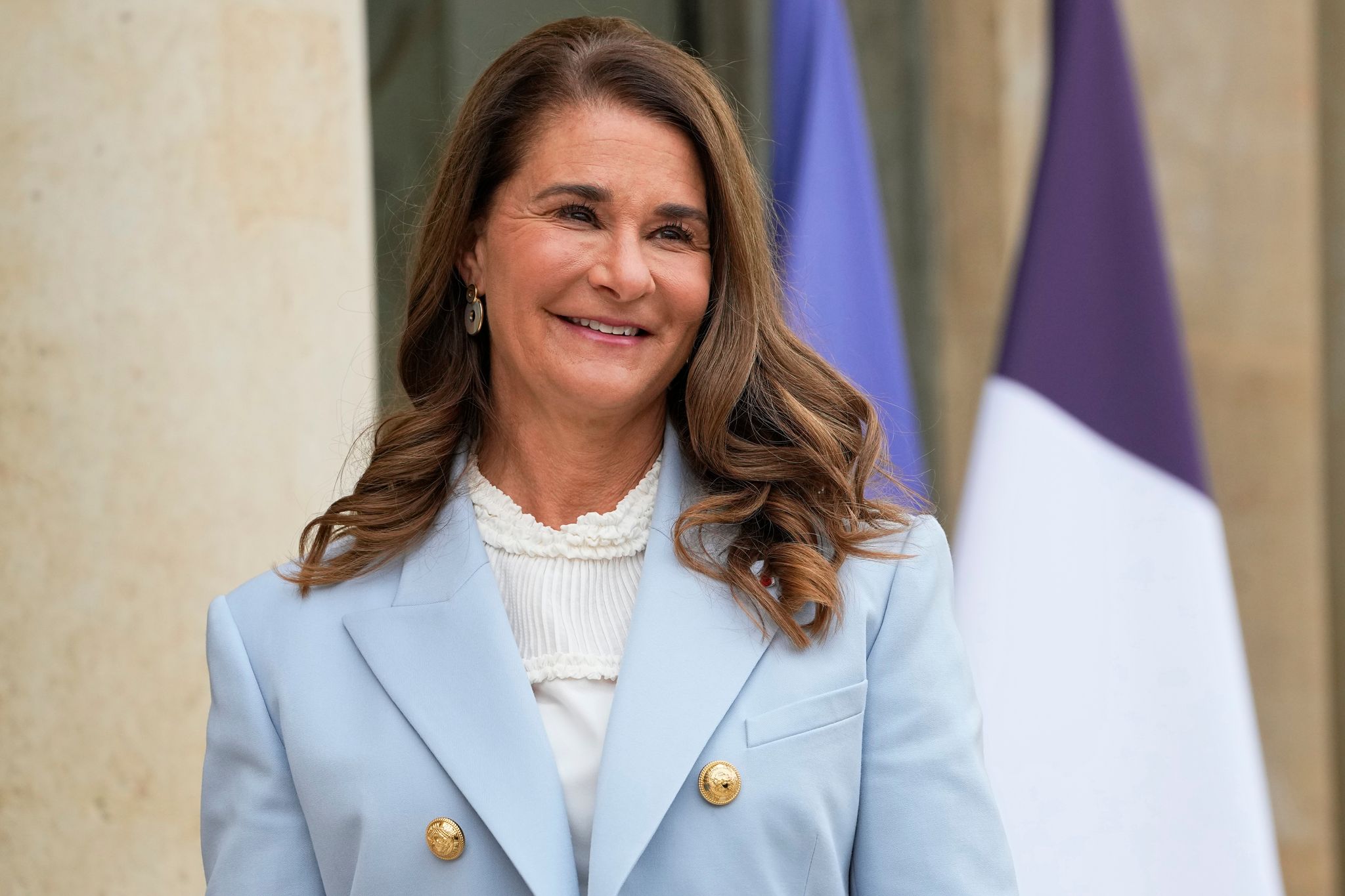
Philanthropist Melinda French Gates announced a new $215 million donation aimed at improving women’s health around the world. The funds will go toward ensuring access to contraception, protecting maternal health, and supporting research on menopause and care for middle-aged women. The announcement, made Thursday, brings her total giving for women’s health to $600 million over the past two years.
In an interview with The Associated Press, Gates emphasized that women’s health is the foundation of her philanthropic work through Pivotal Ventures, based in Seattle. The choice of that city is not accidental: Melinda French Gates lives in the area, and her wealth is tied to Microsoft, founded in nearby Redmond. Seattle’s tech ecosystem — including Microsoft, Amazon and hundreds of startups — has generated vast wealth that many local billionaires direct toward philanthropy. “It’s absolutely clear that women’s health is fundamental — a woman has to be healthy to thrive in life,” she said.
Since 2024, after stepping away from the Bill & Melinda Gates Foundation, Melinda French Gates has focused on supporting women, especially in underfunded areas. The Bill & Melinda Gates Foundation, the world’s largest private charitable foundation, is also based in Seattle and sets standards for the region’s philanthropic ecosystem. Seattle attracts philanthropists thanks to an established culture of “tech philanthropy,” where wealthy entrepreneurs feel a duty to address social problems, along with strong institutions like the University of Washington and a network of like-minded peers, including the Gates family and Jeff Bezos.
The new round of funding includes $40 million for Co-Impact’s initiative to integrate psychiatric care into maternal and primary health services, especially in Africa. Another $10 million will go to the Menopause Society to improve menopause care in the U.S.: the organization will train physicians and expand access to treatment in regions where such care is nearly absent — about 6,000 U.S. counties have critically low access to menopause specialists. Gates hopes her example will inspire other donors.
Seattle’s “tech philanthropy” culture, based on data, scalability and innovation, is reflected in the approach to funding: money is directed to projects with measurable results that use technology and have the potential to scale. Pivotal Ventures often backs initiatives that combine scientific research with practical solutions and focuses on partnering with local communities in developing countries. According to the World Economic Forum, only 2% of private investment goes to women’s health, despite women comprising half the world’s population. “The role of philanthropy is to shine a light on problems society has forgotten and show ways to solve them, to attract other donors and ultimately public funding,” Gates explained.
Dr. Stephanie Fobion, medical director of the Menopause Society, noted that menopause remains one of the most neglected areas of medicine, and the donation will allow the society to expand its educational resources to more regions. Research in this area was already underfunded even before recent cuts to government medical research spending, so Gates believes philanthropy will play a larger role than ever. She stressed that by allocating these funds she hopes not only to address some problems directly but also to draw attention to the importance of the issue.
“I want women’s health issues to stop being invisible,” Melinda French Gates said. “It should not be normal for women to simply endure pain and suffering. We need to see their real experiences and address these concerns.” For her, bringing attention to these problems is almost as important as the funding itself.
Based on: Melinda French Gates donates $215 million to improve women’s health worldwide