
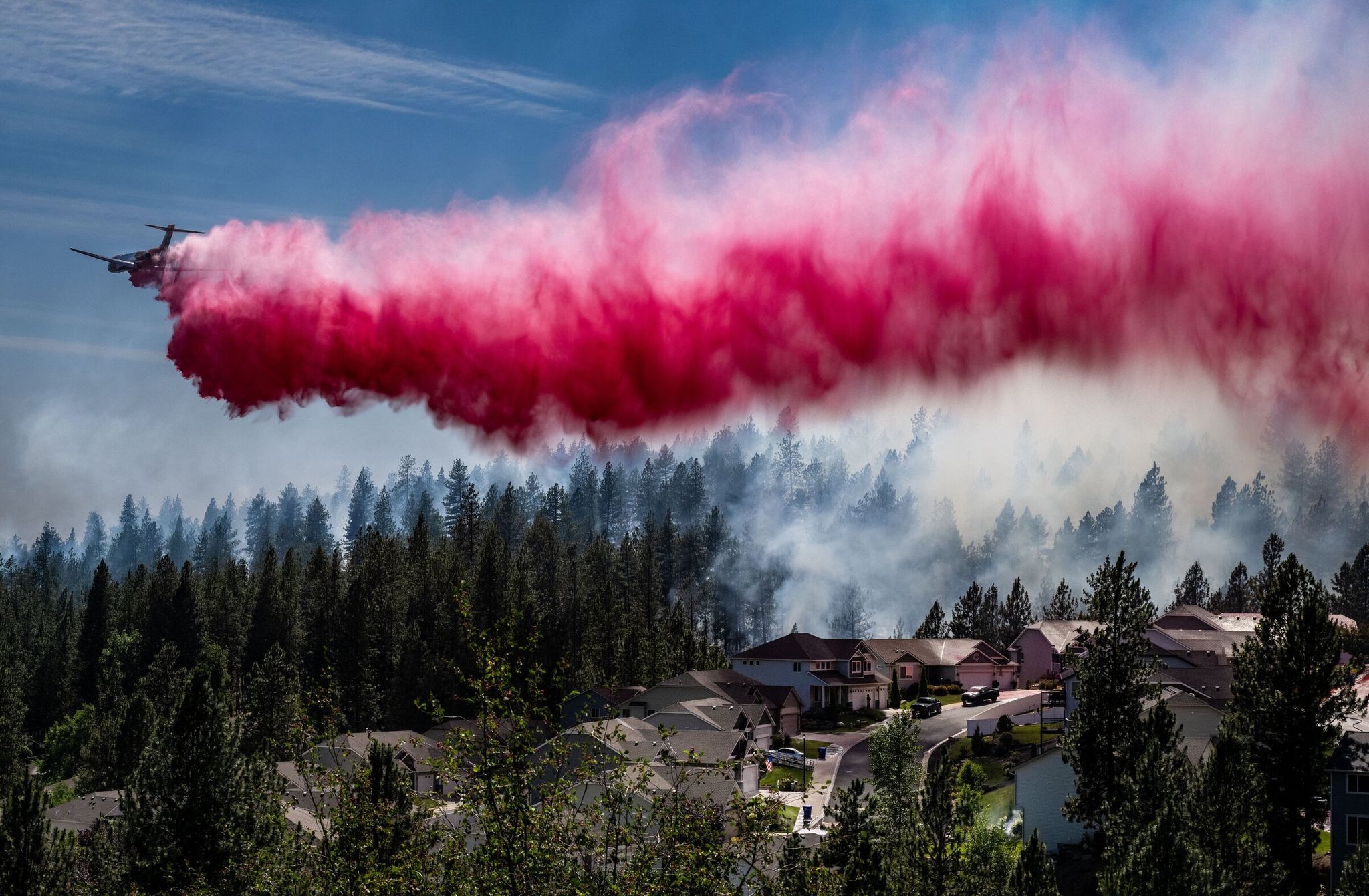
A fast-moving wildfire, driven by strong winds and sweeping through the Up River area east of Spokane at the start of Washington’s fire season, prompted an immediate, large-scale response from hundreds of firefighters and emergency personnel. Officials described rapidly evolving conditions on the ground and in the air as residential areas were streaked red with fire retardant dropped from aircraft, halting the blaze’s advance.
As of Wednesday, the fire had burned 222 acres and was only 10% contained. At least 15 homes were destroyed, and remains believed to be human were found in one of the burned structures. Located roughly 15–20 kilometers (about 9–12 miles) northeast of Spokane, Lake Sekani and the forested areas along the Spokane River with low-density housing were at the epicenter of the disaster. Fire leaders noted that such extreme conditions for ignition and spread this early in the season—which typically starts in July or August—are unusual. May fires often spread faster because there is less green foliage and dry grass from the previous year, while summer ignitions burn hotter due to deeper drying of soils and wood. Because the season began early, however, firefighters and equipment were not already committed to other incidents.
Thomas Kyle-Milward, a spokesperson for the state Department of Natural Resources, said that while the loss of homes is always tragic, the rapid response at all levels of government likely prevented a much larger catastrophe. In Washington, responsibility for fighting fires is divided by land ownership: DNR handles state and private forestlands, local fire districts respond to rural and urban areas, and federal agencies operate in national forests and reserves. In practice, large fires trigger unified command centers that include all parties. Spokane County Sheriff John Nowels said that within the first four hours of the fire more than 1,500 people had been notified and over 400 were evacuated by officers who went door to door. One person is listed as missing, but rescuers could not enter the danger zone because of continuing hazards.
This area has faced destructive fires before. In 2023, two nearby blazes destroyed hundreds of homes, burned thousands of acres and killed two people. “Unfortunately, residents of this community are seeing for the second time in three years just how dangerous these fires can be at any time of year,” Nowels said bitterly.
Anticipating worsening conditions, county fire leaders began preparing for the worst last week. They raised the wildfire response level to “high,” which triggers immediate deployment of all available resources when a call comes in. It was the first time this year that all county agencies were operating at that heightened level.
Fire District 3 Chief Cody Rohrbach expressed concern about what a destructive early-season fire means for the months and years ahead. Given increased tree mortality, forest health problems, prolonged drought and low snowpack, he sees a broader issue: “Resources are already tied up, and the big question is—what are we facing in July and August?” Low snowpack means soils and vegetation receive less moisture from snowmelt in spring, leaving forests dry by early summer. Trees weakened by water stress become vulnerable to pests, causing widespread tree death, and dead dry wood serves as ideal fuel. Over the past 10–15 years, the Pacific Northwest has seen more frequent droughts, mean summer temperatures rise by 1–2°C (about 1.8–3.6°F), and mountain snowpack decline by 20–30%, lengthening the fire season and making fires larger and more intense.
The first sign of trouble was noticed by Spokane Valley battalion chief John Levell as he was heading to his shift. Seeing smoke near Lake Sekani, he immediately notified dispatch and requested a full response. When he arrived, he found a house fully engulfed in flames, with five-foot flame tongues being pushed northeast by the wind. Within an hour the fire reached a residential neighborhood.
The response was lightning-fast: within an hour aircraft and helicopters were attacking the wildfire. Levell, who has served for 31 years, said he had never seen so much aerial support on a single fire in such a short time—14 fixed-wing air tankers and four helicopters. Firefighters described the heat from the blaze as “like a blowtorch” as they stood on slopes behind residents’ homes.
Although the flame front passed, crews spent many more hours extinguishing hotspots and smoldering embers that had penetrated homes. At one point, crews driving through the neighborhood spotted smoke coming from a home’s ventilation and quickly put out the fire. Rohrbach said county and regional agencies rallied around one mission—to protect the community.
The fire is a warning for the broader Pacific Northwest. Experts link the rise in early fires to climate change, which brings more frequent and severe weather that promotes ignition and spread. Burned acreage in the 2020s is two to three times the averages of the 1990s, and individual fires grow faster because of drier fuels. Spokane’s experience is a reminder that preparedness and coordination can save lives and property, but the threat continues to grow with rising temperatures and drought.
Based on: Inside the massive response to an early-season wildfire near Spokane