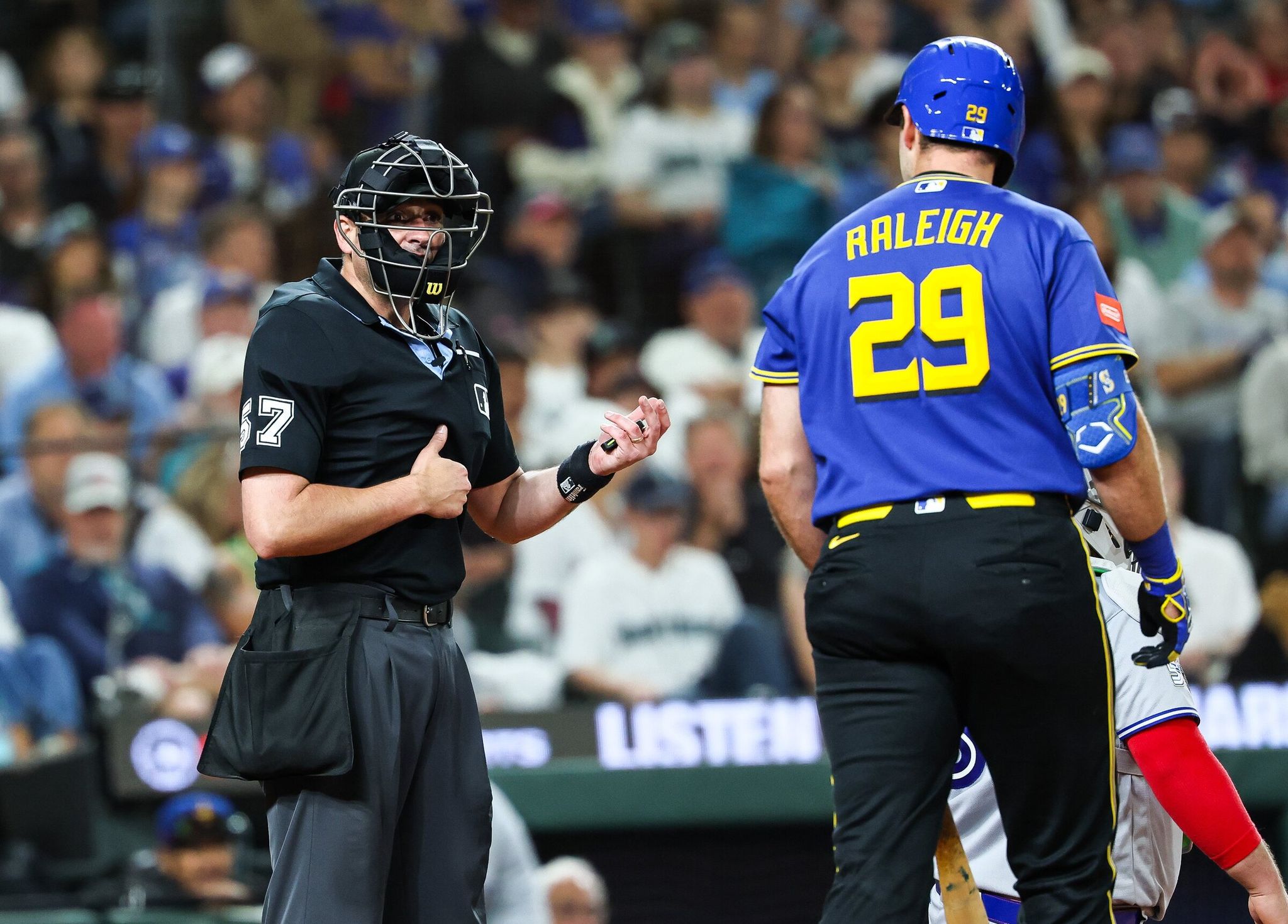
Friday evening brought two pieces of news: the Mariners fell to the Blue Jays, 0–2, amid a patriotic pregame ceremony, and in the Lake City neighborhood there was a shooting that killed a 25-year-old man—Seattle’s first killing in the city after a record stretch of calm in June.
Mariners’ Loss to the Blue Jays Doused the Patriotic Pregame Mood
On Friday evening, T-Mobile Park was packed to capacity—45,891 fans arrived well before the first pitch to support not only the home team but also the U.S. soccer team, which received an elaborate ceremony before the game. The stands chanted “USA! USA! USA!,” and Mariners players took the field alongside soccer players waving American flags—seemingly, the energy and patriotic uplift were about to carry over to the home team.
But the festive mood vanished as soon as the game began. In the very first inning, Dylan Cease of the Toronto Blue Jays retired three Mariners batters in a row, and from the stands, instead of the earlier cheers, came a familiar—yet entirely unwelcome for Seattle—chant: “Let’s go Blue Jays!” The visitors from Canada left the Mariners with no chance, winning 2–0 in shutout fashion.
It was already the sixth time this season the Mariners have failed to score any runs in a game against the Blue Jays, and over the last 19 innings, the team has managed just one run. After the game, manager Dan Wilson acknowledged, “Yes, that was a tough night.” It seems the emotional pregame shows and full houses aren’t inspiring the group so much as they’re becoming a cause of yet another round of disappointment—something that has even gained an unofficial reputation.
The key factor in the loss was the brilliant start by Toronto’s starter Dylan Cease, who signed a $210 million contract over seven years last offseason. That night, he was completely dominant: seven innings, just three hits, one walk, and nine strikeouts. Wilson noted that Cease typically has trouble landing his pitches in the strike zone, but this time he consistently went ahead in the count, changed the direction of his pitches masterfully, and kept hitters on edge. For Cease, it was his best start since mid-May, and he also avoided the kind of long, extended at-bats and the many walks that typically drive up the number of pitches thrown.
There was even a hiccup involving the league’s trial automatic strike/balls system (ABS). The Mariners exhausted their challenges early: in the first inning, Randy Arozarena, batting second, unsuccessfully challenged two umpire calls on strikes—even though in both instances the ball clearly was in the zone. After that, the team had no challenges left for the rest of the game, although later there were спорные moments involving Cal Raleigh and Dom Canzone that could have been contested.
Dan Wilson gently criticized Arozarena for a lack of situational awareness, but said he wouldn’t remove one of the team’s most consistent hitters from the lineup in the absence of injured Julio Rodríguez. In the end, Cease—knowing that any borderline pitches would remain strikes—attacked the edges of the zone even more aggressively, and twice, when the count was 3–2, turned potential walks into strikeouts.
As for Mariners pitcher Luis Castillo, he allowed both runs in the third inning. After a single by Shawn Casey and a double from Toronto’s ninth batter Andres Gimenez, which brought in the first run, Nathan Lux sparked a rally; then a single by Vladimir Guerrero Jr. made it 2–0. Castillo said the pitches were good, but that the opponent simply managed to hit them.
He praised Mariners shortstop Colt Emerson, who made an incredible dive stop on the way up and, from a kneeling throw, got the runner at first to end the inning. Wilson called it a display of athleticism and talent from a young player. However, the Mariners’ offense again left much to be desired—the team couldn’t score a single run despite support from 45,000 fans.
As reported by the Seattle Times, the game was another reminder of the team’s chronic struggles with converting key moments—especially in the presence of strong pitching. For the Mariners, the loss of Julio Rodríguez due to a concussion is a serious blow, and without him, their batting lineup becomes too vulnerable. At the same time, the Blue Jays’ win once again showed that even on the road, under pressure from patriotic chants, they know how to swing the momentum of a game.
One Killed in Shooting in Seattle’s Lake City Neighborhood
Late Friday evening, around 8:00 p.m., a shooting occurred in Seattle’s Lake City area in the northeast part of the city, killing a young man. According to the Seattle Police Department, neighbors reported hearing gunshots and saw a man lying in the 12,000 block of 40th Avenue Northeast.
When Seattle Fire Department medics arrived, they tried to perform life-saving measures, but the injured man was pronounced dead at the scene. The victim was a man believed to be about 25 years old. By the Saturday morning update, police had no additional information.
As the Seattle Times reports, details of the incident are currently limited, and the investigation is ongoing. In cases like this, police typically review surveillance video, interview witnesses, and try to determine possible motives. While this report does not name any suspects or describe the circumstances, the fact that a person was killed in a residential area is troubling to local residents. Incidents like this underscore the concerns about street violence that are occasionally documented in different parts of Seattle.
Key points that can be drawn from this brief update: the incident happened late Friday evening; the victim was a man around 25; the shooting occurred on a street in a densely populated neighborhood; and police have not yet reported any arrests or identified suspects. There are still no quotes from police representatives or witnesses, but the fact that an outlet such as the Seattle Times is publishing the story suggests the case is being handled by law enforcement. It’s important to note that these incidents often take time to gather evidence, so the public will have to wait for further news.
The consequences of the event are already clear: Lake City becomes, for a time, a focal point for police attention; residents may feel anxious; and local officials may increase patrols. Such tragedies also raise questions about safety in city neighborhoods and gun availability. For now, the only thing left is to follow the investigation as it develops.
Shooting in Lake City: Seattle’s First Killing After a Bloodless June
Late Friday evening, a shooting took place in Seattle’s Lake City neighborhood, killing a young man. Police arrived at the scene at about eight p.m., finding the victim with gunshot wounds on the roadway. The victim, reportedly about twenty years old, died at the scene before medics arrived. The identity of the deceased has not been released.
This killing was Seattle’s first of July, and its significance goes well beyond a single tragic incident. The entire previous month—June—passed without a single killing in the city. As Seattle police emphasized, this was the first time it has happened since 1970. June 2026 has gone down in history as the first criminographically calm June in more than half a century—and now that unique streak has been broken.
According to police, the suspect fled the scene before officers arrived. Investigators are currently searching for both the shooter and the vehicle believed to have been used in the attack. However, KOMO reports that no identifying details or a description of the suspect have been released so far. No arrests have been made, and the investigation continues.
The fact that Seattle went an entire month without killings is extremely rare for a major U.S. city. Usually, such figures become a source of pride for local officials and the police. Yet the current tragedy in Lake City serves as a reminder of how fragile that kind of statistic can be. Experts note that even isolated incidents can quickly erase positive trends, and this case has already made residents recall the systemic problem of gun violence. There is not yet information on whether this was a random attack or a targeted action, so residents in the area remain on edge, waiting for more details from the investigation.