
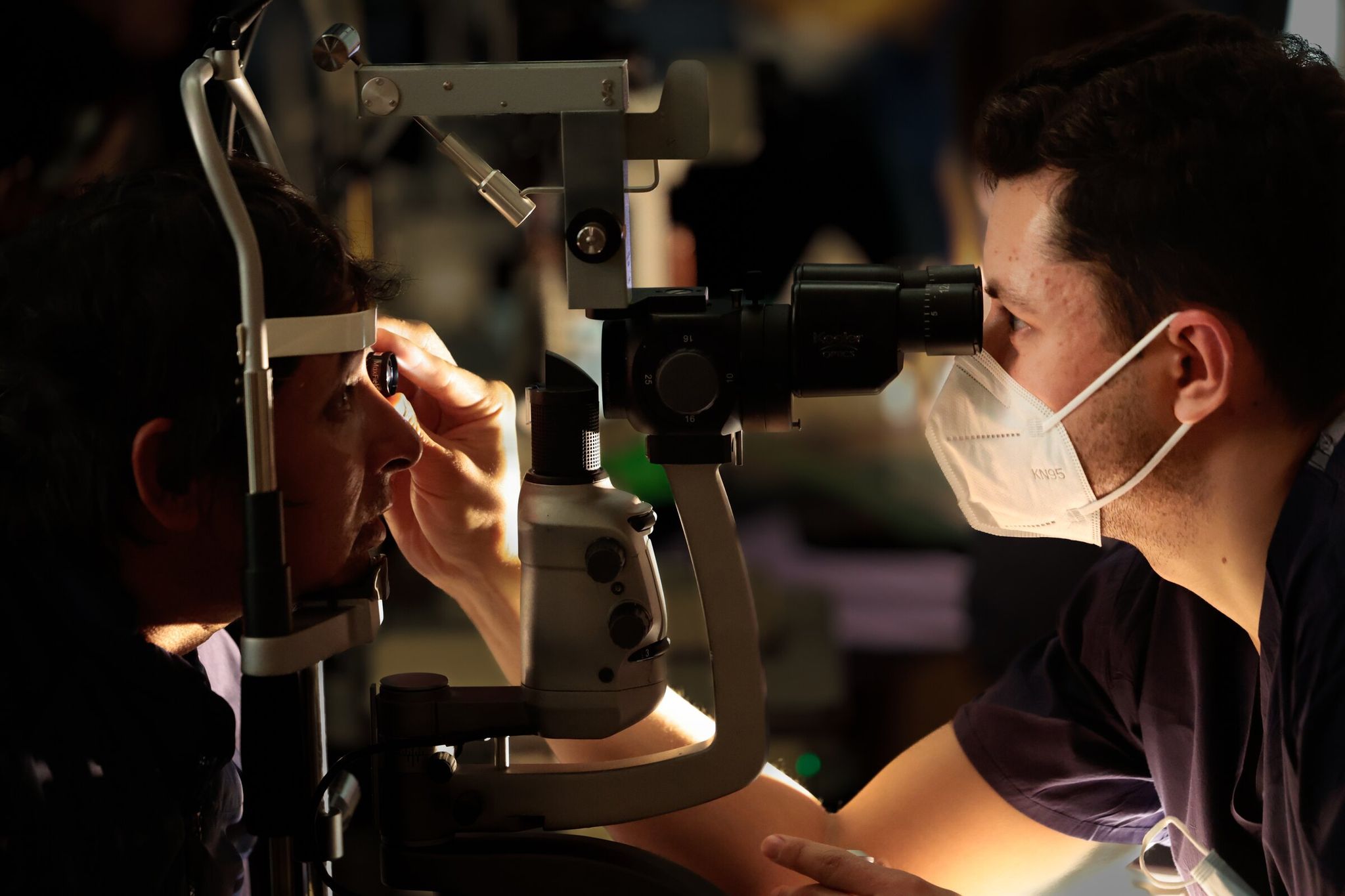
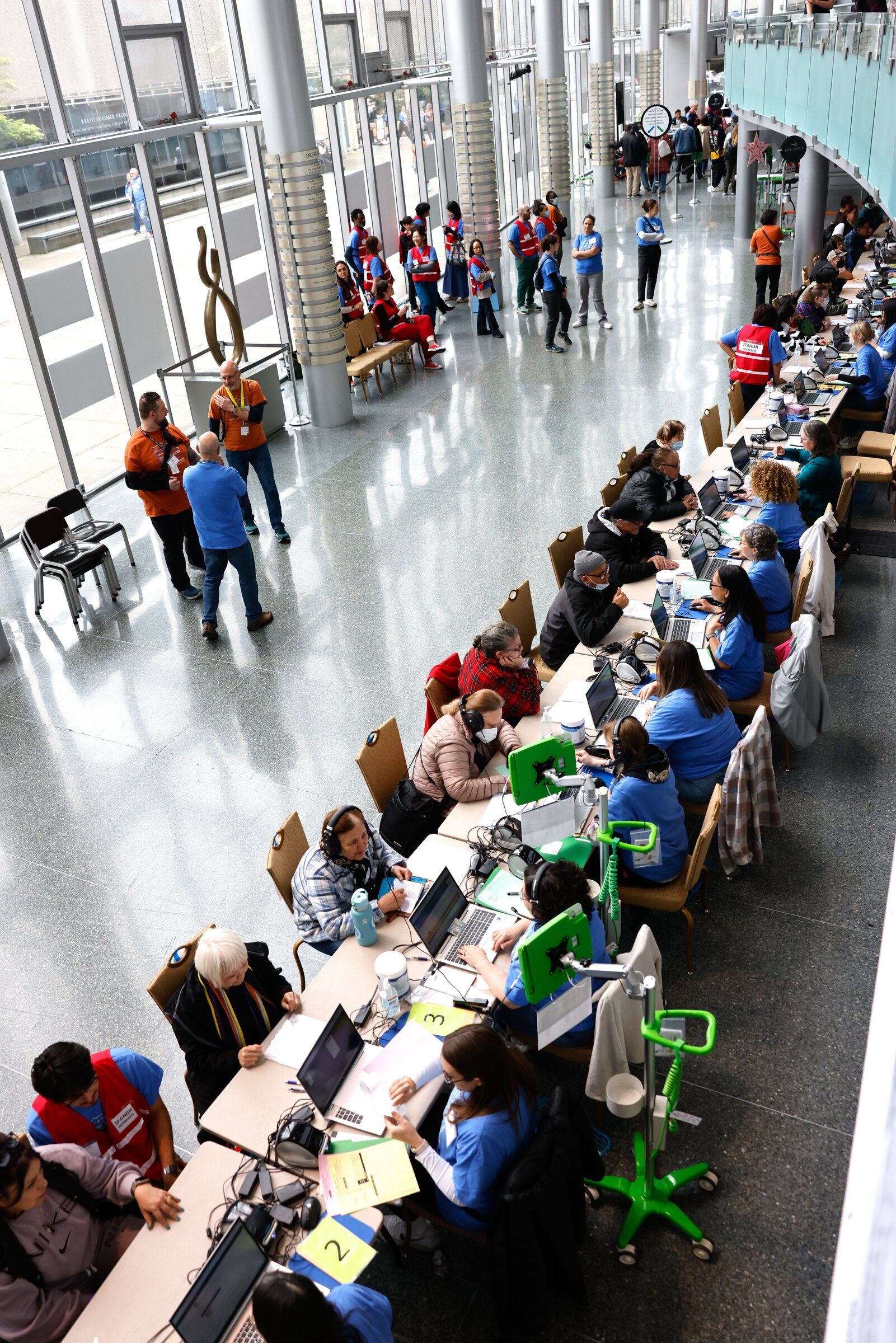
A line for the Seattle/King County clinic began forming on Wednesday at 11 a.m. — 18 hours before doors opened. By 9 p.m. there were 40 people in line, and by midnight the tail wound around the entire Fisher Pavilion building. Hundreds of people spent the night outside to later see a doctor, dentist, or eye specialist. For many, this event is the only chance to get a free X-ray, have a tooth treated, get prescribed glasses, or ease chronic pain.
The clinic operates only four days a year at Seattle Center — a place normally used for concerts and festivals. Seattle Center, built for the 1962 World’s Fair and home to the famous Space Needle, is a 30-acre park. Its temporary transformation into a hospital underscores the scale of the crisis: the coronavirus pandemic has overwhelmed regular hospitals, and outdoor tent camps have become infection hotspots. Even the city’s most iconic public spaces have had to be devoted to medical care for the most vulnerable.
The principle is simple: first come, first served — tickets are handed out in strictly limited numbers, for example 120 per day. On Thursday, the opening day, dental tickets were gone in 10 minutes, vision tickets in a couple of hours, and medical tickets a bit later. To guarantee a ticket, people arrive 18 hours early and wait outside until the 5:30 a.m. opening. The event runs through Sunday: every day at 5:30 a.m. new tickets are distributed at Fisher Pavilion, and free parking is available nearby. Anyone may be seen, regardless of insurance or income. Such a desperate line is the result of the extreme shortage of free medical care for the poor in the U.S.: private hospitals refuse to treat the uninsured, and public programs are underfunded.
Organizers say demand for free care is higher than ever and still growing. The health-care reform law (the Affordable Care Act) once banned denying coverage to people with preexisting conditions, but it did not make care truly affordable. Republicans in Congress did not renew subsidies, premiums have skyrocketed, and according to the state, nearly 40,000 Washington residents lost insurance in the past year. For those people, the clinic is a last lifeline.
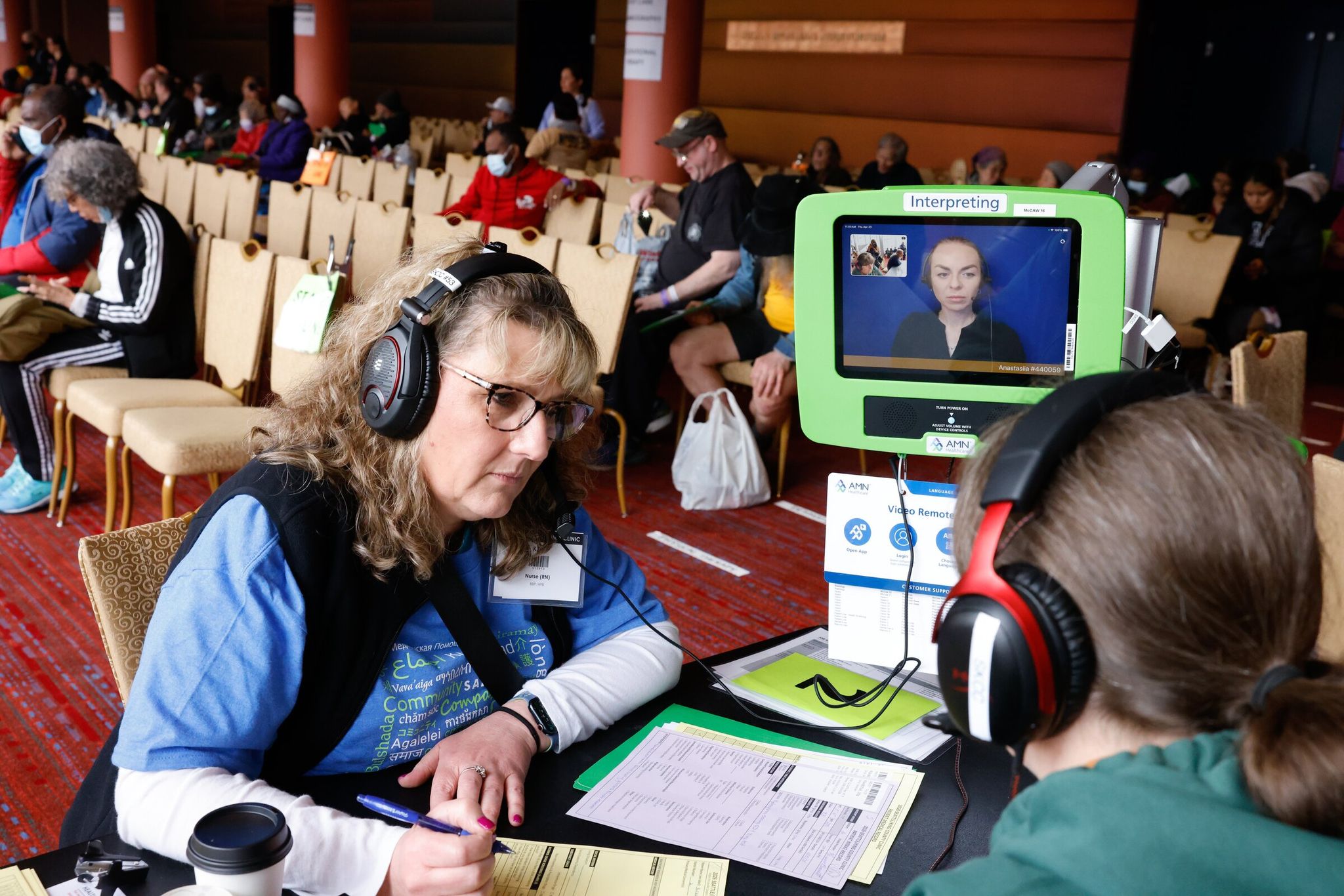
Among those who arrived at 4 a.m. on Thursday was Tamar Kirk. She works as a mobile phlebotomist — traveling to homes and medical facilities to draw blood for tests. As a contract worker — a temporary employee hired through an agency — she does not have insurance: pay can be higher, but there are no paid vacations, sick leave, or health benefits. Companies save by avoiding permanent contracts, shifting risks onto workers. Tamar earns too much for Medicaid but not enough to buy private insurance. "I'm in limbo," she says. The irony is that, working in health care, Tamar can get help only at this annual event.
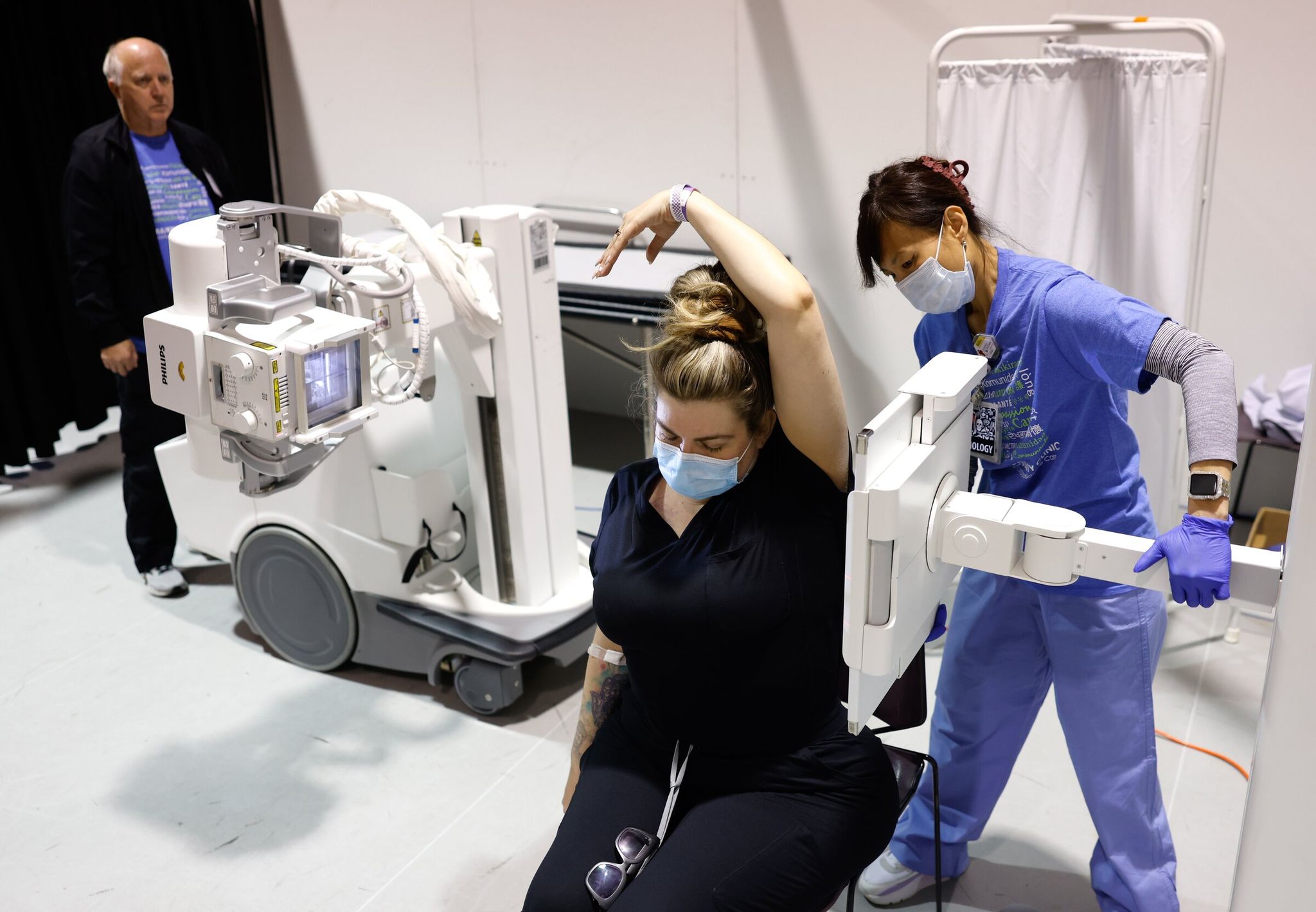
She has had upper back pain for many years — the pain radiates into her right arm and fingers, and has recently worsened. At the clinic she was first examined by a nurse, then by a doctor who ordered an X-ray of her spine. The X-ray room was set up right in the rehearsal hall under McCaw Hall — where the Seattle Opera orchestra usually plays. "Everything is so well organized, everyone is so kind," Kirk says, impressed by the professionalism of the temporary hospital.
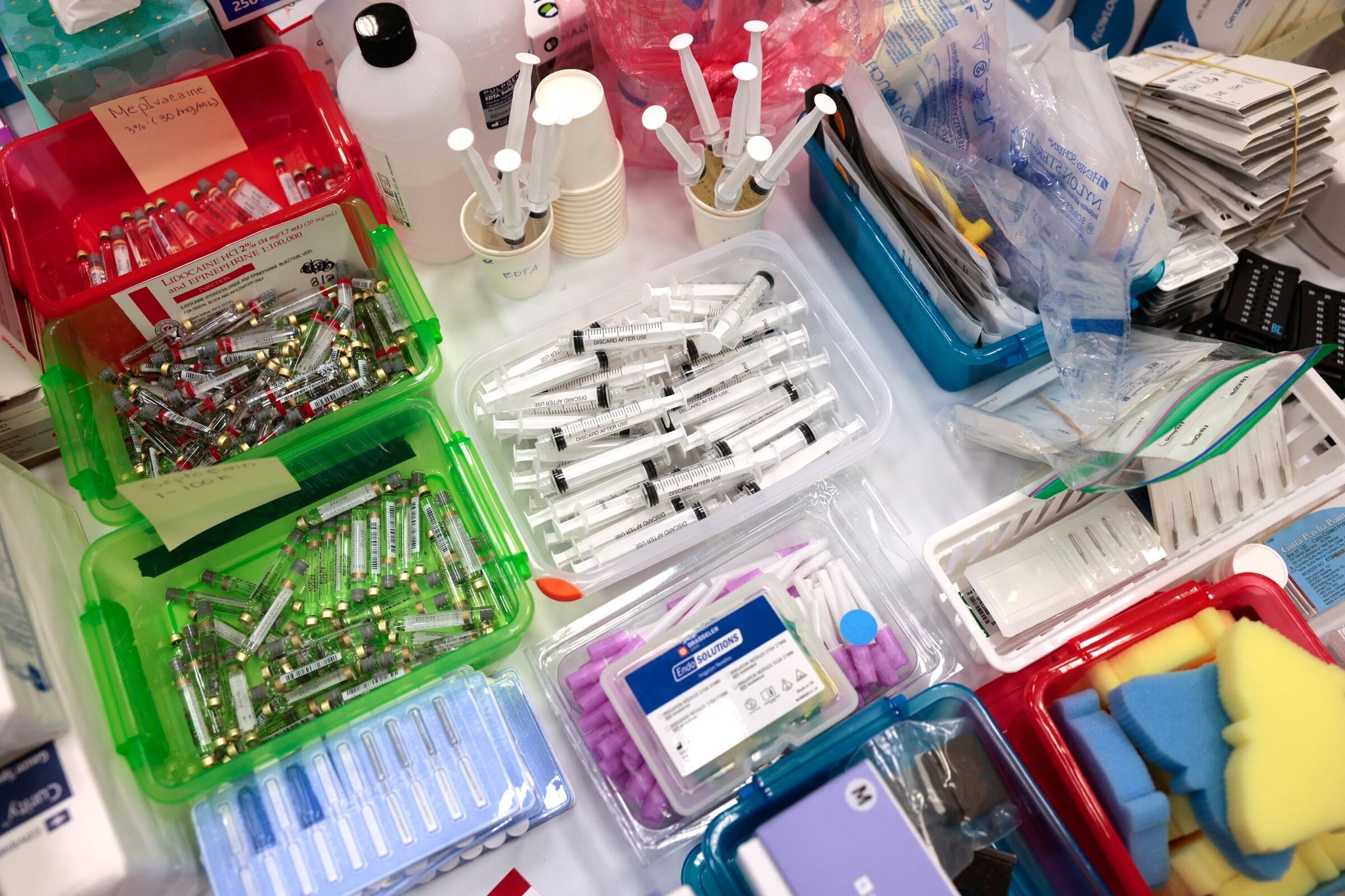
The clinic was founded 11 years ago by Seattle Center employee Julia Colson, who still runs it. According to her, this is the largest "field hospital" in the U.S. combining medical, dental, and ophthalmology services: over four days it serves about 3,400 people. "Our health-care system is not always accessible to people in the community," Colson says. "Because of the high cost of living, people are forced to choose between food, rent, and medicine." Seattle Center provides the space for free, and more than 3,000 volunteers — doctors, nurses, and aides — work using donated supplies.
The clinic operates literally in the shadow of Seattle’s most conspicuous wealth: a few blocks away are Amazon headquarters in South Lake Union and the Bill & Melinda Gates Foundation. There are glass skyscrapers and programmer salaries ranging from $100,000 to $300,000 a year. And inside the clinic are people who slept on the street and don’t even have basic insurance. Organizers note the contrast between the glittering tech boom and basic medical needs, a vivid illustration of the "split" between two Seattles. Project manager Olivia Sarriugarte says Thursday is usually the quietest day, but this year people lined up earlier and tickets ran out faster. "Demand this year is just unprecedented," she admits. "We feared that gaps in our health-care system would hurt the people we serve — and it seems we’re seeing that in real time."
Pressure on the system will only increase due to new federal rules. President Donald Trump signed a law that will require many Medicaid recipients in Washington state to work at least 80 hours a month to keep coverage. If an unemployed person cannot prove they are actively seeking work, they could lose insurance. There was also a proposal to move Medicaid funding to "block grants" — fixed sums that don’t depend on the actual number of people in need. Medicaid currently covers nearly 2 million state residents, and further changes — funding cuts, limits for noncitizens, more frequent recertification — threaten to push even more people out of the system. In Washington state this could reduce the insured population by tens of thousands. If people lose Medicaid, they will come to free clinics like the one at Seattle Center, further overloading them. Clinic organizers fear these shifts will bring an influx of new patients.
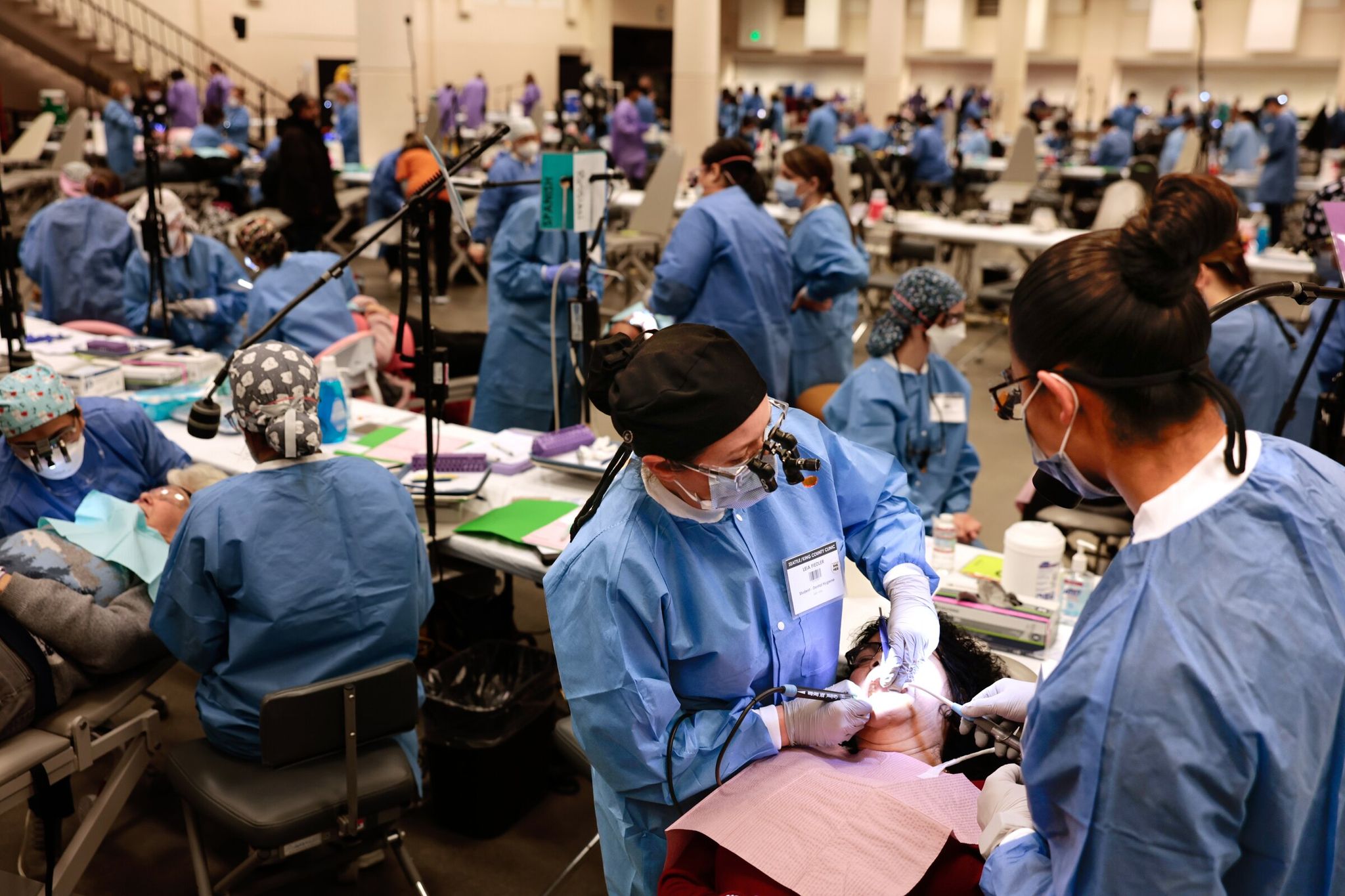
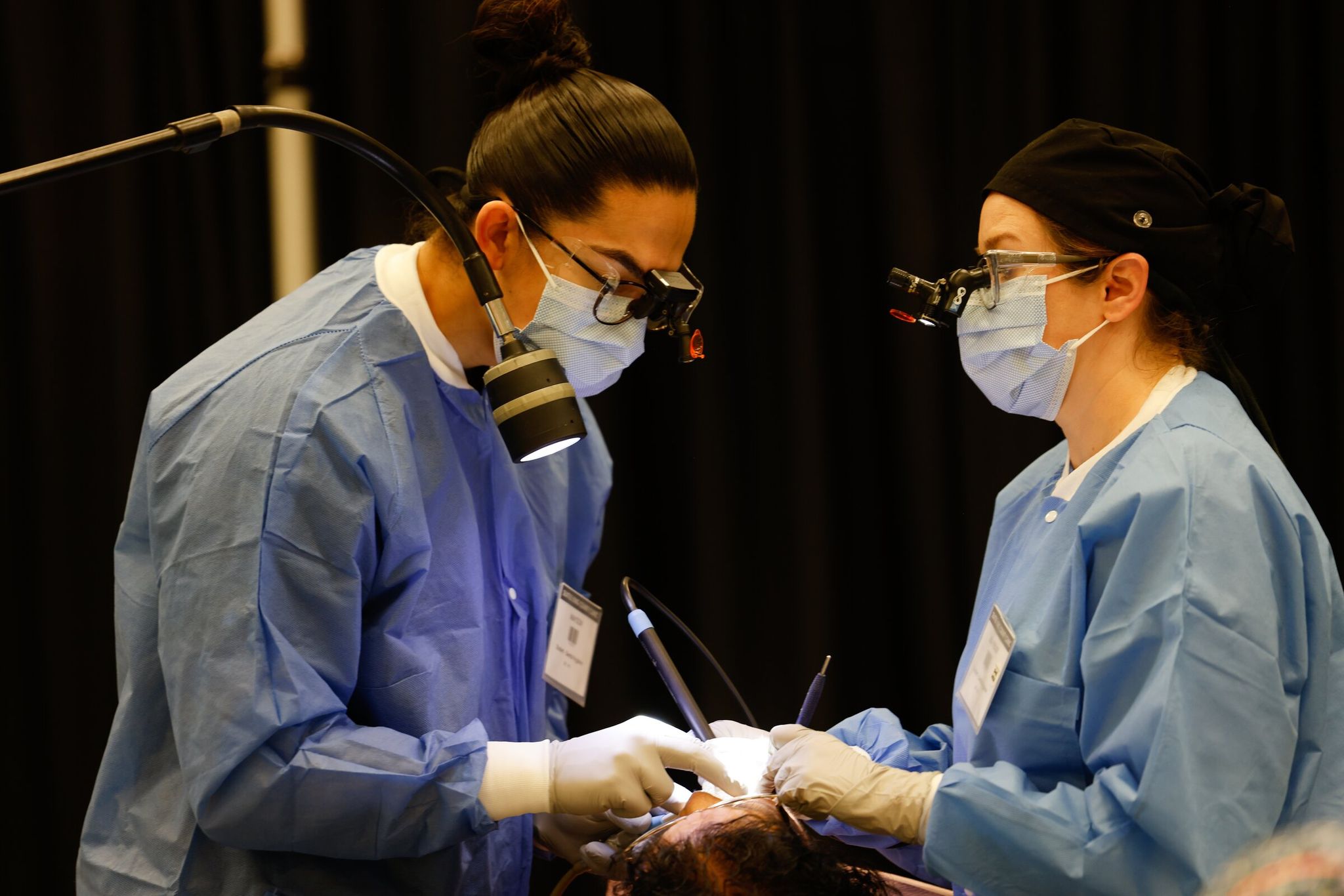
Inside the exhibition hall at Seattle Center rows of dental chairs were set up, and the air buzzed with dental drills, the scraping of scalers, and the sounds of suction devices. Marine Corps veteran Lisa Beck, who served nearly 20 years including three deployments to Iraq.
Based on: Seattle clinic offers free health care for thousands