A look at the key news: the Seahawks trim their roster ahead of the season, Scherzer matches a historic achievement from 35 years ago, and the Mariners are forced to reshape their rotation because of injuries.
Seattle Seahawks Finalize Roster: Tracking Preseason Cuts
The NFL preseason is always a time of difficult decisions, and coach Mike Macdonald’s team found itself at the center of a roster shuffle this time around. The Seattle Seahawks, like all 31 other clubs in the league, were required to reduce their expanded 91-player roster to the mandated 53 players by Sunday evening. Every year, this process separates the dreams of promising rookies and veterans who were considered key figures only a day earlier. According to the official Seattle Sports tracker, the club had settled on its final roster by 4:16 p.m. local time, although details continued to be updated in real time.
Roster cuts in the NFL are more than simply removing names from a team’s website. It is a complicated legal procedure that depends on a player’s experience. If an athlete has fewer than four full seasons in the league, he enters the waiver system: any other club may claim him by 10 a.m. Monday, and if there are no claims, he becomes a free agent and can negotiate with any team. Veterans with four or more seasons receive immediate free-agent status, and their futures are decided directly on the market. It is also important to understand that, in addition to the active roster, the Seahawks can form a 16-player practice squad—or a 17-player squad if it includes a participant in the International Player Pathway program. Those who have just been cut often end up there, giving them a chance to remain in the club’s system.
The Seahawks made several notable moves ahead of this year’s deadline. One that stands out was the acquisition of cornerback Avery Smith from the Los Angeles Chargers: despite having no regular-season experience, the young player was considered more promising than some of the other competitors in camp. However, the most discussed development was the official signing of Terrion Arnold, a talented defensive player who has nevertheless faced legal problems. Analysts note that the move carries reputational risks, but the player’s potential apparently outweighed general manager John Schneider’s concerns.
As for the cuts themselves, the list was substantial and largely expected. Among those leaving the team were safeties D’Anthony Bell and Rodney Thomas II, who were released without being subject to waivers. Receivers Emmanuel Henderson Jr., Ricky White III and Julian Hicks, cornerback Michael Danksy, and several defensive and offensive linemen—including Jalen Gaines, Bubba Thomas and Kellen Diesch—were placed on waivers. For most of them, this is not the end of their careers but rather the beginning of a fight for a place on the practice squad or with another club. Significantly, all of these players largely lacked regular-season experience, confirming the Seahawks’ strategy: the team is relying on veterans at key positions while giving younger players an opportunity to prove themselves through the practice-squad system.
The main conclusion from this roster marathon is that Seattle is approaching the start of the season with a clear understanding of its strengths. In the final preseason games, including the matchup against the Kansas City Chiefs, several players demonstrated leadership qualities, while the contract extension for Leonard Williams sent an important message to the locker room. The futures of those who were cut have not yet been settled, and in the coming days we will see which of them return through the practice squad. For Seahawks fans, this waiting period is always a mixture of anxiety and hope, because these decisions determine whether the team can compete for a playoff spot this year.
Injury Forces Mariners to Reshape Starting Rotation: Miller Returns
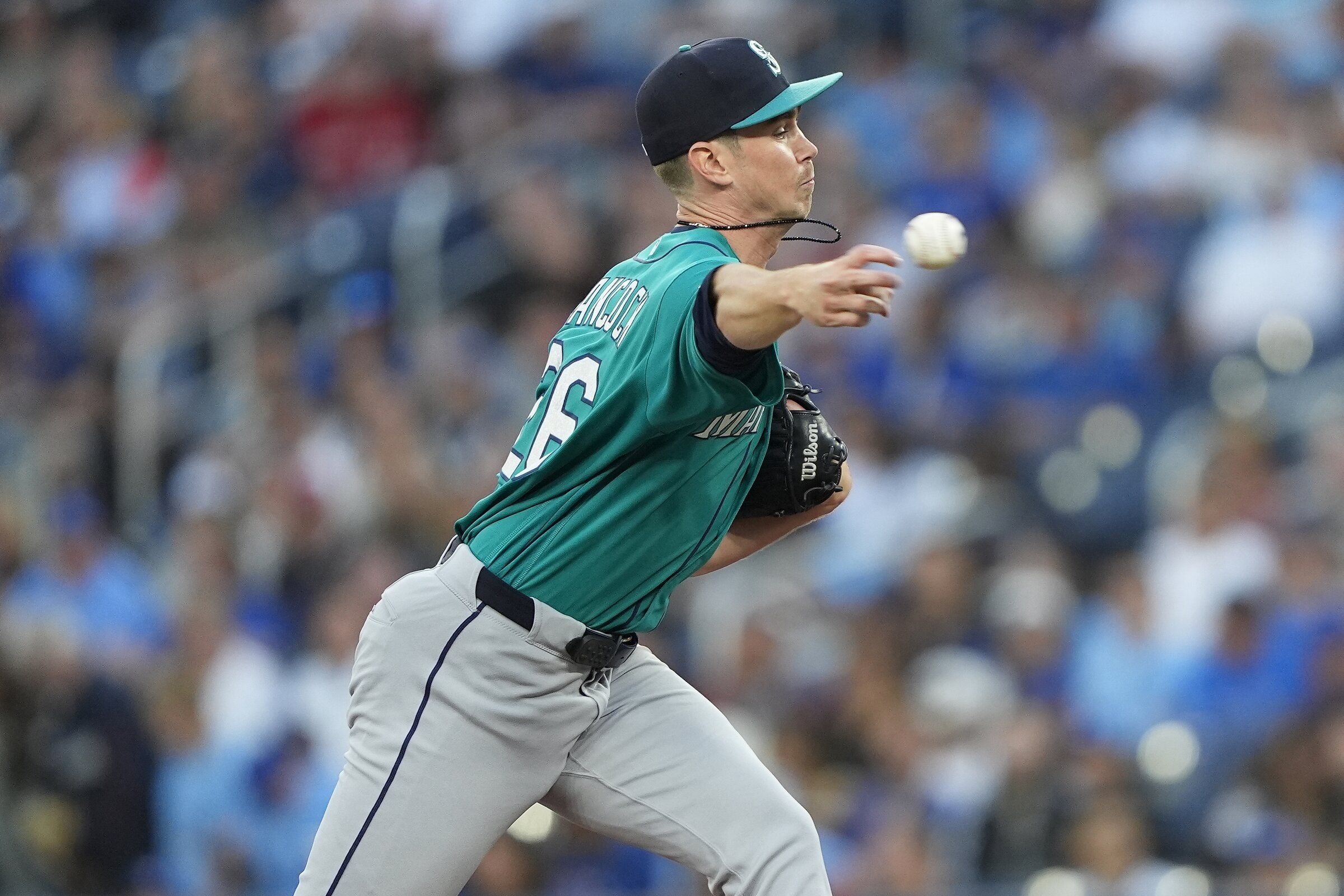
The situation within the Seattle Mariners organization is developing rapidly and, as is often the case in baseball, unpredictably. The planned experiment of moving pitcher Bryce Miller to the bullpen may never get off the ground, as another pitcher’s injury is forcing the coaching staff to return him to the starting rotation on short notice. The player in question is Emerson Hancock, who apparently will be placed on the injured list, automatically opening a spot in the rotation. All of this is happening on the eve of important games in Toronto, where the team is trying to find its rhythm and stabilize its roster.
According to information published by The Seattle Times, the prospect of seeing Miller work as a reliever—a pitcher who enters the game in relief—is becoming increasingly remote. The club’s management clearly does not want to weaken the starting rotation and would rather return a proven performer to his familiar role. It is a classic situation in which plans drawn up on paper collide with the harsh reality of injuries and the need to produce results immediately.
For those unfamiliar with the sport, baseball has a clear division of labor among pitchers. Starting pitchers are elite athletes who begin games and typically work for five to seven innings, conserving their energy and distributing it over the course of the outing. They set the tone and serve as the team’s primary force on the mound over the grueling 162-game regular season. Relief pitchers, or relievers, enter when the starter is tired or has lost control, and their job is to preserve a lead or prevent the opponent from extending it late in the game. These are very different roles, requiring different psychological and physical preparation, which is why a coaching staff’s moves between them always attract fans’ attention.
Hancock’s injury is a blow to the team’s pitching depth. Every club would like to have as many quality starters in reserve as possible, but there are never as many as teams would want. When one goes down, the next player steps in, but that player is usually of a lower caliber. Miller’s return, after he has already established himself as a reliable performer, should partly compensate for the loss. Still, a natural question arises: how much will this stress test affect his own form and his ability to withstand the demands of a long season? We will have answers in the coming games, when Miller takes the mound as a starter again and the Mariners continue their battle in the difficult AL West.
Max Scherzer Makes History Again: Veteran Delivers a Game Unseen in 35 Years
In baseball, age is not a verdict; sometimes it is even an advantage. That is especially true when discussing a master such as Max Scherzer. In the game between the Seattle Mariners and the Toronto Blue Jays on August 30, 2026, the 42-year-old pitcher delivered a performance that sent statisticians digging through the archives. Scherzer, who was 42 years and 34 days old at the time, became the oldest pitcher in MLB history to record 10 or more strikeouts while allowing no more than one hit. The last player to accomplish something similar was the legendary Nolan Ryan, back in 1991.
This is more than a dry line in the box score—it is a moment that reminds everyone why baseball is called a game in which experience is valued above youth. When Scherzer took the mound in Toronto, few expected him to match an achievement that had stood for more than three decades. Ryan was 44 in May 1991, and his performance was considered the benchmark for veteran dominance. Now Scherzer has joined that giant, proving that age is merely a number on a passport, not in the statistical record.
The game itself was tense, although it may have appeared one-sided to a neutral viewer. Scherzer seized control from his very first pitch: his fastball still traveled at a velocity capable of surprising even the quickest hitters, while his famous slider remained virtually unreadable. The Blue Jays tried everything—from changing their stances to taking aggressive swings at first pitches—but nothing worked. It seemed as if Scherzer were reading his opponents’ minds like an open book. By the seventh inning, when his strikeout total had passed double digits, the Toronto crowd began chanting his name—even opposing fans understood that they were witnessing something special.
The key moment came in the eighth inning, when a Toronto outfielder finally broke up the no-hit bid with the game’s only hit. Scherzer did not flinch. Rather than easing off, he doubled down on his concentration and struck out the next two batters in succession. This was not merely pitching—it was a spectacle in which every move mattered. Now that statisticians have confirmed the achievement’s uniqueness, it is clear that Scherzer is not simply playing baseball at 42—he is rewriting its rules.
To understand the significance of the number, it is worth remembering that recording 10 or more strikeouts while allowing one or zero hits is considered a gold standard of dominance on the mound. It means the pitcher controlled the game almost completely, giving the opposing hitters virtually no chance to build an offense. In modern baseball, where the average age of elite pitchers rarely exceeds 30, Scherzer’s performance looks like an anomaly—especially given that he continues to perform at a level that places him alongside the greatest players of all time. Details of the historic game can be found in the official MLB report, which records all of the game’s key moments.
Interestingly, Scherzer himself was restrained in his postgame comments, saying only that he was “just doing my job.” But fans and analysts understand that this is more than a job—it is a legacy. When Nolan Ryan retired in 1993, few imagined that his record would be matched so soon, much less by a pitcher whom many had written off because of injuries a decade earlier. Scherzer, who has dealt with shoulder and back problems over the years, continues to find ways to adapt his game. He no longer relies solely on power; his arsenal now includes clever changes of pace and pinpoint pitch placement around the corners of the strike zone.
The achievement has far-reaching implications for the league as a whole. First, it once again raises the question of how teams evaluate aging pitchers. If it was once believed that a pitcher inevitably declines after age 35, Scherzer’s example shows that with proper preparation and mental resilience, it is possible to remain elite at 42. Second, it sends a message to young players: it is not how old you are but how you approach your craft. That may be why many experts have already begun saying that Scherzer could serve as a model for a new generation willing to reject stereotypes about an “age ceiling.”
Still, it should not be forgotten that Seattle was not merely watching history unfold in this game—they won, and the victory could prove decisive in the playoff race. Scherzer, who joined the team in midseason, was acquired precisely for games like this: to take the mound at a crucial moment and do what others cannot. He did so with such brilliance that even the most committed skeptics are forced to admit that baseball has room for miracles—especially when they are created by a man with 42 years of life experience and 20 years of experience winning.