
Seattle Mayor Katie Wilson’s first proposed budget for 2027–2028 offers a rare combination in city politics: no tax increases, a significant boost in police spending, and continued funding for housing, food assistance and programs for the city’s most vulnerable residents. The $9.1 billion plan for 2027 is intended to close the general fund’s structural deficit, which the administration estimates at $175 million, primarily through spending cuts, the elimination of long-vacant positions and the redistribution of existing funds. The debate over whether the plan is realistic and fair now moves to the City Council.
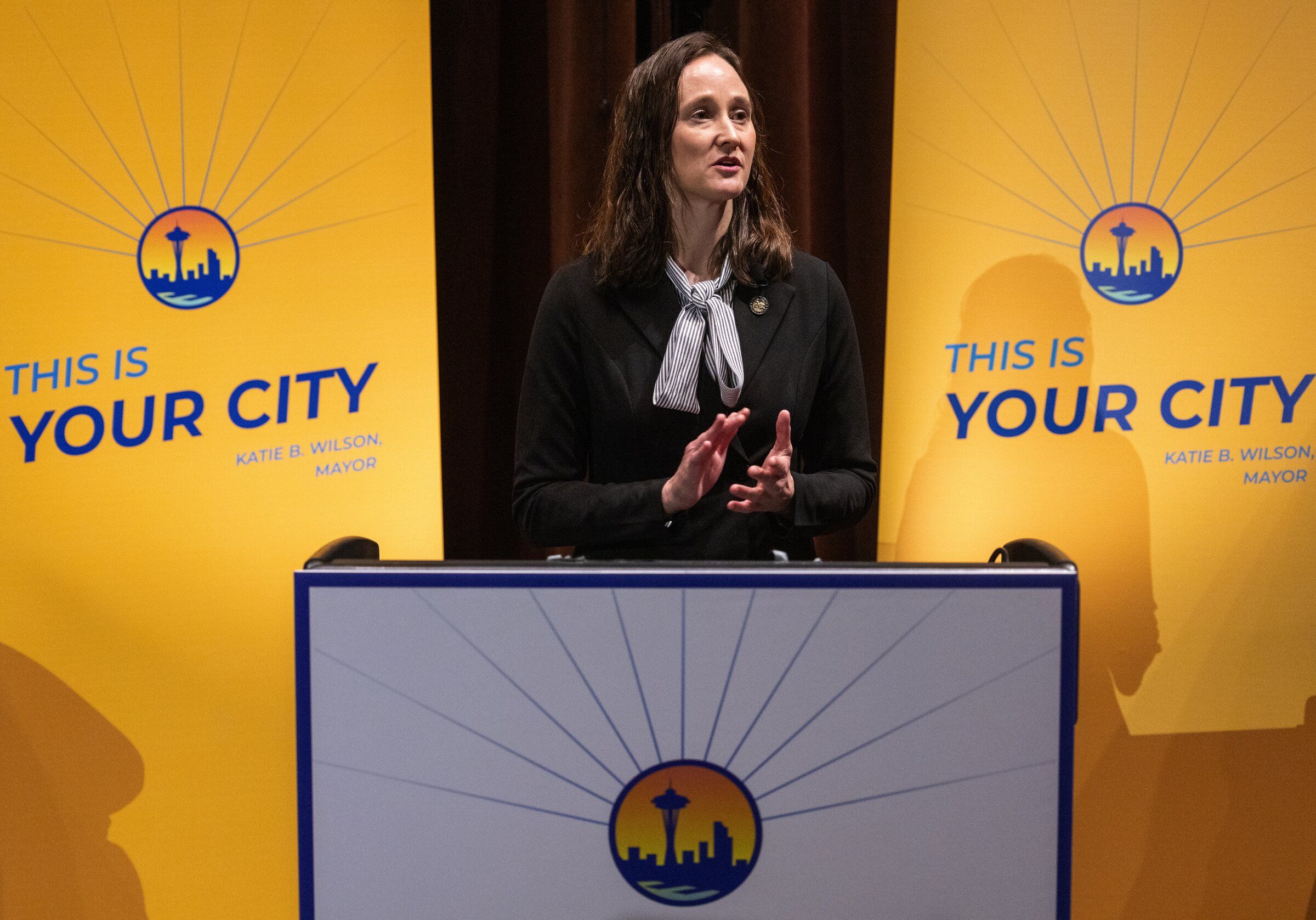
In her first budget speech, delivered Sept. 22 at the Central Library, Wilson called on the city to abandon its habit of patching annual gaps with one-time transfers and temporary measures. The administration promises nearly $50 million in annual general fund cuts without tapping financial reserves. Of the 128 positions being eliminated, only 15 are filled; the mayor’s office says the rest have remained vacant for years. Still, the cuts will affect current employees as well — in building-permit services, the Police Department’s civilian staff, the city’s IT operations and the Department of Neighborhoods.
The plan’s loudest element is policing. The Seattle Police Department’s budget will increase by about $68 million in 2027 compared with the current year, surpassing $550 million. The proposal allocates $58 million to hiring 66 additional sworn officers, bringing the total number of funded police positions to 1,250. For Wilson, who entered City Hall with a reputation as a progressive activist, this is more than a line item. It is a political statement: public safety concerns voiced by residents, downtown workers and small-business owners will not be pushed aside.
Yet the $68 million figure does not mean the city is simply buying more patrols. A substantial share of the new spending is tied to staffing and the cost of police labor, while the proposal simultaneously cuts spending on recruitment advertising and hiring incentives for new officers. It also leaves eight 911 dispatcher positions and 14 positions in CARE — the city’s unarmed, nonmedical crisis-response service — unfilled. Council Budget Committee Chair Dan Strauss has already questioned that logic. In his view, it is difficult to promise more police officers while cutting the tools used to recruit them and weakening an alternative response to emergency calls at the same time.
Wilson wants to show that her definition of public safety is not limited to the number of badges and patrol cars. The plan preserves more than $100 million annually for violence prevention, victim assistance, community safety programs and alternative response. Contracts with nine community organizations working to prevent gun violence would move from the Human Services Department to CARE, which would also receive a director and coordinator focused on reducing gun violence. The City Attorney’s Office would receive a dedicated position to handle extreme-risk protection orders for people deemed dangerous to themselves or others.
The Police Department also lacks a permanent chief. After a change in leadership over the summer, Wilson launched a nationwide search for a new department head and expects to name a candidate in early 2027. The next chief will inherit not only a substantially larger budget but also demands for immediate results — from residents worried about shootings and open drug use, from a business community for which downtown safety has become a matter of economic survival, and from reform advocates demanding police accountability.
The absence of new taxes also carries both a cost and a political message. Wilson decided not to increase JumpStart, the city’s payroll tax on large companies, although some of its revenue will continue to support general fund needs. More than 30% of projected JumpStart revenue, or $140.2 million, would remain dedicated to affordable housing. For the first time, some of the tax’s funds would also go directly to homelessness assistance programs. The mayor has not abandoned the idea of a local capital-gains tax, but acknowledges that the state’s timeline would not allow it to address the current budget gap.
The proposal also attempts to preserve the city’s social fabric, which can be easily torn during years of austerity: $37 million for nearly 1,000 new shelter beds by the end of 2027, $10 million for food banks, the Fresh Bucks program and meal delivery, and free breakfast and lunch for all Seattle Public Schools students. It preserves $4 million for services for immigrants and refugees, while parks would receive 12 new public restrooms. These relatively small, tangible details help create the image of the city Wilson is trying to defend: more compassionate toward people, but less tolerant of financial uncertainty.
The mayor’s document is now shifting from a program into a subject of negotiation. The City Council’s Budget Committee will begin reviewing departmental budgets Sept. 24, hold public hearings Oct. 6 and is expected to make a final decision Nov. 20. Wilson promises four years of balanced budgets, from 2027 through 2030. The Council will have to decide not only whether the calculations are sound, but also whether the city can hire more police officers, expand its shelter network, avoid raising taxes and prevent today’s savings from becoming tomorrow’s deficit.
Based on: Seattle mayor tries to ‘right the ship’ in her first city budget