
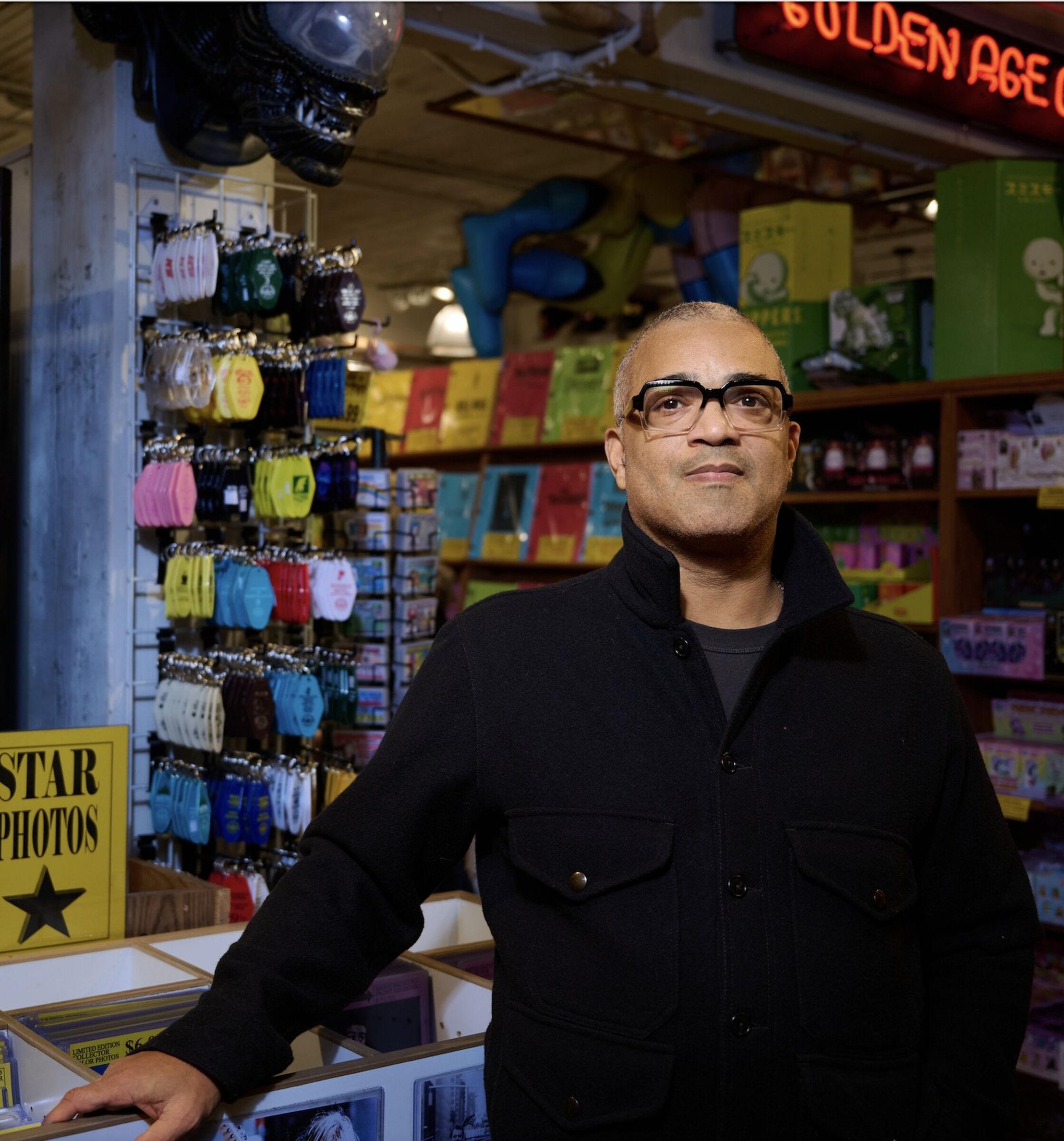
Samray Estifanos, a 27-year-old graphic designer from a Seattle suburb, has lived and breathed soccer since he was four. Every Saturday he plays pickup games with strangers in the park, and his first job was as a ticket taker at Lumen Field — the large arena in the SoDo neighborhood that’s home to the NFL’s Seattle Seahawks and MLS’s Seattle Sounders. There he heard the roar of fans, and the stadium, famous for its deafening crowd (a noise-record holder) and unique retractable roof, became for him a symbol of the city’s sports unity — a venue for matches as well as major concerts and festivals. Now his art will be seen by millions: Estifanos is one of two winners of the Juneteenth Matchday design contest organized by the city’s World Cup planning committee.
The second winner is Damon Brown, known as Creative Lou — an artist who grew up in Seattle’s historically Black Central District. The neighborhood was long the center of African American culture: discriminatory redlining forced Black families to settle there, where they built their churches, jazz clubs, schools and community organizations. Although the area has undergone heavy gentrification since the 1990s, its historical significance remains an important part of Seattle’s civil rights legacy. Their works were selected from numerous submissions by local Black artists to mark an important date — the U.S. vs. Australia match on June 19. That date coincides with the Juneteenth holiday, which commemorates the freeing of the last enslaved people in Texas in 1865.
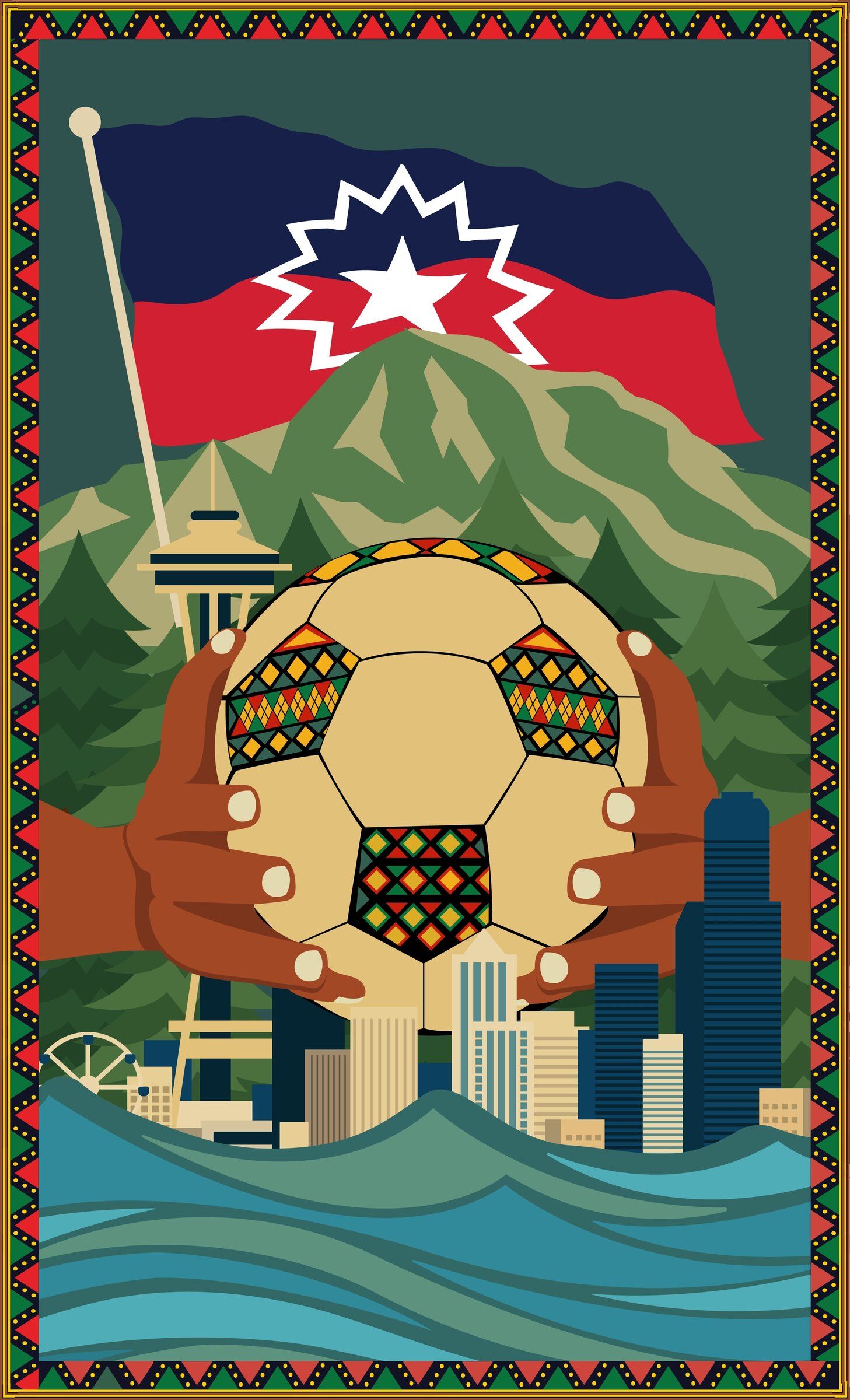
In his poster Estifanos depicted two hands holding a soccer ball against a backdrop of the Seattle skyline, Mount Rainier and the Juneteenth flag. The bright geometric patterns on the ball were borrowed from traditional Eritrean clothing. “It’s a symbol of the unity the World Cup brings, and of progress in racial equity,” the designer explains. “I feel like I’ve already won the World Cup.”
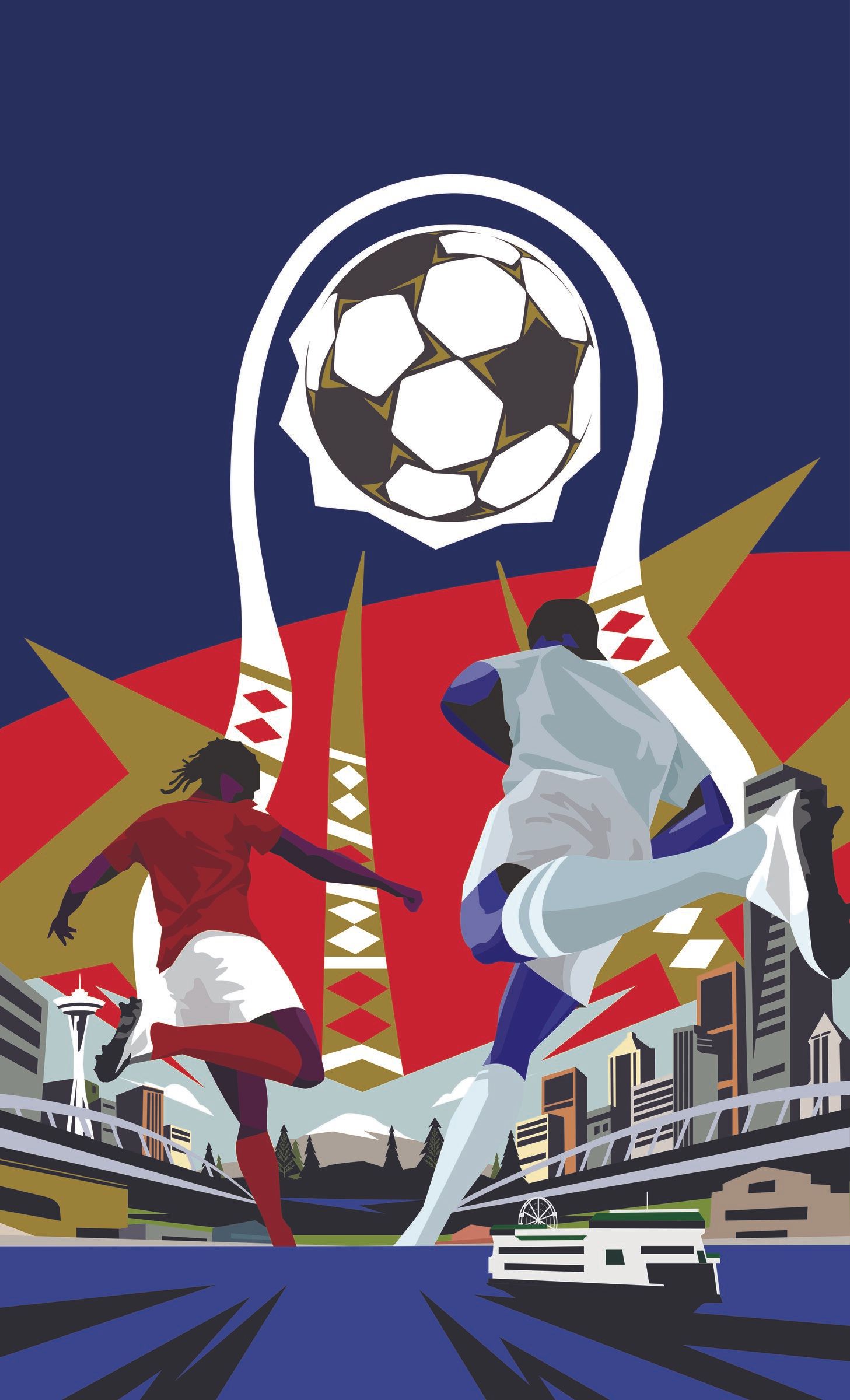
Damon Brown, a 52-year-old artist who works in styles from illustration to digital art, depicted two players running toward the city together. “It’s about movement and hope,” he says. The blue and red colors of the Juneteenth flag blend with Seattle’s skyscrapers, and the large ball includes curved starburst lines — a symbol of new beginnings for everyone.
The winners’ awards include a cash prize and a share of merchandise sales featuring their designs. Estifanos’s poster will appear on pins available through the SEA&WIN mobile app, while Brown’s work will adorn one of the monorail’s columns — the transport landmark built for the 1962 World’s Fair as a symbol of the future. That futuristic monorail, running from the Westlake Center to Seattle Center, has become iconic for its design and frequent movie appearances. Limited runs of pins, posters, scarves and stickers will be distributed for free on June 19 at the official fan center.
Organizers emphasize the contest was created for more than city decoration. “We want to tell global audiences about the importance of Juneteenth and inspire a new generation of Black players,” says Dylan Ordoñez, the committee’s vice president. A special advisory council was formed to study the stories of past and present Black soccer legends.
Both winners hope their art will resonate with youth. “I want them to feel representation, culture and the energy of the tournament,” Brown says. “Even if you’re not into soccer, let this work inspire you to learn more.” Estifanos adds, “We’ve been given a platform to share our talents and be noticed — locally and globally.”

Based on: Seattle’s World Cup Juneteenth design contest winners talk soccer, art