
A federal judge in Portland on Wednesday ordered changes to the operation of eight dams on the Columbia and Snake rivers to reduce harm to salmon populations. The decision came after the Trump administration in June last year withdrew from a landmark pact that had been intended as a roadmap for salmon recovery in the river basin.
Salmon and steelhead populations in the Columbia River basin are imperiled, and hydroelectric dams are a key cause of the problem. Litigation over the operation of those dams has been going on for decades, but the fish situation continues to worsen. Native tribes’ treaty rights to salmon, established in 1855 treaties with the Yakama Nation and the Nez Perce Tribe, are the supreme law of the United States and form the basis for modern legal claims to protect rivers and fish.
In his order, Judge Michael Simon wrote that salmon—one of the defining symbols of the West, a critical resource for recreation, culture and the economy, and a treaty-guaranteed heritage of several tribes—are disappearing from these lands. He lamented that court battles over the issue have proceeded “largely as they have for the last 30 years.”
In 2023 the Biden administration reached a Columbia Basin Prosperity and Sustainability Agreement with several tribes, the states of Washington and Oregon, and conservation groups. But the Trump administration in 2024 scrapped the deal, which would have dedicated $1 billion to salmon restoration and tribal clean-energy projects.
In fall 2023 fishing and conservation groups and the state of Oregon renewed litigation, asking the court to alter dam operations to reduce harm to salmon. Joining them as amici curiae—providing expert views to the court—were the Yakama Nation, the Nez Perce Tribe and the state of Washington. The sovereign status of those nations lends special weight to their position in cases affecting their historical treaty rights.
The plaintiffs sought increased spill—releasing more water over the dams—so juvenile salmon could pass over them and avoid lethal turbines, and lower reservoir levels to shorten the time fish spend in warm, predator-filled backwaters. Defendants, including the Public Utility Districts, opposed some measures, citing threats to grid reliability in hot months with low flows. They note that hydroelectric dams on the Columbia and Snake produce about 70% of Washington’s electricity, providing reliable, low-cost power for the region, including Seattle.
Judge Simon granted nearly all of the plaintiffs’ requests to increase spill, which will mostly mirror 2025 operations with some modest increases. He did not grant the request to lower reservoir elevations, leaving them at 2025 levels. The judge described his orders as “narrowly tailored” and effectively maintaining the status quo.
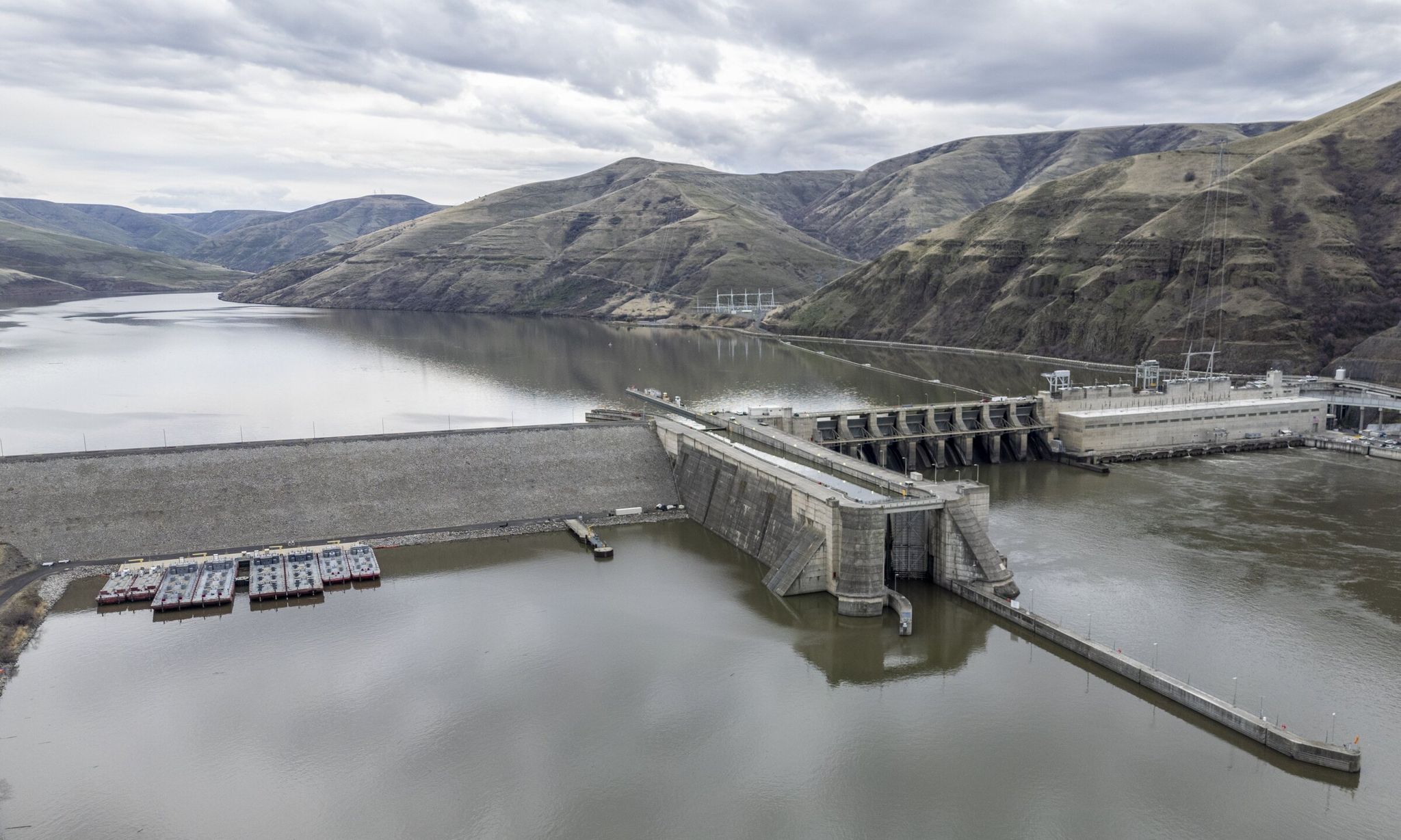
The changes affect four dams on the lower Snake River (Ice Harbor, Lower Monumental, Little Goose, Lower Granite) and four dams on the mainstem Columbia (Bonneville, The Dalles, John Day, McNary). The Snake River dam cascade is considered especially problematic, creating a series of nearly insurmountable obstacles on one of the West Coast’s most important spawning routes. At the center of the long-running litigation is the looming extinction of salmon, a primary food source central to the health, culture and religion of tribes and a cornerstone of the Pacific Northwest economy. For Seattle and other Washington cities, salmon remain a powerful cultural symbol and the basis for recreational fisheries that generate revenue, even though commercial harvests have declined sharply.
Historically the Columbia Basin hosted some of the most abundant salmon spawning grounds on Earth, but today more than 40% of habitat is blocked by impassable dams. Of 16 historical populations of salmon and steelhead in the basin, four have already gone extinct and seven are listed as endangered or threatened. Beyond the litigation, Washington state and tribes such as the Yakama are pursuing habitat restoration, hatchery modernization and scientific research to preserve the species.
According to Jay Hesse, director of biological services for the Nez Perce Tribe, half of the historic salmon populations in the Snake River basin are already lost. In 2024 one-third of spring–summer Chinook populations and 14% of wild Snake River steelhead populations numbered fewer than 50 returning adults.
Based on: Federal judge orders protections for salmon on Columbia River