
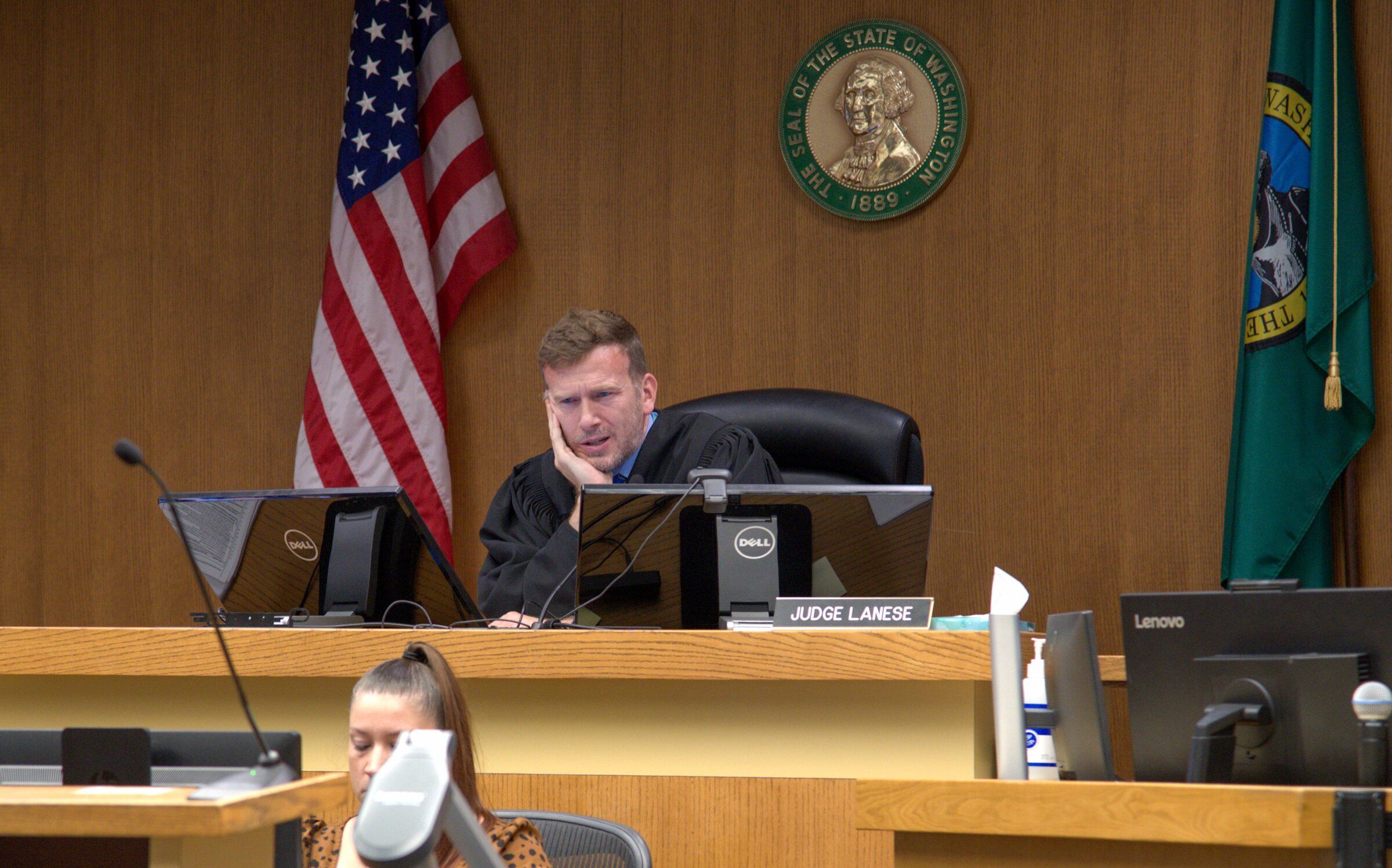
Thurston County Superior Court Judge Chris Lanese ruled that including information on the budgetary consequences of repealing the tax on high-income earners on November ballots does not violate the Washington state Constitution. The decision allows the explanation to remain on the ballot for Initiative I-645.
The initiative would repeal the capital gains tax, which is commonly called the “millionaires tax” in public debate. It is scheduled to take effect in 2028, with the first revenue expected in 2029. The tax applies primarily to large profits from the sale of long-term investments — such as stocks or bonds — rather than being a general income tax on everyone earning more than $1 million. Washington has no standard state income tax on individuals.
The accompanying text says repealing the tax would reduce funding for public schools, higher education, including universities and colleges, and social services, particularly health care. The current capital gains tax is a dedicated source of education funding, while sales taxes, business taxes and other revenues go into the state’s general fund.
The general fund is Washington’s primary operating budget, which pays for day-to-day government services. It supports education, public universities, Medicaid and many social programs. As a result, a decline in revenue quickly affects the state’s ability to support these areas. Washington is also generally required to adopt a balanced budget and cannot cover ongoing expenses through large-scale deficit borrowing.
The lawsuit was filed by open-government activist Arthur West. He argued that the state may not add its own wording to a citizen initiative after signatures have been collected and verified and the measure has been approved for the ballot. In his view, such intervention restricts citizens’ right to petition the government through the initiative process.
In Washington, an initiative is first submitted to the secretary of state’s office, after which supporters collect the required number of signatures. The secretary verifies their validity and compliance with the requirements. The attorney general reviews the measure’s wording and prepares its official title and summary but does not decide whether to approve the initiative on its merits. Once the signatures are certified, the initiative may go to a vote or be sent to the Legislature. Courts generally intervene in disputes over constitutionality, procedural compliance or the accuracy of signature counts, but they do not replace voters in making the policy decision.
West also argued that the wording about the budgetary consequences was not neutral and could influence voters’ decisions. The judge disagreed, noting that listing the largest or most likely spending areas remained a neutral way to inform citizens about the consequences of their vote.
Carl Smith, representing the state attorney general’s office, argued that withholding information about the initiative’s financial consequences from voters would be unfair. He said the explanation lists the three general-fund categories that would be most affected by a decline in revenue after the tax is repealed. State law requires such estimates to be published for initiatives that could change tax revenues.
Lanese’s decision to leave the text on the ballot cannot be appealed, but West plans to appeal his constitutional arguments. A separate lawsuit filed by Let’s Go Washington, which supports the initiative, was put on hold after the court’s decision. The organization wanted to rewrite the explanation, calling it misleading, and argued that the budget categories identified were inaccurately defined.
Based on: Judge allows fiscal impacts from ‘millionaires tax’ on WA ballots