
Shell Hallahan gently teases a pebble the size of a golf ball with her fingertip and carefully lifts it from the wet sand at Seacrest Park in Burien — a Seattle suburb south of the city along the shores of Puget Sound. The park is popular with local rockhounds: after low tides, its beaches yield rounded cobbles, jasper and agates washed out of glacial deposits. Hallahan is hunting pieces of honey-gold agate that glow in the sun, revealing delicate banding like tree rings. “They’re like unicorns,” she says, emphasizing how rare and special such finds are. The stone in her hand turns out not to be an agate but a banded lump of brown jasper, which she admires anyway, shaking the sand off.
“Sometimes a pretty rock is just a pretty rock,” Hallahan says before resuming her search. For her and other enthusiasts, the challenge of finding agates is part of the appeal. “You never know when you’ll find a gem,” she says, peering over the gravel-strewn beach. The hunt — not just the trophy — brings them back again and again to Washington’s shores and hillsides.
“Rockhounds” is the informal name for collectors of minerals and rocks in the Pacific Northwest. It’s a local nickname, popular in clubs and geology hobby communities, not an official state term. For them Washington is a veritable treasure trove that tells the planet’s story. While there are no gem-quality rubies or sapphires here, you can find orange-red carnelian, purple amethyst crystals and the famed “Ellensburg blue” agates. These agates are unique for their intense blue color, rarely seen in other varieties. They’re found only in the Ellensburg area and prized for their hardness, brightness and ability to take a perfect polish, making them among the region’s most sought-after collectible stones.
Some value the hobby for the chance to get outdoors and reconnect with the planet. Others appreciate the camaraderie of a close-knit community where enthusiasts from different walks of life swap stories and finds. “It’s about the people as much as the rocks,” says Susan Gardner, president of the North Seattle Lapidary and Mineral Club, who met her husband through the club. “Lapidary” refers to the art of cutting, grinding and polishing gemstones and minerals. Clubs bring together hobbyists who learn the craft: how to process stones, make jewelry, go on field trips to collect specimens, and share knowledge about regional geology. For Nick Weeks it’s simpler: “Pretty rocks, shiny stuff.” Working as a heavy-equipment operator, she a few years ago saw stunning quarry finds on a construction site — slabs of quartz and calcite, blue agate and purple amethyst sparkling after the rain. She drove a forklift, scooping up glittering pieces, and realized she was “hooked.”
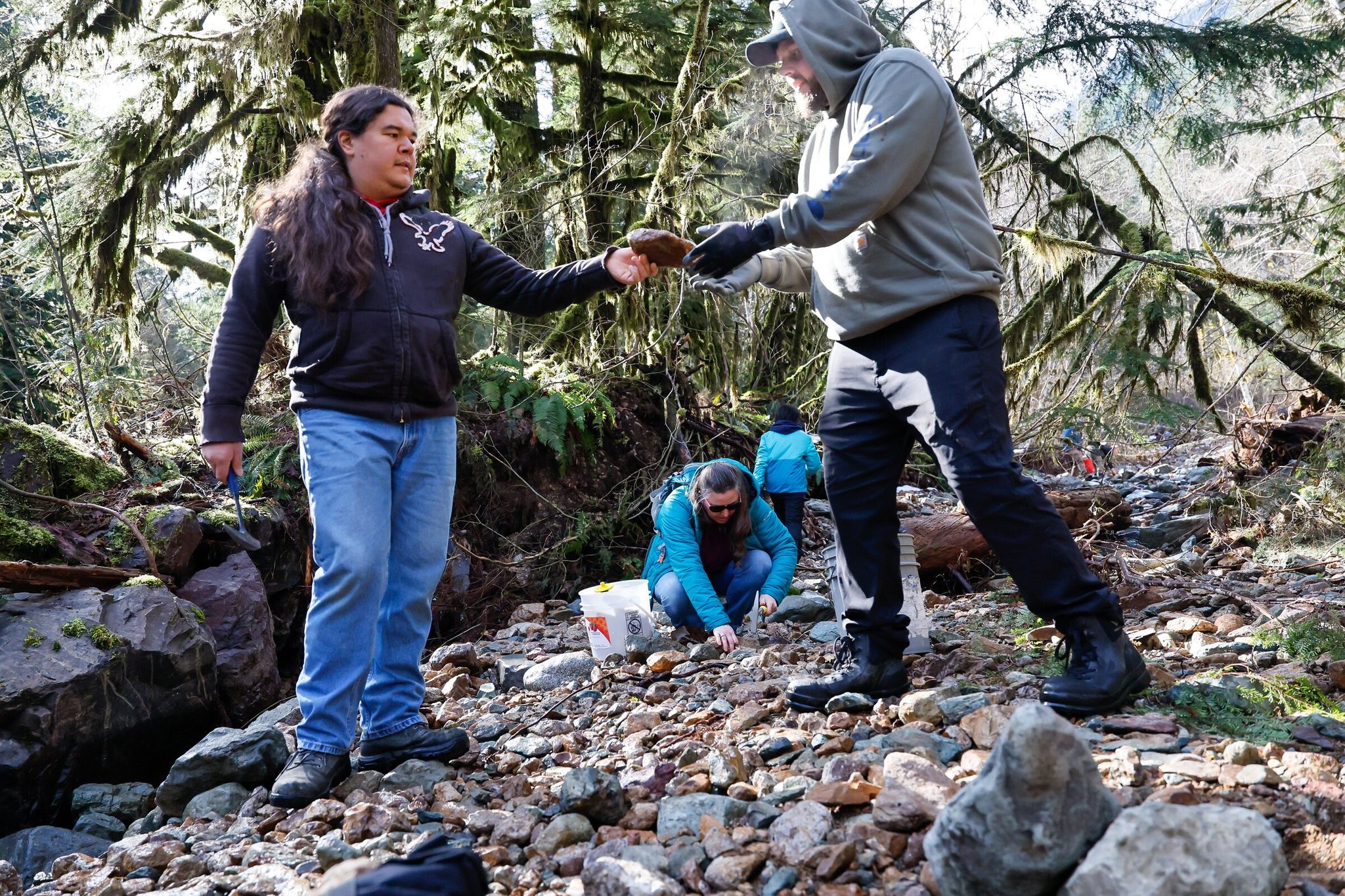
In 2018 Weeks joined the Marysville Rock and Gem Club and quickly dove deeper into the hobby. “It’s amazing what people dig out of the ground,” she marvels at the hidden beauty. Weeks is now the wagon master for the Washington State Mineral Council, taking over from longtime leader Ed Lehman. This unofficial, historical title is in fact a civic role: the wagon master plans routes, ensures group safety and coordinates the logistics of field trips to collecting sites. She leads newcomers and veterans on field trips across the state, showing where and how to look.
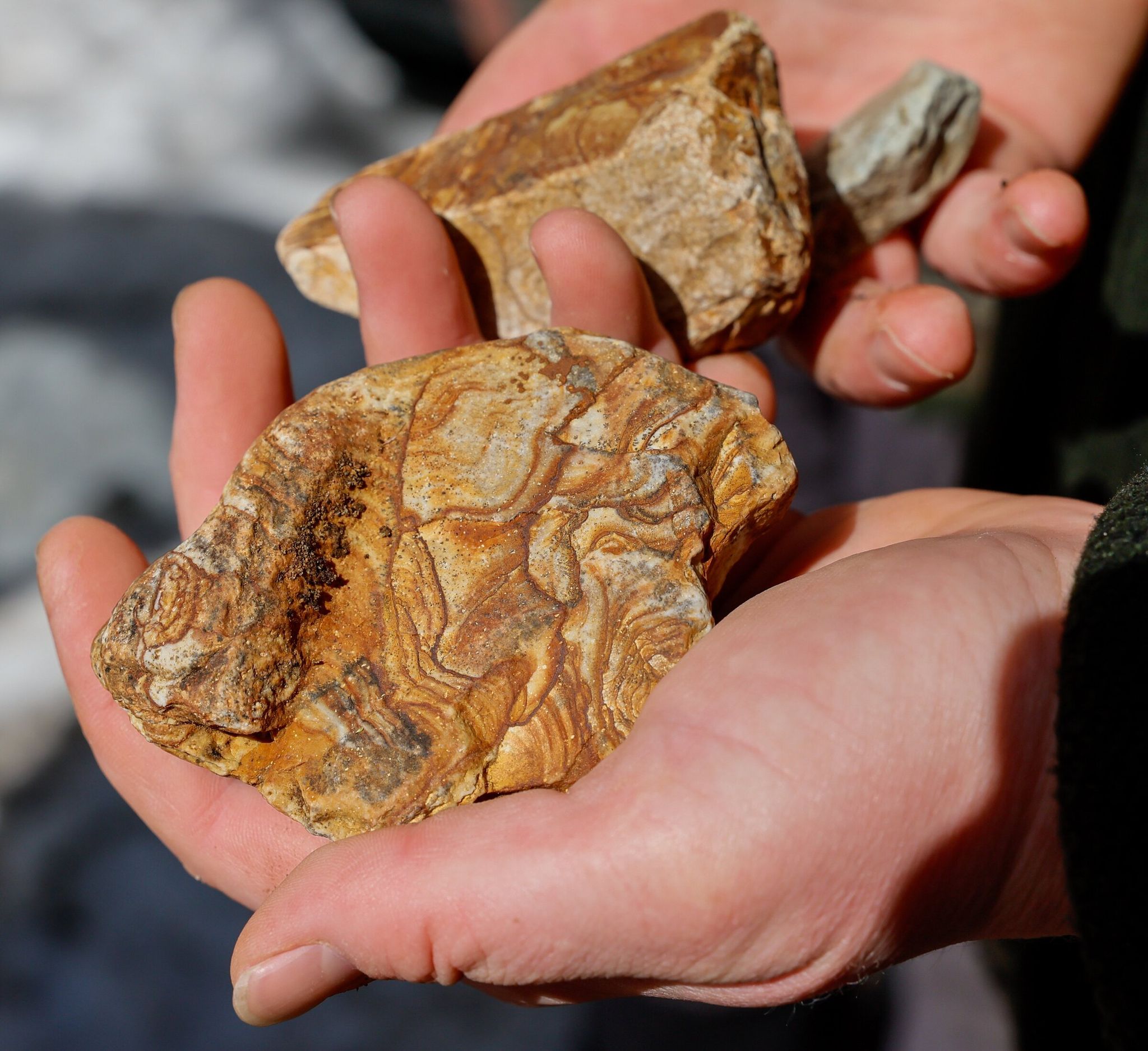
Last month Weeks led a group to the bank of a creek at the Mani Creek campground in search of “picture jasper.” These stones are marked with wavy lines of brown, black or blue that resemble miniature landscapes. With a sharp eye, a bucket and tools, she says, you can find an astonishing variety of minerals and fossils. At Little Naches campground you can find blue-gray “thunder eggs” — geode-like stones formed in gas pockets of cooling lava flows.
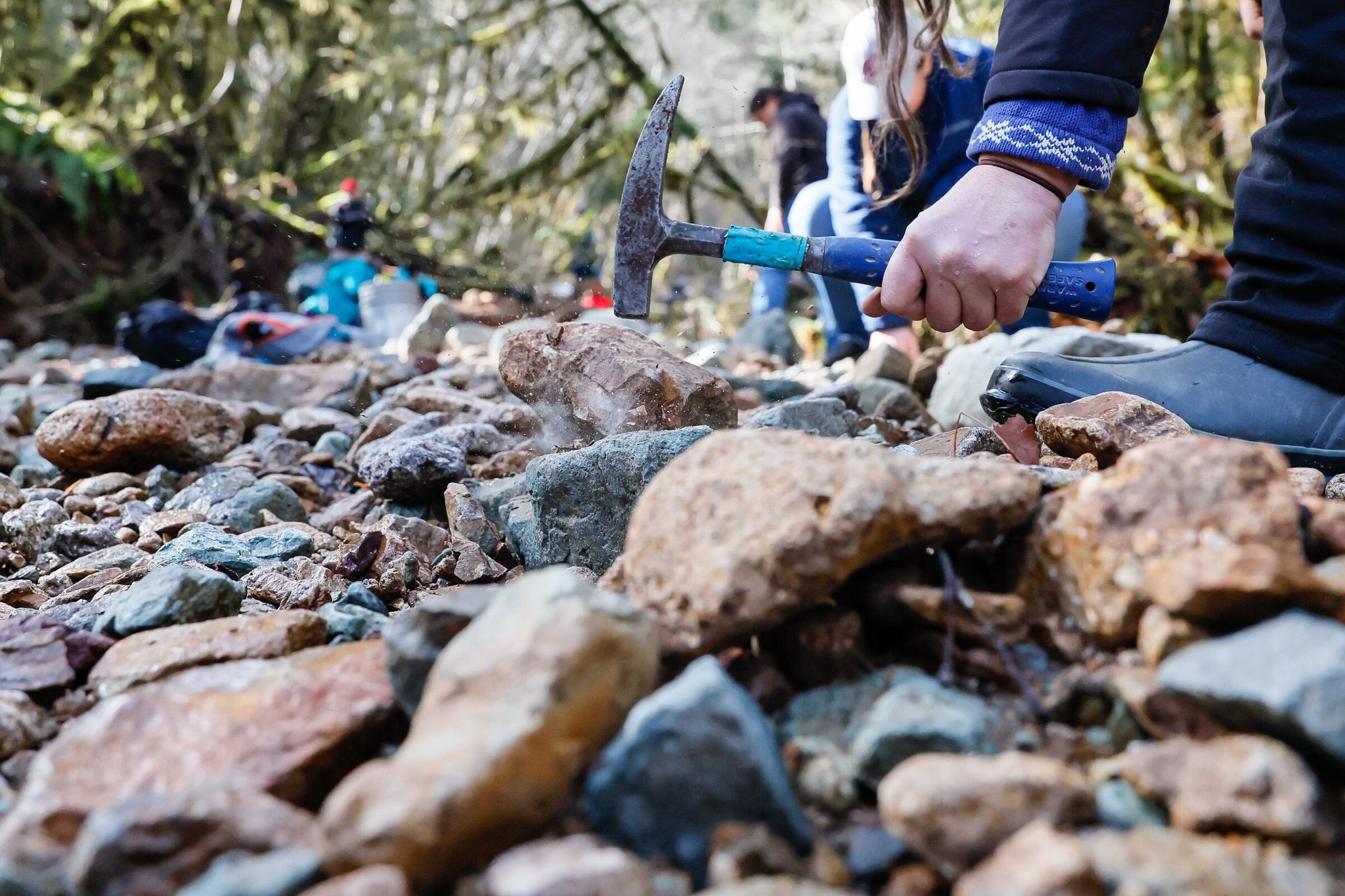
Hansen Creek is popular for finding clear quartz crystals, but Weeks warns of hazards and the need for gear. The Wild Turkey mine in Eastern Washington offers easy pickings of green serpentine. Fossilized wood can be seen in Ginkgo Petrified Forest State Park. Blanchard Hill has “dalmatian stone,” and Samish Overlook has a view of the water, but “it’s heavy hand-drilling, hammers and pry bars — a real workout,” Weeks says.
For beginners, Washington’s abundance can be overwhelming: finding good rocks may be easy, but knowing how to start is not. “Half the battle is knowing where to go, what to look for and what tools to use,” Weeks says. That’s why experienced collectors recommend joining a local club and participating in organized outings. In clubs, veterans help newcomers pick gear and look in safe, permitted areas.
Collecting a reasonable amount of rocks for personal use is generally allowed on U.S. Forest Service and Bureau of Land Management lands, but with limits: no more than 25 pounds (about 11 kg) of material per person per day, a ban on heavy equipment and no commercial collecting without a permit. Collection is prohibited in national parks and on tribal lands. Private property or leased mining claims require permission. “A respectful rockhound follows a code of ethics,” Weeks says, though some people litter, dig under live trees, trespass or take too many rocks. Ethics call for not disturbing ecosystems and always checking local rules, since regulations in Washington can be tightened at the level of individual forests.
One of Kim Willins’s favorite annual trips, from the East King County Rock Club, is the summer hunt for garnets at Heather Lake. People of all ages wade in the creek looking for tiny gems that look like dried currants. “Kids love it,” she smiles.
Based on: WA rockhounds search for Earth’s hidden gems, treasures