This digest covers a viral video showing a father and daughter being detained at Seattle’s airport, sparking protests and debate over ICE tactics; a Seattle school district agreement to pay $600,000 over violations of pregnant and nursing employees’ rights; and a review of the new Amtrak Cascades Airo train on the Seattle–Portland route.
Father and Daughter Arrested at Seattle Airport: How a Viral Video Exposed a New Immigration Enforcement Tactic
An incident at Seattle-Tacoma International Airport last weekend quickly grew from a local event into a national political story. Masked, unmarked U.S. Immigration and Customs Enforcement (ICE) agents detained a man and his adult daughter on the jet bridge as they boarded an Alaska Airlines flight to Los Angeles. Passengers filmed what happened on their phones, and within a day the footage had spread across social media, prompting outrage and protests inside the airport. The story is significant less for the scale of the arrest than for how it exposed tensions surrounding ICE’s changing strategy and the limits of federal agents’ authority in public spaces.
Video posted Saturday captured a struggle: plainclothes agents hold someone down on the floor amid a commotion, with shouting in the background. The flight was delayed. On Sunday, demonstrators marched through the airport terminals with megaphones and signs reading “ICE Out of Washington” and “Abolish ICE,” chanting, “ICE, leave now.” Politicians responded immediately: Washington Gov. Bob Ferguson, a Democrat, called the agency’s tactics “deeply un-American” and called for its abolition, while Seattle Mayor Katie Wilson said such methods were “unacceptable and un-American.” Ferguson said he had asked Alaska Airlines to urge ICE to leave airports and would make a similar request to every carrier operating at Seattle-Tacoma. The Guardian’s report provides more detail on the governor’s position and the protests.
The two sides’ accounts differ sharply. According to ICE, the man detained was Ricardo Larrondo Mendoza, a native of Mexico who overstayed his visa and violated immigration law. His daughter, Sofia Hernandez Mejia, was also in the country unlawfully, the agency says, and “threw hot coffee at officers,” potentially exposing her to a charge of assaulting a federal agent. The family’s lawyer, Olya Katala, tells a different story: the father and daughter were traveling to a family baptism in California, had lived in the United States since 2015, were seeking asylum and had no criminal records. Mejia, who is around 25, is married to a U.S. citizen and has already filed paperwork to adjust her status. According to her attorney, the young woman was simply carrying a cup of coffee; when people in plain clothes and without uniforms rush at you, your reaction is predictable—the cup falls, and panic and chaos follow. Both detainees are being held at an immigration detention center in Tacoma. Mejia’s husband, who was accompanying the family, was not detained.
The broader context makes the incident especially sensitive. Since the summer, ICE has shifted its focus noticeably from large-scale urban raids to targeted operations, including at airports, and arrests have reached record levels. The flight to Los Angeles departed during a tense weekend ahead of Thanksgiving, and the airline stressed that it had not been given advance notice of the agents’ actions. Alaska Airlines said it was working with the Port of Seattle to determine whether established procedures had been followed and had already raised its concerns “directly with the relevant authorities.” The Port, for its part, called the incident distressing not only for the family but also for other passengers, and promised to work with federal officials to understand what happened.
The heart of the story is not just the fate of one family, but the question of whether it is appropriate to carry out a forceful arrest in a secure airport area, without uniforms or warning, among ticketed passengers. That apparent arbitrariness turned a private immigration case into a symbol: for ICE’s critics, footage of the struggle on the floor was proof of “un-American” tactics; for the agency, it illustrated that immigration violators can be found everywhere, including on jet bridges. The protests in Seattle showed that the agency’s new tactics are meeting resistance not only in courtrooms but also in public spaces—and that viral video has become a tool of political pressure, much like press releases and hearings once were.
For readers unfamiliar with the U.S. immigration system, a few terms are worth explaining. ICE (Immigration and Customs Enforcement) is a federal agency within the Department of Homeland Security responsible for enforcing immigration law within the country, including detention and deportation. A visa overstay occurs when a foreign national remains in the United States after their visa or authorized period of stay expires, which is considered a violation of immigration law. Adjustment of status is a process that allows someone already in the United States to obtain permanent resident status—a green card—including through marriage to a U.S. citizen. Asylum is a form of protection for people who have left their country because of persecution and grants the right to remain lawfully in the United States. An asylum application and a visa overstay can coexist, creating legal ambiguity. Finally, a jet bridge is an enclosed walkway connecting the terminal to an aircraft. It is formally under the airport’s jurisdiction, but it is also an area where local and federal authority intersect; this legal gray area has become a point of contention.
The possible outcomes are clear. If the allegation of assaulting a federal agent is substantiated, ICE will have grounds for criminal prosecution, not just deportation. If the lawyer’s account—that the coffee cup fell accidentally—prevails, the agency will have to explain how an unannounced operation carried out by plainclothes agents led to a traumatic scene in front of dozens of passengers. In any case, Seattle has already become a test of whether U.S. airports and airlines are prepared for a new reality in which immigration raids take place not in remote neighborhoods, but right at the boarding gate.
Seattle Schools to Pay $600,000 for Violating Pregnant and Nursing Employees’ Rights
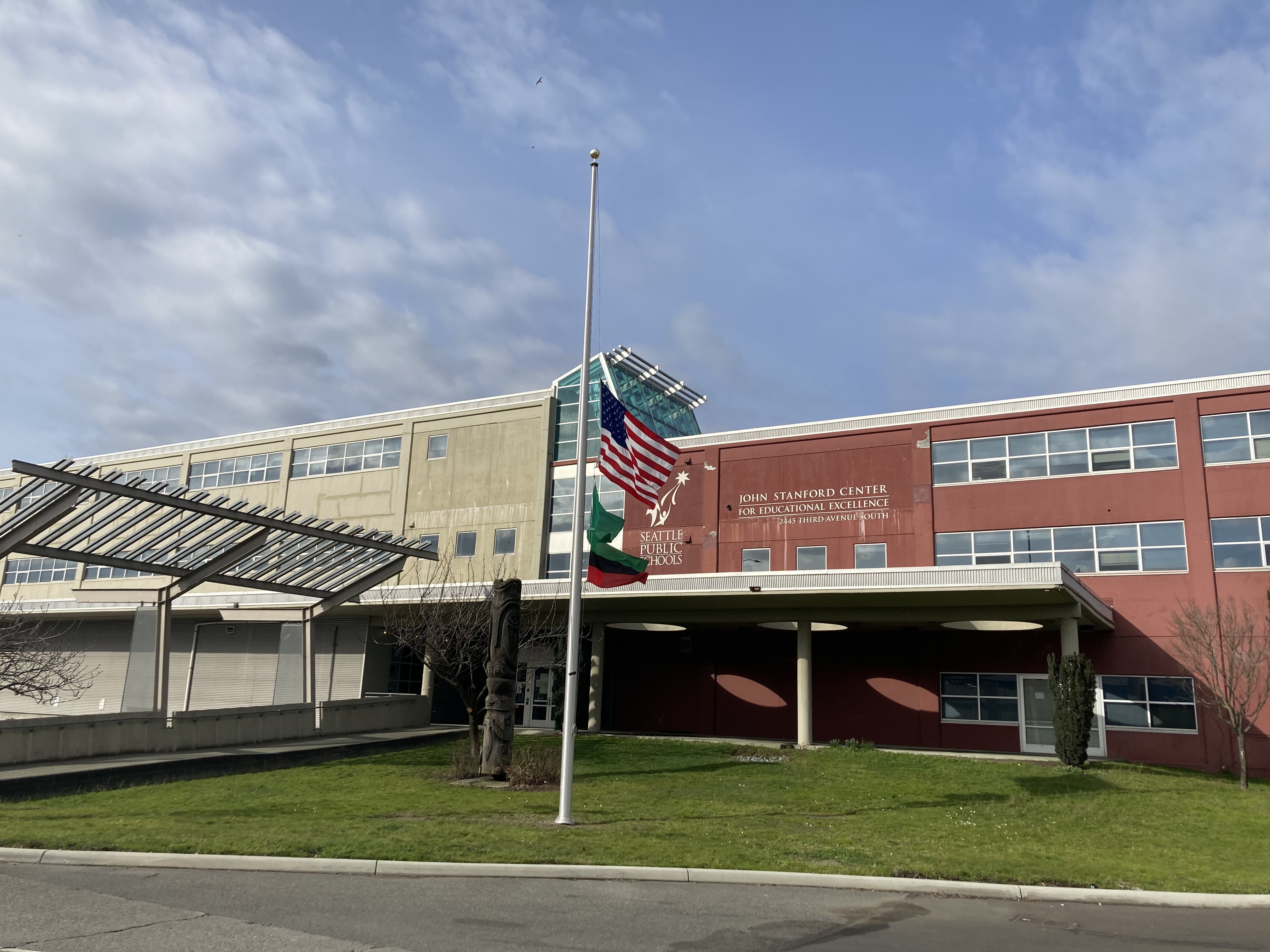
What begins as a dry legal brief turns out to be a revealing story about how a major public employer failed for years to heed the requirements of its own state. Seattle Public Schools has agreed to pay $600,000 and rewrite its internal policies after Washington State’s attorney general pursued a civil lawsuit over violations of the rights of pregnant and nursing employees. The agreement, formalized as a consent decree, was reached on November 20 and announced publicly on Monday. According to the attorney general’s office, the district did more than simply ignore the law: employees suffered tangible consequences of that negligence. They were interrupted while pumping breast milk and experienced painful blocked ducts and mastitis.
The allegations center on the state’s Healthy Starts Act, which took effect in July 2017. The law requires employers to provide pregnant employees with a range of accommodations, including more frequent, longer or flexible bathroom breaks. It also requires employers to give nursing mothers reasonable time to pump breast milk for up to two years after a child’s birth, as well as a private space that is not a bathroom. According to court documents, neither requirement was being met in Seattle schools. The complaint describes, among other things, an employee who was repeatedly ignored at a security desk when she asked to use the bathroom. Other employees, the lawsuit says, faced retaliation—that is, punitive measures or hostile treatment—simply for requesting the accommodations they were entitled to by law. The attorney general’s office filed suit in April 2025, and the district now acknowledges the consequences. In addition to paying the settlement, it must establish a district-wide policy for handling accommodation requests, respond to such requests within five business days and train the employees who review them on how to apply the law correctly.
Some legal and medical details are worth explaining to understand the context. The Healthy Starts Act is not a federal law but a Washington state law, and it goes beyond nationwide requirements: it obliges employers not merely to “avoid discrimination,” but actively to adapt working conditions to the needs of pregnant employees. A consent decree is not, strictly speaking, an admission of guilt. Rather, it is a commitment voluntarily accepted under court supervision; if the district violates its terms, the case could return to court and penalties could become more severe. Mastitis and blocked ducts are more than abstract discomfort: mastitis is an inflammatory breast condition that can occur when milk is not expressed in time and may require antibiotics and time off work. That is why the law requires breaks and a private space—not for convenience, but for health reasons.
The money will not go into the attorney general’s general budget. It will go to a special fund to compensate affected employees and enforce the decree. That distinction matters: the $600,000 is not a fine intended simply to deter misconduct, but a means of compensating specific people for harm. It is also notable that the district had not responded to KUOW’s request for comment by the time of publication, underscoring the issue’s sensitivity for the school system’s reputation. The attorney general’s official statement, quoted by KUOW, says the new decree “requires Seattle schools to provide employees with legally required pregnancy accommodations and to establish new policies and training to ensure schools comply with the law in the future.”
The main lesson extends beyond one district. Even in a city known for progressive politics and well-funded schools, a major employer failed for nine years to bring its human resources practices into compliance with a law that had been in effect since 2017. It is a reminder that rights on paper and rights in the teachers’ lounge are two different things—and the gap between them is measured not only in money but in the health of individual women. A five-business-day response deadline for accommodation requests and mandatory training for the employees responsible may seem like modest steps, but such procedural safeguards are often what change day-to-day practice. The question remains how many similar cases are waiting to emerge in other districts, where a pregnant teacher may still be asking a security guard for a break when there is no requirement for the guard to listen.
The New Amtrak Cascades Airo: What to Know About the Train Transforming Seattle–Portland Travel
Amtrak is gradually updating its fleet on key Pacific Northwest routes, and one of the first lines where passengers have been able to experience a new Airo train is the Cascades route between Seattle and Portland. A journalist with Seattle Refined rode the route to see how comfortable, convenient and modern the new train is. The Seattle Refined article is structured as a photo essay, so it focuses less on technical specifications and more on the experience of the trip: the train’s exterior, the interiors, seat quality, views and the overall feel of traveling along one of the region’s most scenic corridors.
The trains are part of the Airo family, a new generation of rolling stock Amtrak is ordering from Siemens Mobility. These trains are replacing aging models and are expected to gradually take their place on several routes across the country, including Cascades. For passengers, this means more than a cosmetic update; it reflects a change in the way rail travel is presented. The emphasis is on modern design, more ergonomic seats, improved lighting and climate control, and an overall aesthetic intended to make rail travel competitive with cars and planes over short and medium distances. The Seattle–Portland route is one of the busiest in Amtrak’s northwestern network, making the upgrade especially significant. The cities are about 300 kilometers (roughly 185 miles) apart, and the train has traditionally been seen as a convenient alternative to driving, avoiding traffic while offering views of Puget Sound, forests and mountains along the way.
One detail woven throughout the article is that the journey begins at King Street Station, a historic station in downtown Seattle. The arrival of a new train at such a landmark is symbolic in itself: modern rolling stock is set against an architectural backdrop where railways are part of the city’s history. The journalist highlights both the visual contrast and the harmony between the updated train and the classic station, enhancing the overall impression of the trip. From there, the route follows the coastline, and the panoramic windows and thoughtfully designed interior allow passengers to take in the scenery—from the water and coastal communities to stretches of forest. The article presents this as one of the main reasons to choose the train over a car: the views become a central part of the experience, not just a backdrop.
Comfort is another important focus. The report emphasizes that the new seats and overall layout make the trip enjoyable, even over a relatively short distance. For people who regularly travel between Seattle and Portland for work, study or tourism, this is a significant selling point. Amtrak Cascades has long competed with cars and intercity bus operators, and improving comfort directly affects passengers’ choices. The fleet upgrade is also part of Amtrak’s broader strategy to modernize and make rail travel more appealing amid growing interest in sustainable transportation. For short trips, trains are seen as a more environmentally friendly alternative to private cars and air travel.
A few terms that appear in articles like this are worth explaining. Airo is the name of a new train platform being developed by Siemens Mobility specifically for Amtrak; the trains are designed for different types of routes and are expected to appear on many lines over time. Cascades is the name of the service operating along the corridor between Vancouver, Canada, Seattle and Portland. It refers not to a specific train but to the route and brand as a whole. King Street Station is a historic Seattle railway station built in the early 20th century and one of the city’s architectural landmarks. Finally, the Pacific Northwest, or PNW, is a region in the northwestern United States and southwestern Canada, known for its natural scenery. The route passes through this region, which helps make it so popular with travelers.
The main takeaway from the article is simple: upgrading the Cascades fleet is not just a technical replacement of trains, but an effort to make rail travel in the region more appealing through design, comfort and views from the windows. For passengers choosing between a car, bus and train on the Seattle–Portland route, the new Airo makes rail a more compelling option. For Amtrak, it is part of a long-term modernization strategy; for the region, it is another step toward making short intercity trips a convenient and enjoyable choice rather than a necessity.