Daily roundup: The controversial detention of a family on an airport jet bridge in Seattle prompted widespread criticism and questions about ICE, while a car fire downtown disrupted traffic on the I-5 express lanes for an hour. No one was injured.
Detention at Seattle airport: A family trip to a baptism turns chaotic on the jet bridge
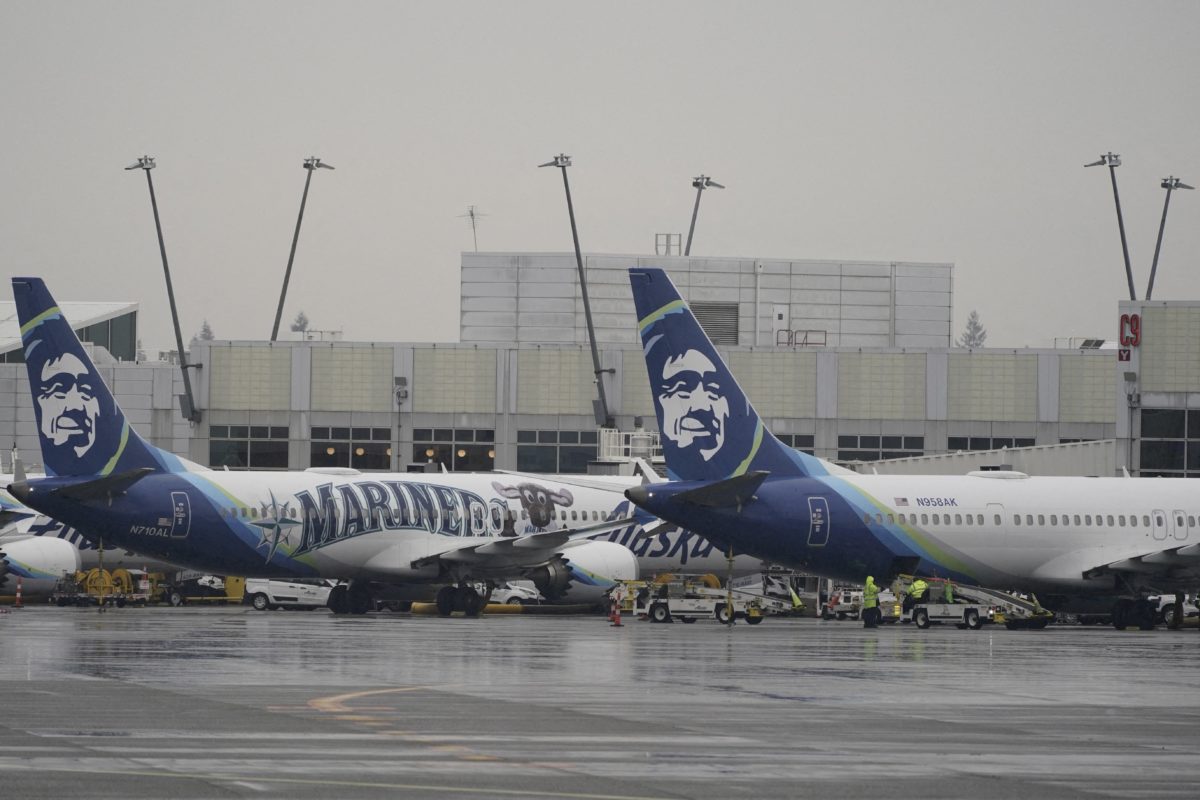
Another incident involving U.S. immigration authorities took place at Seattle–Tacoma International Airport, where ICE officers detained a father and daughter on the jet bridge as they boarded a flight to Los Angeles. The family was traveling to California for a relative’s baptism, but instead of celebrating, they found themselves at the center of a controversy filmed by other passengers on their phones. Videos showing masked people in unmarked clothing wrestling someone to the floor quickly spread across social media, and the Alaska Airlines flight was delayed. The incident is the latest in a series of stepped-up airport detentions carried out by ICE since the summer, particularly targeting people suspected of overstaying their visas.
According to the family’s lawyer, Olya Katala, those detained—Ricardo Larrondo Mendoza and his daughter, Sofia Hernandez Mejia—have lived in the United States since 2015 and are in the process of applying for asylum. Neither has a criminal record; the daughter attended university and worked for a nonprofit organization. “They did everything right. They’re educated people. It’s just heartbreaking,” she said, according to a PBS NewsHour report. ICE, for its part, says Larrondo Mendoza is a native of Mexico who violated immigration law by overstaying his visa. The agency says another passenger splashed hot coffee on officers during the detention; that passenger was Mejia herself, who may now be charged with assaulting a federal officer. Her lawyer insists that her client was holding the coffee when people in plain clothes rushed her, and that spilling it was a reflexive response to panic, not a deliberate attack.
The situation is further complicated by the fact that Mejia is married to a U.S. citizen and has already filed paperwork to adjust her status. Her husband was nearby when she was detained but was not taken into custody. Both detainees are now being held at the Northwest ICE Processing Center in Tacoma. Alaska Airlines said ICE did not notify it of the planned operation in advance and that it is raising questions with the authorities. The Port of Seattle, which operates the airport, called the incident alarming for passengers and promised to seek details from federal agencies. Washington Governor Bob Ferguson, a Democrat, went further, calling ICE’s tactics “deeply un-American” and describing the footage as “horrifying and chilling.”
For context, ICE (Immigration and Customs Enforcement) is a federal agency responsible for enforcing immigration law within the country, unlike border patrol, which operates at the borders. A detention on a jet bridge—the passageway connecting the airport terminal to an aircraft—is notable because passengers tend to think of it as an area already almost “inside” the plane. The officers wore masks and unmarked clothing, adding to the sense of unpredictability. Overstaying a visa is a common ground for deportation, even when someone has lived in the country for decades and committed no other offense; filing for asylum or to adjust one’s status does not always stop enforcement actions. The key takeaway from the incident is that the public use of force against a family traveling to a baptism, combined with the failure to notify the airline and airport in advance, poses risks not only to ICE’s reputation but also to flight and passenger safety. The governor’s response shows how closely the incident is tied to the broader struggle over U.S. immigration policy.
Arrest on the jet bridge: How Seattle officers staged a high-profile raid on passengers
Last weekend, the United States once again found itself at the center of a heated debate over immigration enforcement. The immediate trigger was the detention of two passengers as they boarded a plane at Seattle–Tacoma International Airport, but the circumstances of the arrests sparked the public outcry. Videos shared widely on social media showed masked people holding a woman down on the floor and dragging her toward the exit as she screamed, while another passenger who tried to intervene was shoved by a masked officer. It was this imagery—not the deportation detention procedure itself, but the way it was carried out and the setting—that turned a local incident into a nationwide debate about the limits of federal agents’ authority. Democratic officials at the state and federal levels almost simultaneously called what happened “horrifying,” “completely out of control” and “deeply un-American.” The airline and airport administration effectively distanced themselves from the operation, saying they had not been properly notified. ICE, in turn, offered its own account, casting the detainees and the passengers who supported them not as victims but as assailants. The gap between these two descriptions of the same episode is the central story.
The criticism voiced by politicians boils down to three related points. First, there is the question of procedure: the detention was carried out without notifying the airline or port authorities, putting passengers, staff and the boarding process itself at risk. Second, there is the question of tactics: the agents wore masks and displayed no visible identification, which critics say makes it impossible to oversee their actions and undermines the very idea of government accountability. Third, there is the level of force used—the woman was held on the floor and pulled through the jet bridge, which many observers consider disproportionate in a case involving an immigration violation rather than a direct threat to safety. Congressman Adam Smith put it bluntly on MS NOW’s “The Assignment,” saying, “We need immigration enforcement, but we do not need a regime of terror that Trump and Stephen Miller have unleashed on the American people.” Notably, he also called on Congress to “aggressively regulate” the government’s actions in this area. The issue, then, is no longer an isolated case but a demand for systemic legislative limits.
The responses from the airport authorities and airline add an institutional dimension to the story. Alaska Airlines said outright that it had not received proper notice of the operation and expressed concern about its impact on the crew and passengers on Flight 1306. The Port of Seattle went further, calling what happened “outrageous” and emphasizing that immigration operations at the airport are carried out without the port’s involvement or knowledge, despite protocols previously agreed with local federal immigration authorities. The port is now asking the Department of Homeland Security whether those protocols were violated. This matters: if the airline and airport operator did not know a detention was planned, the entire boarding process—from seating to preflight checks—was made subject to an operation they knew nothing about, creating obvious risks to both flight safety and passengers’ rights.
ICE’s version, outlined in an official statement, shifts the focus from the agents’ actions to those of the people around them. According to the agency, “other travelers began obstructing and assaulting officers during the arrest—federal crimes and felonies,” and one passenger, identified as a Mexican national who had overstayed a visa, “splashed hot coffee on the officers.” ICE says that person will be charged with assaulting a federal officer. The legal context is important: under U.S. law, assaulting a federal officer in the line of duty is indeed a separate serious offense, and the agency is deliberately framing the story so that passenger resistance, rather than the agents’ use of force, becomes the central legal fact. Critics, however, say that this does not answer why the detention required physically pinning someone to the floor or who authorized an operation in a public place without notifying the agencies responsible for it.
The reaction from elected state officials shows how politically toxic the issue has become locally. Governor Bob Ferguson called ICE “completely and totally out of control” and said the airport operation was “just another example of the agency’s deeply un-American tactics,” emphasizing that the agents wore masks and did not identify themselves. Senator Patty Murray demanded answers from the Department of Homeland Security and vowed to “keep fighting to end this campaign of terror.” Congresswoman Pramila Jayapal went furthest rhetorically, saying that “violent arrests are the hallmark of fascist states, not democracies,” and linking the prospect of reining in the agency to Democrats regaining control of Congress. The remark is telling: it moves the discussion from an isolated incident to the electoral arena, where immigration has been one of the main issues mobilizing voters for several years.
Setting aside the emotional reaction, several recurring themes in recent U.S. politics are visible in this story. The first is the use of masks and identification by law enforcement officers. A practice introduced to protect agents from having their identities exposed is increasingly criticized as a tool for impunity, since it makes both complaints and internal investigations more difficult. The second is the conflict between federal immigration authorities and local institutions, which are not formally under the Department of Homeland Security but must share physical space with its operations. A failure to notify them turns an airport into a zone of legal uncertainty. The third is the public nature of the arrests: carrying out an operation in front of dozens of passengers, with footage recorded and a viral reaction afterward, appears to be part of a deliberate strategy of intimidation. That, critics say, is why they speak of a “regime of terror” before any charges have been proven in court. Finally, there is the fate of the detainees themselves: ICE’s statement refers to a Mexican national who overstayed a visa, but the agency has not officially disclosed details about the status of the second detainee or the woman held on the floor, leaving room for mutually conflicting interpretations.
The key takeaway from the Seattle incident is that the dispute is not about immigration enforcement itself—its necessity is acknowledged even by critics such as Adam Smith—but about how it is carried out and whether it is accountable. The fact that the airline, port authorities and Democratic state politicians have taken similar positions shows that dissatisfaction with ICE’s methods has spread beyond partisan rhetoric to institutions responsible for the everyday operation of infrastructure. At the same time, the agency’s swift shift of the discussion to the alleged assault of federal officers shows that it is prepared to defend its actions in court and in the public arena. What happens next will depend on two things: whether recordings and details of the protocols that the Port of Seattle says may have been violated are made public, and whether Congress uses the incident to pursue the legislative restrictions Smith has called for. That will determine whether the jet-bridge incident remains a local controversy or becomes a turning point in the debate over the limits of federal agents’ authority in public spaces. For a detailed account of how events unfolded, see the MS NOW article.
A few terms in the article may need clarification. ICE, or U.S. Immigration and Customs Enforcement, is a federal agency within the Department of Homeland Security. Among other things, it is responsible for deporting people who violate immigration law; in recent years, its operations at airports, train stations and courthouses have become the subject of intense debate. “Visa overstay”
Car catches fire on I-5 express-lane exit in downtown Seattle; traffic restored, no injuries
A car caught fire in downtown Seattle on Sunday afternoon, briefly paralyzing traffic on the exit from the I-5 express lanes toward Stewart Street. According to KIRO 7 News Seattle, firefighters needed just under an hour to fully resolve the incident and reopen the roadway. Most importantly, no one was killed or injured: according to the Seattle Fire Department, there were no injuries. For a car fire amid heavy city traffic, that can be considered a fortunate outcome.
Events unfolded quickly, and the emergency services’ rapid response determined the scale of the disruption. The Washington State Department of Transportation (WSDOT) initially confirmed that the lane was closed because of a burning car that was subsequently disabled. Shortly before 1:20 p.m., it warned that the I-5 express lanes would switch direction later than scheduled. These reversible lanes change direction depending on the time of day and traffic volumes. The delay was caused by the disabled car blocking the Stewart Street exit near milepost 166. Crews were working at the scene, but officials did not say exactly when the lanes would switch to northbound traffic, urging drivers to allow extra time for their trips.
For those unfamiliar with local road conditions, two key points are worth explaining. The I-5 express lanes are dedicated lanes in the middle of the highway whose direction changes during the day: in the morning, they usually carry southbound traffic, then switch to northbound in the afternoon. The changeover is a complex logistical operation requiring a clear corridor, so any stalled vehicle at an exit can disrupt the schedule and trigger a chain reaction of traffic jams across downtown. The Stewart Street exit, meanwhile, is one of the main routes into Seattle’s business district, so even an hour-long closure can affect traffic well beyond the immediate intersection.
One point worth noting is the speed of communication. WSDOT posted a warning on social media with a photo of the scene and asked drivers to expect delays, allowing some to change their routes in advance. When every minute that a downtown exit is blocked can contribute to hours-long traffic jams, that kind of transparency has real practical value. In the end, the incident was routine for a major city: a brief fire, less than an hour of disruption, no injuries and a quick return to normal traffic. Still, it shows how fragile a major city’s road infrastructure can be: one car can disrupt an entire transportation network for an hour, and only the coordinated efforts of firefighters and transportation crews, along with timely information for drivers, keep the system from collapsing.
```html