
On the morning of Saturday, November 21, boarding for an Alaska Airlines flight from Seattle–Tacoma International Airport to Los Angeles was interrupted by an operation by U.S. Immigration and Customs Enforcement. ICE agents detained a father and daughter on the jet bridge—Ricardo Larrondo Mendoza and Sofia Hernandez Mejia. Passengers filmed the struggle, the flight was delayed for nearly three hours, and a protest was held at the airport the next day. The incident laid bare a long-running conflict between federal immigration policy and Washington state’s local authorities, who cannot bar ICE from entering the terminal but are increasingly vocal in challenging the agency’s methods.
The operation began at about 8:05 a.m. at Gate N9, as passengers were already walking down the jet bridge to Alaska Airlines Flight 1306. Videos circulating online show people in dark clothing without visible identifying insignia holding two passengers to the floor. Travelers with carry-on bags stood nearby, while family members shouted and tried to understand what was happening. Witnesses said some crew members left the flight afterward, forcing the airline to find replacements.
The Department of Homeland Security said the operation targeted Larrondo Mendoza, a Mexican citizen who had allegedly remained in the country after his visa expired. The department says Hernandez Mejia poured hot coffee on agents during the arrest and was detained as well; she could face a federal charge of assaulting a law enforcement officer. As of the evening of November 23, prosecutors had not yet filed a formal complaint on that charge in the U.S. District Court for the Western District of Washington.
The family’s attorney, Olya Catala, offers a different legal account. She says the father and daughter entered the United States legally on tourist visas in 2015, after which Mendoza applied for asylum. His daughter, who graduated from university and married a U.S. citizen, filed separate paperwork for a green card. Both, the attorney says, had valid work permits and were traveling to California for a family baptism. Catala disputes the claim that the coffee was thrown deliberately: according to her, the cup ended up on the floor during the sudden struggle.
At the heart of the dispute is a distinction that is clear to lawyers but almost invisible to a passenger holding a boarding pass. The expiration of an original visa does not always mean that someone has no legal basis to remain in the country: people with pending asylum or immigration cases may be permitted to stay and work without receiving a new visa. Federal authorities, however, point to expired entry documents. Behind the legal language are a father and daughter who were taken to the Northwest ICE Processing Center in Tacoma after their arrest.
Alaska Airlines said it had not been notified in advance of ICE’s actions, had not provided agents with passenger information, and had not taken part in the operation. The company stressed that access to the secured jet-bridge area is managed through credentials issued by the Port of Seattle, not the airline. The port, which operates the airport, called the incident outrageous and began asking the Department of Homeland Security whether agreed protocols had been violated.
But the port’s powers are limited. Seattle–Tacoma International Airport is a joint-use facility subject to federal regulation; ICE has broad access to its public areas, as well as to parts of the terminal both before and after security screening. Port police do not conduct or assist with civil immigration enforcement, but the airport administration cannot interfere with federal operations. The Port of Seattle Commission had previously expressed concern over reports that the Transportation Security Administration was sharing passenger lists with immigration authorities and called for greater transparency.
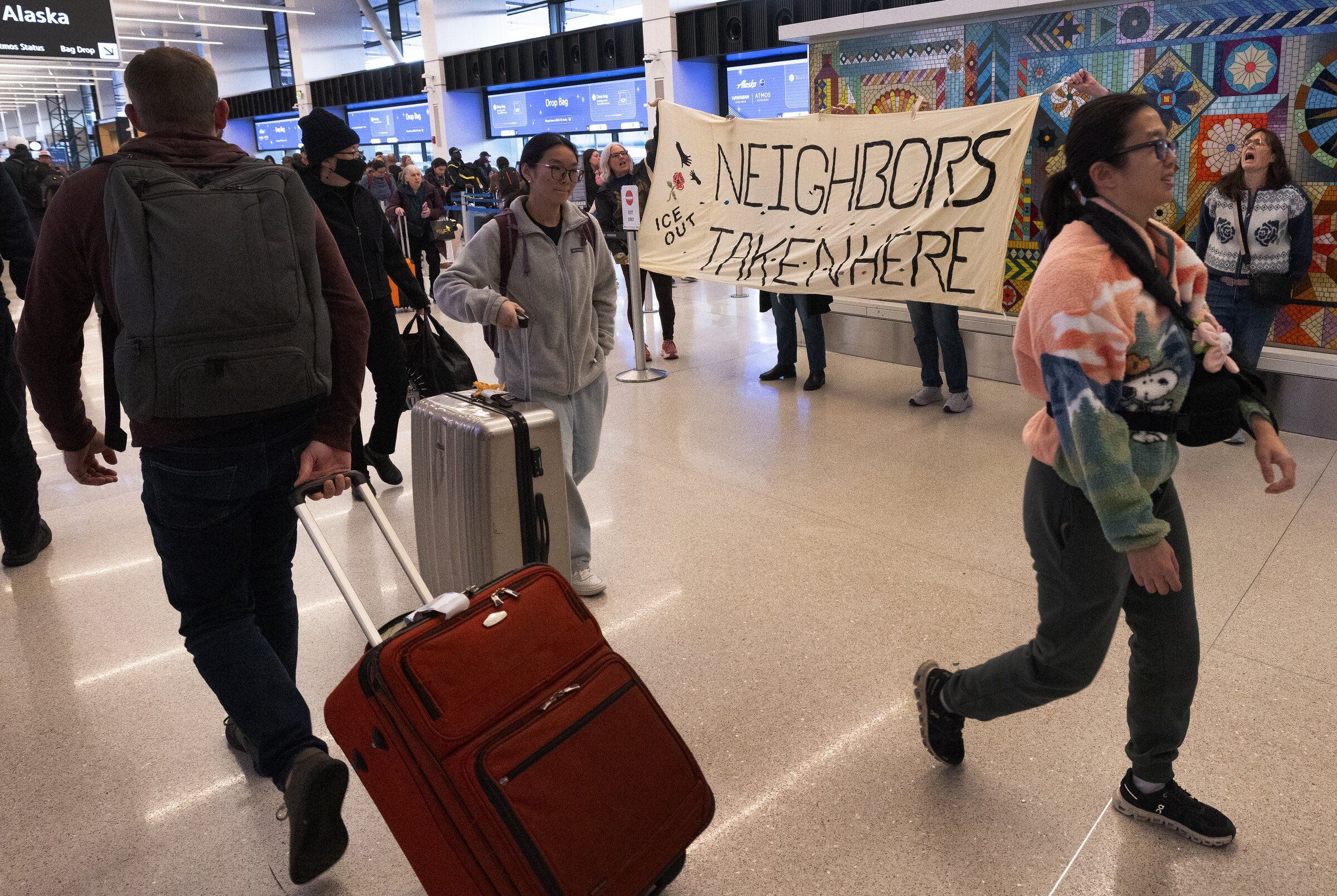
Governor Bob Ferguson called what he saw “horrifying” and “chilling,” saying that ICE in its current form cannot be reformed. He also ordered a review into whether agents had violated a state law passed in March 2026 that restricts law enforcement officers from wearing opaque masks while on duty. On Sunday, November 22, protesters gathered at Sea-Tac with signs opposing ICE, turning the usually quiet airport concourse into an extension of the dispute that began on a narrow jet bridge.
The family’s next step is to seek a release hearing or challenge the legality of their detention in federal court. For the port and the airline, a different, less clearly defined question remains: how to maintain order and a sense of security at an airport when a federal operation can begin after a passenger has already passed through security, presented a ticket, and come within a few steps of the plane.

Based on: ICE pushed past Alaska Airlines staffer to make Sea-Tac arrests