
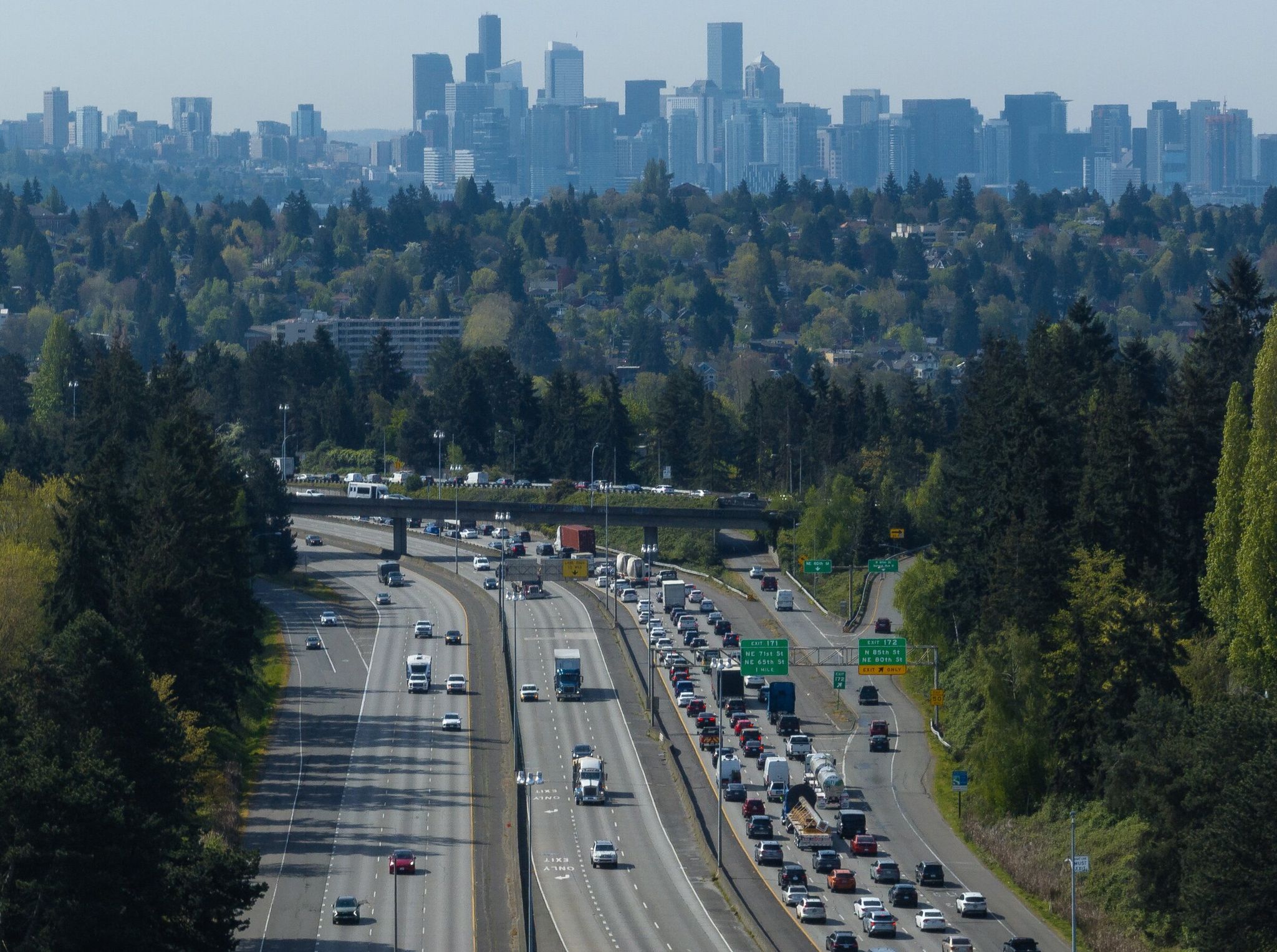
It has been several months since major repairs began on the Ship Canal Bridge on Interstate 5 in Seattle, and drivers are gradually moving past the initial shock. The Ship Canal Bridge, which spans the Lake Union Ship Canal connecting Lake Washington to Puget Sound, is a critical piece of the transportation network, allowing the city’s main highway to pass over the waterway uninterrupted. Without this bridge, crossings would rely on drawbridges, which would cause constant backups to allow vessels through. Many drivers have already changed their routes and travel times to adapt to the reduced number of lanes. However, the southbound situation remains strained: a trip from Lynnwood to the Lake Union area now takes an average of 56 minutes Tuesday through Thursday — eight minutes faster than at the start of the project, but still about 20 minutes longer than before work began.
According to the Washington State Department of Transportation (WSDOT), the modest improvement in travel times is tied to drivers leaving later or earlier, using alternate routes such as Highway 99 and I-405, and reducing the gap between vehicles. In addition, the longer daylight compared with midwinter has played a role. There are no signs of a large shift to transit yet — January and February ridership data do not show a significant increase.
The worst congestion is on southbound lanes, even though repairs are taking place on the northbound side. That’s because WSDOT has directed the I-5 express lanes to the north to protect them from incidents on the main lanes. Normally those lanes switch direction depending on the time of day: they go south in the morning (toward downtown) and north in the evening (out of downtown). Redirecting the express lanes north removed a morning option for southbound commuters, worsening gridlock because huge numbers of drivers head into the city during the peak. The 2019 closure of the Alaskan Way Viaduct (replaced by the SR 99 tunnel) and the West Seattle Bridge repair (closed for two years) previously illustrated how vulnerable Seattle’s transportation system is to disruptions, and the current express-lane situation is being compared to those crises.
Drivers will get temporary relief from June 8 through July 10, when the bridge will be returned to full capacity — four northbound lanes — for the 2026 FIFA World Cup matches in Seattle. This is necessary so tens of thousands of fans can quickly reach Lumen Field from northern suburbs and the airport without getting stuck in traffic, which is critical for the city’s image during the global event. Nearby neighborhoods will also be in focus — SoDo, downtown and the International District. The temporary restoration will provide a short respite, but work will resume after July.
Despite the jams, southbound traffic has increased: in early April the bridge carried more than 100,000 trucks and cars per day, 3,000–4,000 more than at the start of the year. Regional traffic engineer Mike Swyers of WSDOT said drivers are adapting: “Stability and a little growth — that’s a good sign.”
Interestingly, the congestion peak has shifted from 7:45 a.m. to 8:45 a.m., and the morning rush now lasts four hours instead of two. Many are leaving earlier, but traffic volume builds steadily, creating long slowdowns. That “stretching” of the peak was also seen during the West Seattle Bridge repairs and the Alaskan Way Viaduct closure.
Slower speeds on I-5 have worsened conditions on parallel I-405: a morning trip from Lynnwood to downtown Bellevue now averages 43 to 68 minutes in the general-purpose lanes. Those willing to pay up to $15 for tolled lanes spend about 38 minutes. Northbound I-5 (from Tukwila to the University District) remains steady in the morning (30–40 minutes), but afternoon trips have roughly doubled in duration.
Amid the congestion, transit is gaining popularity. Since the opening of the Line 2 light rail across Lake Washington in March, trains run every 4–5 minutes and riders report more available seats. Commute Seattle, which helps employers and residents find alternatives to driving alone, says employers are increasingly interested in vanpools. With a severe shortage of downtown parking, heavy traffic delays and emissions-reduction goals, employers are actively promoting ridesharing, which lets employees save on fuel and parking. Bicycle counts on the Fremont Bridge were up 8% in April compared with last year.
Overall demand for roads and rail continues to rise in 2026 despite post-pandemic recovery. Analysts say some people returning to offices is sustaining pressure on infrastructure. The temporary relief during the World Cup may offer a breather, but work will resume from mid-July through December.
Overall, the current level of congestion is likely to persist until repairs are complete.
Based on: I-5 in Seattle sees ‘new normal’ for traffic jams and driving habits