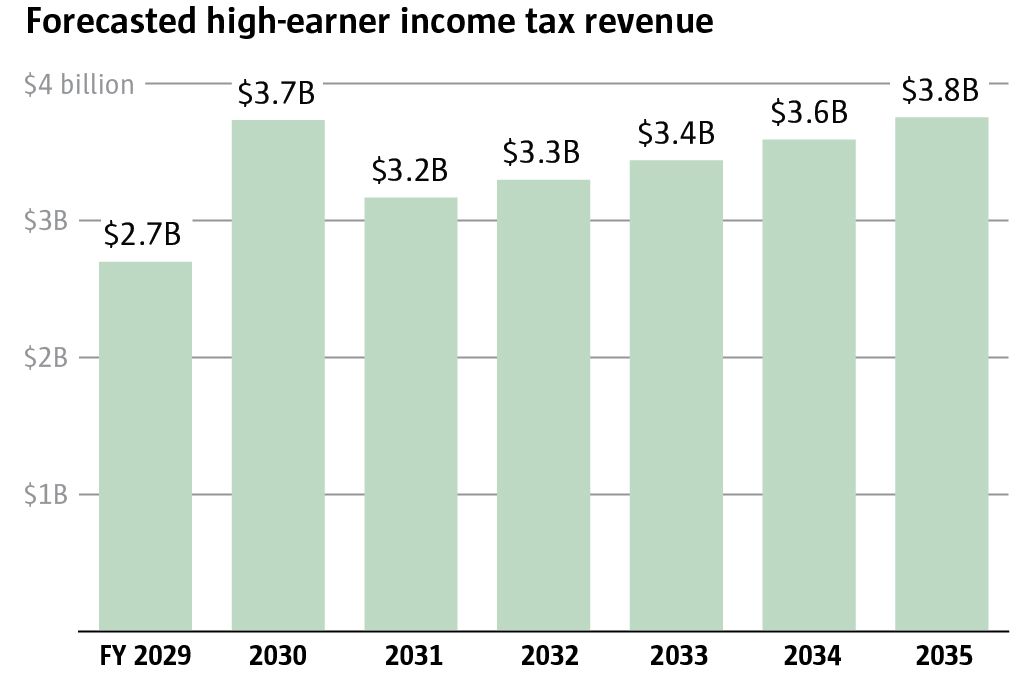
The state of Washington has passed a law imposing a 9.9% tax on annual income exceeding $1 million for individuals and married couples. This so-called "millionaires' tax," if it survives lawsuits and a possible referendum, will take effect for 2028 tax-year income. It is expected to bring in $3 billion to $4 billion annually starting in 2029, affecting about 21,000 taxpayers. Decades-long debates over adopting an income tax in a state that traditionally has not had one continue. Supporters say the move will make the tax system fairer and more progressive, while opponents worry about negative economic consequences and upending a revenue model built on sales and business taxes.
The main debates in shaping the law centered on how to allocate this new, massive revenue. Democratic Governor Bob Ferguson insisted that "more than half" of the money should be returned to state residents through tax breaks for businesses and individuals. But the Democratic legislative majority only partially heeded him.
In the final version of the bill, which the governor is set to sign on Monday, less than a third of future revenue is directed to tax breaks and payments. For example, in fiscal 2030, of an expected $3.7 billion, about $1 billion (28%) will go to those purposes. The remaining funds will bolster the state's operating budget.
The bulk of the new tax will strengthen the state's general fund, which pays for K-12 schools, universities, social services, prisons and health care. In addition, 5% of collected revenue will be reserved for the "Fair Start for Kids" fund, which supports preschool programs and child-care subsidies. This state fund was created to increase access to high-quality preschool and supports programs such as the Early Childhood Education and Assistance Program (ECEAP) — the state-level counterpart to the federal Head Start program — as well as child-care subsidies, professional development for caregivers, and expansion of preschool slots in underserved communities.
Although modest in share, tax relief measures are included in the law and will affect many residents. Starting in 2029, the sales tax will be eliminated on purchases of over-the-counter medicine, diapers and hygiene products such as toothpaste and shampoo. As Senate Majority Leader Jamie Pedersen noted, this will make virtually all such items in grocery stores tax-free.
For businesses, the bill doubles the threshold of annual gross receipts at which a company must pay the business and occupation (B&O) tax — from $150,000 to $300,000. This tax, levied on gross business revenue rather than profit, is the primary revenue source in a state without an income tax but can be a heavy burden for low-margin small businesses because it is owed even in loss years. Companies with revenues up to $600,000 will also receive some relief. In addition, eligibility for the Working Families Tax Credit is significantly expanded; that program provides annual payments ranging from $335 to $1,330. Before the expansion, this tax-refund program was mainly available to low- and middle-income working families, especially those with children, and was similar to the federal Earned Income Tax Credit (EITC).
Republicans in the legislature unanimously opposed the new tax, arguing it could eventually be extended to families with incomes below $1 million. Republican Sen. Chris Gildon acknowledged that some benefits, like eliminating the diaper tax, are good but insufficient. He criticized the expansion of the working families' payments, questioning whether six-figure-earning families should receive such state refunds.
Despite his initial tougher demands, Governor Ferguson ultimately backed the compromise bill. He said that the expanded family payments, which will make an additional 460,000 households eligible, were a key factor in his support. Ferguson also expressed confidence that voters would approve the tax plan if it were put to a vote, seeing that funds would support small businesses, be returned to people, and fund things like free breakfasts and lunches for schoolchildren.