
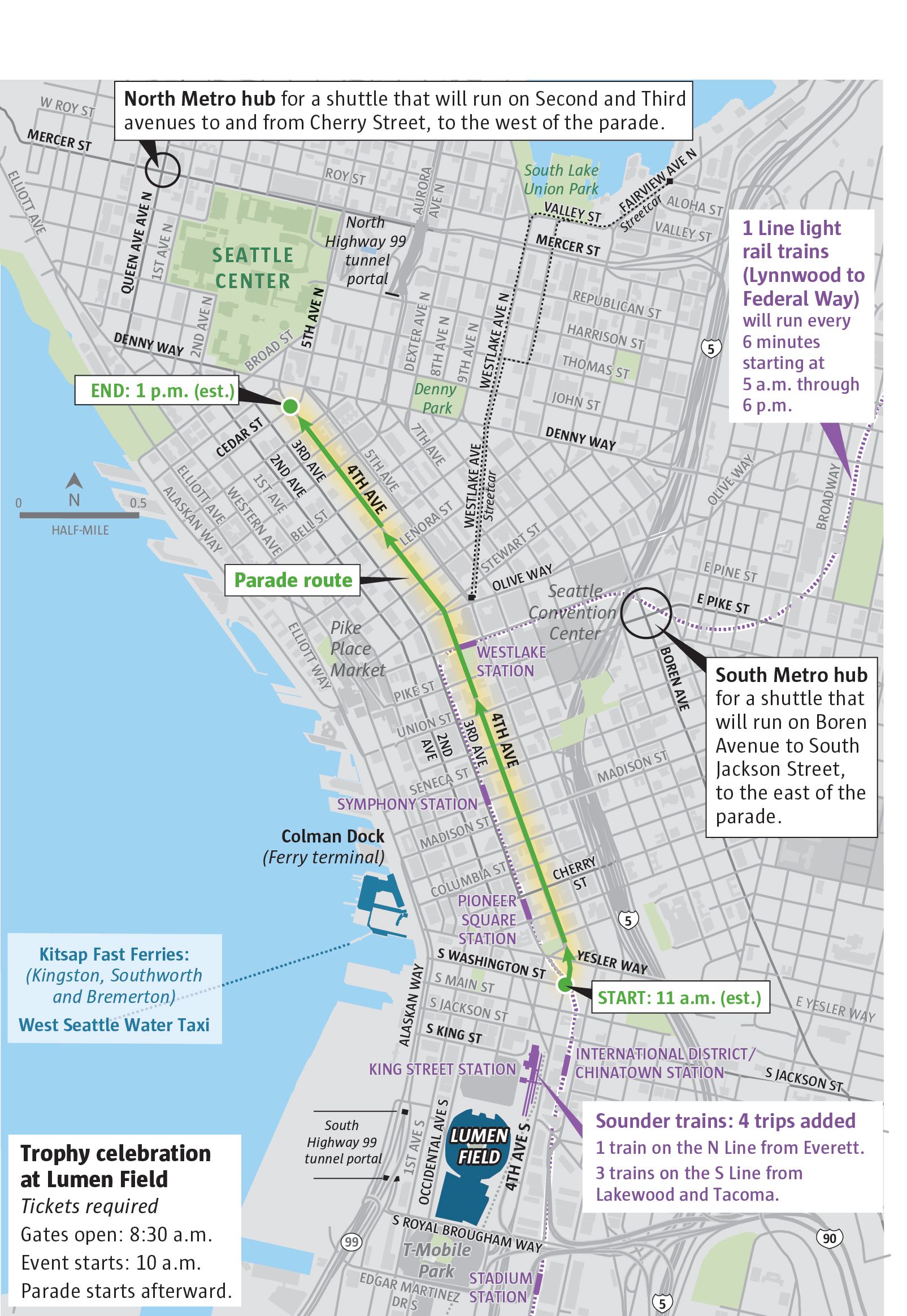
On Wednesday, Seattle will host a grand parade celebrating the hometown Seahawks' Super Bowl victory. The event will begin at 11 a.m. at the intersection of Fourth Avenue and Washington Street and last about two hours, ending at the iconic Space Needle observation tower in the Seattle Center. This is the city's most recognizable architectural landmark, a symbol of innovation and the future, making it a traditional and symbolic place to conclude such festivities. Organizers expect several hundred thousand fans along the two-mile route, creating unprecedented strain on the city's transportation system.
Prominent community advocate and passenger rights champion Girma Zeray, known for his active stance on accessibility and equity in public transit, strongly urges all attendees to avoid driving. More than 20 downtown streets will be closed for the parade, bus routes will be altered, and parking will be virtually impossible. "Events like this are exactly what the regional transportation network was built for," Zeray said.
The primary recommended mode of travel is the Light Rail, operated by regional agency Sound Transit. The agency will increase train frequency between Lynnwood and Federal Way to one train every six minutes from 5 a.m. to 6 p.m. It is expected that ridership records will be broken that day, given that at the previous parade in 2014 the rail system carried 71,000 people in one direction versus the usual 29,700.
Additionally, Sound Transit will run four special Sounder trains on Wednesday morning, in addition to the regular N and S line schedules. Organizers advise taking early trips, as all trains will be crowded. Extra trains will also be added for the return trip.
Bus service in downtown Seattle will see major changes starting at 5 a.m. King County Metro buses, regional Sound Transit buses, and Community Transit buses serving Snohomish County from the north will stop at Mercer Street and Queen Anne Avenue, where shuttles will take passengers along Second and Third avenues to the business district. From the east and south, buses will go to the SODO and Stadium stations for transfers to the light rail. All these services operate as part of an integrated regional network with coordinated schedules and transfer hubs.
Ferry service will face particular challenges. Washington State Ferries warns of significant wait times at terminals, especially at Coleman Dock downtown. The ferry system is critically important to the region because of its unique geography: Seattle sits on a isthmus between Puget Sound and Lake Washington, and ferries serve as vital "floating bridges" for island and peninsula residents. Many sailings will be filled to maximum capacity — up to 1,800 people per sailing. The ferry system explicitly does not recommend driving to terminals, advising passengers on the Edmonds and Fauntleroy routes to walk or bike.
To ensure smooth ferry operations, WSF has asked crew members to arrive early and even consider sleeping in vessel crew cabins Tuesday night to avoid traffic delays on parade day.
Kitsap Transit, serving Kitsap County west of the sound, will expand fast-ferry service to downtown Seattle from Bremerton, Kingston, and Southworth. A third 188-passenger vessel will be added on the Seattle–Bremerton route, and the Kingston ferry will be able to carry up to 349 passengers per sailing thanks to an open upper deck.
King County's water taxi will also optimize operations, aiming to shorten boarding and disembarking times to provide additional sailings from Seattle to West Seattle and Vashon Island. Free bike parking will be available at the University of Washington station from 6 a.m. to 6 p.m.
Based on: Tips for getting to the Seattle Seahawks Super Bowl parade